南海海滩岩微生物群落结构和特定菌株对其成因机制的启示*
*感谢编辑部老师和三位审稿专家提出的宝贵建议
|
刘玓玓(2001—), 女, 河南濮阳人, 本科生, 从事海洋生物学研究。email: |
Copy editor: 孙翠慈
收稿日期: 2023-10-07
修回日期: 2023-10-23
网络出版日期: 2023-12-08
基金资助
国家重点研发计划(2021YFC3100603)
国家重点研发计划(2022YFC3102402)
国家自然科学基金项目(42306076)
国家自然科学基金项目(42376165)
海南省重点研发项目(ZDYF2022SHFZ072)
Microbial communities and specific strains within beachrocks of the South China Sea: implications for the origin of beachrock*
Copy editor: SUN Cuici
Received date: 2023-10-07
Revised date: 2023-10-23
Online published: 2023-12-08
Supported by
National Key Research and Development Program of China(2021YFC3100603)
National Key Research and Development Program of China(2022YFC3102402)
National Natural Science Foundation of China(42306076)
National Natural Science Foundation of China(42376165)
Key Research and Development Program of Hainan Province(ZDYF2022SHFZ072)
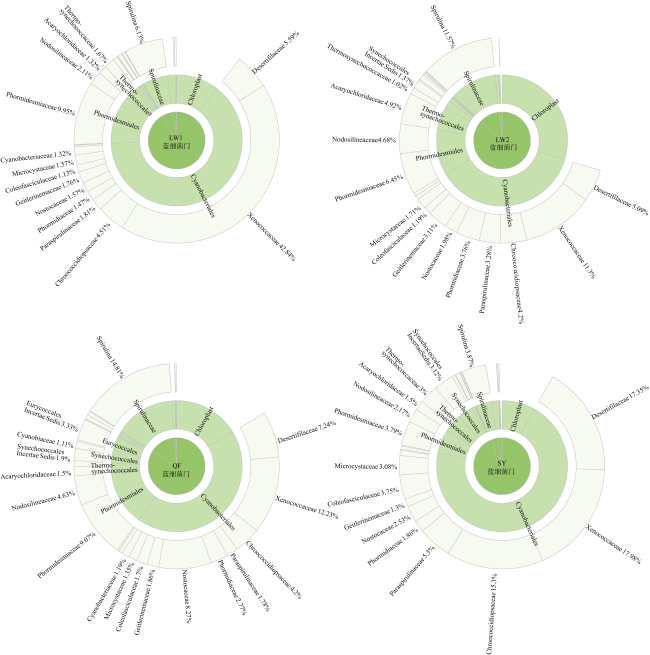
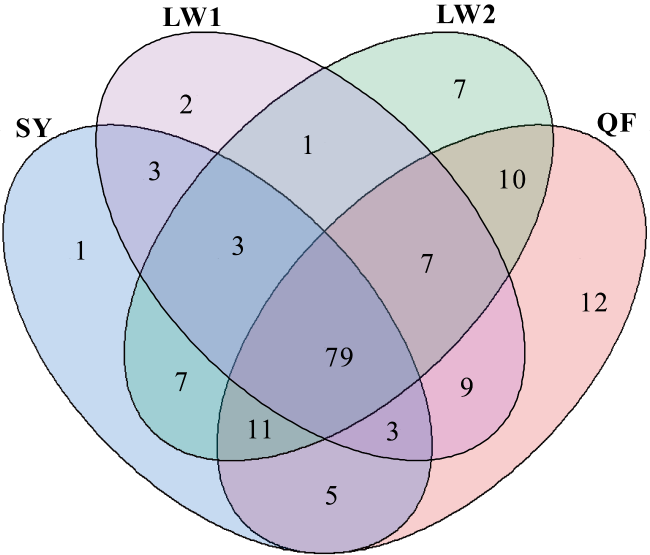
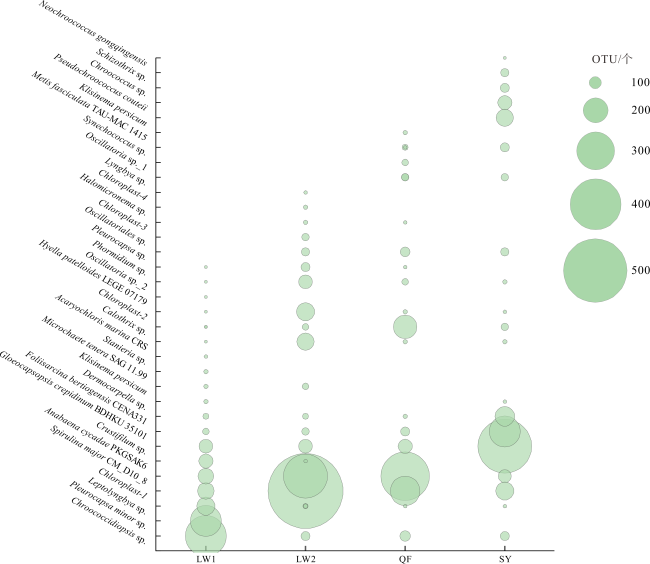
热带—亚热带潮间带沉积物中丰富的菌—藻类微生物及其复杂的生命活动对颗粒的早期胶结过程起重要作用。本文通过16S rRNA高通量基因测序方法分析西沙群岛石屿、全富岛及海南龙湾珊瑚礁滨岸带海滩岩表生微生物群落结构, 确定主导海滩岩快速胶结的共性菌株/微生物功能群。表层生长草皮海藻的全富岛海滩岩原核生物多样性最高。龙湾潮间带上部暴露时间较长的海滩岩比潮间带下部海滩岩原核生物多样性高。相对固结的石屿海滩岩原核生物多样性最低。4个取样点具有较为相似的细菌门类组成, 物种丰度由大到小依次为变形菌门(Proteobacteria)、拟杆菌门(Bacteroidetes)、放线菌门(Actinobacteriota)、蓝细菌门(Cyanobacteria)、绿弯菌门(Chloroflexi)、芽单胞菌门(Gemmatimonadota)和脱硫杆菌门(Desulfobacterota)。不同点位的海滩岩形成环境中蓝细菌主要种类大体相同, 其中眉藻(Calothrix sp.)是主导海滩岩早期胶结的共性钙化菌株, 通过分泌胞外聚合物成为碳酸盐矿物沉淀的“热点”。群落中检出的反硝化细菌和硫酸盐还原菌表明海滩岩内部氧化还原梯度较大, 表面下极浅处即存在缺氧微环境。微生物群落内强烈的光合作用、硫酸盐还原作用和反硝化作用不断提高微环境pH值, 有利碳酸盐矿物在粒间孔内的成核和生长并加速颗粒胶结。
刘玓玓 , 张喜洋 , 孙富林 , 王明壮 , 谭飞 , 施祺 , 王冠 , 杨红强 . 南海海滩岩微生物群落结构和特定菌株对其成因机制的启示*[J]. 热带海洋学报, 2024 , 43(4) : 112 -122 . DOI: 10.11978/2023142
Abundant bacterial-algal microorganisms and their metabolisms play important roles in early cementation of beachrocks along intertidal-supratidal zones of tropical-subtropical shorelands. In this study, 16S rRNA high-throughput sequencing analysis was employed to reveal the compositions of prokaryotic microbial communities and identify the common strains/microbial functional groups that dominated the beachrocks’ cementation. The Quanfu turf algae-bearing beachrocks have the highest biodiversity. The diversity of Longwan beachrocks in upper intertidal zone is higher than that in lower intertidal zone. The prokaryotic biodiversity of consolidated Shiyu beachrocks is the lowest. The bacterial phylum in the four sampling localities was roughly similar, which includes Proteobacteria, Bacteroideta, Actinobacteria, Cyanobacteria, Chloroflexi, Gemmatimonadetes and Desulfobacterota in descending order. The main cyanobacteria species were same. The common calcified cyanobacterial strain-Calothrix sp. was all detected, and the extracellular polymer substances could be the hotspots for precipitation of carbonate biomaterials. Denitrobacteria and sulfate-reducing bacteria detected in microbial communities indicate the anaerobic environment and steep redox gradient below the superficial beachrocks. Strong photosynthesis, sulfate reduction and denitrification in particle surface and intergranular pore together significantly rise pH, and promote the nucleation and growth of carbonate biomaterials, accelerating the consolidation of loose beach sands.
Key words: prokaryote; community structure; cyanobacteria; beachrock; South China Sea
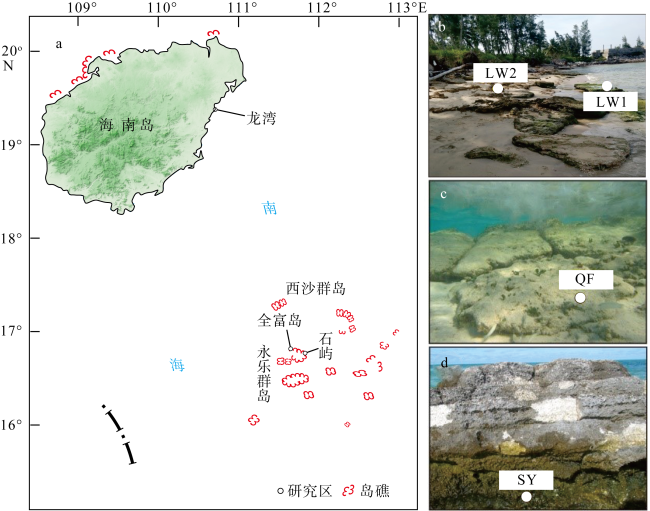
图1 a. 采样点区域位置图; b. 为龙湾海滩岩野外照片; c. 全富岛海滩岩样品(QF)采自海滩岩表面草皮海藻; d. 石屿海滩岩样品(SY)为潮间带海滩岩表面该图基于海南测绘地理信息局的审图号为琼S(2021)120号的标准地图制作, 底图无修改。龙湾1号取样点海滩岩样品(LW1)位于潮间带下部, 龙湾2号取样点海滩岩样品(LW2)位于潮间带上部 Fig. 1 (a) Map of sampling sites; (b) LW1 beachrocks from the lower part of intertidal zone and LW2 beachrocks from the upper part of intertidal zone; (c) QF beachrock and the surficial turf algae; (d) SY beachrock from intertidal zone |
| [1] |
白洁, 李海艳, 赵阳国, 2009. 黄海北部不同站位海洋细菌群落分布特征[J]. 微生物学报, 49(3): 343-350.
|
| [2] |
白洁, 刘小沙, 侯瑞, 等, 2014. 南海南部海域浮游细菌群落特征及影响因素研究[J]. 中国环境科学, 34(11): 2950-2957.
|
| [3] |
陈倩茹, 夏雪, 王川, 等, 2021. 沙颍河下游城市黑臭内河沉积物微生物群落季节变化特征[J]. 水生生物学报, 45(1): 182-189.
|
| [4] |
高旭波, 潘振东, 龚培俐, 等, 2022. 微生物诱导碳酸盐岩沉淀过程及作用机理[J]. 中国岩溶, 41(3): 441-452.
|
| [5] |
李建生, 冯炎基, 1998. 华南海滩岩及若干问题讨论[J]. 矿物岩石地球化学通报, 17(3): 45-47.
|
| [6] |
李平日, 1988. 华南全新世海滩岩及其古地理意义[J]. 海洋地质与第四纪地质, 8(4): 21-29.
|
| [7] |
仇潇洒, 2020. 陶厄氏菌属(Thauera)富集的SBR系统脱氮性能研究[D]. 西安: 长安大学: 1-65.
|
| [8] |
孙金龙, 徐辉龙, 2009. 中国的海滩岩研究与进展[J]. 热带海洋学报, 28(2): 103-108.
|
| [9] |
滕建彬, 金春花, 沈建伟, 2007a. 海南岛鹿回头水尾岭海滩岩中的微生物岩[J]. 海洋地质与第四纪地质, 27(3): 25-30.
|
| [10] |
滕建彬, 沈建伟, 2007b. 海南岛鹿回头水尾岭海滩岩中的微生物碳酸盐沉积研究[J]. 中国科学D辑: 地球科学, 37(10): 1338-1348.
|
| [11] |
王月, 沈建伟, 龙江平, 2011. 海南岛三亚小东海珊瑚礁坪生态沉积分带和碳酸盐沉积作用[J]. 中国科学D辑: 地球科学, 41(3): 362-374.
|
| [12] |
朱长歧, 周斌, 刘海峰, 2015. 南海海滩岩的细观结构及其基本物理力学性质研究[J]. 岩石力学与工程学报, 34(4): 683-693.
|
| [13] |
|
| [14] |
|
| [15] |
|
| [16] |
|
| [17] |
|
| [18] |
|
| [19] |
|
| [20] |
|
| [21] |
|
| [22] |
|
| [23] |
|
| [24] |
|
| [25] |
|
| [26] |
|
| [27] |
|
| [28] |
|
| [29] |
|
| [30] |
|
| [31] |
|
| [32] |
|
| [33] |
|
| [34] |
|
| [35] |
|
| [36] |
|
| [37] |
|
| [38] |
|
| [39] |
|
| [40] |
|
| [41] |
|
| [42] |
|
| [43] |
|
| [44] |
|
| [45] |
|
| [46] |
|
| [47] |
|
/
| 〈 |
|
〉 |