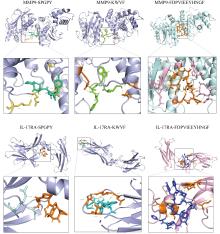
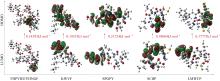
| [1] |
孔德新, 陈雪红, 谢靖, 等, 2015. 狭鳕鱼皮胶原蛋白肽对大鼠关节炎模型中氧化应激和炎症因子的影响[J]. 安徽农业科学, 43(26): 132-134.
|
|
KONG DEXIN, CHEN XUEHONG, XIE JING, et al, 2015. Effect of collagen peptides from walleye pollock skin on oxidative stress and inflammatory cytokine in osteoarthritis rats[J]. Journal of Anhui Agricultural Sciences, 43(26): 132-134 (in Chinese with English abstract).
|
| [2] |
CHO W, PARK J, KIM J, et al, 2023. Low-molecular-weight fish collagen peptide (valine-glycine-proline-hydroxyproline-glycine-proline-alanine-glycine) prevents osteoarthritis symptoms in chondrocytes and monoiodoacetate-injected rats[J]. Marine Drugs, 21(12): 608.
doi: 10.3390/md21120608
|
| [3] |
FENG JIANHUI, WANG HAOJIE, LUO XINYUE, et al, 2024. Identification and molecular mechanism of the anti-inflammatory effect of sea cucumber peptides: Network pharmacology, molecular docking and animal experiments[J]. International Journal of Biological Macromolecules, 279(Pt 2): 134958.
doi: 10.1016/j.ijbiomac.2024.134958
|
| [4] |
GREENE M A, LOESER R F, 2015. Aging-related inflammation in osteoarthritis[J]. Osteoarthritis and Cartilage, 23(11): 1966-1971.
doi: 10.1016/j.joca.2015.01.008
pmid: 26521742
|
| [5] |
HOANG T H, LIANG QI, LUO XUAN, et al, 2022. Bioactives from marine animals: potential benefits for human reproductive health[J]. Frontiers in Marine Science, 9: 872775.
doi: 10.3389/fmars.2022.872775
|
| [6] |
HOUARD X, GOLDRING M B, BERENBAUM F, 2013. Homeostatic mechanisms in articular cartilage and role of inflammation in osteoarthritis[J]. Current Rheumatology Reports, 15(11): 375.
doi: 10.1007/s11926-013-0375-6
pmid: 24072604
|
| [7] |
HU YUXI, NI CE, WANG YINGYING, et al, 2023. Research progress on the preparation and function of antioxidant peptides from walnuts[J]. International Journal of Molecular Sciences, 24(19): 14853.
doi: 10.3390/ijms241914853
|
| [8] |
KEMP D C, KWON J Y, 2021. Fish and shellfish-derived anti-inflammatory protein products: properties and mechanisms[J]. Molecules, 26(11): 3225.
doi: 10.3390/molecules26113225
|
| [9] |
KOOPMANS T, 1934. The classification of wave functions and eigenvalues to the single electrons of an atom[J]. Physica, 1: 104-113.
doi: 10.1016/S0031-8914(34)90011-2
|
| [10] |
LEE CHENGTEH, YANG WEITAO, PARR R G, 1988. Development of the Colle-Salvetti correlation-energy formula into a functional of the electron density[J]. Physical Review B, 37(2): 785-789.
doi: 10.1103/physrevb.37.785
pmid: 9944570
|
| [11] |
LEE H G, KIM H S, OH J Y, et al, 2021. Potential antioxidant properties of enzymatic hydrolysates from Stichopus japonicus against hydrogen peroxide-induced oxidative stress[J]. Antioxidants, 10(1): 110.
doi: 10.3390/antiox10010110
|
| [12] |
LIU QIANG, HU XIAOQING, ZHANG XIN, et al, 2016. Effects of mechanical stress on chondrocyte phenotype and chondrocyte extracellular matrix expression[J]. Scientific Reports, 6: 37268.
doi: 10.1038/srep37268
pmid: 27853300
|
| [13] |
LU ZHIQIANG, SUN NA, DONG LIU, et al, 2022. Production of bioactive peptides from sea cucumber and its potential health benefits: a comprehensive review[J]. Journal of Agricultural and Food Chemistry, 70(25): 7607-7625.
doi: 10.1021/acs.jafc.2c02696
pmid: 35715003
|
| [14] |
LORÈ N I, CHEN KONG, BULEK K, 2021. Editorial: the IL-17 cytokine family in tissue homeostasis and disease[J]. Frontiers in Immunology, 12: 641986.
doi: 10.3389/fimmu.2021.641986
|
| [15] |
MAO JING, ZHAO YUNJIAO, WANG LECHEN, et al, 2023. Sea cucumber peptide alleviates ulcerative colitis induced by dextran sulfate sodium by alleviating gut microbiota imbalance and regulating miR-155/SOCS1 axis in mice[J]. Foods, 12(18): 3434.
doi: 10.3390/foods12183434
|
| [16] |
MOHD HEIKAL M Y, AHMAD NAZRUN S, CHUA K H, et al, 2019. Stichopus chloronotus aqueous extract as a chondroprotective agent for human chondrocytes isolated from osteoarthitis articular cartilage in vitro[J]. Cytotechnology, 71(2): 521-537.
doi: 10.1007/s10616-019-00298-2
|
| [17] |
MOREIRA F R C, DE OLIVEIRA T A, RAMOS N E, et al, 2021. The role of renin angiotensin system in the pathophysiology of rheumatoid arthritis[J]. Molecular Biology Reports, 48(9): 6619-6629.
doi: 10.1007/s11033-021-06672-8
pmid: 34417705
|
| [18] |
MORELL C, GRAND A, TORO-LABBÉ A, 2005. New dual descriptor for chemical reactivity[J]. The Journal of Physical Chemistry A, 109(1): 205-212.
doi: 10.1021/jp046577a
|
| [19] |
NIELSEN S D, BEVERLY R L, QU YUNYAO, et al, 2017. Milk bioactive peptide database: a comprehensive database of milk protein-derived bioactive peptides and novel visualization[J]. Food Chemistry, 232: 673-682.
doi: S0308-8146(17)30622-2
pmid: 28490127
|
| [20] |
RIVERA-JIMÉNEZ J, BERRAQUERO-GARCÍA C, PÉREZ-GÁLVEZ R, et al, 2022. Peptides and protein hydrolysates exhibiting anti-inflammatory activity: sources, structural features and modulation mechanisms[J]. Food & Function, 13(24): 12510-12540.
|
| [21] |
SCHINOCCA C, RIZZO C, FASANO S, et al, 2021. Role of the IL-23/IL-17 pathway in rheumatic diseases: an overview[J]. Frontiers in Immunology, 12: 637829.
doi: 10.3389/fimmu.2021.637829
|
| [22] |
SHAABAN S, ABDOU A, ALHAMZANI A G, et al, 2023. Synthesis and in silico investigation of organoselenium-clubbed schiff bases as potential mpro inhibitors for the SARS-CoV-2 replication[J]. Life, 13(4): 912.
doi: 10.3390/life13040912
|
| [23] |
SHOU YIWEN, FENG CHAO, LU QINPEI, et al, 2023. Research progress on the chemical components and biological activities of sea cucumber polypeptides[J]. Frontiers in Pharmacology, 14: 1290175.
doi: 10.3389/fphar.2023.1290175
|
| [24] |
WENHAM C Y J, CONAGHAN P G, 2013. New horizons in osteoarthritis[J]. Age and Ageing, 42(3): 272-278.
doi: 10.1093/ageing/aft043
pmid: 23568255
|
| [25] |
XIAO JUAN, ZHANG PING, CAI FANGLAN, et al, 2023. IL-17 in osteoarthritis: a narrative review[J]. Open Life Sciences, 18(1): 20220747.
doi: 10.1515/biol-2022-0747
|
| [26] |
XIONG LING, LUO TAO, WANG LUANFENG, et al, 2022. Potential of food protein-derived peptides for the improvement of osteoarthritis[J]. Trends in Food Science & Technology, 129: 544-557.
|
| [27] |
YIN HAOWEN, YUE HAO, WANG MENG, et al, 2023. Peptides from sea cucumber intestine: preparation and promoting cartilage callus formation in mice with tibial fractures by promoting the polarization of M1 to M2 macrophages[J]. Journal of Functional Foods, 108: 105718.
doi: 10.1016/j.jff.2023.105718
|
| [28] |
ZHAO QIANQIAN, LI ZHAOXIA, LIU ZEYU, et al, 2024. Preparation, typical structural characteristics and relieving effects on osteoarthritis of squid cartilage type II collagen peptides[J]. Food Research International, 191: 114697.
doi: 10.1016/j.foodres.2024.114697
|
| [29] |
ZHOU XINDIE, LI JIN, ZHOU YUANSHUAI, et al, 2020. Down-regulated ciRS-7/up-regulated miR-7 axis aggravated cartilage degradation and autophagy defection by PI3K/AKT/mTOR activation mediated by IL-17A in osteoarthritis[J]. Aging, 12(20): 20163-20183.
doi: 10.18632/aging.v12i20
|


 ), 黎思1,2, 赵祥弹1,2, 陈华2(