

热带海洋学报 ›› 2026, Vol. 45 ›› Issue (4): 190-202.doi: 10.11978/2025202CSTR: 32234.14.2025202
钦州湾水体中溶解性有机质的组分特征及其来源分析
姜世豪1( ), 廖日权1,2,3(), 牛东蕾4, 乔真4, 鲁栋梁1,2,3, 唐建辉1,2,4
- 1
北部湾大学 ,海洋学院
2北部湾大学海洋学院 ,平陆运河河口海湾生态系统广西野外科学观测研究站
3北部湾大学海洋学院 ,广西海洋环境灾害过程与生态保护技术重点实验室
4中国科学院烟台海岸带研究所 ,海岸带环境过程与生态修复研究室
-
收稿日期:2025-10-27修回日期:2025-11-17出版日期:2026-07-10发布日期:2026-07-31 -
通讯作者:廖日权。 email: liaorq@bbgu.edu.cn -
作者简介:姜世豪(2000—), 男, 江苏省淮安人, 硕士研究生, 从事海洋生态研究。email: 1427692174@qq.com
-
基金资助:国家自然科学基金(42476043); 钦州市科研与技术开发项目(202116623); 中国大学生创新创业训练计划项目(S202411607021)
The distribution characteristics, compositions and sources of dissolved organic matter (DOM) in Qinzhou Bay
JIANG Shihao1(), LIAO Riquan1,2,3(), NIU Donglei4, QIAO Zhen4, LU Dongliang1,2,3, TANG Jianhui1,2,4
- 1
College of Marine Sciences ,Beibu Gulf University
2Pinglu Canal and Beibu Gulf Coastal Ecosystem Observation and Research Station of Guangxi ,College of Marine Sciences, Beibu Gulf University
3Guangxi Key Laboratory of Marine Environmental Disaster Processes and Ecological Protection Technology ,College of Marine Sciences, Beibu Gulf University
4Laboratory of Coastal Environmental Processes and Ecological Remediation ,Yantai Institute of Coastal Zone Research, Chinese Academy of Sciences
-
Received:2025-10-27Revised:2025-11-17Online:2026-07-10Published:2026-07-31 -
Contact:LIAO Riquan. email: liaorq@bbgu.edu.cn -
Supported by:National Natural Science Foundation of China(42476043); Scientific Research and Technology Development project of Qinzhou(202116623); China College Students' Innovation and Entrepreneurship Training Program Project(S202411607021)

摘要:
溶解性有机质(dissolved organic matter, DOM)是生物地球化学反应的重要驱动因子, 河口海湾水体DOM组分特征及其来源对海域生态环境具有重要影响。本研究于2024年8月至2025年6月期间, 以平陆运河—钦州湾入海口为研究区域进行多批次采样, 综合运用紫外-可见吸收光谱与三维荧光光谱-平行因子技术分析采集的样品, 旨在系统解析水体中溶解性有机质的组分特征与来源。研究结果表明, 钦州湾表层水体溶解有机碳(dissolved organic carbon, DOC)范围为1.31~9.14mg·L−1。其中, 2025年2月平均浓度最低, 为(2.11±0.38)mg·L−1, 2024年10月平均浓度最高, 为(7.53±1.43)mg·L−1。同时, 空间上呈现出从平陆运河河口向茅尾海降低, 但湾外浓度有所回升。钦州湾水体中DOM识别出3种荧光组分: 类腐殖质C1(Ex/Em=240/430nm)、类蛋白质C2(Ex/Em=245/300nm)和C3(Ex/Em=250, 275/350nm), 各组分相对占比存在着季节变化。在丰水期, DOM类腐殖质组分(C1)相对占比高达60%~81%, 同时芳香性指数和腐殖化指数(humification index, HIX)显著升高, 表明水体中DOM是由河流输送的大量芳香性强、腐殖化程度高的陆源类腐殖质; 枯水期类蛋白组分(C2+C3)占比超过60%, 芳香性指数(<1.5)和HIX降至极低水平, 而生物源指数(biological index, BIX)升高, 此阶段以内源自生源和人为源为主。盐度与类腐殖质组分C1(r=−0.96, P<0.01)呈显著负相关, 与DOC浓度(r=−0.23, P>0.05)和类酪氨酸组分C2(r=−0.08, P>0.05)无显著相关性, 表明陆源DOM在河口的混合过程复杂。与长江口、黄河口等大型自然河口对比发现, 钦州湾DOM动态同时受到自然水文过程(例如降雨)与高强度人类活动(例如平陆运河疏浚、水产养殖)的共同调控, 体现了典型人为干扰河口的生物地球化学特征。研究结果为理解人类活动影响下河口碳循环的演变提供了支持, 并为平陆运河建设及区域水环境管理与污染控制提供了参考依据。
中图分类号:
- P734
引用本文
姜世豪, 廖日权, 牛东蕾, 乔真, 鲁栋梁, 唐建辉. 钦州湾水体中溶解性有机质的组分特征及其来源分析[J]. 热带海洋学报, 2026, 45(4): 190-202.
JIANG Shihao, LIAO Riquan, NIU Donglei, QIAO Zhen, LU Dongliang, TANG Jianhui. The distribution characteristics, compositions and sources of dissolved organic matter (DOM) in Qinzhou Bay[J]. Journal of Tropical Oceanography, 2026, 45(4): 190-202.
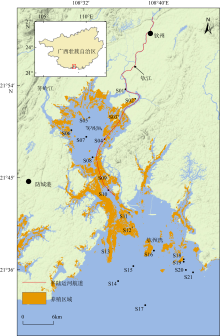
图1
研究区域及采样站点 该图基于自然资源部标准地图服务网站下载的审图号为GS(2024)0650号标准地图制作"

图1
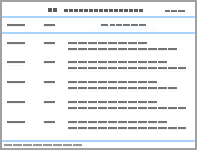
表1
DOM的光谱参数及意义"
| 光谱参数 | 参数定义 | 指示意义 | 参考文献 |
|---|---|---|---|
| E2/E3 | 250nm与365nm处紫外吸光度之比 | 与DOM相对分子量成反比 | Wang et al, |
| a350 | 350nm处的吸光系数 | 有色溶解性有机物(chromophoric dissolved organic matter, CDOM)的替代指标和量化参数 | Wang et al, |
| SR | S275~295/S350~400紫外光谱斜率比 | 与DOM的相对分子质量成反比: SR>1 表明DOM来源以内生源为主 | Spencer et al, |
| 芳香性指数(SUVA254) | 254nm处紫外吸收系数与DOC浓度比值 | 与DOM的芳香性与腐殖化程度正相关 | Tremblay et al, |
| FI | 当Ex为370nm时, Em在450nm和 500 nm 处的荧光强度(F)的比值 | 当FI>1.9主要表现为自生源特征, FI<1.4陆源为主要来源 | McKnight et al, |
| BIX | 当Ex为310nmn时, Em在380nm 和430nm处的荧光强度比值 | BIX>1以自生源为主 | Birdwell et al, |
| HIX | area(Em=435~480nm)/area(Em=300~345nm), Ex=254nm, 其中area为荧光峰面积 | 与DOM腐殖化程度成正比 | Ohno, |
表1
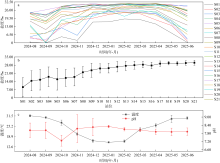
图2
钦州湾水体环境参数变化特征"
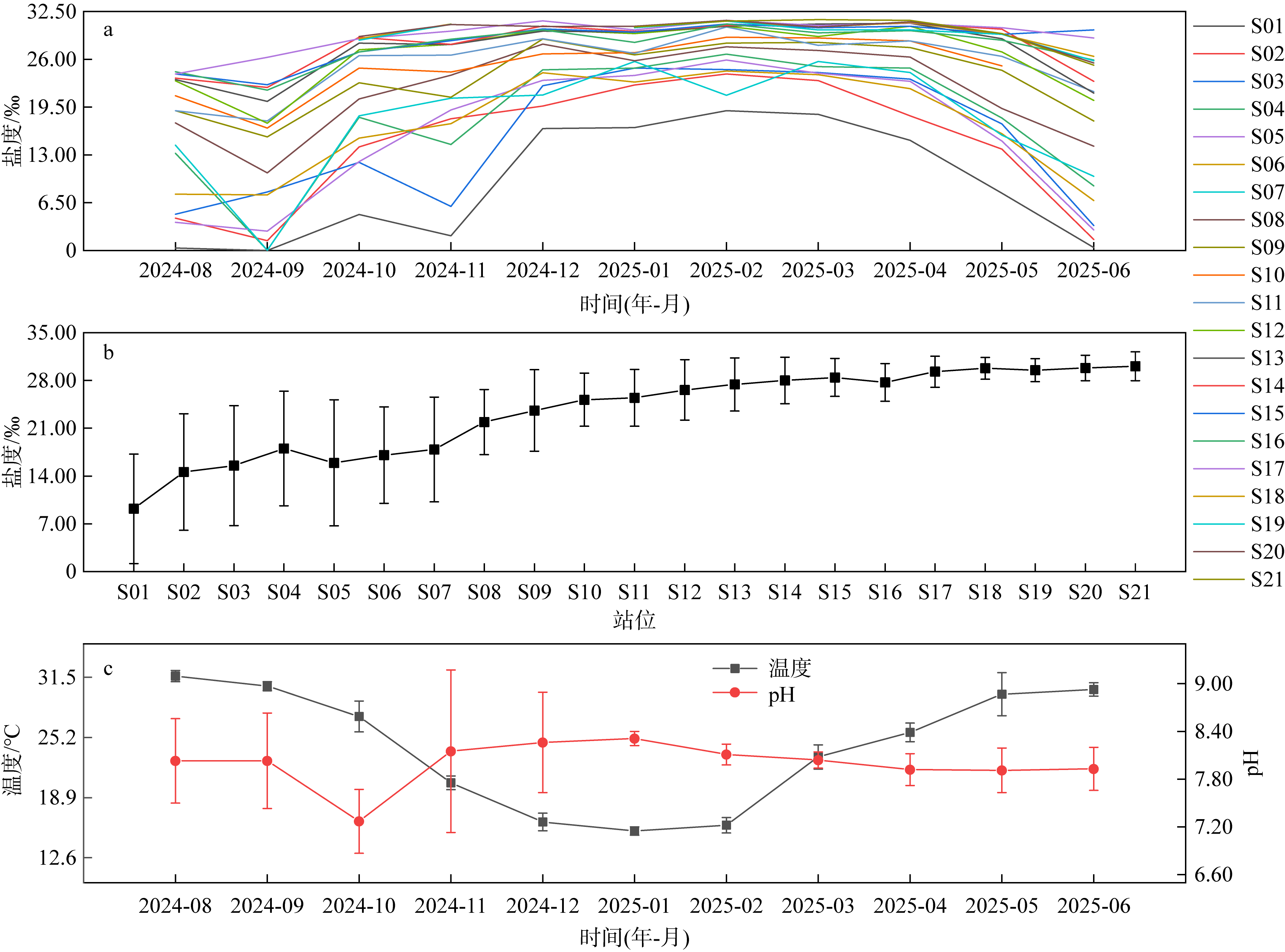
图2
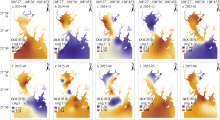
图3
钦州湾水体中DOC 时空分布"

图3
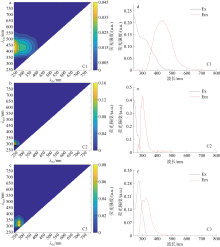
图4
钦州湾水体中DOM组分荧光强度(a—c)及其荷载图(d—f)"
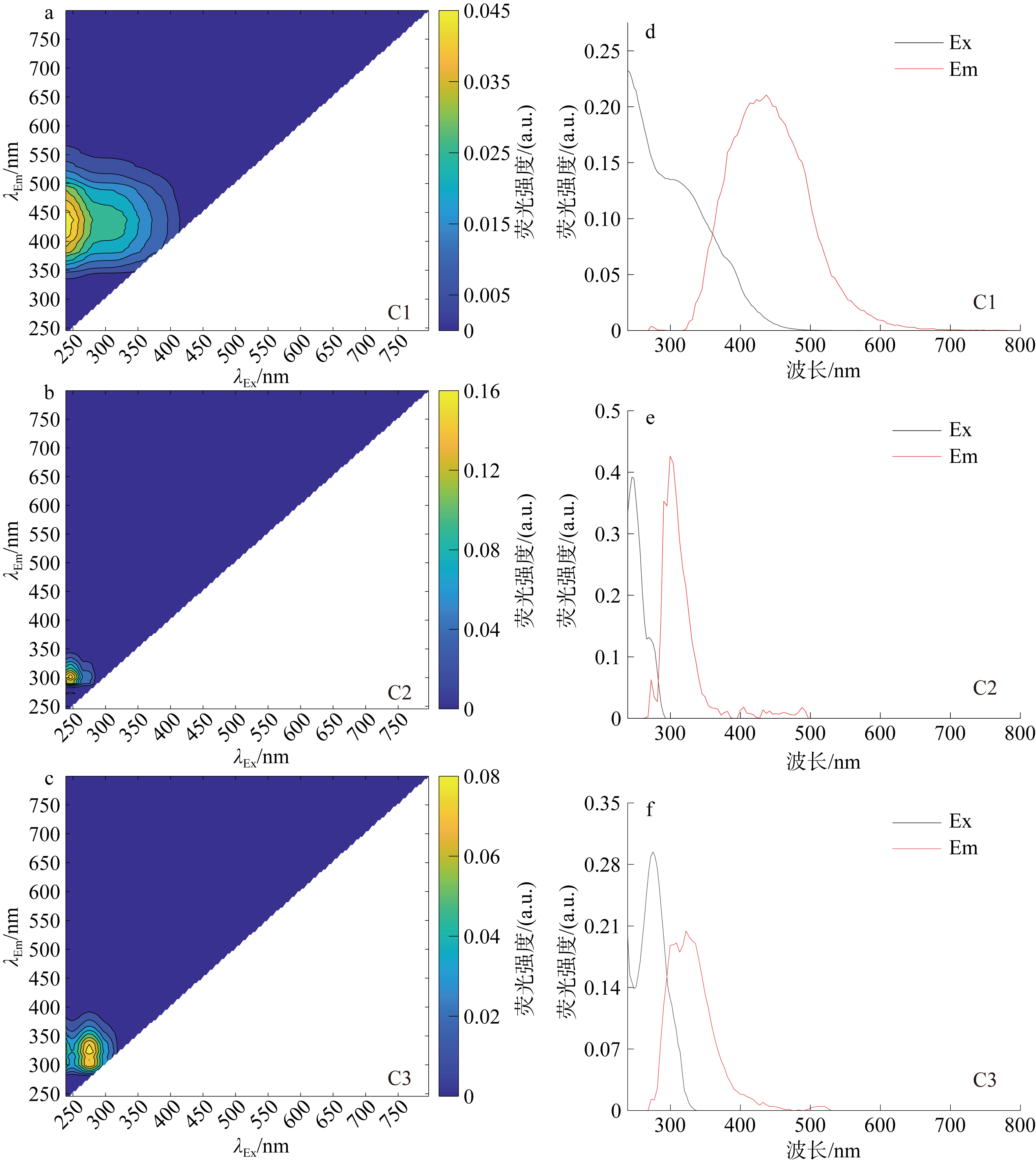
图4
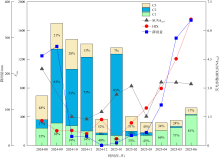
图5
钦州湾水体DOM荧光组分的Fmax及相对占比、荧光参数(HIX、SUVA254)和降雨量变化特征 降雨量数据来源于中国气象数据网(https://data.cma.cn/)"
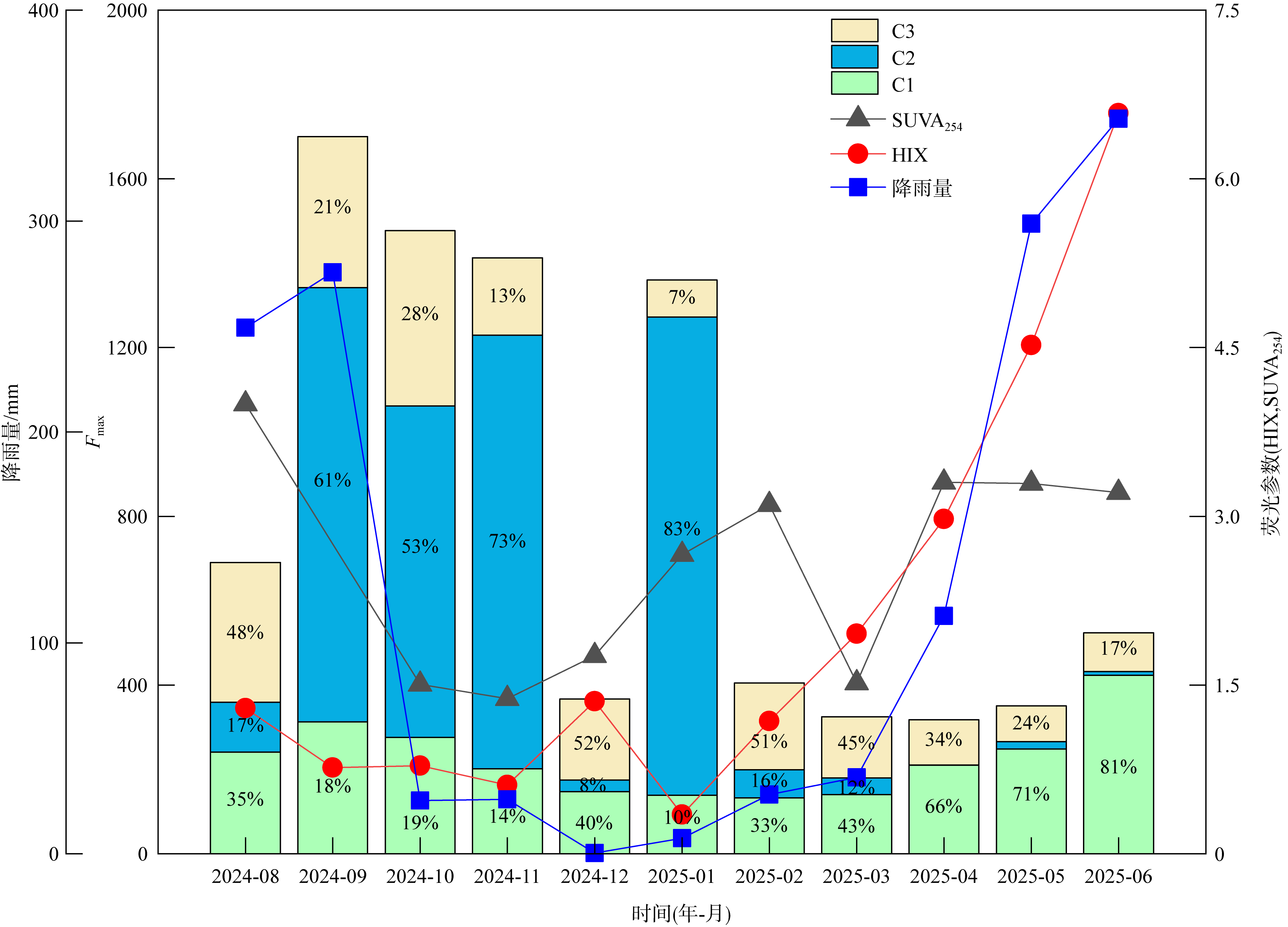
图5
图6
钦州湾水体中DOM组分月平均最大荧光强度(Fmax)空间变化特征"
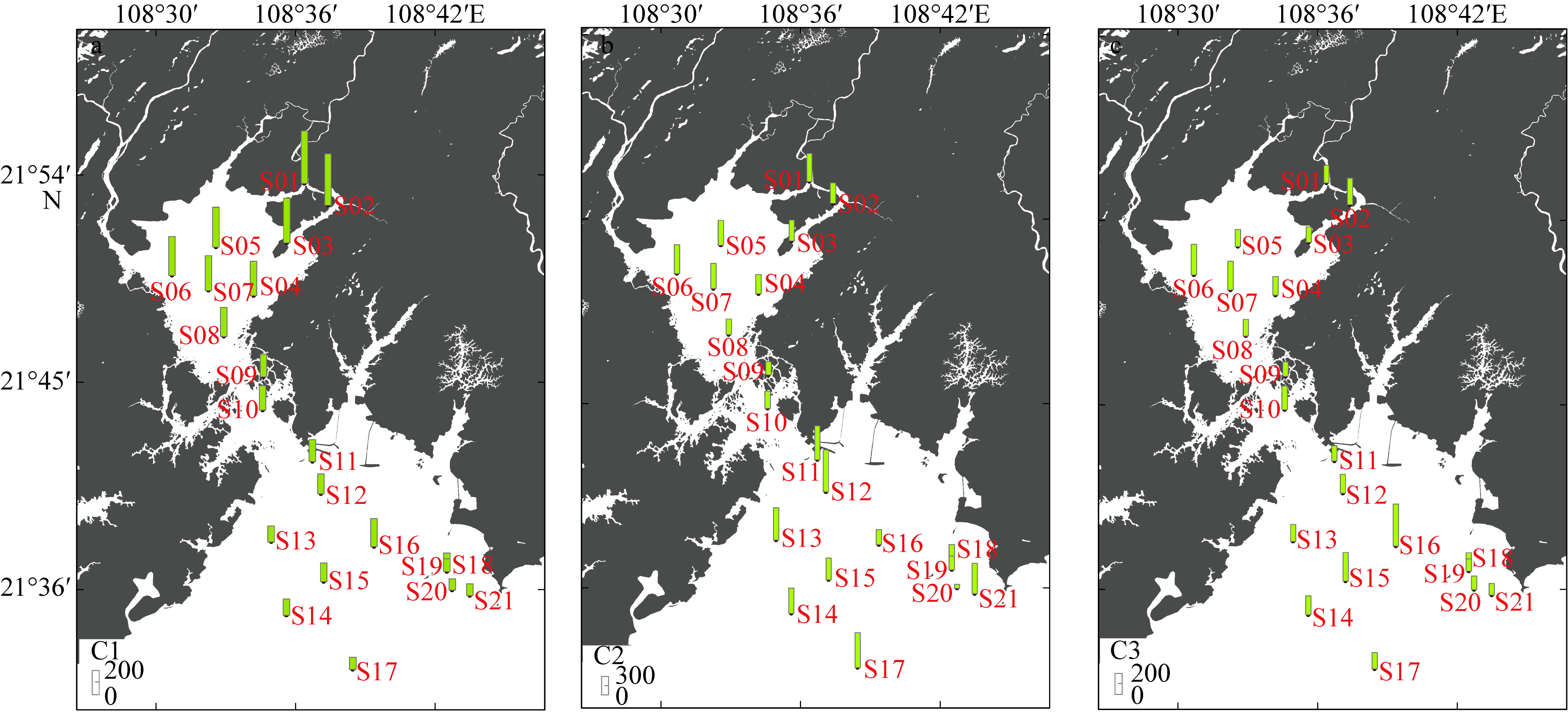
图6
图7
钦州湾水体中DOM荧光参数(a)和紫外参数(b)"
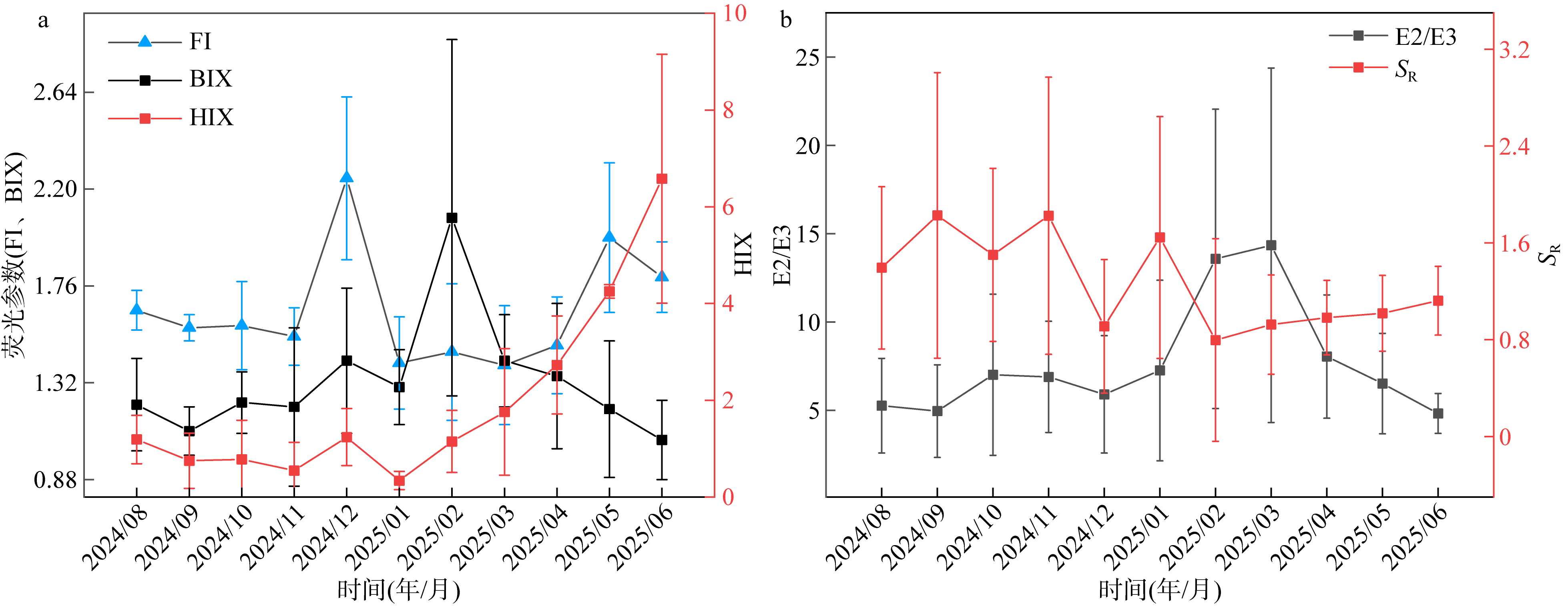
图7
图8
钦州湾水体DOM 各荧光组分、荧光参数、紫外参数相关性 图中⁎表示P≤0.05, ⁎⁎表示 P≤0.01"
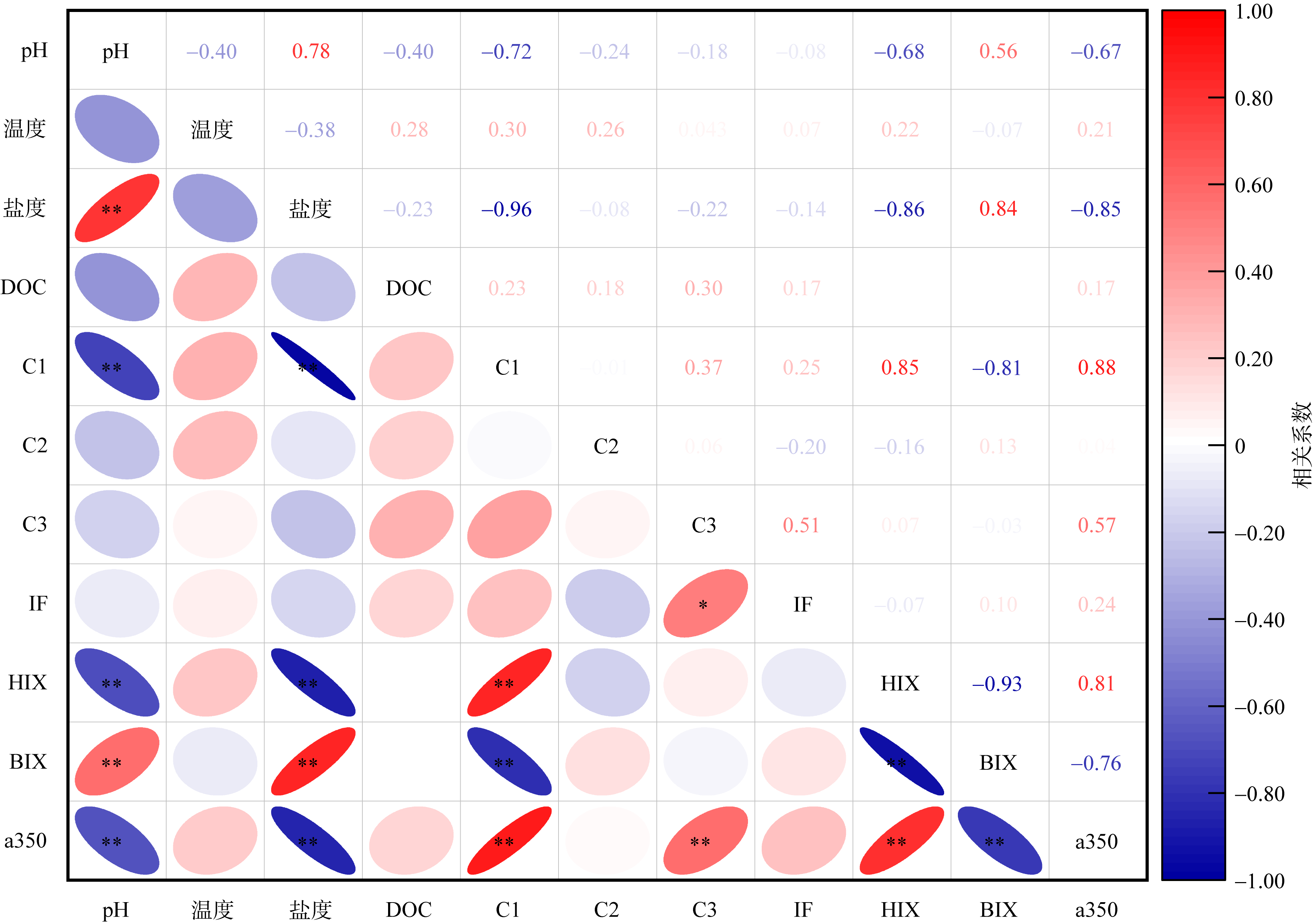
图8
表2
钦州湾与其他河流DOC和CDOM浓度对比"
| 区域 | 采样时间 | DOC浓度/(mg·L−1) | CDOM/m−1 | 参考文献 |
|---|---|---|---|---|
| 中国广西钦州湾 | 2022—2023 | 1.54~10.01 | — | 李一鸣, |
| 中国珠江口 | 2015-05 | 1.87±0.54 | 1.99±0.19 (a330) | Li et al, |
| 中国黄浦江 | 2011-04 | 4.80±0.57 | 6.00~6.40(a355) | Guo et al, |
| 中国长江口 | 2021-05 | 1.67±0.13 | 2.20±0.57(a355) | 郭丽霞 等, |
| 中国黄河口 | 2017-08 | 11.00±6.48 | 29.84±21.37(a254) | Cui et al, |
| 中国广西钦州湾 | 2024-08至2025-06 | 1.31~9.14 | 1.74±1.51(a350) | 本研究数据 |
| 密西西比河 | 2009—2010 | 5.60±0.20 | 5.75±0.66(a350) | Kolic et al, |
表2
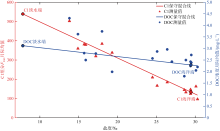
图9
钦州湾水体DOM 中盐度与DOC、C1的相关性分析"
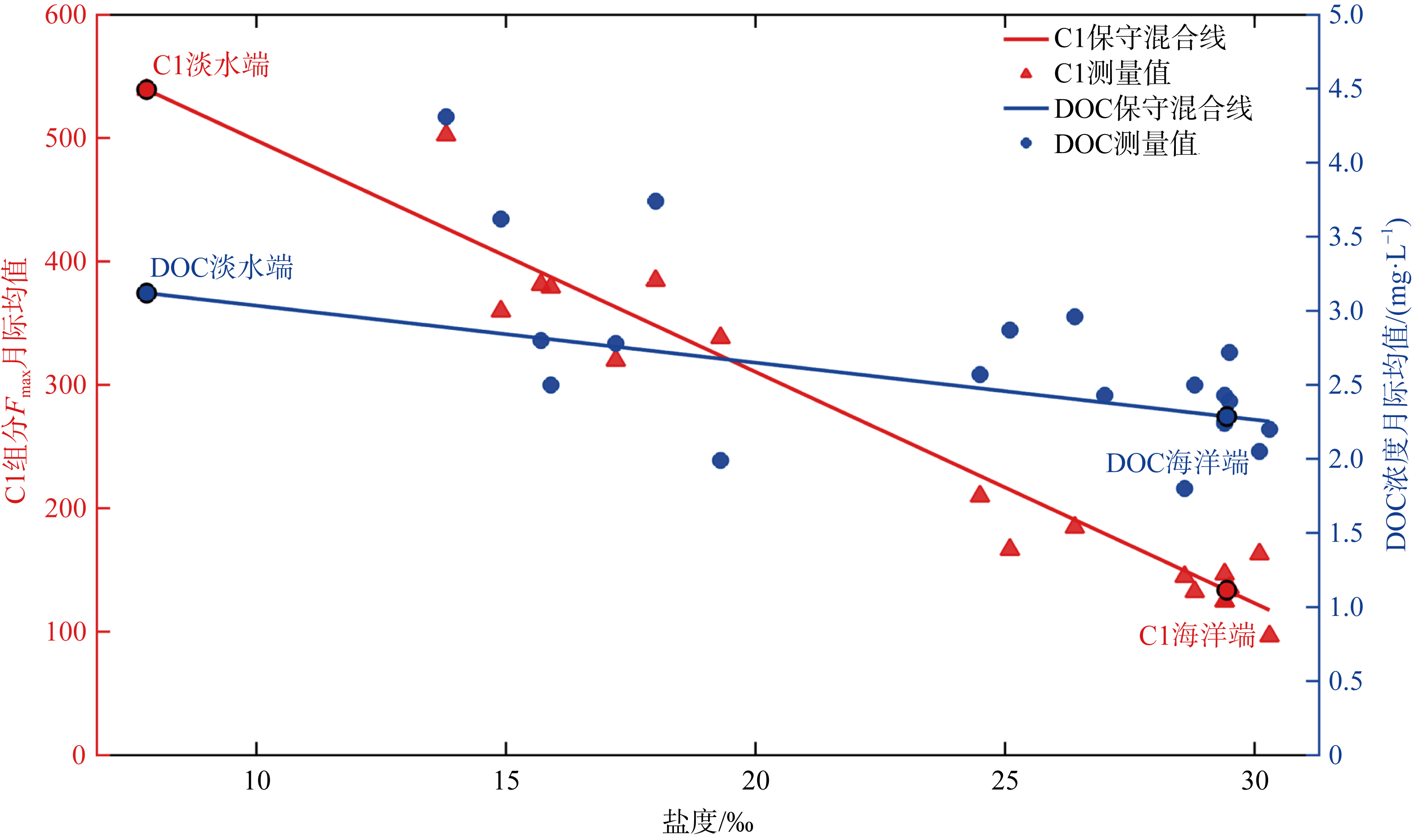
图9
| [1] |
郭丽霞, 王亚松, 乔德会, 等, 2022. 夏季长江口南北支溶解有机质的比较[J]. 海洋科学, 46(11): 67-82.
|
|
|
|
| [2] |
郭卫东, 黄建平, 洪华生, 等, 2010. 河口区溶解有机物三维荧光光谱的平行因子分析及其示踪特性[J]. 环境科学, 31(6): 1419-1427.
|
|
|
|
| [3] |
何鑫龙, 裴福云, 吴胜春, 等, 2021. 渔业养殖区溶解性有机质的来源、组成及其对汞甲基化的影响[J]. 环境科学学报, 41(10): 4097-4106.
|
|
|
|
| [4] |
黄慧倩, 胡浩鹏, 杨斌, 等, 2023. 亚热带海湾表层沉积物对磷的吸附解析特征研究[J]. 环境科学研究, 36(2): 363-372.
|
|
|
|
| [5] |
劳齐斌, 刘国强, 高劲松, 等, 2021. 钦州湾养殖区营养盐分布特征及富营养化状况研究[J]. 海洋环境科学, 40(3): 407-416.
|
|
|
|
| [6] |
李一鸣, 2024. 钦州湾养殖区水体碳含量特征及微藻固碳与牡蛎碳汇效率研究[D]. 钦州: 北部湾大学.
|
|
|
|
| [7] |
卢佳, 韩艳萍, 吴嘉曦, 等, 2025. 贵州草海水体溶解性有机质光谱特征及来源分析[J/OL]. 水生态学杂志, (2025-04-10)[2025-11-17].
|
|
|
|
| [8] |
吴峰, 宋秀贤, 池连宝, 等, 2022. 近海养殖水体溶解性有机质的荧光特征及环境指示意义[J]. 海洋与湖沼, 53(3): 597-606.
|
|
|
|
| [9] |
杨斌, 钟秋平, 张晨晓, 等, 2015. 钦州湾叶绿素a和初级生产力时空变化及其影响因素[J]. 环境科学学报, 35(5): 1333-1340.
|
|
|
|
| [10] |
杨秀虹, 彭琳婧, 李适宇, 等, 2013. 红树植物凋落叶分解对土壤可溶性有机质的影响[J]. 生态环境学报, 22(6): 924-930.
|
|
|
|
| [11] |
曾德斌, 彭光煜, 杨斌, 等, 2025. 南海北部钦州湾茅尾海溶解碳水化合物的分布特征及影响因素[J]. 热带海洋学报, 44(3): 197-205.
|
|
|
|
| [12] |
|
| [13] |
doi: 10.1038/ngeo101 |
| [14] |
doi: 10.1016/j.orggeochem.2009.11.002 |
| [15] |
doi: 10.1016/j.scitotenv.2018.05.205 |
| [16] |
doi: 10.1016/0304-4203(95)00062-3 |
| [17] |
doi: 10.1021/cr050350+ pmid: 17256912 |
| [18] |
doi: 10.1021/es0506962 |
| [19] |
doi: 10.1093/jpe/rtac037 |
| [20] |
doi: 10.1016/j.watres.2023.120297 |
| [21] |
doi: 10.4319/lo.2010.55.6.2452 |
| [22] |
doi: 10.3390/w12113059 |
| [23] |
|
| [24] |
doi: 10.1002/jgrg.v119.5 |
| [25] |
doi: 10.1007/s10201-007-0232-2 |
| [26] |
doi: 10.4319/lo.2008.53.3.0955 |
| [27] |
doi: 10.1016/j.jenvman.2023.119517 |
| [28] |
doi: 10.1016/j.chemosphere.2023.140091 |
| [29] |
doi: 10.1007/s10533-018-0529-8 |
| [30] |
doi: 10.1016/j.marchem.2023.104210 |
| [31] |
doi: 10.1021/acs.est.6b05761 |
| [32] |
doi: 10.1002/wat2.2018.5.issue-1 |
| [33] |
doi: 10.1016/j.scitotenv.2014.03.121 |
| [34] |
doi: 10.1029/2018JG004690 |
| [35] |
doi: 10.5194/bg-16-2751-2019 |
| [36] |
doi: 10.1016/j.jhazmat.2023.132410 |
| [37] |
doi: 10.4319/lo.2001.46.1.0038 |
| [38] |
doi: 10.1016/j.marchem.2007.10.003 |
| [39] |
doi: 10.1021/es0155276 |
| [40] |
|
| [41] |
|
| [42] |
doi: 10.1016/j.marchem.2006.12.015 |
| [43] |
doi: 10.1016/j.marenvres.2024.106796 |
| [44] |
pmid: 20108658 |
| [45] |
doi: 10.1016/j.marpolbul.2010.07.025 pmid: 20863534 |
| [46] |
doi: 10.1016/j.aquaculture.2014.02.009 |
| [47] |
doi: 10.1016/j.jwpe.2025.108946 |
| [48] |
doi: 10.1029/2018JC014004 |
| [49] |
doi: 10.1016/j.envpol.2025.126854 |
| [50] |
doi: 10.1016/j.watres.2009.07.024 pmid: 19665748 |
| [1] | 李新正, 杜小丽, 徐勇, 张悦, 王金宝, 隋吉星, 陈丹. 夏、冬季钦州湾茅尾海大型底栖动物群落特征及其环境影响因素探究*[J]. 热带海洋学报, 2026, 45(4): 15-28. |
| [2] | 孙康伟, 廖日权, 李晗, 翁培耀, 唐建辉. 钦州湾表层海水营养盐的月际变化特征及其影响因子研究*[J]. 热带海洋学报, 2026, 45(4): 162-178. |
| [3] | 金松, 邹涛, 廖日权, 陈超豪, 米环, 唐建辉. 基于遥感技术的2000年以来钦州湾筏架养殖空间扩展模式分析[J]. 热带海洋学报, 2026, 45(4): 104-115. |
| [4] | 谢亚军, 戴志军, 陈俭清, 钟明涛, 黄强, 王日明. 平陆运河出海口沙井岛潮间带大型底栖动物群落响应近自然修复的变化分析[J]. 热带海洋学报, 2026, 45(4): 29-40. |
| [5] | 梁喜幸, 戴志军, 李焰, 黎树式, 李为华, 王日明, 吴尔江. 基于Sentinel-2的平陆运河出海口红树林动态变化特征[J]. 热带海洋学报, 2026, 45(4): 77-88. |
| [6] | 娄志凤, 李雨辰, 殷雪华, 孙溶, 田崇国. 钦州湾水体硝酸盐分布特征及其主要来源解析*[J]. 热带海洋学报, 2026, 45(4): 153-161. |
| [7] | 田蜜, 张健, 廖日权, 董凤凤, 唐建辉. 钦州湾表层海水中全氟烷基化合物的时空变化及来源解析[J]. 热带海洋学报, 2026, 45(4): 116-125. |
| [8] | 王梦竹, 许珊珊, 黎树式, 李建明, 杨夏玲, 黄升. 人类活动和气候变化影响下钦江近60年悬浮泥沙浓度变化[J]. 热带海洋学报, 2026, 45(4): 126-139. |
| [9] | 杨留柱, 杨莉玲, 潘洪州, 刘超群, 喻丰华. 人类活动影响下的钦州湾近期滩槽冲淤演变特征[J]. 热带海洋学报, 2019, 38(6): 41-50. |
| [10] | 江丽芳, 尹毅, 齐义泉, 张志旭. 钦州湾台风浪的多年一遇极值推算[J]. 热带海洋学报, 2012, 31(4): 8-16. |
| [11] | 张伯虎 ,陈沈良 ,刘焱雄 ,谷国传 . 广西钦州湾海域表层沉积物分异特征与规律[J]. 热带海洋学报, 2011, 30(4): 66-70. |
|
||