

热带海洋学报 ›› 2026, Vol. 45 ›› Issue (4): 203-216.doi: 10.11978/2025186CSTR: 32234.14.2025186
北部湾万尾金滩对台风作用的动力地貌响应过程
陆必宇1( ), 庞文鸿2(), 喜扬洋3, 覃旭健1, 杨敏1, 王天济1, 顾靖华4
- 1
广西壮族自治区海洋地质调查院
2北部湾大学 ,平陆运河河口海湾生态系统广西野外科学观测研究站, 广西海洋环境灾害过程与生态保护技术重点实验室
3广西科学院 ,广西海洋科学院
4华东师范大学河口海岸全国重点实验室
-
收稿日期:2025-10-09修回日期:2025-11-04出版日期:2026-07-10发布日期:2026-07-31 -
通讯作者:庞文鸿(1991—), 男, 副研究员, 硕士生导师。email: whpang@bbgu.edu.cn -
作者简介:陆必宇(1994—), 男, 安徽省六安市人, 硕士, 工程师, 从事海洋地质相关研究。email: 1121962550@qq.com
-
基金资助:国家自然科学基金项目(42406166); 广西高校中青年教师科研基础能力提升项目(2024KY0431); 广西地矿局财政项目(GXDK202439); 国家自然科学基金联合基金项目(U20A2099)
The morphodynamic process of Wanwei Jintan Beach in the Beibu Gulf in response to typhoon impacts
LU Biyu1(), PANG Wenhong2(), XI Yangyang3, QIN Xujian1, YANG Min1, WANG Tianji1, GU Jinghua4
- 1
Guangxi Zhuang Autonomous Region Marine Geological Survey Institute
2Pinglu Canal and Beibu Gulf Coastal Ecosystem Observation and Research Station of Guangxi ,Guangxi Key Laboratory of Marine Environmental Disaster Processes and Ecological Protection Technology, Beibu Gulf University
3Guangxi Academy of Marine Sciences ,Guangxi Academy of Sciences
4State Key Laboratory of Estuarine and Coastal Research ,East China Normal University
-
Received:2025-10-09Revised:2025-11-04Online:2026-07-10Published:2026-07-31 -
Contact:PANG Wenhong. email: whpang@bbgu.edu.cn -
Supported by:National Natural Science Foundation of China(42406166); Guangxi Universities and Colleges Young and Middle-aged Teachers' Research Basic Ability Improvement Project(2024KY0431); Financial Project of Bureau of Geology and Mineral Exploration and Development of Guangxi Zhuang Autonomous Region(GXDK202439); Joint Funds of the National Natural Science Foundation of China(U20A2099)

摘要:
极端天气事件影响下的海滩动力地貌快速演变, 通常引发海滩下蚀和岸线后退, 严重危及海岸防护与海滩旅游资源可持续开发利用。本文基于2024年4号台风“派比安”前后广西万尾金滩的剖面高程、表层沉积物和离岸区波潮等实测资料, 探究该海滩响应台风作用的动力地貌变化过程。结果表明: (1)金滩遭受台风影响后, 西部沙丘型剖面和中部平坦型剖面分别表现为弱侵蚀(平均侵蚀高度为0.50cm)和强侵蚀(平均侵蚀高度为2.50cm)。其中沙丘型剖面的变化模式为: 后滨沙丘侵蚀、前滨中上部淤积和前滨下部侵蚀; 平坦型剖面表现为: 后滨至前滨中部侵蚀量不断减小、前滨下部转为淤积。然而, 东部沙坝型剖面展现为弱淤积(平均淤积高度为0.64cm), 且剖面呈现后滨侵蚀-前滨上淤积-前滨中侵蚀-前滨下淤积的冲淤相间分布格局。(2)海滩表层沉积物显著变化的位置主要集中在沙丘与沙坝两处海滩地貌单元, 遭受侵蚀的沙丘, 其迎风坡反射性强, 泥沙搬运营力强, 较粗的推移质被带走, 表层沉积物变细, 分选性变差; 沙坝的沟槽地处复杂的双向水流输沙环境, 呈现“坝顶侵蚀、推移质组分增加—沟槽淤积、跃移质组分增加”的台风沉积响应特征。在平坦滩面位置, 海滩耗散性强, 泥沙搬运营力结构稳定, 台风影响后的沉积物组分比例变化小。(3)大型后滨沙丘与脊-沟沙坝地形则因其消浪、缓流的功能而在塑造剖面冲淤空间格局和减缓海滩局部侵蚀方面均扮演正面角色。相反地, 后滨修建的海岸工程则在大潮高潮位时强化风暴潮对海滩上部的侵蚀作用。
中图分类号:
- P736
引用本文
陆必宇, 庞文鸿, 喜扬洋, 覃旭健, 杨敏, 王天济, 顾靖华. 北部湾万尾金滩对台风作用的动力地貌响应过程[J]. 热带海洋学报, 2026, 45(4): 203-216.
LU Biyu, PANG Wenhong, XI Yangyang, QIN Xujian, YANG Min, WANG Tianji, GU Jinghua. The morphodynamic process of Wanwei Jintan Beach in the Beibu Gulf in response to typhoon impacts[J]. Journal of Tropical Oceanography, 2026, 45(4): 203-216.
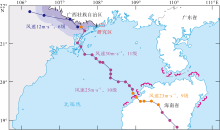
图1
研究区位置与台风路径 该图基于自然资源部标准地图服务网站下载的审图号为GS(2023)2762号的标准地图制作"
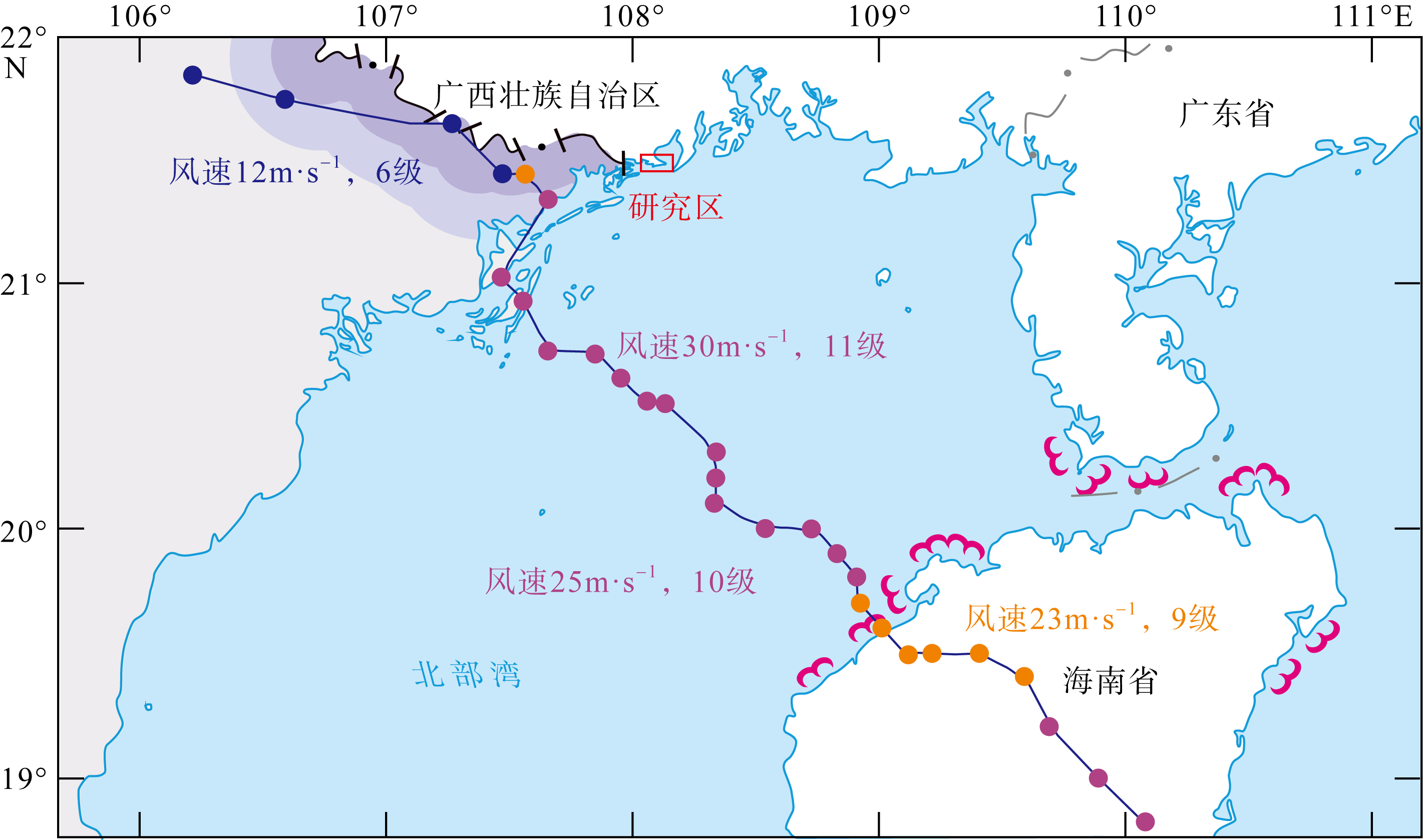
图1
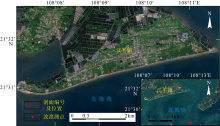
图2
测线布置与波浪测点位置"

图2
表1
沉积物取样点位与人工海堤的距离及所处的剖面分带位置"
| 剖面编号 | 剖面形态 | CT01距离/位置 | CT02距离/位置 | CT03距离/位置 | CT04距离/位置 | CT05距离/位置 |
|---|---|---|---|---|---|---|
| L1 | 沙丘型剖面 | 2.8m/ | 22.2m/ | 51.9m/ | 86.0m/ | 122.8m/ |
| 后滨 | 后滨 | 前滨上 | 前滨中 | 前滨下 | ||
| L2 | 平坦型剖面 | 8.7m/ | 20.1m/ | 49.2m/ | 73.3m/ | 96.8m/ |
| 后滨 | 后滨 | 前滨上 | 前滨中 | 前滨下 | ||
| L3 | 沙坝型剖面 | 10.7m/ | 24.2m/ | 42.2m/ | 85.8m/ | 108.4m/ |
| 后滨 | 前滨上 | 前滨上 | 前滨中 | 前滨下 |
表1
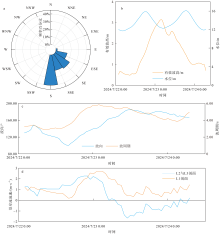
图3
2024年4号台风“派比安”过境前后波潮流变化过程图 a. 波向频率玫瑰图; b. 有效波高和水位变化曲线图; c. 波向及波周期变化图; d. 不同剖面沿岸流大小变化图(正值为由西向东, 负值为由东向西)"
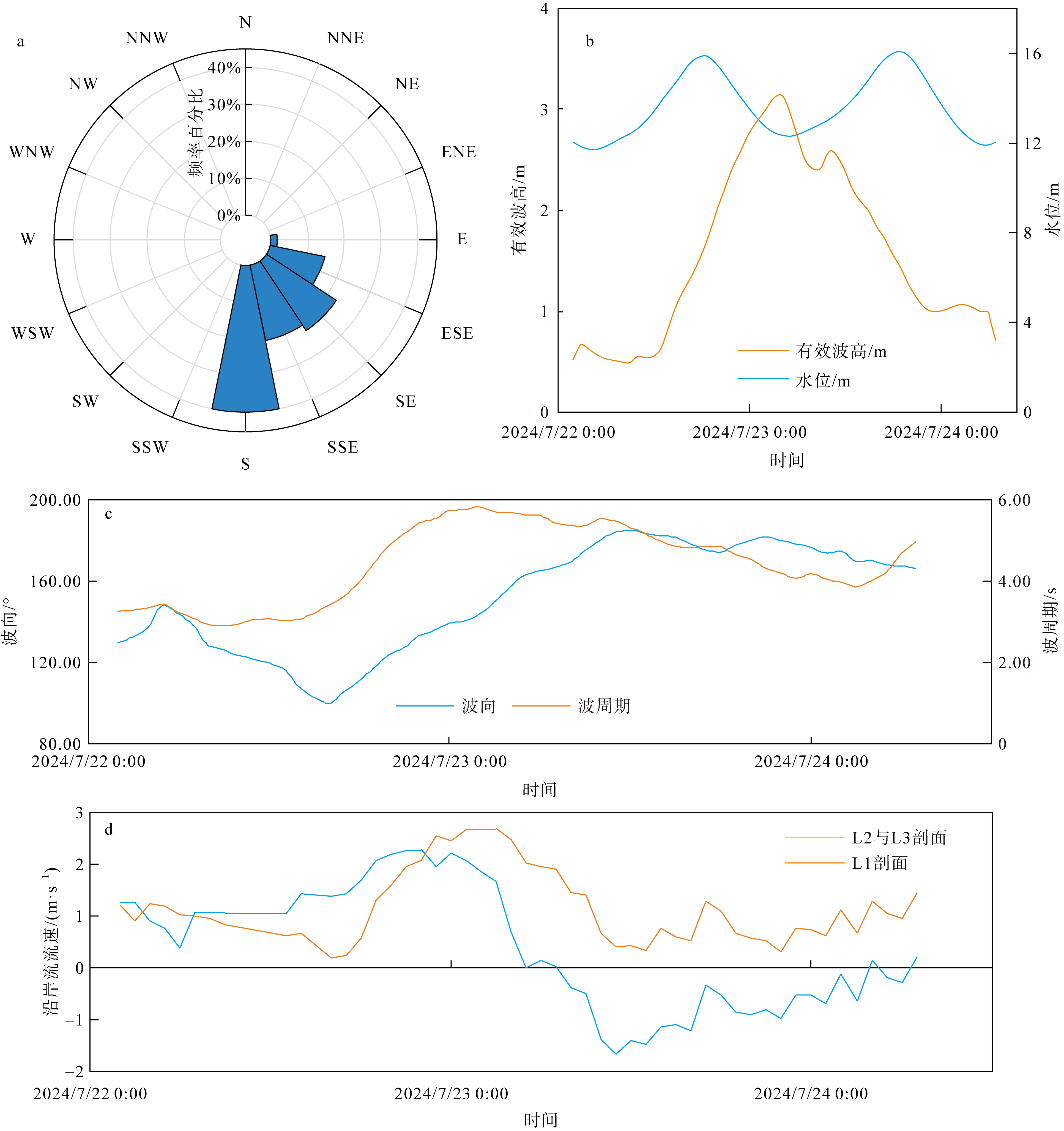
图3
表2
不同剖面地貌状态统计表"
| 剖面形态 | 台风前 | 台风后 | ||
|---|---|---|---|---|
| 破波尺度参数ε | 海滩地貌状态 | 破波尺度参数ε | 海滩地貌状态 | |
| 沙丘型剖面 | 219 | 耗散型 | 211 | 耗散型 |
| 平坦型剖面 | 324 | 耗散型 | 384 | 耗散型 |
| 沙坝型剖面 | 380 | 耗散型 | 400 | 耗散型 |
表2
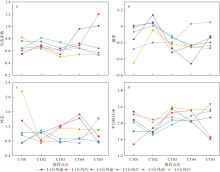
图4
台风前后剖面表层沉积物的粒度参数变化 a. 分选系数; b. 偏度; c. 峰态; d. 平均粒径"
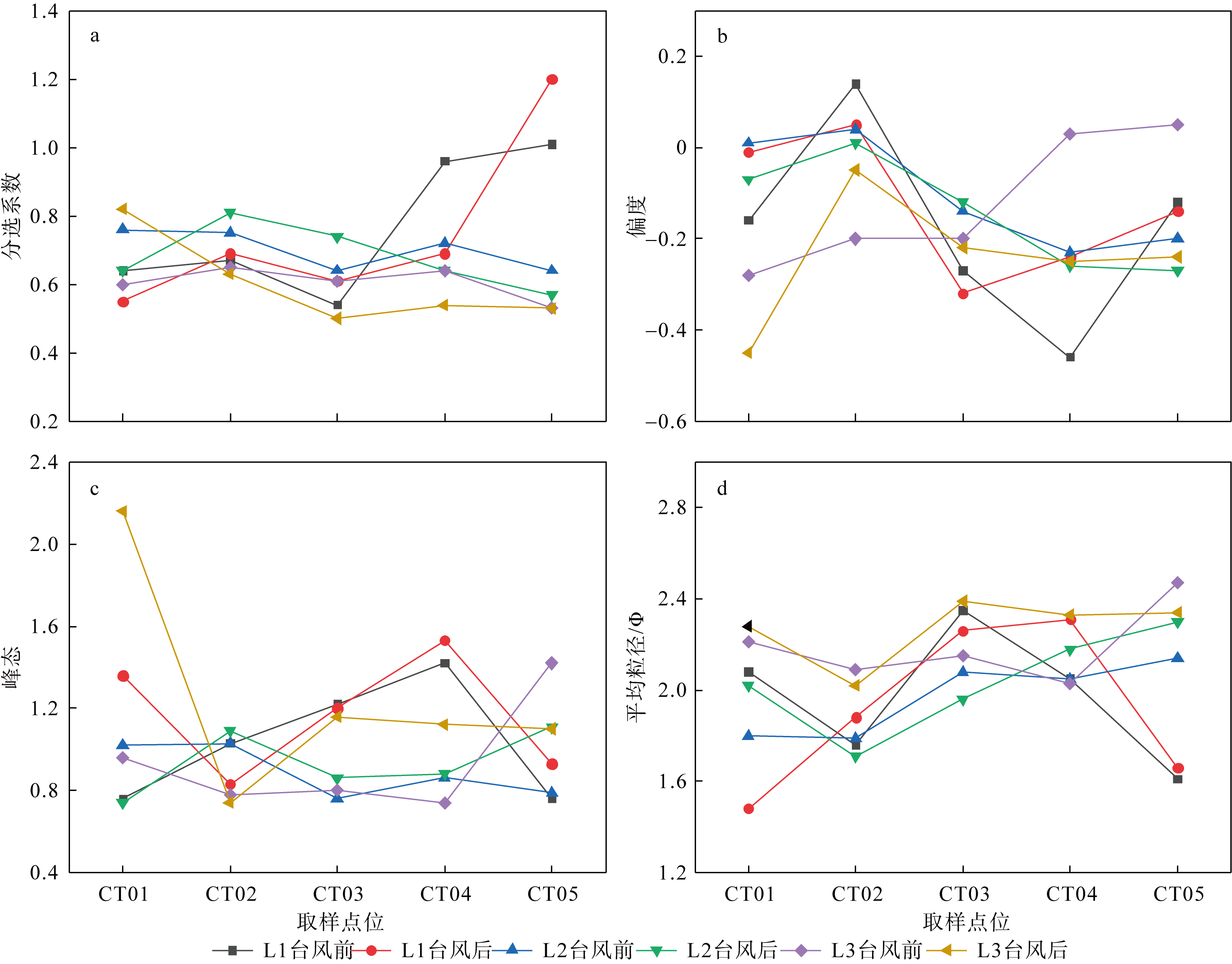
图4
图5
不同剖面台风前后沉积物组分变化 a. 沙丘型剖面; b. 平坦型剖面; c. 沙坝型剖面"
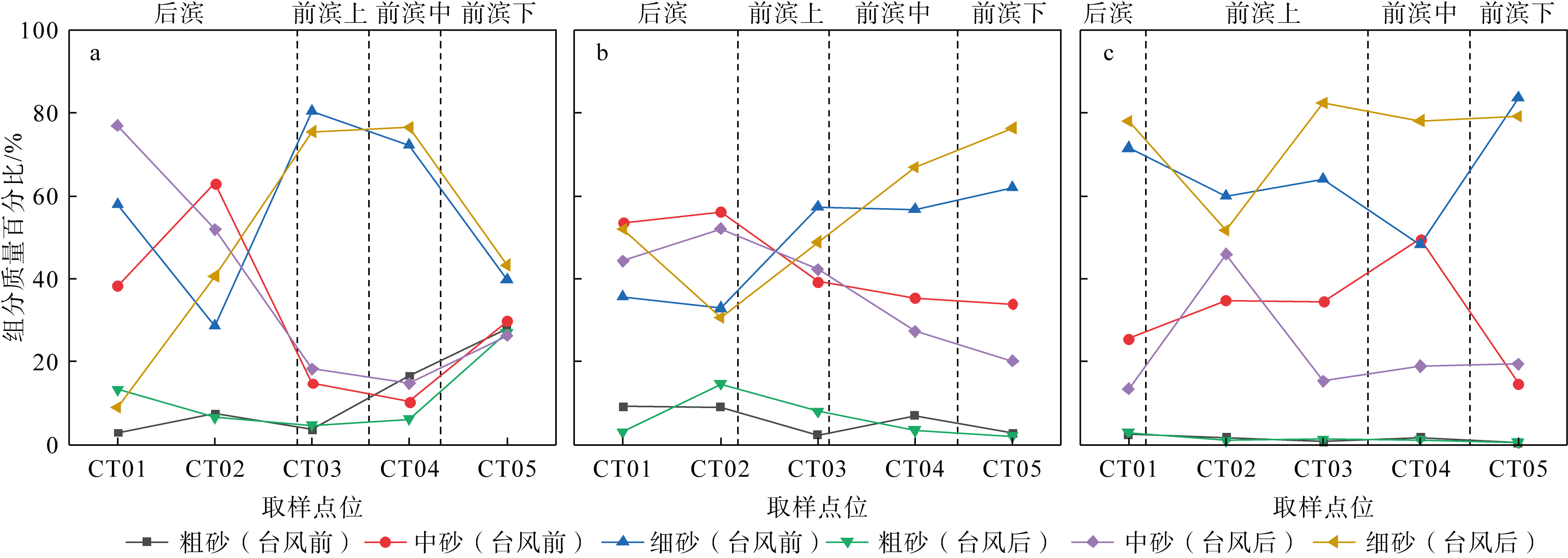
图5
图6
台风前后剖面的高程变化 a. 沙丘型剖面; b. 平坦型剖面; c. 沙坝型剖面; 图中红线和绿线分别代表台风前(2024年7月22日)和台风后(2024年7月24日)的高程变化, 圆圈为沉积物取样位置; 垂直虚线将剖面分成后滨、前滨上、前滨中、前滨下和内滨"
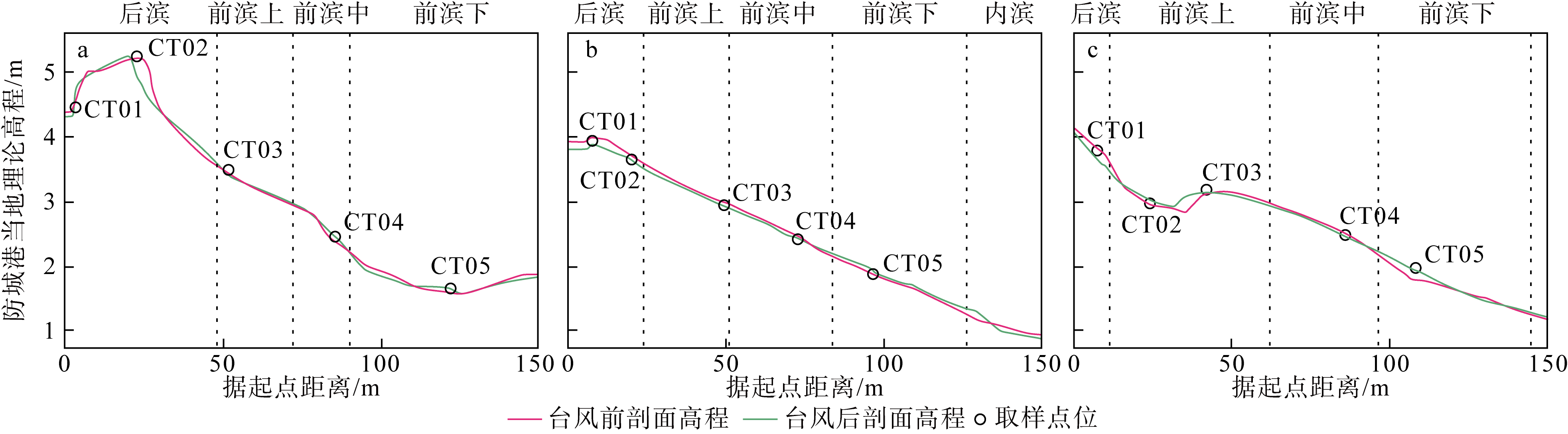
图6
表3
不同剖面不同位置高程和坡度变化统计表"
| 剖面形态 | 位置 | 单宽体积变化量S/m3 | 最大冲淤高度h1/cm | 平均冲淤高度h2/cm | 台风前坡度/% | 台风后坡度/% |
|---|---|---|---|---|---|---|
| 沙丘型剖面 | 后滨 | −0.65 | −48.55 | −1.35 | 7.09* | 6.19* |
| 前滨上 | 0.19 | 2.12 | 0.81 | 2.58 | 2.54 | |
| 前滨中 | 0.63 | 9.00 | 3.53 | 4.24 | 4.39 | |
| 前滨下 | −0.93 | 9.36 | −1.56 | 0.56 | 0.64 | |
| 整个剖面 | −0.75 | −0.50 | ||||
| 平坦型剖面 | 后滨 | -2.57 | -16.38 | −10.91 | 1.48 | 1.31 |
| 前滨上 | −1.46 | -11.22 | −5.39 | 2.37 | 2.28 | |
| 前滨中 | −0.95 | -7.52 | −2.91 | 2.50 | 2.21 | |
| 前滨下 | 1.83 | 7.34 | 4.28 | 2.20 | 2.05 | |
| 整个剖面 | -3.15 | −2.50 | ||||
| 沙坝型剖面 | 后滨 | −1.60 | −19.10 | −13.77 | 4.88 | 5.57 |
| 前滨上 | 1.15 | 28.00 | 2.27 | 1.27 | 0.98 | |
| 前滨中 | −0.61 | −3.65 | −1.78 | 2.94 | 2.23 | |
| 前滨下 | 1.99 | 17.90 | 4.13 | 1.55 | 2.02 | |
| 整个剖面 | 0.93 | 0.64 |
表3
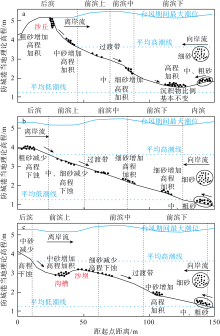
图7
不同剖面变化模式图 a. 沙丘型剖面; b. 平坦型剖面; c. 沙坝型剖面"
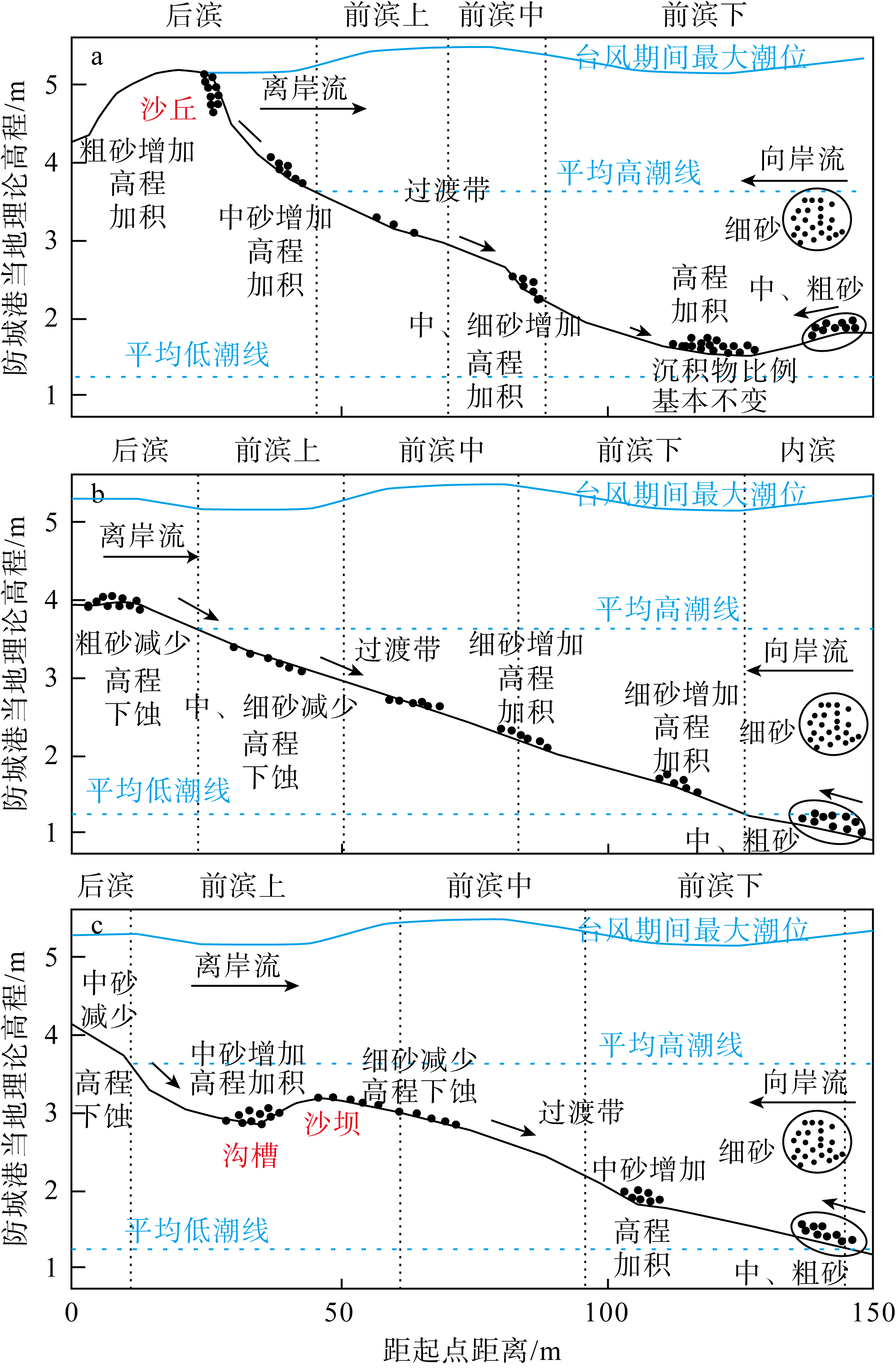
图7
图8
金滩剖面各分带区域内的沉积物累积概率曲线a、b分别为 L1-CT01台风前、后; c、d分别为 L1-CT02台风前、后; e、f分别为 L3-CT02台风前、后; g、h分别为 L3-CT03台风前、后; i、j分别为 L2-CT04台风前、后; k、l分别为 L3-CT04台风前、后; m、n分别为 L2-CT05台风前、后; o、p分别为 L3-CT05台风前、后"
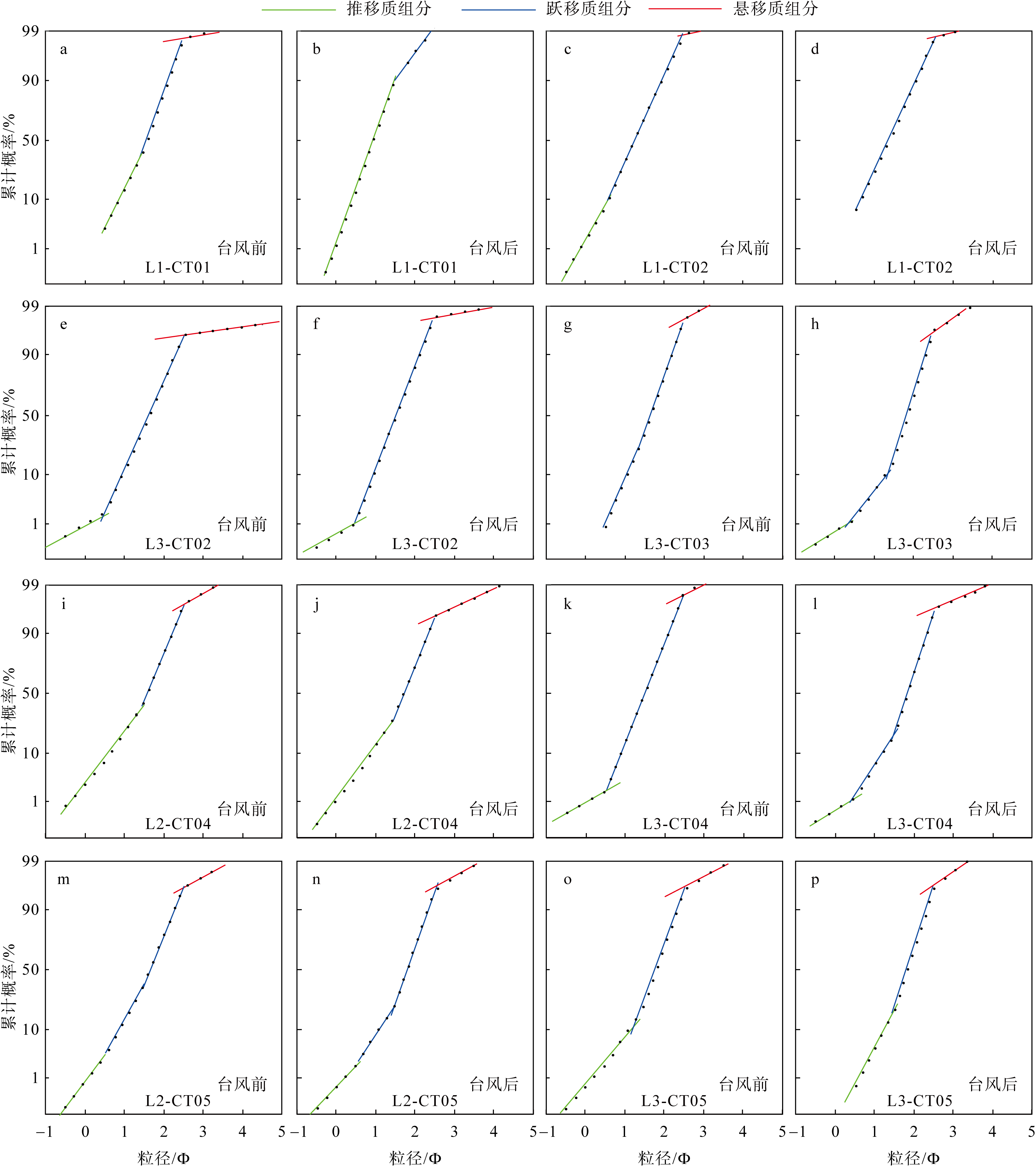
图8
| [1] |
陈海南, 杨丽中, 付玉成, 等, 2022. 台风 “巴威” 对威海楮岛沙滩的侵蚀研究[J]. 海洋湖沼通报, 44(4): 82-88.
|
|
|
|
| [2] |
蔡锋, 雷刚, 苏贤泽, 等, 2006. 台风"艾利"对福建沙质海滩影响过程研究[J]. 海洋工程, 24(1): 98-109.
|
|
|
|
| [3] |
蔡锋, 苏贤泽, 曹惠美, 等, 2005. 华南砂质海滩的动力地貌分析[J]. 海洋学报, 27(2): 106-114.
|
|
|
|
| [4] |
陈子燊, 1995. 弧形海岸海滩地貌对台风大浪的响应特征[J]. 科学通报, 40(23): 2168-2170 (in Chinese).
|
| [5] |
戴志军, 陈子燊, 李春初, 2001. 岬间海滩剖面短期变化的动力作用分析[J]. 海洋科学, 25(11): 38-41.
|
|
|
|
| [6] |
戴志军, 陈子燊, 欧素英, 2002. 粤东汕尾岬间海滩剖面月内日变化过程特征分析[J]. 热带海洋学报, 21(1): 27-32.
|
|
|
|
| [7] |
戴志军, 路海亭, 欧素英, 等, 2008. 海滩体积时空变化和波浪场的奇异谱分析[J]. 海洋学报, 30(3): 133-139.
|
|
|
|
| [8] |
龚昊, 陈沈良, 钟小菁, 等, 2017. 海南岛东北部海滩侵蚀与恢复对连续台风的复杂响应[J]. 海洋学报, 39(5): 68-77.
|
|
|
|
| [9] |
郭俊丽, 时连强, 陈沈良, 等, 2022. 台风季节朱家尖岛砂、砾质岬湾海滩的不同沉积地貌动态变化[J]. 热带海洋学报, 41(4): 82-96.
|
|
doi: 10.11978/2021091 |
|
| [10] |
黄祖明, 戴志军, 黎树式, 等, 2021. 中强潮海滩剖面冲淤过程研究--以北海银滩为例[J]. 海洋地质与第四纪地质, 41(4): 36-47.
|
|
|
|
| [11] |
雷刚, 蔡锋, 2005. 福建江田下沙沙滩沉积地貌组合对台风的响应模式[J]. 台湾海峡, 24(3): 395-403+419.
|
|
|
|
| [12] |
黎树式, 戴志军, 葛振鹏, 等, 2017. 强潮海滩响应威马逊台风作用动力沉积过程研究--以北海银滩为例[J]. 海洋工程, 35(3): 89-98.
|
|
|
|
| [13] |
黎奕宏, 雷刚, 蔡锋, 等, 2019. 我国硬式护岸、渔港工程和人工岛等3类典型海岸工程对相邻海滩的影响研究[J]. 应用海洋学学报, 38(1): 118-125.
|
|
|
|
| [14] |
李志龙, 陈子燊, 2006. 岬间砂质海岸平衡形态模型及其在华南海岸的应用[J]. 台湾海峡, 25(1): 123-129.
|
|
|
|
| [15] |
刘涛, 王增军, 张建兵, 2020. 广西北海银滩侵蚀动力研究[J]. 海洋学报, 42(7): 147-154.
|
|
|
|
| [16] |
罗时龙, 靳瑞芳, 于帆, 等, 2016. 海岸沙丘风暴侵蚀研究现状与展望[J]. 海洋地质前沿, 32(2): 1-7.
|
|
|
|
| [17] |
彭俊, 蔡锋, 雷刚, 2008. 0418号台风过境后近岸沉积物粒度特征参数的变化分析[J]. 海洋湖沼通报, (2): 37-45.
|
|
|
|
| [18] |
邵超, 戚洪帅, 蔡锋, 等, 2016. 海滩-珊瑚礁系统风暴响应特征研究: 以1409号台风“威马逊”对清澜港海岸影响为例[J]. 海洋学报, 38(2): 121-130.
|
|
|
|
| [19] |
束芳芳, 蔡锋, 戚洪帅, 等, 2019. 不同沉积物养护海滩对台风响应的差异性研究[J]. 海洋学报, 41(7): 103-115.
|
|
|
|
| [20] |
王爱军, 叶翔, 陈坚, 2009. 台风作用下的港湾型潮滩沉积过程以2008年“凤凰”台风对福建省罗源湾的影响为例[J]. 海洋学报, 31(6): 77-86.
|
|
|
|
| [21] |
王立杨, 付玉成, 杨丽中, 等, 2021. 台风“利奇马”对威海楮岛海滩演化过程的影响[J]. 海洋科学进展, 39(4): 608-617.
|
|
|
|
| [22] |
王永红, 黄伊恒, 2024. 全球海滩重金属污染的研究进展[J]. 中国海洋大学学报(自然科学版), 54(10): 51-65.
|
|
|
|
| [23] |
喜扬洋, 王日明, 冯炳斌, 等, 2022. 北海银滩响应台风作用的动力地貌过程[J]. 热带海洋学报, 41(4): 97-104.
doi: 10.11978/2021097 |
|
doi: 10.11978/2021097 |
|
| [24] |
杨林, 董玉祥, 黄德全, 等, 2017. 海岸沙席形态及近表层沉积物粒度对台风的响应[J]. 地理科学, 37(8): 1243-1250.
doi: 10.13249/j.cnki.sgs.2017.08.015 |
|
doi: 10.13249/j.cnki.sgs.2017.08.015 |
|
| [25] |
张雪琴, 董玉祥, 杨林, 等, 2016. 海岸沙丘近表层粒度对台风的响应[J]. 中国沙漠, 36(6): 1519-1526.
doi: 10.7522/j.issn.1000-694X.2016.00072 |
|
doi: 10.7522/j.issn.1000-694X.2016.00072 |
|
| [26] |
朱士兵, 李志强, 张会领, 等, 2020. 基于地貌动力学的雷州半岛海滩状态分类研究[J]. 地理研究, 39(6): 1269-1282.
doi: 10.11821/dlyj020190444 |
|
|
|
| [27] |
中华人民共和国国家质量监督检验检疫总局, 中国国家标准化管理委员会, 2007. GB/T12763.8-2007海洋调查规范第8部分: 海洋地质地球物理调查[S]. 北京: 中国标准出版社.
|
|
General Administration of Quality Supervision, Inspection and Quarantine of the People's Republic of China, Standardization Administration of the People's Republic of China, 2007. Specifications for oceanographic survey - Part 8: marine geology and geophysics survey (GB/T12763.8-2007)[S]. Beijing: Standards Press of China (in Chinese).
|
|
| [28] |
doi: 10.1061/(ASCE)NH.1527-6996.0000593 |
| [29] |
doi: 10.1016/j.ecss.2004.04.004 |
| [30] |
|
| [31] |
doi: 10.1306/74D70646-2B21-11D7-8648000102C1865D |
| [32] |
doi: 10.1016/j.margeo.2017.08.008 |
| [33] |
doi: 10.1029/JC080i021p02997 |
| [34] |
|
| [35] |
|
| [36] |
|
| [37] |
doi: 10.1038/s41598-018-24630-6 pmid: 29703960 |
| [38] |
doi: 10.1016/j.csr.2019.104006 |
| [39] |
doi: 10.1002/esp.5036 |
| [40] |
doi: 10.1016/j.margeo.2010.06.005 |
| [41] |
|
| [42] |
doi: 10.1306/D4269774-2B26-11D7-8648000102C1865D |
| [43] |
|
| [44] |
doi: 10.1016/0025-3227(84)90008-2 |
| [45] |
doi: 10.1016/j.coastaleng.2008.11.004 |
| [1] | 王泽宇, 鲁栋梁, 周姣娣, 金竹灵, 陆金凤, 李晨阳. 茅尾海沉积物生源要素分布特征及污染评价*[J]. 热带海洋学报, 2026, 45(4): 140-152. |
| [2] | 杜恕环, 向荣, 苏翔, 张兰兰, 潘子锐, 谢金沃, 罗传秀, 万随. 东北印度洋90°E海岭表层沉积物碳酸钙组成与影响因子*[J]. 热带海洋学报, 2026, 45(1): 73-80. |
| [3] | 钟福昌, 向荣, 杨艺萍, 毛华斌. 东北印度洋海岭区表层沉积物底栖有孔虫分布特征及其影响因素初探*[J]. 热带海洋学报, 2026, 45(1): 81-90. |
| [4] | 喜扬洋, 王日明, 冯炳斌, 陈波. 北海银滩响应台风作用的动力地貌过程[J]. 热带海洋学报, 2022, 41(4): 97-104. |
| [5] | 丛新, 匡翠萍, 武云龙, 夏子龙. 侵蚀浪条件下沉水植被对沙坝-潟湖海岸的冲淤影响研究[J]. 热带海洋学报, 2022, 41(4): 31-37. |
| [6] | 赵峰, 吴梅桂, 周鹏, 李冬梅, 赵力, 郑远来, 蔡伟叙, 方宏达, 黄楚光. 黄茅海—广海湾及其邻近海域表层沉积物中γ放射性核素含量水平[J]. 热带海洋学报, 2015, 34(4): 77-82. |
| [7] | 李亮, 陈忠, 刘建国, 陈翰, 颜文, 仲义. 南海北部表层沉积物类型及沉积环境区划*[J]. 热带海洋学报, 2014, 33(1): 54-61. |
| [8] | 张小华,钟立峰,苗莉,黄蔚霞,颜文. 粤东典型海湾表层沉积物Cd的分布及其潜在生态危害评价*[J]. 热带海洋学报, 2013, 32(2): 118-127. |
| [9] | 张才学, 林宏升, 孙省利. 广东省典型海湾表层沉积有机质的来源和分布[J]. 热带海洋学报, 2012, 31(6): 62-68. |
| [10] | 李涛,向荣,李团结. 珠江口外表层沉积物底栖有孔虫组合及其与环境的关系[J]. 热带海洋学报, 2011, 30(4): 51-57. |
| [11] | 周鹏,李冬梅,刘广山,门武,纪利红. 南海东北部和南部海域表层沉积物生物硅研究[J]. 热带海洋学报, 2010, 29(4): 40-47. |
| [12] | 乔永民,顾继光,杨扬,黄长江. 南澳岛海域表层沉积物重金属分布、富集与污染评价[J]. 热带海洋学报, 2010, 29(1): 77-84. |
| [13] | ,赵美训,赵晓晨,陈建芳,邢磊,SARNTHEIN M,陆红峰,. 南海表层沉积物生物标志物的分布特征及古生产力重建意义[J]. 热带海洋学报, 2009, 28(3): 45-53. |
|
||