

Journal of Tropical Oceanography ›› 2026, Vol. 45 ›› Issue (3): 50-60.doi: 10.11978/2025140CSTR: 32234.14.2025140
Previous Articles Next Articles
Analysis of hydrodynamic environment evolution characteristics in Zhanjiang Bay based on satellite images
GUAN Zhuoqiang1,2( ), YANG Tao3, XIE Lingling1,4, LI Junyi1,2()
- 1
Laboratory of Coastal Ocean Variation and Disaster Prediction (Guangdong Ocean University)
2Key Laboratory of Space Ocean Remote Sensing and Application (National Satellite Ocean Application Service)
392682 Military
4Resource and Environment in Continental Shelf Sea and Deep Sea (Guangdong Ocean University)
-
Received:2025-08-20Revised:2025-11-01Online:2026-05-10Published:2026-05-28 -
Contact:LI Junyi. email: junyiocean@outlook.com -
Supported by:National Natural Science Foundation of China(42276019); National Natural Science Foundation of China(42476027); Guangdong Basic and Applied Basic Research Foundation(2024A1515012572); Guangdong Basic and Applied Basic Research Foundation(2025A1515010741); Innovation Team Plan for Universities in Guangdong Province(2023KCXTD015); Guangdong Provincial Observation and Research Station for Tropical Ocean Environment in Western Coastal Waters(2024B1212040008)

CLC Number:
- P731.2
Cite this article
GUAN Zhuoqiang, YANG Tao, XIE Lingling, LI Junyi. Analysis of hydrodynamic environment evolution characteristics in Zhanjiang Bay based on satellite images[J].Journal of Tropical Oceanography, 2026, 45(3): 50-60.
share this article
Add to citation manager EndNote|Reference Manager|ProCite|BibTeX|RefWorks
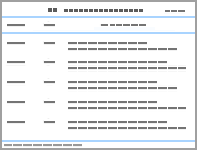
Tab. 1
Image information for Landsat satellite used in the calculation"
| 成像时间 | 潮位/m | 成像时间 | 潮位/m | 成像时间 | 潮位/m | 成像时间 | 潮位/m | 成像时间 | 潮位/m |
|---|---|---|---|---|---|---|---|---|---|
| 1986/7/28 | 2.48 | 1992/7/12 | 4.24 | 1998/4/24 | 4.17 | 2007/1/27 | 2.61 | 2016/12/5 | 2.81 |
| 1987/2/5 | 2.54 | 1992/8/29 | 4.93 | 1998/5/26 | 5.10 | 2007/4/1 | 4.22 | 2017/1/22 | 2.85 |
| 1987/4/10 | 3.69 | 1992/9/14 | 4.03 | 1998/10/17 | 4.30 | 2007/7/6 | 3.06 | 2017/12/8 | 2.37 |
| 1987/6/29 | 4.17 | 1992/9/30 | 2.96 | 1999/11/21 | 4.34 | 2008/3/2 | 3.16 | 2018/6/18 | 3.68 |
| 1987/7/15 | 3.29 | 1992/10/16 | 2.91 | 1999/12/23 | 3.72 | 2008/11/13 | 4.32 | 2019/9/25 | 3.47 |
| 1987/12/6 | 3.24 | 1993/2/5 | 3.76 | 2000/11/7 | 3.43 | 2009/8/28 | 2.59 | 2019/10/11 | 4.42 |
| 1987/12/22 | 2.85 | 1993/5/28 | 2.78 | 2001/2/11 | 2.72 | 2009/10/15 | 3.88 | 2019/11/28 | 3.68 |
| 1988/6/15 | 4.80 | 1993/9/1 | 4.76 | 2001/11/26 | 3.38 | 2009/10/31 | 4.10 | 2020/5/6 | 4.63 |
| 1988/7/17 | 4.02 | 1993/12/6 | 3.42 | 2002/5/21 | 2.89 | 2010/11/19 | 3.86 | 2020/6/23 | 4.79 |
| 1988/11/6 | 4.01 | 1994/1/23 | 3.05 | 2002/9/10 | 3.79 | 2010/12/5 | 3.95 | 2021/1/1 | 3.07 |
| 1988/11/22 | 4.27 | 1995/7/5 | 2.44 | 2002/10/12 | 2.51 | 2011/11/6 | 3.47 | 2021/12/3 | 4.21 |
| 1988/12/8 | 3.71 | 1995/9/23 | 4.81 | 2003/3/5 | 3.32 | 2013/4/5 | 3.00 | 2022/9/9 | 5.15 |
| 1989/2/26 | 3.25 | 1995/10/25 | 4.00 | 2003/6/25 | 3.20 | 2013/10/26 | 2.89 | 2022/10/11 | 4.69 |
| 1989/7/4 | 4.87 | 1995/11/26 | 2.47 | 2003/12/2 | 2.72 | 2014/10/13 | 2.89 | 2022/12/14 | 2.63 |
| 1989/8/5 | 3.78 | 1995/12/12 | 2.64 | 2004/10/17 | 3.40 | 2014/11/14 | 2.79 | 2022/12/22 | 3.83 |
| 1989/11/25 | 3.75 | 1996/3/17 | 4.06 | 2004/11/2 | 2.86 | 2015/1/1 | 2.97 | 2022/12/30 | 2.28 |
| 1990/1/12 | 2.96 | 1996/5/20 | 4.07 | 2004/12/4 | 2.60 | 2015/1/17 | 3.20 | 2023/5/31 | 3.23 |
| 1991/5/23 | 2.90 | 1996/10/11 | 4.65 | 2005/1/21 | 3.09 | 2015/2/2 | 3.77 | 2023/10/14 | 4.72 |
| 1991/9/12 | 3.23 | 1996/10/27 | 4.39 | 2005/10/20 | 3.50 | 2015/6/26 | 2.63 | 2023/11/7 | 3.08 |
| 1991/10/30 | 2.50 | 1996/11/12 | 3.90 | 2006/1/24 | 2.76 | 2015/9/30 | 4.37 | 2023/11/15 | 3.66 |
| 1991/11/15 | 2.78 | 1997/3/4 | 3.00 | 2006/10/23 | 4.21 | 2015/10/16 | 3.79 | 2023/11/23 | 3.07 |
| 1992/1/18 | 3.65 | 1997/6/8 | 4.08 | 2006/12/10 | 2.39 | 2016/11/3 | 3.54 | 2024/2/11 | 3.50 |
Tab. 1
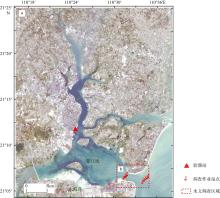
Fig. 1
Map of Zhanjiang Bay (a) and the study area (b)"

Fig. 1
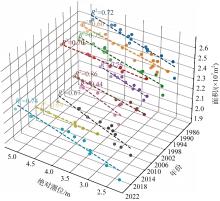
Fig. 2
Relationship between tidal level and water surface area, with 4-year averaging periods (except for the last period). The fitted lines (from innermost to outermost) represent the following time intervals: 1986-1989, 1990-1993, 1994-1997, 1998-2001, 2002-2005, 2006-2009, 2010-2013, 2014-2017, 2018-2021, and 2022-2024"
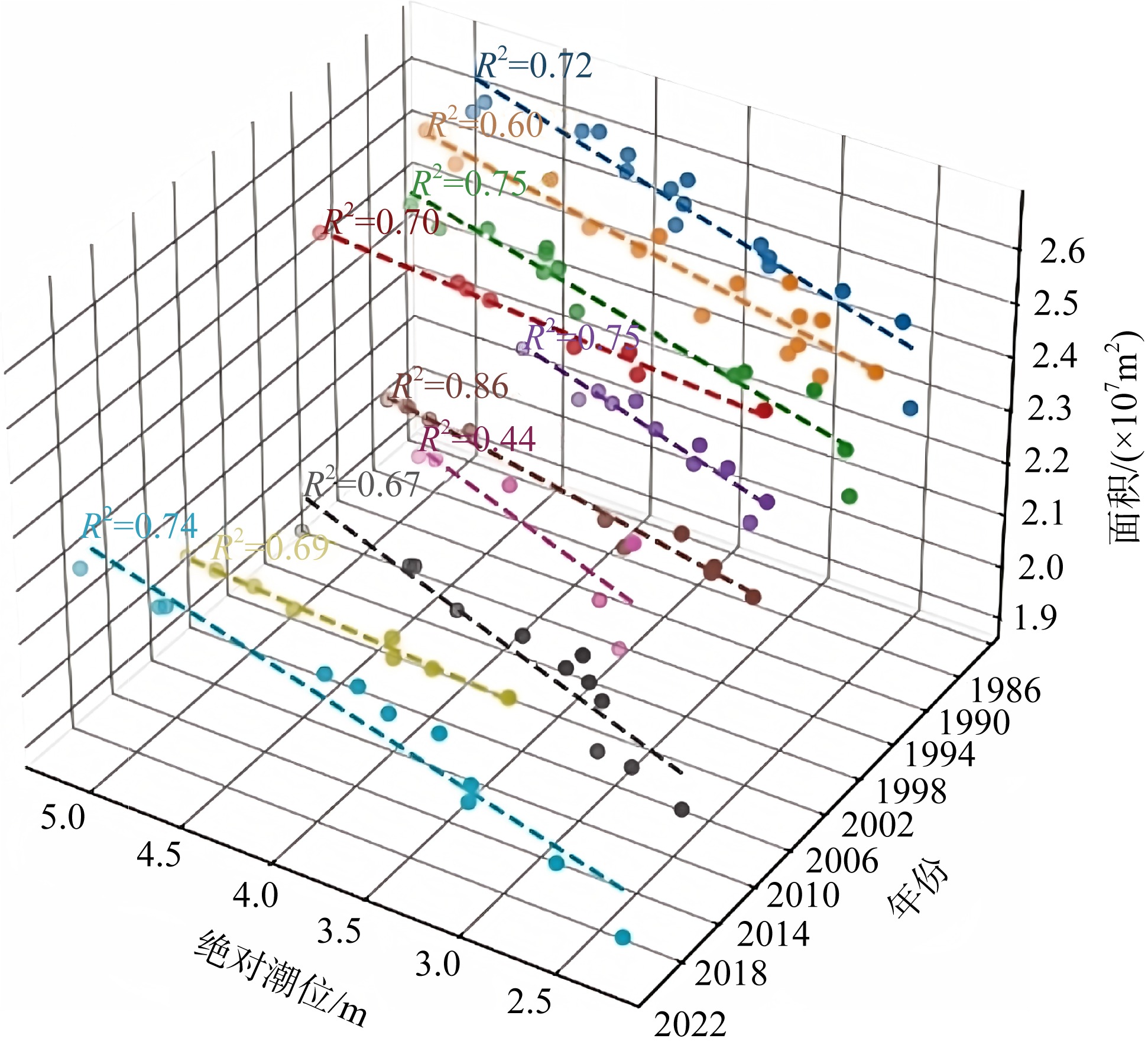
Fig. 2
Fig. 3
Average high/low tide water areas and area difference, with 4-year averaging periods. The blue axis on the left corresponds to the scatter-line plot, representing the mean high- and low-tide water areas, while the right axis corresponds to the bar chart, indicating the differences in bay area"
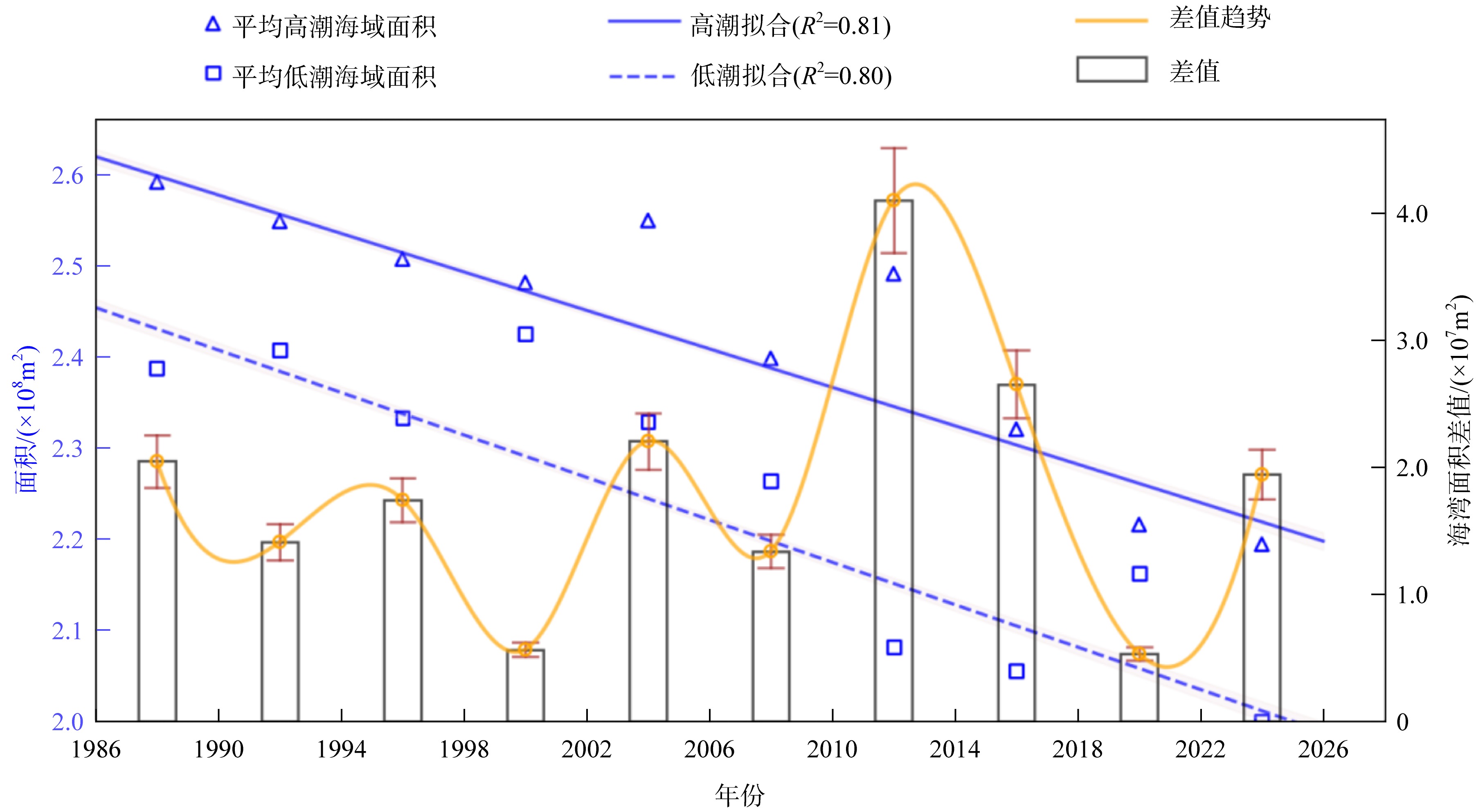
Fig. 3
Fig. 4
Spatiotemporal distribution of intertidal zones, with 4-year averaging periods (except for the last period)"
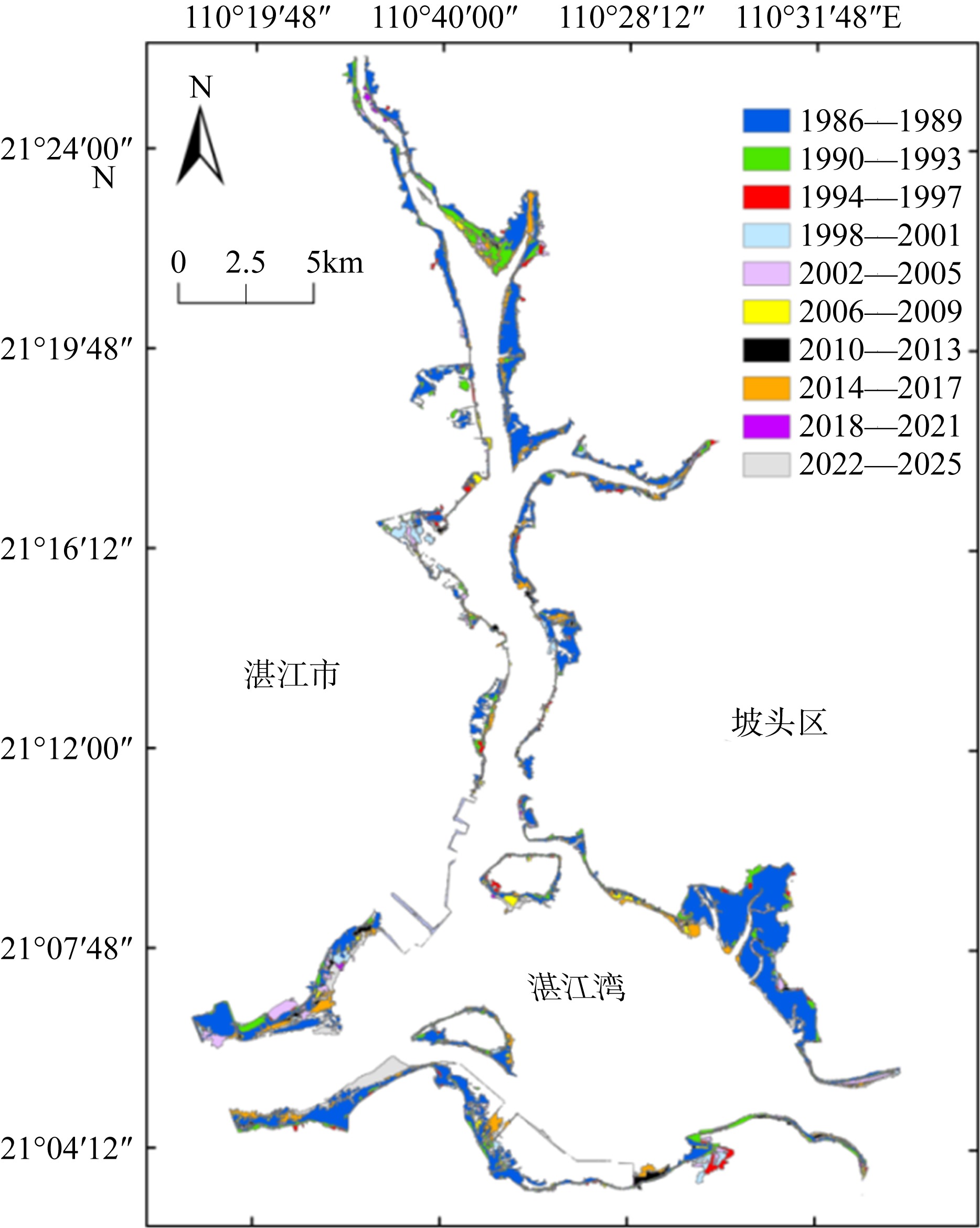
Fig. 4
Fig. 5
Tidal prism and its variation, with 4-year averaging periods. Red arrows indicate a decrease in the rate of change, while blue arrows indicate an increase in the rate of change"
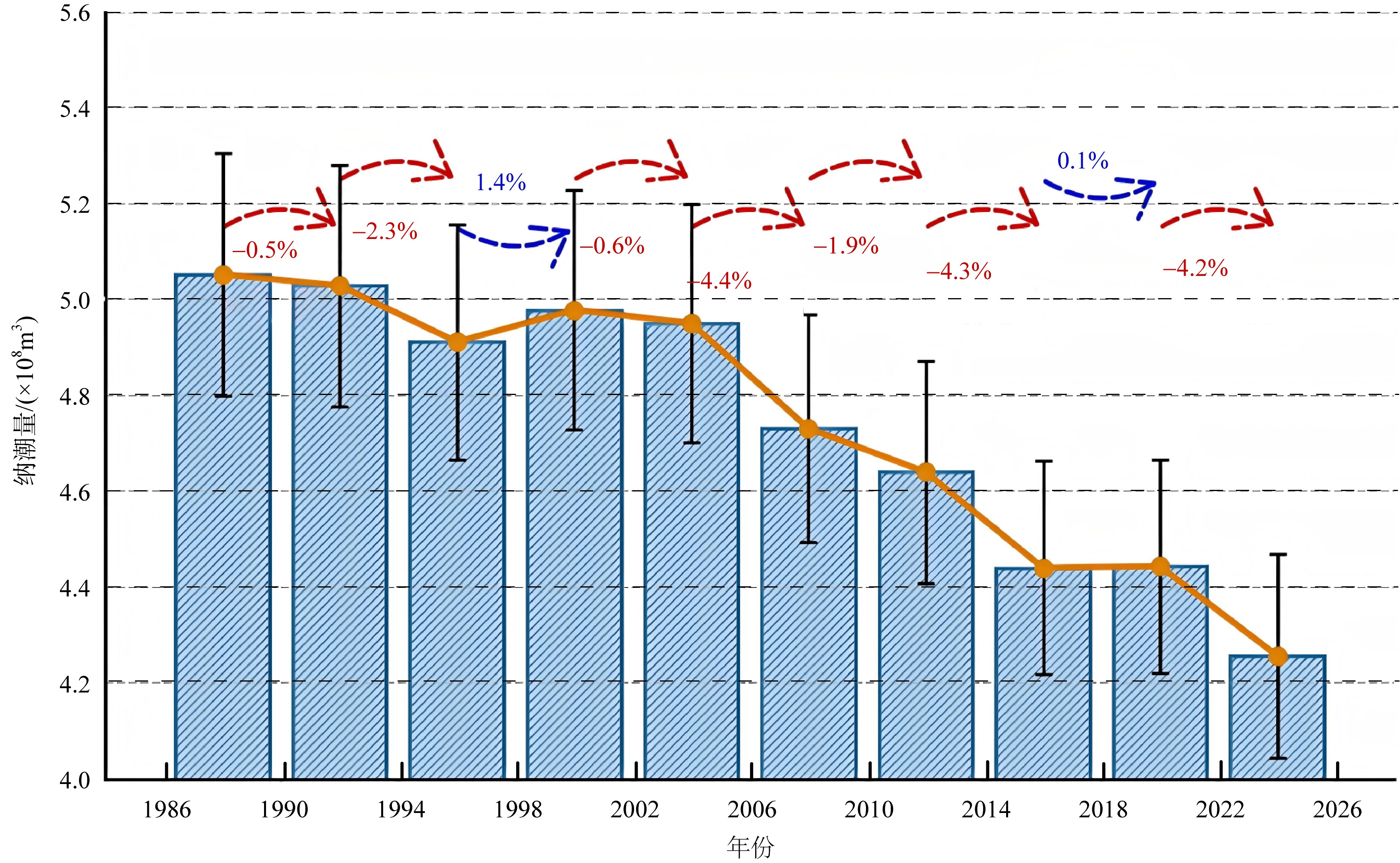
Fig. 5
Fig. 6
Variation of tidal inundation rate and cumulative rate in Zhanjiang Bay. The blue line represents the tidal inundation rate, and the brown line represents the cumulative rate, where the cumulative rate = 1 − tidal inundation rate"
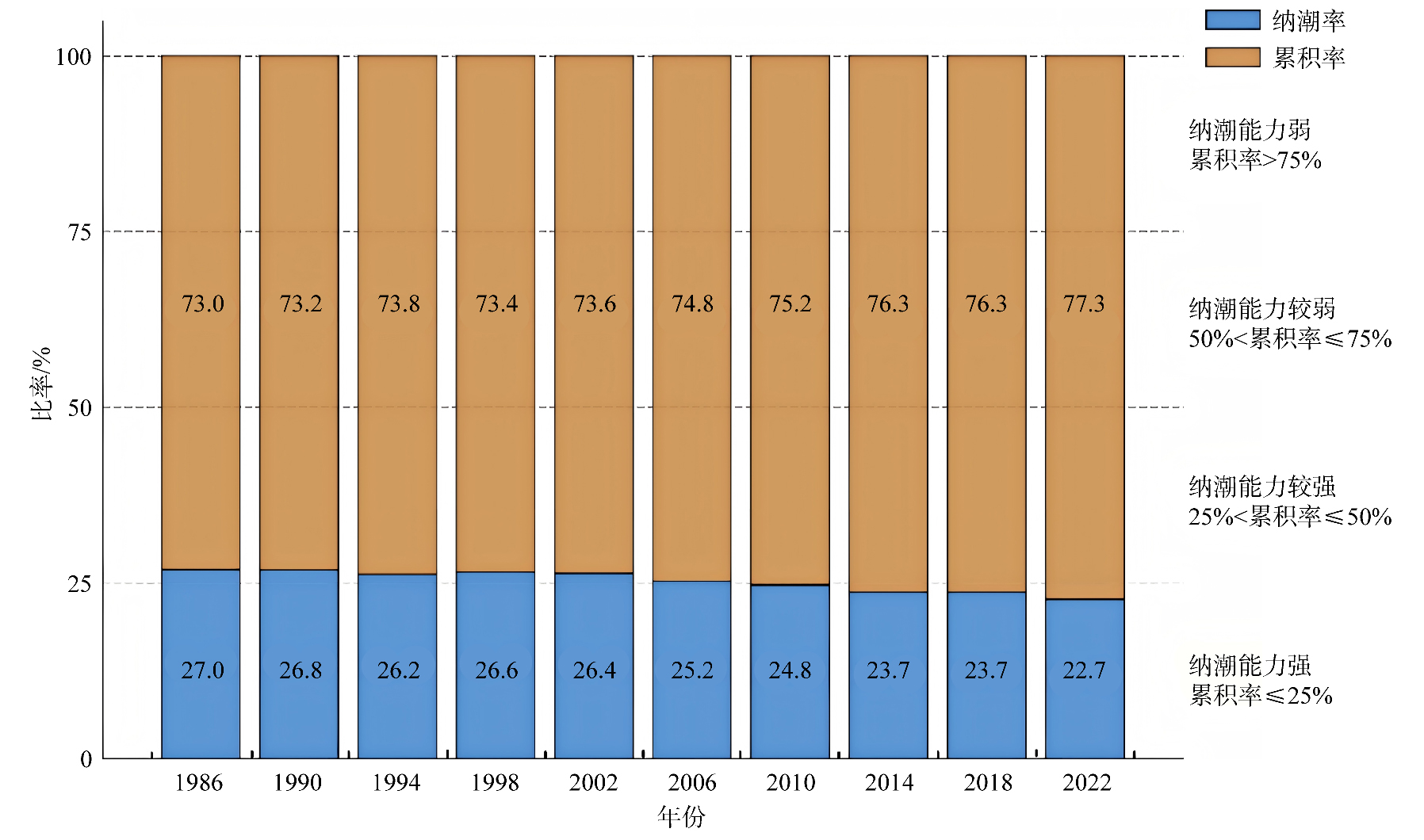
Fig. 6
Fig. 7
Half-exchange period of seawater in Zhanjiang Bay, with 4-year averaging periods. The red line represents the fitted curve, the shaded area indicates the 95% confidence interval, and the yellow line denotes the error curve"
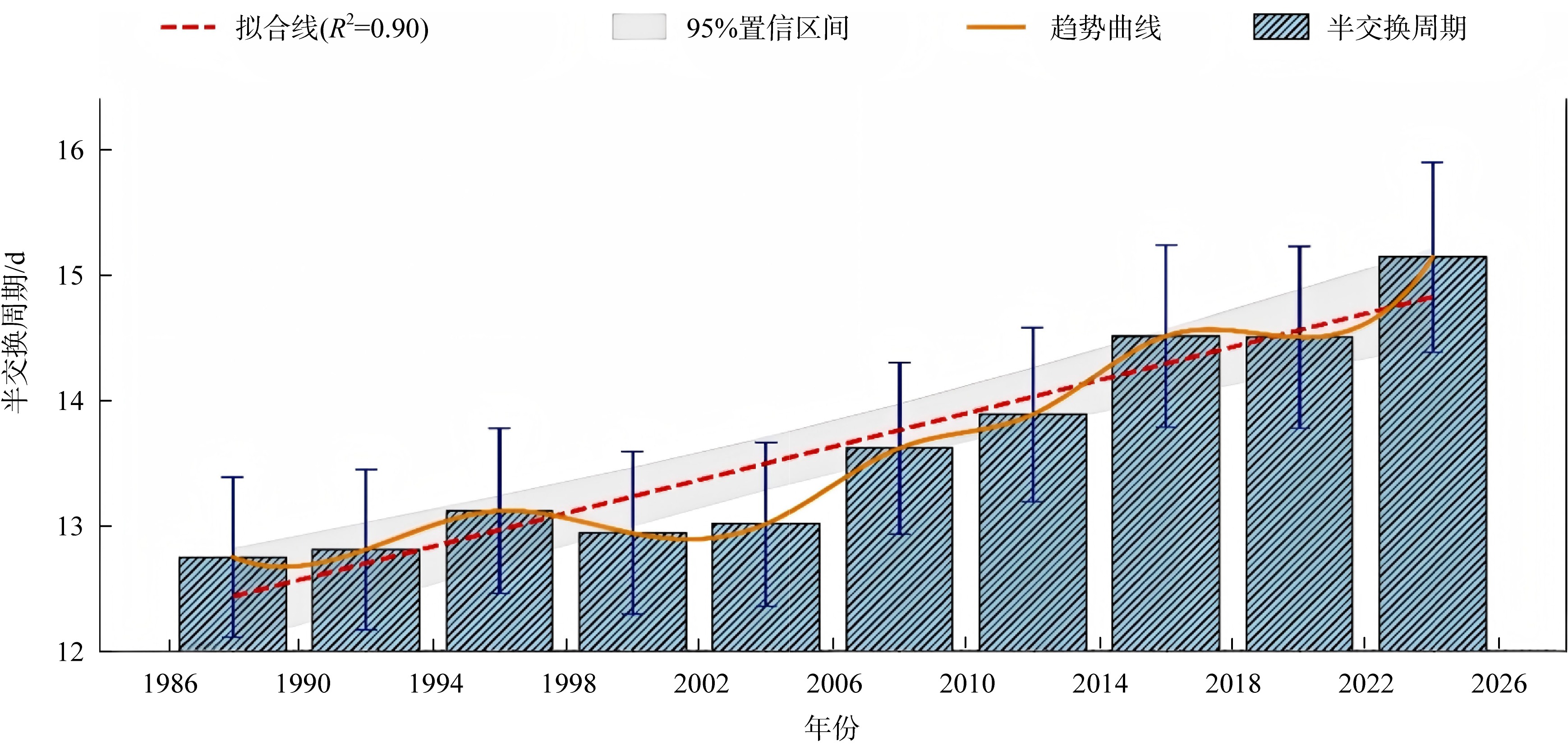
Fig. 7
| [1] |
陈达森, 严金辉, 2006. 湛江湾海区流场特征及其对水环境的影响[J]. 科学技术与工程, 6(14): 2100-2103.
|
|
|
|
| [2] |
丁一, 王翠, 姜尚, 等, 2024. 罗源湾潮致余流特征及其对物质分布的影响[J]. 热带海洋学报, 43(1): 28-39.
|
|
|
|
| [3] |
龚文平, 陈明和, 温晓骥, 等, 2004. 海南陵水新村港潮汐汊道演变及其稳定性分析[J]. 热带海洋学报, 23(4): 25-32.
|
|
|
|
| [4] |
贺松林, 丁平兴, 孔亚珍, 等, 1997. 湛江湾沿岸工程冲淤影响的预测分析Ⅰ. 动力地貌分析[J]. 海洋学报, 19(1): 55-63 (in Chinese).
|
| [5] |
胡建宇, 1998. 罗源湾海水与外海水的交换研究[J]. 海洋环境科学, 17(3): 51-54.
|
|
|
|
| [6] |
李君益, 纪育强, 郑全安, 等, 2012. 利用海图数据与卫星影像计算海湾纳潮量——以胶州湾为例[J]. 海洋科学进展, 30(2): 205-211.
|
|
|
|
| [7] |
李希彬, 孙晓燕, 牛福新, 等, 2012. 半封闭海湾的水交换数值模拟研究[J]. 海洋通报, 31(3): 248-254.
|
|
|
|
| [8] |
林迪洋, 2005. 湛江湾填海工程的水动力条件影响及泥沙冲淤预测[D]. 青岛: 中国海洋大学.
|
|
|
|
| [9] |
国家市场监督管理总局, 国家标准化管理委员会, 2023. 海湾水交换能力评价技术规程GB/T42417—2023[S]. 北京: 中国标准出版社.
|
|
State Administration for Market Regulation, Standardization Administration of the People’s Republic of China, 2023. Code of practice for assessment of water exchange capacity in seabay:GB/T42417—2023[S]. Beijing: Standards Press of China. (in Chinese)
|
|
| [10] |
邱家福, 刘佳鑫, 段晓伟, 等, 2025. 大鹏湾海域海漂垃圾迁移路径研究[J/OL]. 热带海洋学报. (2025-07-28)[2025-08-19]. https://link.cnki.net/urlid/44.1500.P.20250725.1131.002.
|
|
|
|
| [11] |
石泳昊, 贾良文, 张恒, 2020. 湛江湾水体滞留时间及影响因子分析[J]. 环境科学与技术, 43(11): 17-24.
|
|
|
|
| [12] |
孙琰, 2022. 围填海对湛江湾水动力及环境容量影响数值模拟研究[D]. 湛江: 广东海洋大学.
|
|
|
|
| [13] |
王诚超, 潘国富, 许雪峰, 等, 2017. 乐清湾水域纳潮量演变分析[J]. 海洋科学, 41(8): 76-85.
|
|
|
|
| [14] |
王文介, 1984. 华南沿海潮汐通道类型特征的初步探究[G]// 中国科学院南海海洋研究所. 南海海洋科学集刊, 第五集. 北京: 科学出版社:19-30.
|
|
|
|
| [15] |
吴隆业, 吴永森, 孙玉星, 1997. 海口湾遥感研究1. 纳潮量及其变化[J]. 海洋学报, 19(6): 56-59 (in Chinese).
|
| [16] |
夏华永, 林迪洋, 钮智旺, 2006. 湛江湾填海工程对水动力条件的影响预测[J]. 海洋通报, 25(6): 47-54.
|
|
|
|
| [17] |
叶小敏, 王其茂, 丁静, 等, 2011. 渤海海湾纳潮量现状卫星遥感调查与分析[J]. 海洋测绘, 31(6): 48-51.
|
|
|
|
| [18] |
关焯强, 李君益, 谢玲玲, 等, 2024. 1973—2023年湛江湾海岸线变迁分析[J]. 热带地理, 44(11): 2025-2038.
doi: 10.13284/j.cnki.rddl.20230865 |
|
doi: 10.13284/j.cnki.rddl.20230865 |
|
| [19] |
曾毅港, 经志友, 黄小龙, 等, 2022. 夏季南海北部粤东陆架锋面的动力特征分析[J]. 热带海洋学报, 41(4): 136-145.
doi: 10.11978/2021172 |
|
doi: 10.11978/2021172 |
|
| [20] |
张乔民, 宋朝景, 赵焕庭, 1985. 湛江湾溺谷型潮汐水道的发育[J]. 热带海洋, 4(1): 48-57.
|
|
|
|
| [21] |
张志飞, 诸裕良, 何杰, 2016. 多年围填海工程对湛江湾水动力环境的影响[J]. 水利水运工程学报(3): 96-104.
|
|
|
|
| [22] |
郑金海, 彭畅, 陈可锋, 等, 2012. 潮汐汊道稳定性研究综述[J]. 水利水电科技进展, 32(3): 67-74.
|
|
|
|
| [23] |
郑全安, 吴隆业, 戴懋瑛, 等, 1992. 胶州湾遥感研究Ⅱ. 动力参数计算[J]. 海洋与湖沼, 23(1): 1-6.
|
|
|
|
| [24] |
|
| [25] |
doi: 10.1016/j.marpolbul.2025.118444 |
| [26] |
|
| [27] |
doi: 10.1175/JTECH-D-16-0239.1 |
| [28] |
|
| [29] |
doi: 10.1080/01431169608948714 |
| [30] |
doi: 10.1007/s10236-024-01598-8 |
| [31] |
doi: 10.3390/jmse12111983 |
| [32] |
doi: 10.1029/2018JC014146 |
| [33] |
doi: 10.1016/j.marenvres.2025.107340 |
| [34] |
doi: 10.3390/app142411955 |
| [35] |
doi: 10.3390/jmse13071202 |
| [1] | QIU Cheng, ZHU Yiping, ZHU Jianrong. Changes and causes of saltwater intrusion patterns in the Changjiang Estuary [J]. Journal of Tropical Oceanography, 2026, 45(2): 42-58. |
|
||