

Journal of Tropical Oceanography ›› 2026, Vol. 45 ›› Issue (4): 190-202.doi: 10.11978/2025202CSTR: 32234.14.2025202
Previous Articles Next Articles
The distribution characteristics, compositions and sources of dissolved organic matter (DOM) in Qinzhou Bay
JIANG Shihao1( ), LIAO Riquan1,2,3(), NIU Donglei4, QIAO Zhen4, LU Dongliang1,2,3, TANG Jianhui1,2,4
- 1
College of Marine Sciences ,Beibu Gulf University
2Pinglu Canal and Beibu Gulf Coastal Ecosystem Observation and Research Station of Guangxi ,College of Marine Sciences, Beibu Gulf University
3Guangxi Key Laboratory of Marine Environmental Disaster Processes and Ecological Protection Technology ,College of Marine Sciences, Beibu Gulf University
4Laboratory of Coastal Environmental Processes and Ecological Remediation ,Yantai Institute of Coastal Zone Research, Chinese Academy of Sciences
-
Received:2025-10-27Revised:2025-11-17Online:2026-07-10Published:2026-07-31 -
Contact:LIAO Riquan. email: liaorq@bbgu.edu.cn -
Supported by:National Natural Science Foundation of China(42476043); Scientific Research and Technology Development project of Qinzhou(202116623); China College Students' Innovation and Entrepreneurship Training Program Project(S202411607021)

CLC Number:
- P734
Cite this article
JIANG Shihao, LIAO Riquan, NIU Donglei, QIAO Zhen, LU Dongliang, TANG Jianhui. The distribution characteristics, compositions and sources of dissolved organic matter (DOM) in Qinzhou Bay[J].Journal of Tropical Oceanography, 2026, 45(4): 190-202.
share this article
Add to citation manager EndNote|Reference Manager|ProCite|BibTeX|RefWorks
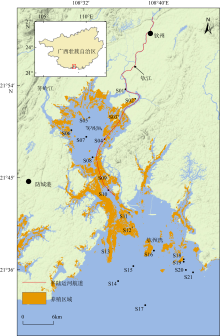
Fig. 1
Research area and sampling sites"

Fig. 1
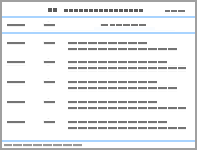
Tab. 1
Spectral parameters of DOM and their significance"
| 光谱参数 | 参数定义 | 指示意义 | 参考文献 |
|---|---|---|---|
| E2/E3 | 250nm与365nm处紫外吸光度之比 | 与DOM相对分子量成反比 | Wang et al, |
| a350 | 350nm处的吸光系数 | 有色溶解性有机物(chromophoric dissolved organic matter, CDOM)的替代指标和量化参数 | Wang et al, |
| SR | S275~295/S350~400紫外光谱斜率比 | 与DOM的相对分子质量成反比: SR>1 表明DOM来源以内生源为主 | Spencer et al, |
| 芳香性指数(SUVA254) | 254nm处紫外吸收系数与DOC浓度比值 | 与DOM的芳香性与腐殖化程度正相关 | Tremblay et al, |
| FI | 当Ex为370nm时, Em在450nm和 500 nm 处的荧光强度(F)的比值 | 当FI>1.9主要表现为自生源特征, FI<1.4陆源为主要来源 | McKnight et al, |
| BIX | 当Ex为310nmn时, Em在380nm 和430nm处的荧光强度比值 | BIX>1以自生源为主 | Birdwell et al, |
| HIX | area(Em=435~480nm)/area(Em=300~345nm), Ex=254nm, 其中area为荧光峰面积 | 与DOM腐殖化程度成正比 | Ohno, |
Tab. 1
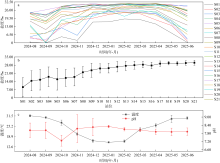
Fig. 2
Variation characteristics of water environment parameters in Qinzhou Bay"
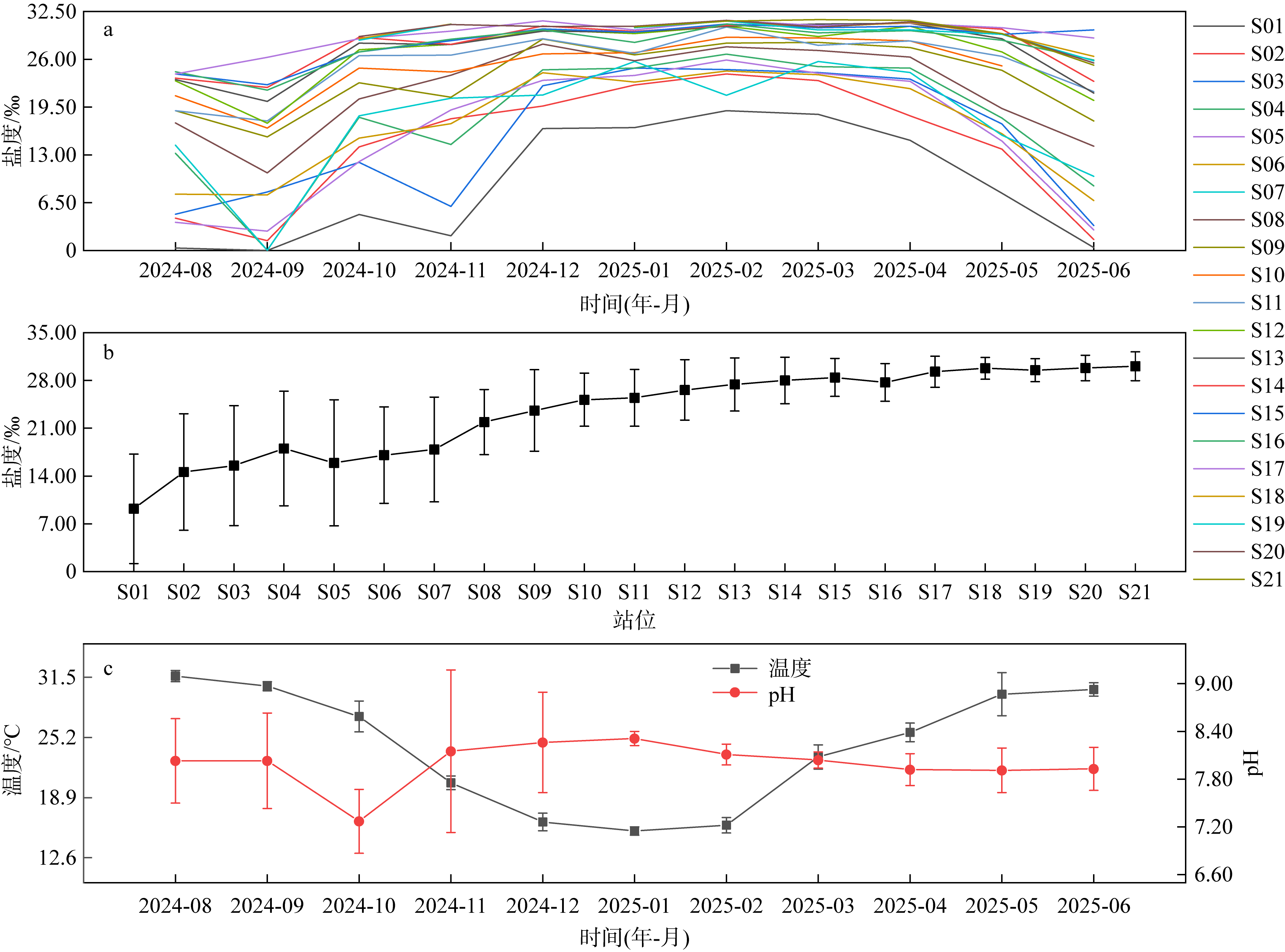
Fig. 2
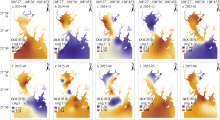
Fig. 3
Spatial and temporal distribution of DOC in Qinzhou Bay"

Fig. 3
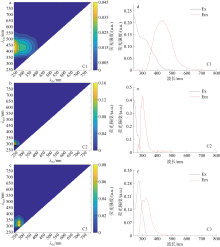
Fig. 4
Fluorescence intensity (a to c) and their loadings (d to f) of DOM components in Qinzhou Bay water"
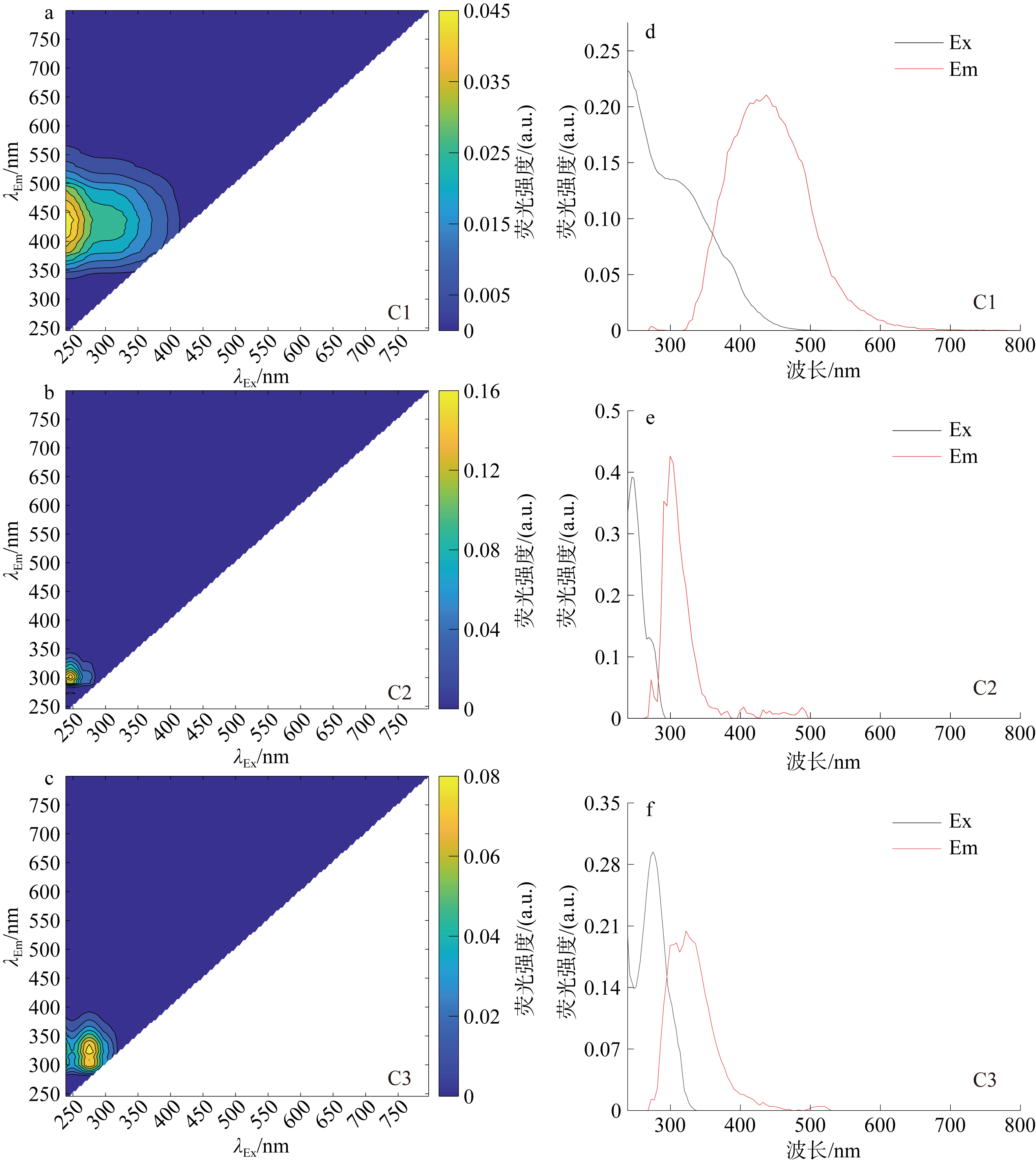
Fig. 4
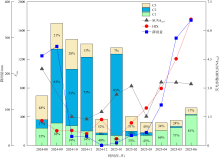
Fig. 5
Variation characteristics of Fmax and relative proportions of DOM fluorescence components, fluorescence parameters (HIX, SUVA254) and rainfall in Qinzhou Bay"
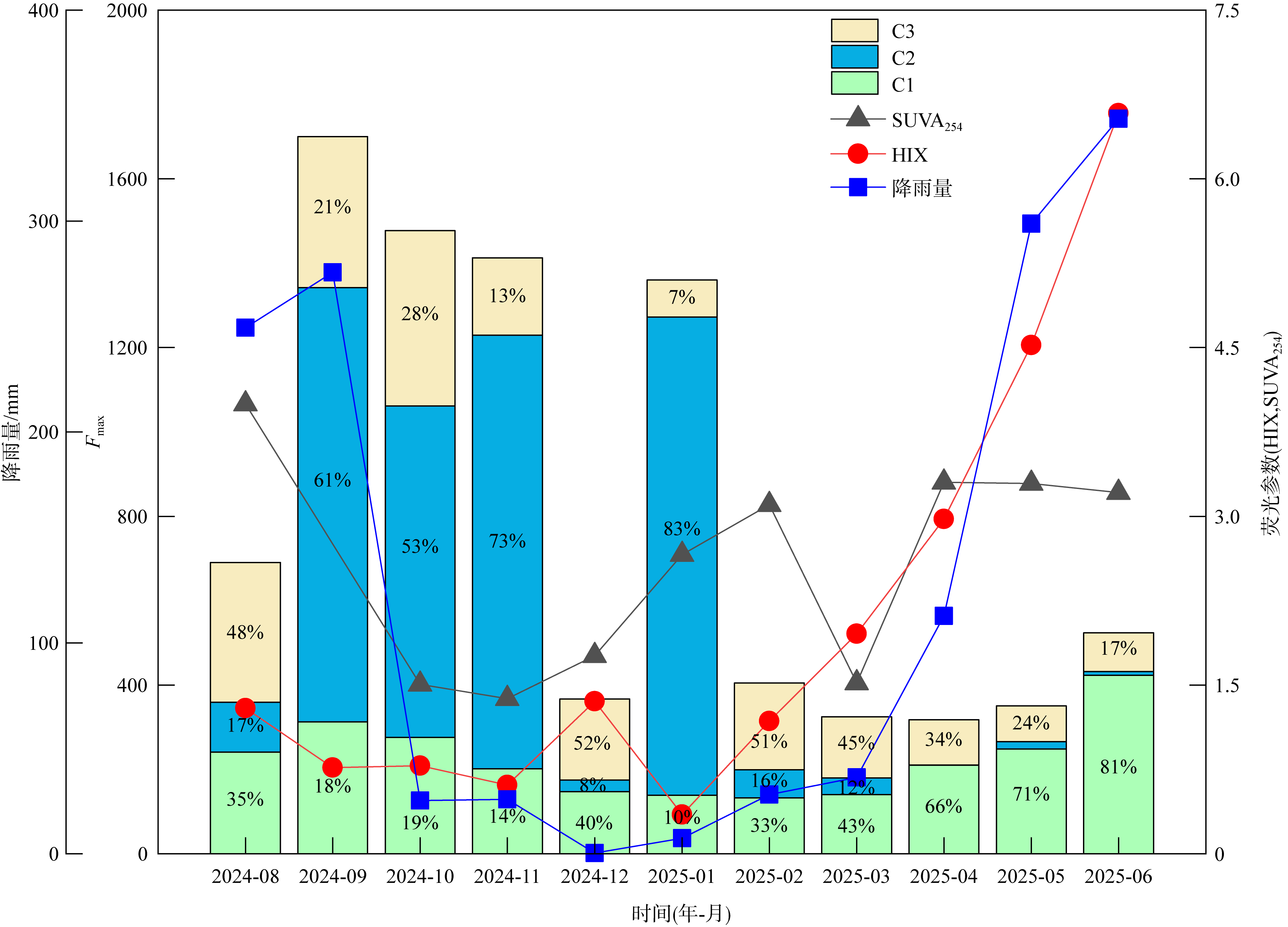
Fig. 5
Fig. 6
Spatial variations of monthly mean fluorescence intensity (Fmax) of DOM components in Qinzhou Bay"
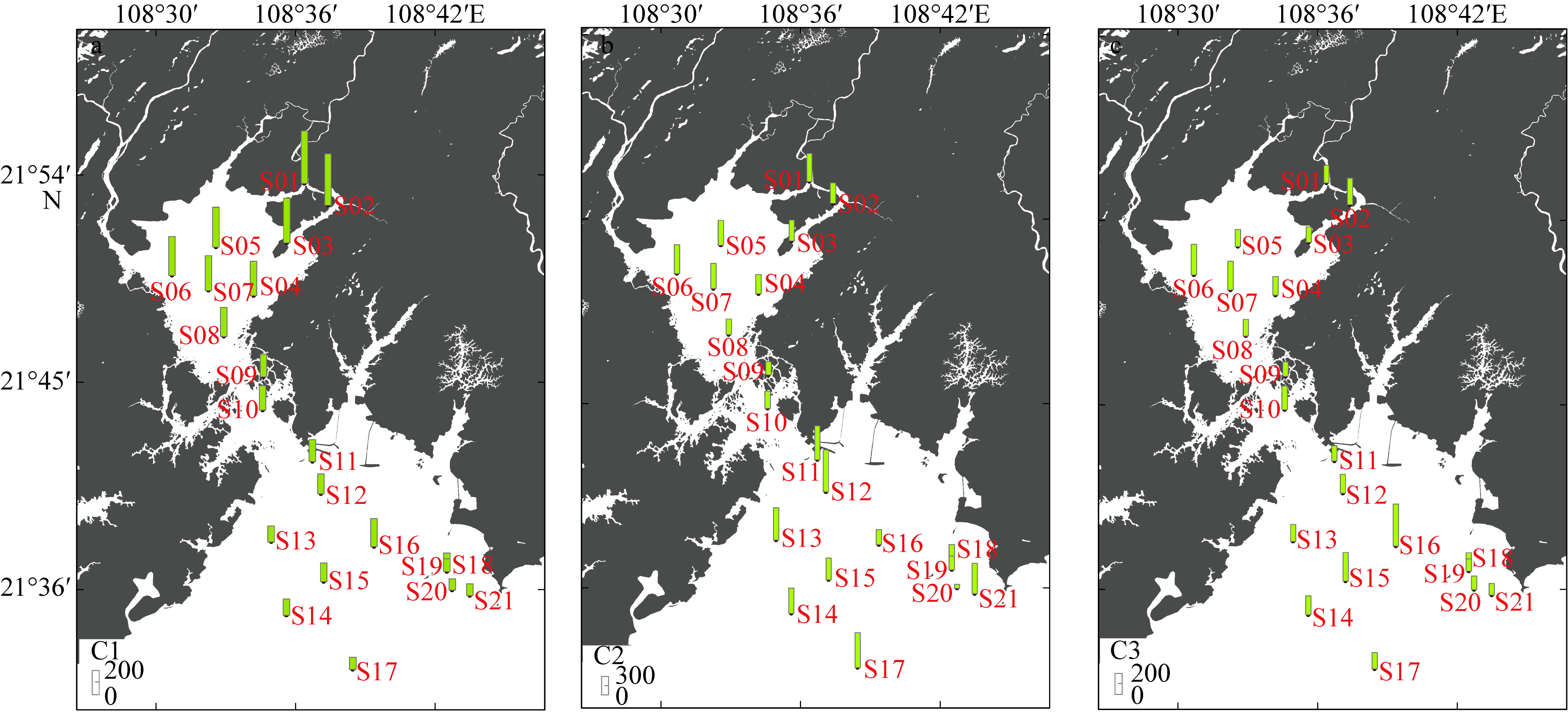
Fig. 6
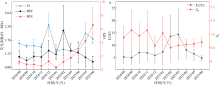
Fig. 7
Variations in fluorescence parameters (a) and ultraviolet parameters (b) of DOM in Qinzhou Bay"
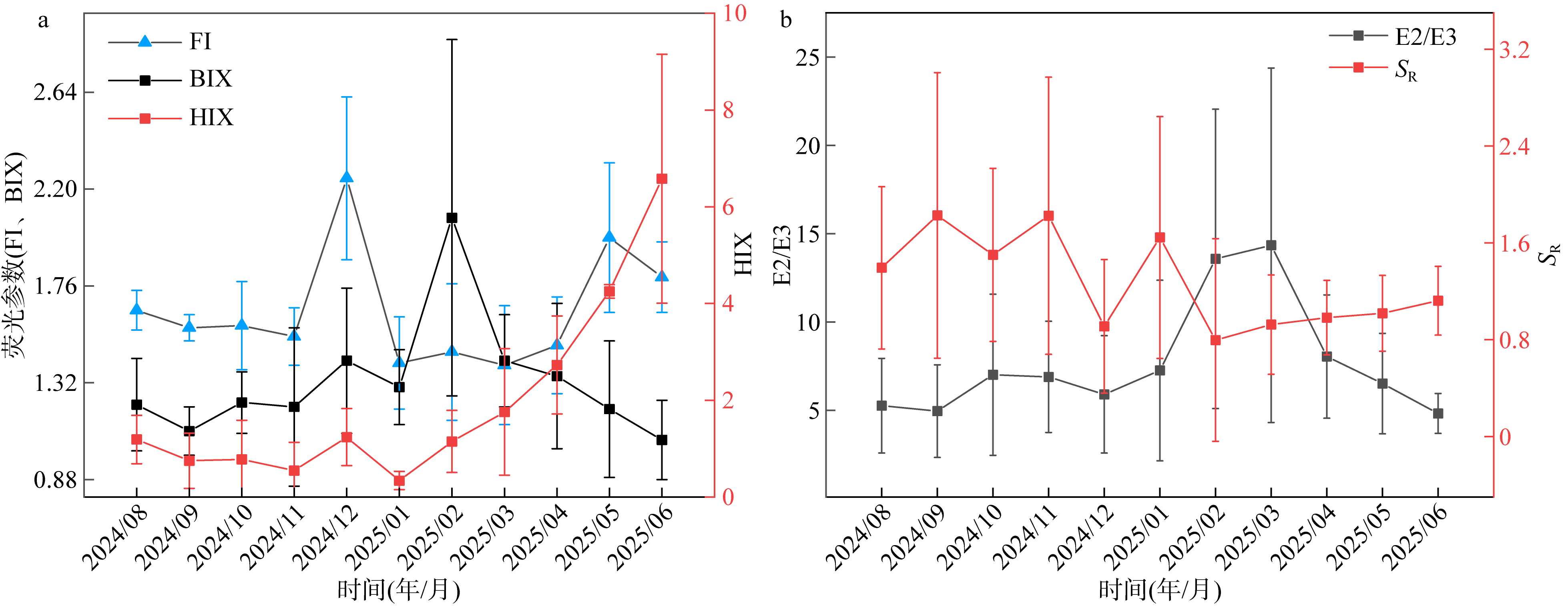
Fig. 7
Fig. 8
Correlations among DOM fluorescence components, fluorescence parameters, and UV parameters in Qinzhou Bay water"
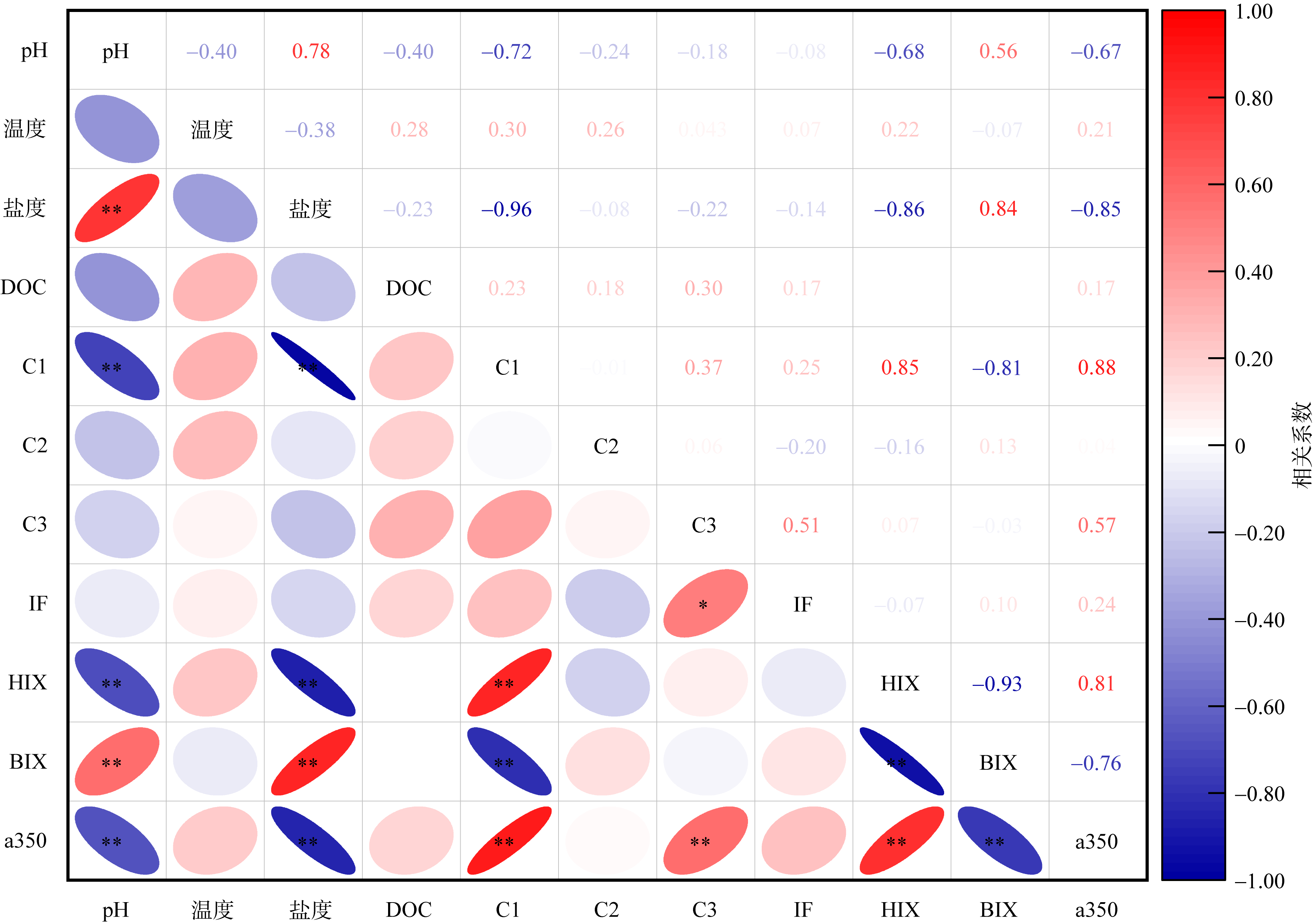
Fig. 8
Tab. 2
Comparison of DOC and CDOM concentrations between Qinzhou Bay and other rivers"
| 区域 | 采样时间 | DOC浓度/(mg·L−1) | CDOM/m−1 | 参考文献 |
|---|---|---|---|---|
| 中国广西钦州湾 | 2022—2023 | 1.54~10.01 | — | 李一鸣, |
| 中国珠江口 | 2015-05 | 1.87±0.54 | 1.99±0.19 (a330) | Li et al, |
| 中国黄浦江 | 2011-04 | 4.80±0.57 | 6.00~6.40(a355) | Guo et al, |
| 中国长江口 | 2021-05 | 1.67±0.13 | 2.20±0.57(a355) | 郭丽霞 等, |
| 中国黄河口 | 2017-08 | 11.00±6.48 | 29.84±21.37(a254) | Cui et al, |
| 中国广西钦州湾 | 2024-08至2025-06 | 1.31~9.14 | 1.74±1.51(a350) | 本研究数据 |
| 密西西比河 | 2009—2010 | 5.60±0.20 | 5.75±0.66(a350) | Kolic et al, |
Tab. 2
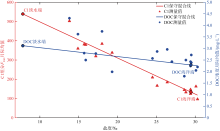
Fig. 9
Correlations of salinity with DOC and C1 in DOM, respectively, in Qinzhou Bay water"
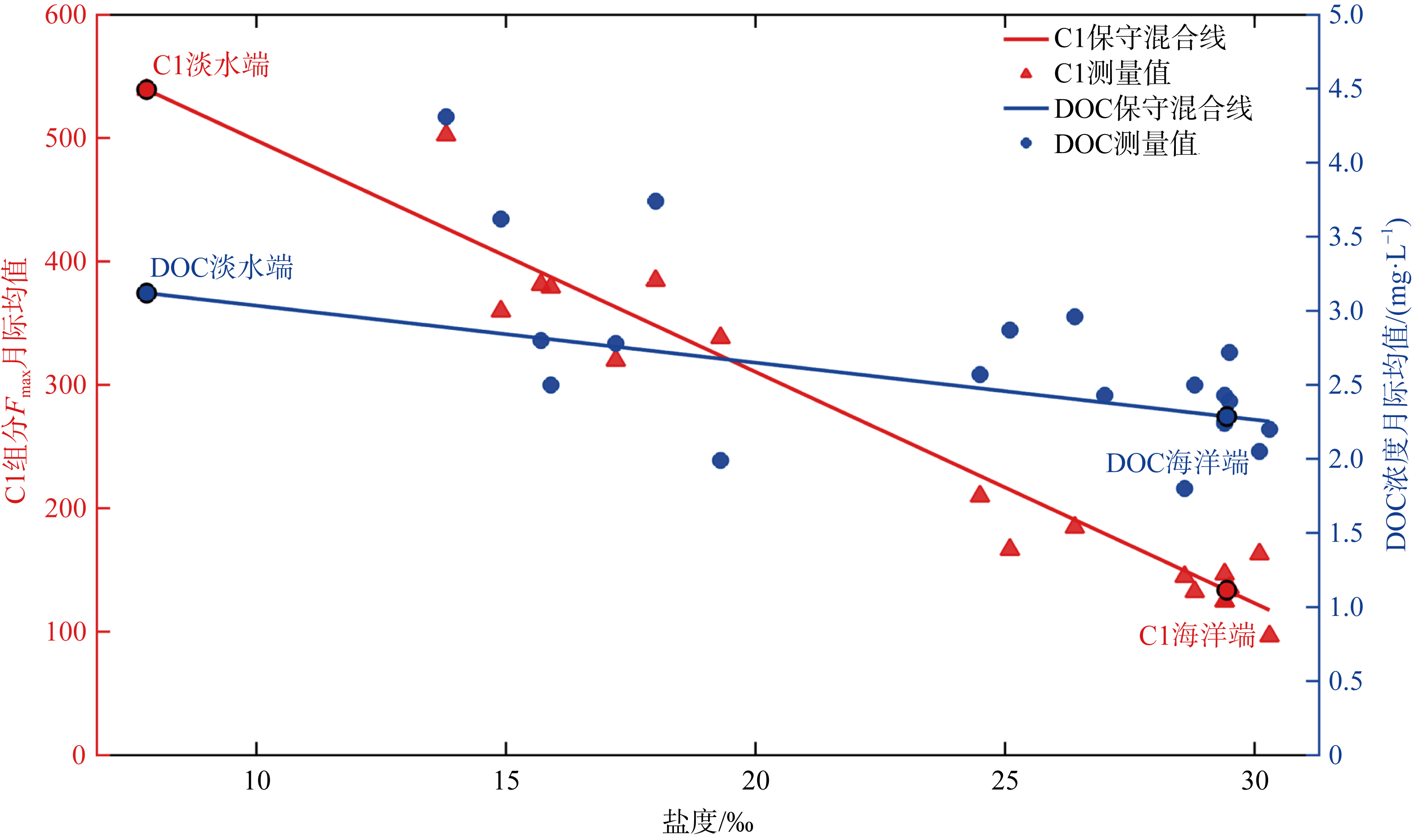
Fig. 9
| [1] |
郭丽霞, 王亚松, 乔德会, 等, 2022. 夏季长江口南北支溶解有机质的比较[J]. 海洋科学, 46(11): 67-82.
|
|
|
|
| [2] |
郭卫东, 黄建平, 洪华生, 等, 2010. 河口区溶解有机物三维荧光光谱的平行因子分析及其示踪特性[J]. 环境科学, 31(6): 1419-1427.
|
|
|
|
| [3] |
何鑫龙, 裴福云, 吴胜春, 等, 2021. 渔业养殖区溶解性有机质的来源、组成及其对汞甲基化的影响[J]. 环境科学学报, 41(10): 4097-4106.
|
|
|
|
| [4] |
黄慧倩, 胡浩鹏, 杨斌, 等, 2023. 亚热带海湾表层沉积物对磷的吸附解析特征研究[J]. 环境科学研究, 36(2): 363-372.
|
|
|
|
| [5] |
劳齐斌, 刘国强, 高劲松, 等, 2021. 钦州湾养殖区营养盐分布特征及富营养化状况研究[J]. 海洋环境科学, 40(3): 407-416.
|
|
|
|
| [6] |
李一鸣, 2024. 钦州湾养殖区水体碳含量特征及微藻固碳与牡蛎碳汇效率研究[D]. 钦州: 北部湾大学.
|
|
|
|
| [7] |
卢佳, 韩艳萍, 吴嘉曦, 等, 2025. 贵州草海水体溶解性有机质光谱特征及来源分析[J/OL]. 水生态学杂志, (2025-04-10)[2025-11-17].
|
|
|
|
| [8] |
吴峰, 宋秀贤, 池连宝, 等, 2022. 近海养殖水体溶解性有机质的荧光特征及环境指示意义[J]. 海洋与湖沼, 53(3): 597-606.
|
|
|
|
| [9] |
杨斌, 钟秋平, 张晨晓, 等, 2015. 钦州湾叶绿素a和初级生产力时空变化及其影响因素[J]. 环境科学学报, 35(5): 1333-1340.
|
|
|
|
| [10] |
杨秀虹, 彭琳婧, 李适宇, 等, 2013. 红树植物凋落叶分解对土壤可溶性有机质的影响[J]. 生态环境学报, 22(6): 924-930.
|
|
|
|
| [11] |
曾德斌, 彭光煜, 杨斌, 等, 2025. 南海北部钦州湾茅尾海溶解碳水化合物的分布特征及影响因素[J]. 热带海洋学报, 44(3): 197-205.
|
|
|
|
| [12] |
|
| [13] |
doi: 10.1038/ngeo101 |
| [14] |
doi: 10.1016/j.orggeochem.2009.11.002 |
| [15] |
doi: 10.1016/j.scitotenv.2018.05.205 |
| [16] |
doi: 10.1016/0304-4203(95)00062-3 |
| [17] |
doi: 10.1021/cr050350+ pmid: 17256912 |
| [18] |
doi: 10.1021/es0506962 |
| [19] |
doi: 10.1093/jpe/rtac037 |
| [20] |
doi: 10.1016/j.watres.2023.120297 |
| [21] |
doi: 10.4319/lo.2010.55.6.2452 |
| [22] |
doi: 10.3390/w12113059 |
| [23] |
|
| [24] |
doi: 10.1002/jgrg.v119.5 |
| [25] |
doi: 10.1007/s10201-007-0232-2 |
| [26] |
doi: 10.4319/lo.2008.53.3.0955 |
| [27] |
doi: 10.1016/j.jenvman.2023.119517 |
| [28] |
doi: 10.1016/j.chemosphere.2023.140091 |
| [29] |
doi: 10.1007/s10533-018-0529-8 |
| [30] |
doi: 10.1016/j.marchem.2023.104210 |
| [31] |
doi: 10.1021/acs.est.6b05761 |
| [32] |
doi: 10.1002/wat2.2018.5.issue-1 |
| [33] |
doi: 10.1016/j.scitotenv.2014.03.121 |
| [34] |
doi: 10.1029/2018JG004690 |
| [35] |
doi: 10.5194/bg-16-2751-2019 |
| [36] |
doi: 10.1016/j.jhazmat.2023.132410 |
| [37] |
doi: 10.4319/lo.2001.46.1.0038 |
| [38] |
doi: 10.1016/j.marchem.2007.10.003 |
| [39] |
doi: 10.1021/es0155276 |
| [40] |
|
| [41] |
|
| [42] |
doi: 10.1016/j.marchem.2006.12.015 |
| [43] |
doi: 10.1016/j.marenvres.2024.106796 |
| [44] |
pmid: 20108658 |
| [45] |
doi: 10.1016/j.marpolbul.2010.07.025 pmid: 20863534 |
| [46] |
doi: 10.1016/j.aquaculture.2014.02.009 |
| [47] |
doi: 10.1016/j.jwpe.2025.108946 |
| [48] |
doi: 10.1029/2018JC014004 |
| [49] |
doi: 10.1016/j.envpol.2025.126854 |
| [50] |
doi: 10.1016/j.watres.2009.07.024 pmid: 19665748 |
| [1] | LI Xinzheng, DU Xiaoli, XU Yong, ZHANG Yue, WANG Jinbao, SUI Jixing, CHEN Dan. Study on the community characteristics of macrozoobenthos and environmental influencing factors in Maowei Sea, Qinzhou Bay during summer and winter* [J]. Journal of Tropical Oceanography, 2026, 45(4): 15-28. |
| [2] | SUN Kangwei, LIAO Riquan, LI Han, WENG Peiyao, TANG Jianhui. Monthly variability of nutrient concentrations and influencing factors in surface seawater of Qinzhou Bay* [J]. Journal of Tropical Oceanography, 2026, 45(4): 162-178. |
| [3] | JIN Song, ZOU Tao, LIAO Riquan, CHEN Chaohao, MI Huan, TANG Jianhui. Study on the spatial expansion mode of raft aquaculture in Qinzhou Bay since 2000 using remote sensing technology [J]. Journal of Tropical Oceanography, 2026, 45(4): 104-115. |
| [4] | XIE Yajun, DAI Zhijun, CHEN Jianqing, ZHONG Mingtao, HUANG Qiang, WANG Riming. Analysis of changes in macrobenthic community in the Shajing Island intertidal zone of the Pinglu Canal estuary in response to near-natural restoration [J]. Journal of Tropical Oceanography, 2026, 45(4): 29-40. |
| [5] | LIANG Xixing, DAI Zhijun, LI Yan, LI Shushi, LI Weihua, WANG Riming, WU Erjiang. Spatiotemporal dynamics of mangroves at the Pinglu Canal estuary based on Sentinel-2 [J]. Journal of Tropical Oceanography, 2026, 45(4): 77-88. |
| [6] | LOU Zhifeng, LI Yuchen, YIN Xuehua, SUN Rong, TIAN Chongguo. Distribution characteristics and main sources of nitrate in the waters of Qinzhou Bay* [J]. Journal of Tropical Oceanography, 2026, 45(4): 153-161. |
| [7] | TIAN Mi, ZHANG Jian, LIAO Riquan, DONG Fengfeng, TANG Jianhui. Spatiotemporal variation and source analysis of per- and polyfluoroalkyl substances (PFAS) in the surface seawater of Qinzhou Bay, China [J]. Journal of Tropical Oceanography, 2026, 45(4): 116-125. |
| [8] | WANG Mengzhu, XU Shanshan, LI Shushi, LI Jianming, YANG Xialing, HUANG Sheng. Variations of suspended sediment concentration in the Qinjiang River in the past 60 years under the influence of human activities and climate change [J]. Journal of Tropical Oceanography, 2026, 45(4): 126-139. |
| [9] | YANG Liuzhu, YANG Liling, PAN Hongzhou, LIU Chaoqun, YU Fenghua. Characteristics of recent evolution in Qinzhou Bay influenced by human activities [J]. Journal of Tropical Oceanography, 2019, 38(6): 41-50. |
| [10] | ZHOU Hong-li, ZHU Jian-hua, Li Tong-ji. Spectral properties of colored dissolved organic matter in Chinese offshore waters [J]. Journal of Tropical Oceanography, 2015, 34(1): 23-29. |
| [11] | HU Shui-bo, CAO Wen-xi, LIN Jun-fang, YANG Yue-zhong, WANG Gui-fen, ZHOU wen. Spectral absorption properties of colored dissolved organic matter along 6°N transect of tropical eastern Indian Ocean [J]. Journal of Tropical Oceanography, 2013, 32(4): 13-21. |
| [12] | JIANG Li-fang, YIN Yi, QI Yi-quan, ZHANG Zhi-xu. The extreme wave parameters in the Qinzhou Bay during typhoon passages [J]. Journal of Tropical Oceanography, 2012, 31(4): 8-16. |
| [13] | ZHANG Bo-hu,CHEN Shen-liang,LIU Yan-xiong,GU Guo-chuan. Sediment characteristics and differentiation in the Qinzhou Bay, Guangxi, China [J]. Journal of Tropical Oceanography, 2011, 30(4): 66-70. |
|
||