

Journal of Tropical Oceanography ›› 2026, Vol. 45 ›› Issue (5): 108-127.doi: 10.11978/2025236CSTR: 32234.14.2025236
Previous Articles Next Articles
Differential dolomitization process of coral reefs in the South China Sea: a case study based on a deep borehole in Meiji Atoll
LUO Yun1( ), LI Gang1(), ZHANG Xiyang1, XU Weihai1, ZHU Xiaowei1, ZHOU Wanqiu1,2, HUANG Huiwen1, ZHONG Fuchang1, YAN Wen1,2()
- 1
South China Sea Institute of Oceanology ,Chinese Academy of Sciences, State Key Laboratory of Tropical Oceanography, Laboratory of Ocean and Marginal Sea Geology
2University of Chinese Academy of Sciences
-
Received:2025-12-10Revised:2026-01-23Online:2026-09-10Published:2026-10-13 -
Contact:LI Gang. email:gangli@scsio.ac.cn ; YAN Wen. email:wyan@scsio.ac.cn -
Supported by:National Key Research and Development Program of China(2021YFC3100600); Guangdong Basic and Applied Basic Research Foundation(2025A1515012022); Guangdong Basic and Applied Basic Research Foundation(2025A1515010958); Hainan Marine Geological Resources and Environment Key Laboratory Open Fund(24-HNHYDZZYHJKF047)

CLC Number:
- P736.213
Cite this article
LUO Yun, LI Gang, ZHANG Xiyang, XU Weihai, ZHU Xiaowei, ZHOU Wanqiu, HUANG Huiwen, ZHONG Fuchang, YAN Wen. Differential dolomitization process of coral reefs in the South China Sea: a case study based on a deep borehole in Meiji Atoll[J].Journal of Tropical Oceanography, 2026, 45(5): 108-127.
share this article
Add to citation manager EndNote|Reference Manager|ProCite|BibTeX|RefWorks
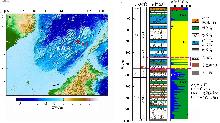
Fig. 1
(a) Map showing the Nansha Islands in deep southern South China Sea; (b) stratigraphic information of Well NK-1, which includes chronology, lithology, and mineralogy. The red box represents the stratigraphy of the Lower Nanwan Formation"

Fig. 1
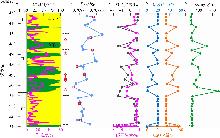
Fig. 2
Composite plots. (a) Stratum, mineral composition, and porosity; (b) Sr isotopic composition. Sr isotope data (solid blue circle) is from our previously published work (Li et al, 2023) and new Sr isotope data are shown using red open squares; (c) δ13C and δ18O; (d) MgO and CaO contents; (e) Sr content"
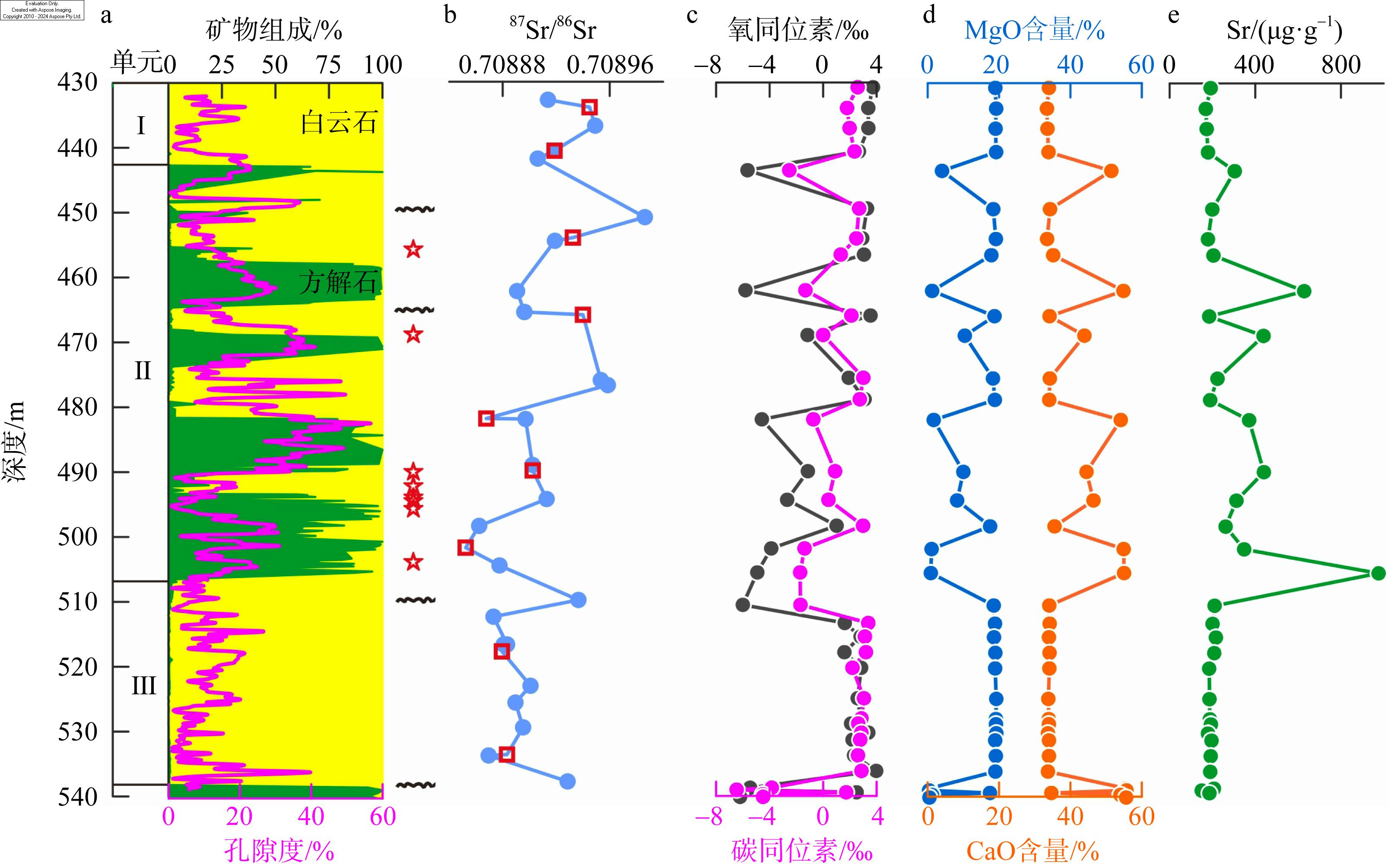
Fig. 2
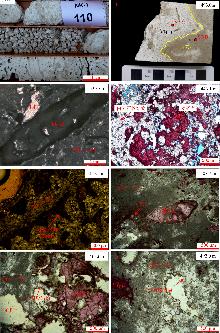
Fig. 3
Core photographs and photomicrographs from the Nanwan Formation in Well NK-1. (a) Core photos showing numerous moldic voids around the exposed surface; (b) grainstone with calcite (white) and dolomite (brown). Red solid circle represents the micro-drilling position for Sr isotope analysis; (c) replacive dolomite with coralline algae. The precursor bioclast structure is well preserved, and there is no dolomite cement at the edge of the pore; (d) dolomitic limestone stained with Alizarin red S, showing dolomite cements floating in the calcite; (e) lime dolostone stained with Alizarin red S, showing undolomitized coral skeletons and fine and dirty replacive dolomite with cloudy cores and clear rims; (f) dolomitic limestone stained with Alizarin red S, containing undolomitized foraminifera; (g, h) lime dolostone showing replacive dolomite, dolomite cement at the edge of the void, and undolomitized calcite. The depths specified in the top right of each image are below the present-day sea level"

Fig. 3
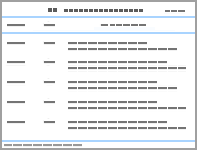
Tab. 1
Mineral compositions and dolomite stoichiometry of the partially dolomitized carbonates from the lower Nanwan Formation in Well NK-1"
| 样品编号 | 深度/m | 方解石含量/% | 白云石含量/% | 白云石阳离子有序度 | d(104) | CaCO3/(mol%) | 白云石类型 | 白云石胶结物含量/% |
|---|---|---|---|---|---|---|---|---|
| S1 | 489.8 | 77.8 | 22.2 | 0.43 | 2.90806 | 58.2 | HCD | 40 |
| S2 | 495.5 | 71.9 | 28.1 | 0.43 | 2.90419 | 56.9 | HCD | 20 |
| S3 | 503.7 | 70.3 | 29.7 | 0.36 | 2.90529 | 57.3 | HCD | 10 |
| S4 | 494.3 | 48.5 | 51.5 | 0.36 | 2.90538 | 57.3 | HCD | 30 |
| S5 | 455.5 | 38.9 | 61.1 | 0.34 | 2.90197 | 56.2 | HCD | 10 |
| S6 | 468.6 | 20.4 | 79.6 | 0.33 | 2.90288 | 56.5 | HCD | 20 |
| S7 | 493.0 | 20.3 | 79.7 | 0.34 | 2.91119 | 59.3 | HCD | 20 |
| S8 | 492.0 | 18.9 | 81.1 | 0.38 | 2.91019 | 58.9 | HCD | 30 |
| S9 | 476.3 | 0.8 | 99.2 | 0.45 | 2.90079 | 55.8 | HCD | 30 |
Tab. 1
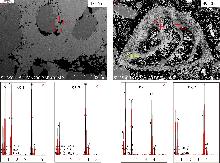
Fig. 4
Backscatter images and EDS spot analysis of dolostones within the Nanwan Formation. (a, b) Backscatter images of dolostones at depths of 455.5 m and 492.0 m. Light gray = calcite; dark gray = dolomite; black = porosity. Dolomite is homogeneous, and foraminifera (F) is undolomitized; (c, d) EDS data of the spot from subplot (a); (e, f) EDS data of the spot from subplot (b)"

Fig. 4
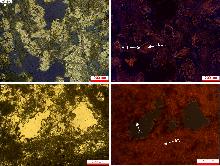
Fig. 5
Thin-section photomicrographs and the corresponding cathodoluminescence images. (a, b) Fabric-destructive dolostone showing replacive dolomite with reddish orange luminescence and limpid dolomite cements with zoned luminescence. DC-Ⅰ = dolomite cement Ⅰ with reddish orange luminescence located in the core of the rhombs, DC-Ⅱ = dolomite cement Ⅱ with dark luminescence. Note that DC-Ⅰ (the core of dolomite cement) has similar luminescence to that of the replacive dolomite. Depth = 443.1 m; (c, d) fine and dirty replacive dolomites. Microcrystalline dolomite shows reddish orange luminescence, whereas dolomite cement shows darker luminescence. RD = replacive dolomite, DC = dolomite cement"
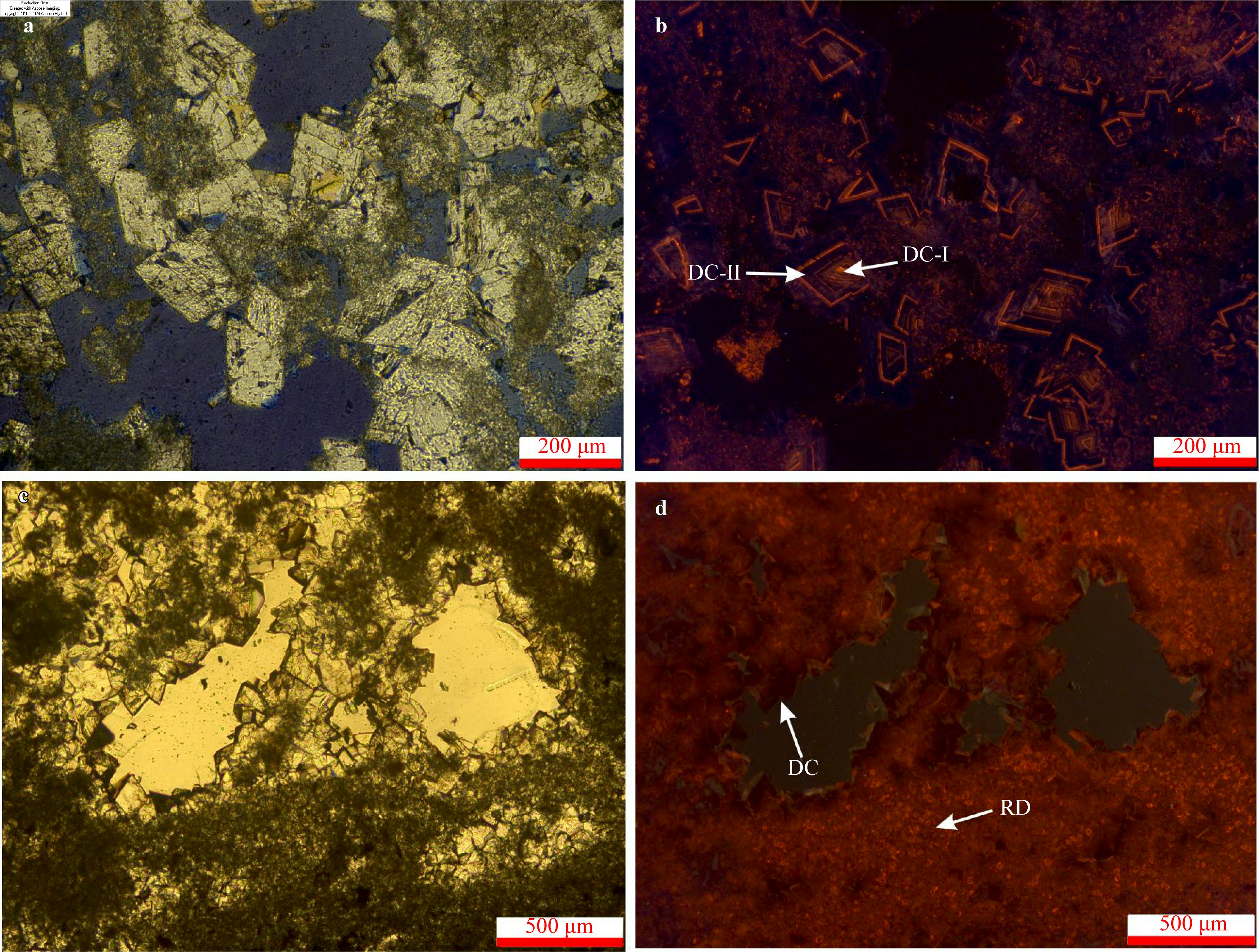
Fig. 5
Tab. 2
Sr isotope ages and in situ U-Pb ages of calcite (coral skeleton) and replacive dolomite from two samples"
| 样品号 | 深度/m | 矿物组成 | 87Sr/86Sr | Sr同位素年龄/Ma | 原位U-Pb年龄/Ma |
|---|---|---|---|---|---|
| S7-C | 493.0 | 方解石(100%) | 0.708862±5 | 10.9 | - |
| S7-D | 交代白云石(99.2%) | 0.708865±5 | 10.8 | 10.7±0.8 | |
| S4-C | 494.3 | 方解石(100%) | 0.708860±5 | 11.0 | - |
| S4-D | 交代白云石(98.3%) | 0.708861±4 | 11.0 | 11.0±0.3 |
Tab. 2
Fig. 6
Cross-plot of Sr isotope ages and in situ U-Pb ages at depths of 493.0 m and 494.3 m in Well NK-1. Two U-Pb ages of dolomite have a good fit with 87Sr/86Sr isotope ages; (b, c) harmonic diagram of U-Pb dating in the dolomite zone from two samples. The inset in the bottom left corner of each image shows ablation points of U-Pb dating"
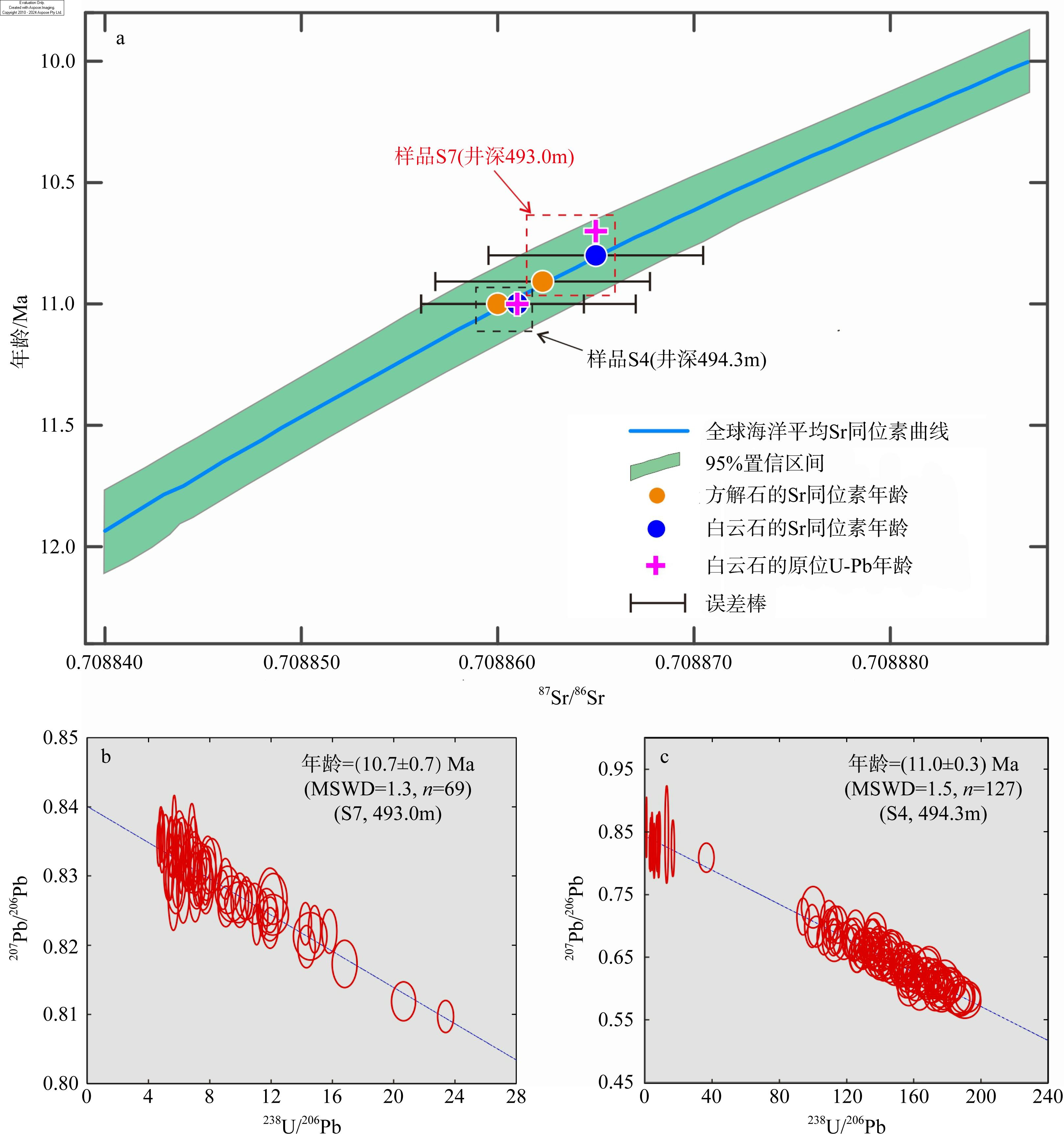
Fig. 6
Fig. 7
Composite plots. (a) PAAS-normalized REY distribution patterns from calcite, replacive dolomite, and dolomite cement in partially dolomitized carbonates in Unit II using laser ablation; (b) carbon and oxygen isotopic compositions of limestone and dolostone"
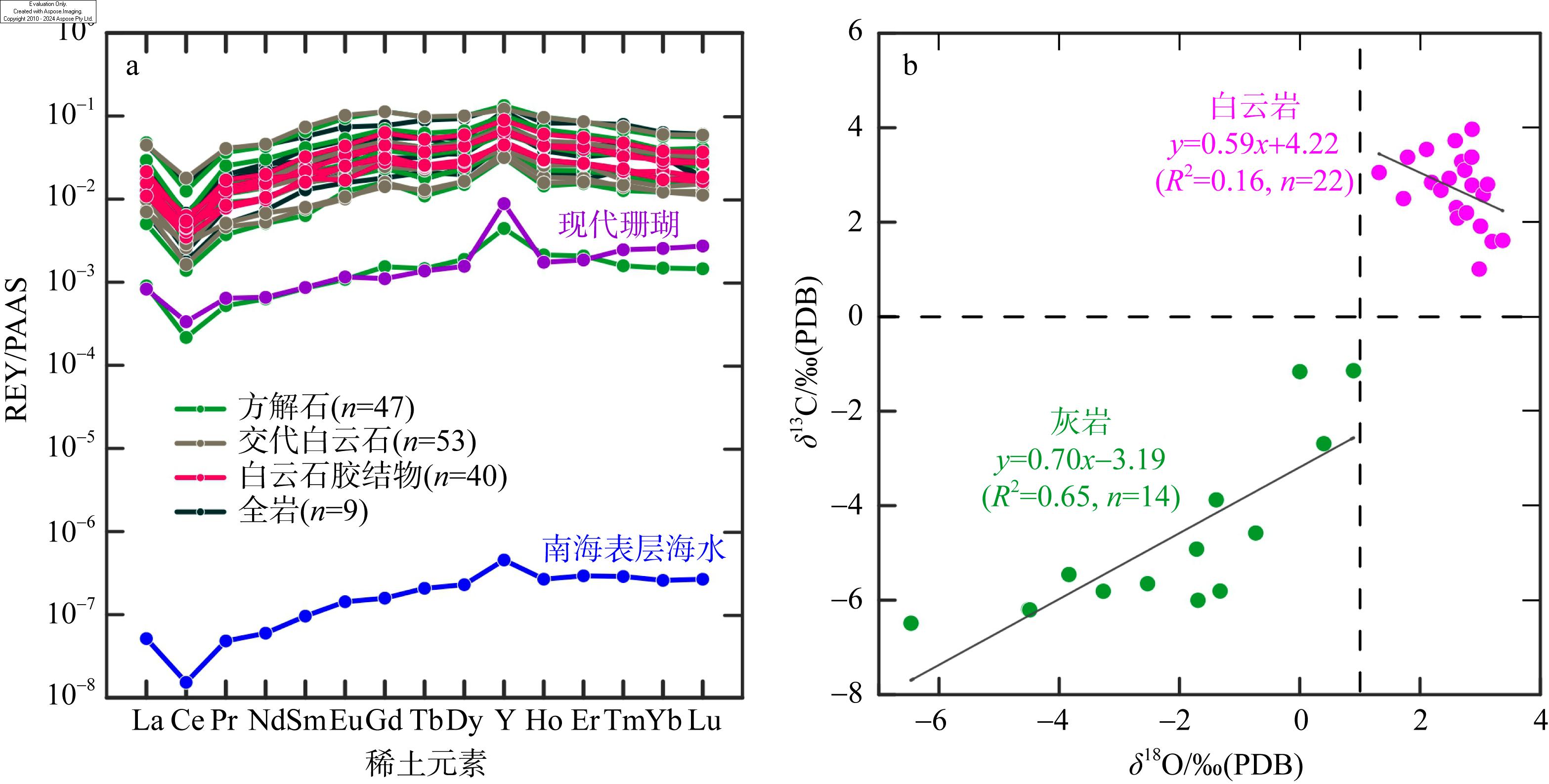
Fig. 7
Tab. 3
In situ elemental composition (average Mg/Ca ratio and Mn, Fe, and Sr contents, Mn/Sr) using the laser ablation technique"
| 样品编号 | 深度/m | 矿物类型 | 原位分析点数 | Mg/Ca (mol/mol) | Mn/(μg·g-1) | Fe/(μg·g-1) | Sr/(μg·g-1) | Mn/Sr |
|---|---|---|---|---|---|---|---|---|
| S1 | 489.8 | 方解石 | 2 | 0.03 | 15.7 | 255 | 640 | 0.02 |
| 交代白云石 | N/A | N/A | N/A | N/A | N/A | N/A | ||
| 白云石胶结物 | 9 | 0.53 | 6.7 | 118 | 173 | 0.04 | ||
| S2 | 495.5 | 方解石 | 8 | 0.04 | 13.3 | 142 | 888 | 0.03 |
| 交代白云石 | 9 | 0.48 | 10.3 | 130 | 251 | 0.04 | ||
| 白云石胶结物 | 4 | 0.62 | 5.2 | 102 | 204 | 0.02 | ||
| S3 | 503.7 | 方解石 | 13 | 0.05 | 17.6 | 122 | 519 | 0.04 |
| 交代白云石 | 15 | 0.53 | 19.1 | 110 | 222 | 0.09 | ||
| 白云石胶结物 | N/A | N/A | N/A | N/A | N/A | N/A | ||
| S5 | 455.5 | 方解石 | 7 | 0.01 | 0.3 | 127 | 1523 | 0.00 |
| 交代白云石 | 13 | 0.61 | 4.5 | 93 | 197 | 0.02 | ||
| 白云石胶结物 | 3 | 0.64 | 4.6 | 96 | 174 | 0.03 | ||
| S6 | 468.6 | 方解石 | 3 | 0.01 | 0.9 | 118 | 494 | 0.00 |
| 交代白云石 | 2 | 0.63 | 5.6 | 90 | 223 | 0.03 | ||
| 白云石胶结物 | 5 | 0.66 | 4.6 | 78 | 192 | 0.02 | ||
| S7 | 493.0 | 方解石 | 12 | 0.03 | 22.6 | 134 | 239 | 0.11 |
| 交代白云石 | 7 | 0.53 | 7.0 | 109 | 241 | 0.03 | ||
| 白云石胶结物 | 13 | 0.62 | 7.0 | 99 | 190 | 0.04 | ||
| S8 | 492.0 | 方解石 | 2 | 0.02 | 4.6 | 127 | 1300 | 0.00 |
| 交代白云石 | 7 | 0.58 | 10.1 | 99 | 259 | 0.04 | ||
| 白云石胶结物 | 6 | 0.67 | 3.9 | 89 | 212 | 0.02 |
Tab. 3
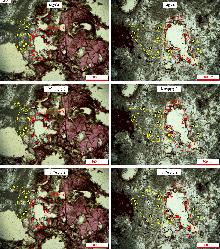
Fig. 8
In situ element composition using laser ablation. (a, b) Mg/Ca ratios (mol/mol); (c, d) Mn contents; (e, f) Sr contents. The numbers marked in the figure represent the corresponding element contents or element ratios"

Fig. 8
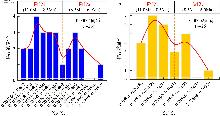
Fig. 9
The distribution curves of 87Sr/86Sr values and ages of dolostones in the Nanwan Formation using class intervals of 0.00001 (a) and 0.00002 (b)"
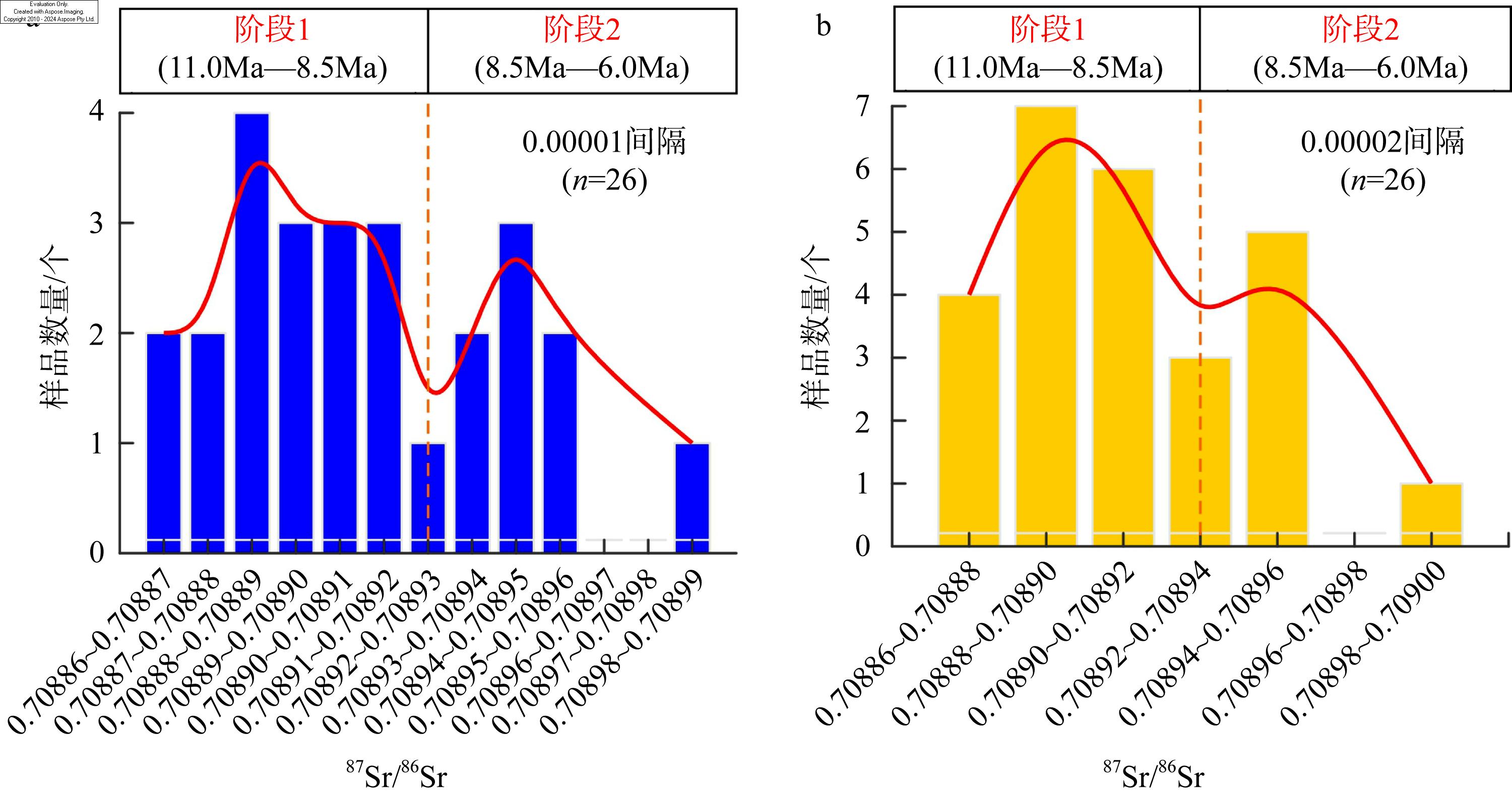
Fig. 9
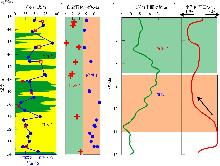
Fig. 10
Dolomitization stages of the Nanwan Formation and sea level history. (a) The mineralogy and Sr isotope of the lower Nanwan Formation in Well NK-1. Sr isotope data (solid blue circle) is from Li et al (2023) and new Sr isotope data are shown using red square. (b) Dolomitization age of the Nanwan Formation. There are two age intervals of 11.5-8.5 Ma (blue dot) and 8.5-6.0 Ma (red plus), corresponding to two stages of dolomitization. (c) Global sea level curve (Data from Miller et al, 2020). (d) The sea level variation in the SCS inferred from the organic proxy (BIT) from Well XK-1 drilled in the Xisha Islands (Data from Shao et al, 2017)"
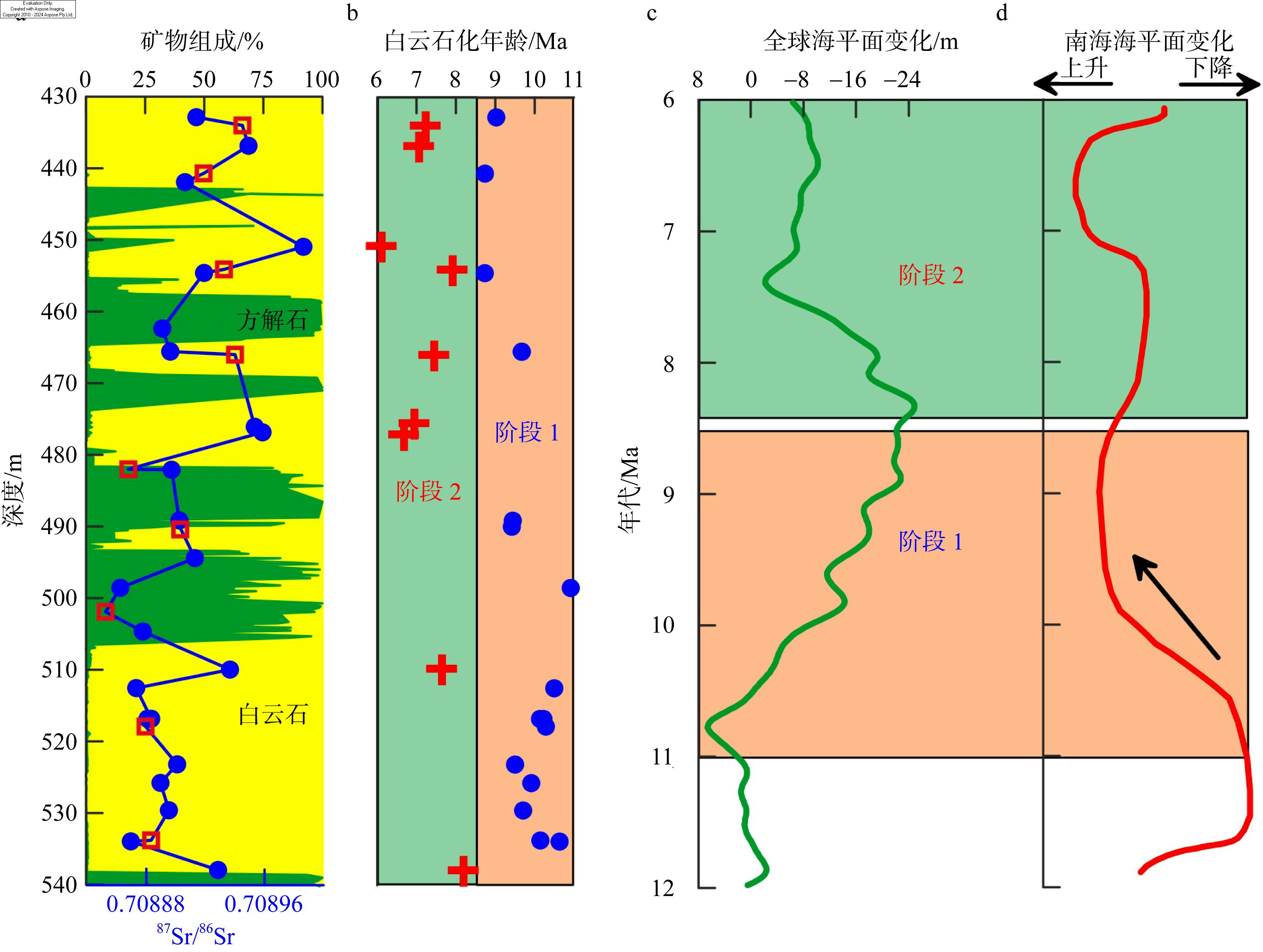
Fig. 10
Fig. 11
Schematic diagrams showing the dolomitization process in the lower Nanwan Formation on the Meiji Island. (a-c) Large-scale diagenetic evolution; (d-f) microscopic evolution pathway"
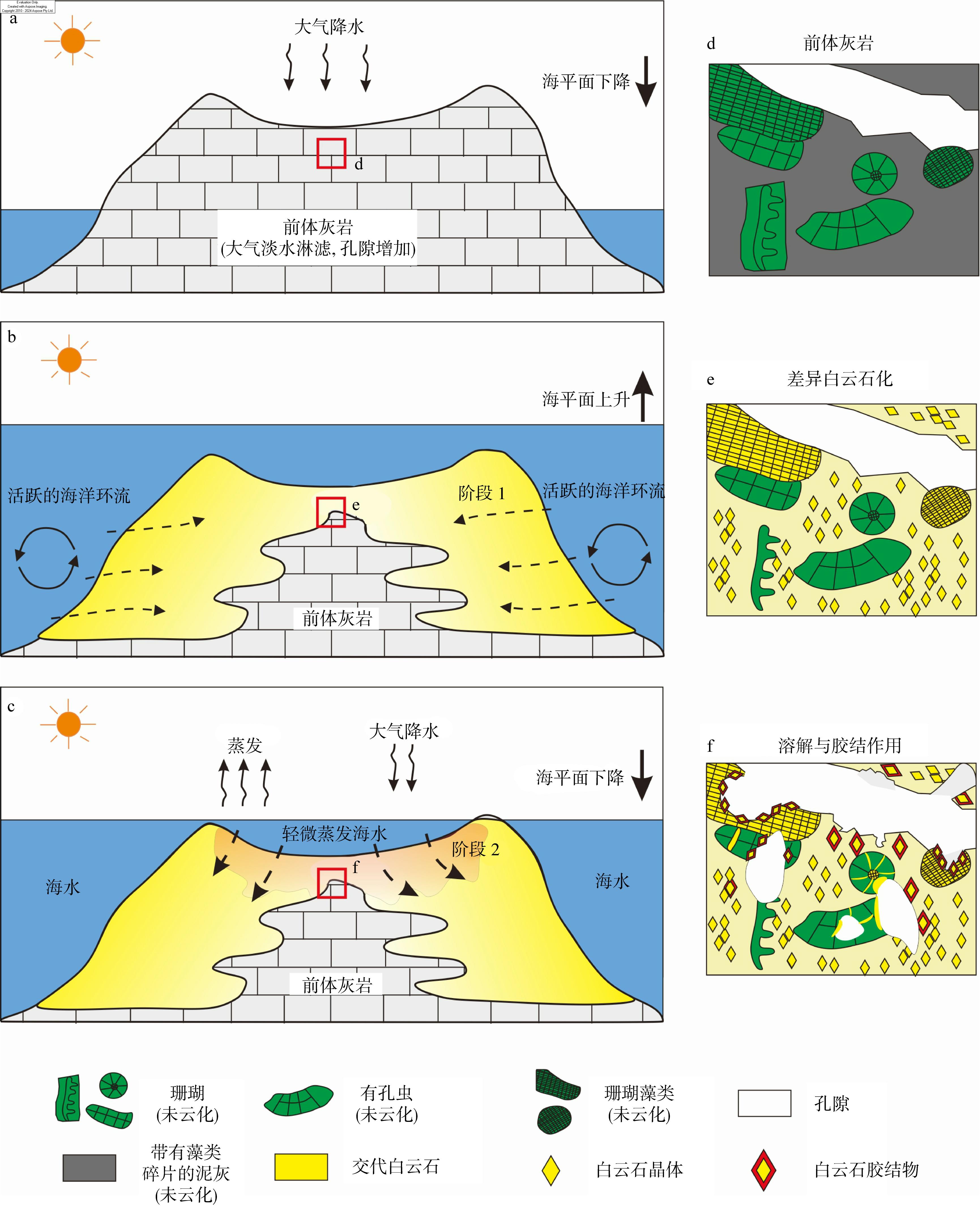
Fig. 11
| [1] |
黄康俊, 滕方振, 沈冰, 等, 2022. 镁同位素示踪表生地质过程的原理及应用[J]. 矿物岩石地球化学通报, 41(2): 213-234.
|
|
|
|
| [2] |
李波, 颜佳新, 刘喜停, 等, 2010. 白云岩有机成因模式: 机制、进展与意义[J]. 古地理学报, 12(6): 699-710.
|
|
|
|
| [3] |
李建忠, 陶小晚, 白斌, 等, 2021. 中国海相超深层油气地质条件、成藏演化及有利勘探方向[J]. 石油勘探与开发, 48(1): 52-67.
doi: 10.11698/PED.2021.01.05 |
|
|
|
| [4] |
罗云, 黎刚, 徐维海, 等, 2022. 南科1井第四系暴露面特征及其与海平面变化的关系[J]. 热带海洋学报, 41(1): 143-157.
doi: 10.11978/2021013 |
|
doi: 10.11978/2021013 |
|
| [5] |
马永生, 郭彤楼, 赵雪凤, 等, 2007. 普光气田深部优质白云岩储层形成机制[J]. 中国科学
|
|
( D辑(A2): 43-52.
|
|
| [6] |
梅冥相, 2012. 从3个科学理念简论沉积学中的“白云岩问题”[J]. 古地理学报, 14(1): 1-12.
doi: 10.7605/gdlxb.2012.01.001 |
|
doi: 10.7605/gdlxb.2012.01.001 |
|
| [7] |
史德锋, 李潇雨, 王亚辉, 等, 2020. 中国南海西沙地区西科1井中新统白云岩中微生物特征及其对白云石化的启示[J]. 矿物岩石, 40(2): 104-113.
|
|
|
|
| [8] |
魏喜, 祝永军, 许红, 等, 2006. 西沙群岛新近纪白云岩形成条件的探讨: C、O同位素和流体包裹体证据[J]. 岩石学报, 22(9): 2394-2404.
|
|
|
|
| [9] |
许红, 张金川, 蔡峰, 1994. 西沙群岛中新世生物礁矿物相研究及其意义[J]. 海洋地质与第四纪地质, 14(4): 15-23.
|
|
|
|
| [10] |
詹文欢, 钟建强, 刘以宣, 等, 1995. 南沙西南地区新构造运动及其动力学机制[J]. 海洋通报(6): 53-60.
|
|
|
|
| [11] |
|
| [12] |
doi: 10.1111/sed.1991.38.issue-2 |
| [13] |
doi: 10.2475/ajs.299.4.257 |
| [14] |
doi: 10.1007/s10498-011-9130-7 |
| [15] |
doi: 10.1111/sed.1995.42.issue-5 |
| [16] |
doi: 10.1130/G45994.1 |
| [17] |
doi: 10.1016/j.chemgeo.2018.07.005 |
| [18] |
doi: 10.1016/j.palaeo.2014.05.047 |
| [19] |
doi: 10.1111/j.1365-3091.2009.01121.x |
| [20] |
doi: 10.1016/S0012-8252(96)00051-7 |
| [21] |
doi: 10.1111/sed.v66.7 |
| [22] |
doi: 10.1144/SP370.14 |
| [23] |
doi: 10.1130/G48213.1 |
| [24] |
doi: 10.1007/s11001-014-9237-5 |
| [25] |
doi: 10.1038/s41586-023-06077-6 |
| [26] |
|
| [27] |
doi: 10.1016/0031-0182(86)90007-6 |
| [28] |
doi: 10.1130/B35088.1 |
| [29] |
doi: 10.1111/sed.2015.62.issue-6 |
| [30] |
doi: 10.1016/j.margeo.2021.106513 |
| [31] |
doi: 10.1306/212F86E8-2B24-11D7-8648000102C1865D |
| [32] |
doi: 10.1016/S0009-2541(99)00080-7 |
| [33] |
doi: 10.1306/091602730187 |
| [34] |
doi: 10.1306/2DC40968-0E47-11D7-8643000102C1865D |
| [35] |
doi: 10.1016/j.sedgeo.2011.07.003 |
| [36] |
doi: 10.1016/j.chemgeo.2017.08.004 |
| [37] |
doi: 10.5408/0022-1368-33.2.112 |
| [38] |
|
| [39] |
doi: 10.1023/A:1009688315854 |
| [40] |
doi: 10.1130/B36365.1 |
| [41] |
doi: 10.1016/j.palaeo.2022.110957 |
| [42] |
|
| [43] |
|
| [44] |
doi: 10.1016/j.sedgeo.2021.105933 |
| [45] |
|
| [46] |
|
| [47] |
doi: 10.1126/sciadv.aaz1346 |
| [48] |
|
| [49] |
|
| [50] |
doi: 10.1111/sed.v67.2 |
| [51] |
doi: 10.1016/j.gca.2017.02.021 |
| [52] |
doi: 10.5194/bg-8-3331-2011 |
| [53] |
|
| [54] |
doi: 10.1016/j.epsl.2021.116956 |
| [55] |
doi: 10.1016/j.epsl.2020.116403 |
| [56] |
doi: 10.1016/0012-821X(92)90125-F |
| [57] |
doi: 10.1016/0037-0738(87)90036-4 |
| [58] |
doi: 10.1016/j.sedgeo.2016.12.001 |
| [59] |
doi: 10.1111/sed.2018.65.issue-6 |
| [60] |
doi: 10.1130/0091-7613(1984)12<217:PAGCOT>2.0.CO;2 |
| [61] |
doi: 10.1007/s00338-015-1365-0 |
| [62] |
doi: 10.1016/j.palaeo.2017.07.006 |
| [63] |
doi: 10.1016/S1876-3804(19)60268-5 |
| [64] |
doi: 10.1086/629437 |
| [65] |
doi: 10.1130/0091-7613(1991)019<0151:SCITAA>2.3.CO;2 |
| [66] |
|
| [67] |
doi: 10.1016/j.sedgeo.2022.106147 |
| [68] |
doi: 10.1016/j.marpetgeo.2013.12.010 |
| [69] |
doi: 10.1016/j.sedgeo.2005.09.016 |
| [70] |
doi: 10.1111/sed.2015.62.issue-5 |
| [71] |
doi: 10.1130/G32538.1 |
| [72] |
|
| [73] |
|
| [74] |
doi: 10.1130/0091-7613(1990)018<0387:NDCFTI>2.3.CO;2 |
| [75] |
doi: 10.1306/D4267825-2B26-11D7-8648000102C1865D |
| [76] |
|
| [77] |
|
| [78] |
doi: 10.1016/0016-7037(92)90033-F |
| [79] |
doi: 10.1111/sed.1990.37.issue-1 |
| [80] |
doi: 10.1016/j.sedgeo.2019.07.002 |
| [81] |
doi: 10.1016/j.sedgeo.2021.106079 |
| [82] |
doi: 10.1016/j.margeo.2018.09.006 |
| [83] |
doi: 10.1016/j.marpetgeo.2021.105286 |
| [84] |
doi: 10.1016/S0012-8252(00)00022-2 |
| [85] |
doi: 10.2110/jsr.69.239 |
| [86] |
doi: 10.1130/0091-7613(1990)018<0200:ACOSGW>2.3.CO;2 |
| [87] |
doi: 10.1144/GSL.SP.2004.235.01.05 |
| [88] |
doi: 10.1016/j.margeo.2013.12.006 |
| [89] |
|
| [90] |
|
| [91] |
doi: 10.1016/j.epsl.2022.117437 |
| [92] |
doi: 10.1016/j.sedgeo.2011.11.004 |
| [1] | ZHU Xiaowei, MO Ziyi, MAO Shengyi, TIAN Yuhang, LUO Yun, MIAO Li, XU Weihai, LI Gang, YAN Wen. Distribution characteristics of biomarker components and their environmental indications at Well NK-1 on Meiji Atoll, Nansha Islands* [J]. Journal of Tropical Oceanography, 2026, 45(5): 162-177. |
| [2] | HUANG Kangjun, ZHANG Pan, FENG Dong, YAN Wen. Controlling factors and implications of magnesium isotopic compositions of marine carbonates* [J]. Journal of Tropical Oceanography, 2026, 45(5): 146-161. |
| [3] | LI Ruoan, LI Xuqing, CHEN Tianran. Graded responses of coral skeletal δ18O and Sr/Ca to ENSO in the southern South China Sea [J]. Journal of Tropical Oceanography, 2025, 44(4): 45-55. |
| [4] | Xiuli LIAO, Ming DAI, Xiuyu GONG, Huaxue LIU, Honghui HUANG. Subsurface chlorophyll a maximum and its possible causes in the southern South China Sea* [J]. Journal of Tropical Oceanography, 2018, 37(1): 45-56. |
| [5] | YI Rong, KE Zhi-xin, SONG Xing-yu, SHEN Ping-ping, WANG Sheng-fu, FAN Yan-zhi, HUANG Liang-min, TAN Ye-hui, LI Gang. Comparisons of surface Chl a and primary productivity along three transects of the southern South China Sea, northern Java Sea and eastern Indian Ocean in April 2011* [J]. Journal of Tropical Oceanography, 2014, 33(6): 61-67. |
| [6] | ZHOU Peng,LI Dong-mei,LIU Guang-shan,MEN Wu,JI Li-hong. Biogenic silica in surface sediments of the northeastern and southern South China Sea [J]. Journal of Tropical Oceanography, 2010, 29(4): 40-47. |
| [7] | XIANG Rong,CHEN Mu-hong,CHENG Xin-rong, ZHANG Lan-lan, LU Jun,Liu Jian-guo,CHEN Zhong. [J]. Journal of Tropical Oceanography, 2009, 28(3): 59-66. |
|
||