

Journal of Tropical Oceanography ›› 2026, Vol. 45 ›› Issue (5): 146-161.doi: 10.11978/YG2026001CSTR: 32234.14.YG2026001
Previous Articles Next Articles
Controlling factors and implications of magnesium isotopic compositions of marine carbonates*
HUANG Kangjun1( ), ZHANG Pan1, FENG Dong2, YAN Wen3
- 1
Department of Geology ,State Key Laboratory of Continental Evolution and Early Life, Shanxi Key Laboratory of Early Life and Environment, Northwest University
2College of Ocean and Ecological Sciences ,Shanghai Ocean University
3Key Laboratory of Marginal Sea Geology (South China Sea Institute of Oceanology) ,South China Sea Ecology and Environment Engineering Innovation Research Institute, Chinese Academy of Sciences
-
Received:2026-02-11Revised:2026-03-04Online:2026-09-10Published:2026-10-13 -
Contact:HUANG Kangjun. email:hkj@nwu.edu.cn -
Supported by:National Key Research and Development Program of China(2021YFC3100600); Key Laboratory of Ocean and Marginal Sea Geology, Chinese Academy of Sciences(OMG2020—02)

CLC Number:
- P734.24
Cite this article
HUANG Kangjun, ZHANG Pan, FENG Dong, YAN Wen. Controlling factors and implications of magnesium isotopic compositions of marine carbonates*[J].Journal of Tropical Oceanography, 2026, 45(5): 146-161.
share this article
Add to citation manager EndNote|Reference Manager|ProCite|BibTeX|RefWorks
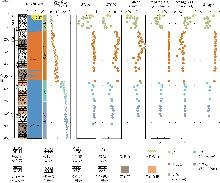
Fig. 1
Lithology (a, b), Sr isotope age (c), and geochemistry (d—i) of bulk carbonates from Well NK-1. Sr isotope age is from Li et al (2022); other data are from Zhang et al (2025)"

Fig. 1
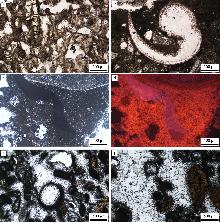
Fig. 2
Thin-section photomicrographs of carbonates from Well NK-1 under plane-polarized light. (a) Coral fragments with aragonite minerals within the upper section; (b) bio-fragments with recrystallized calcite from the upper limestone section; (c−d) dolomicrite and algal fragments from the dolomite section, shown under polarized light and cathodoluminescence, respectively; (e−f) bladed, recrystallized calcite spar growing perpendicularly from bio-fragments in the lower 540-1000 m section"

Fig. 2
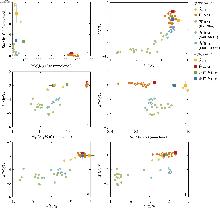
Fig. 3
Crossplots of Mg/(Mg+Ca) and Sr/(Mg+Ca) (a), δ13C and δ18O (b), and their correlations with δ26Mg from Meiji samples, as well as comparisons with Bahamian samples. Bahamian dolomite-, aragonite-, high- and low-Mg calcite-dominated samples are inferred from Higgins et al 2018; error bars represent standard deviation (SD). Low-Mg calcite-dominated samples are filtered by Mg/(Mg+Ca) < 40 and Sr/(Mg+Ca) < 5 (mmol/mol), aragonite-dominated samples by Mg/(Mg+Ca) < 40 and Sr/(Mg+Ca) > 5, and high-Mg calcite-dominated samples by Mg/(Mg+Ca) between 40 and 300, and the remaining samples are dolomite-dominated. Note that the Mg/(Mg+Ca) and δ26Mg of aragonite-dominated samples may be influenced by calcite due to the higher Mg content in calcite"
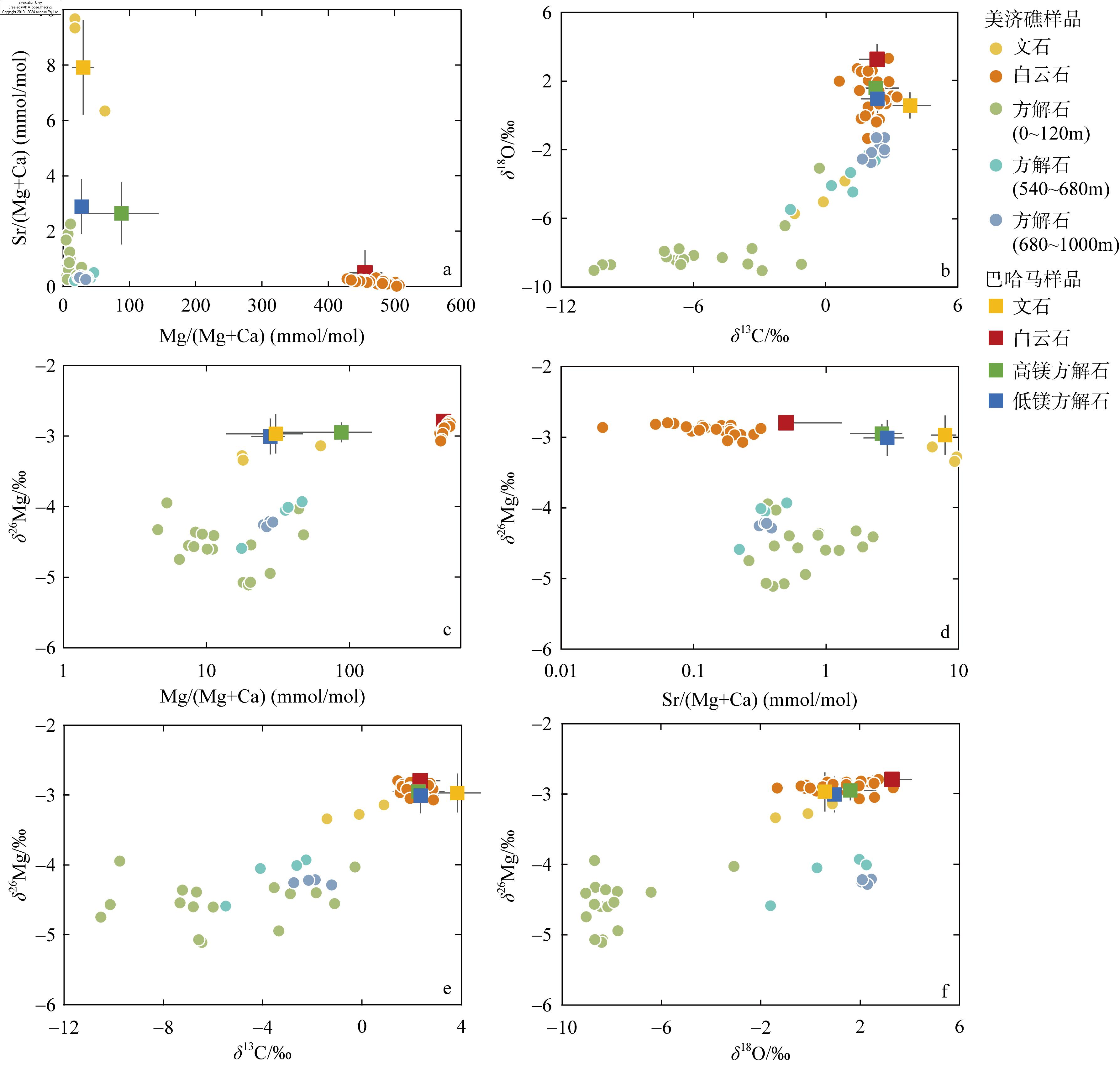
Fig. 3
Fig. 4
Crossplots of δ26Mg against Mg/(Mg+Ca) (a), Sr/(Mg+Ca) (b), δ13C (c), and δ18O (d) for Meiji samples, along with numerical modeling results. Two primary sediments with different geochemical compositions (M1 and M2) were used when modeling marine diagenesis. Arrows of the modeled lines indicate the direction of increasing diagenetic alteration; gray lines between sediment-buffered and fluid-buffered lines represent percentiles of the degree of alteration (from 0 to 100%). Sediment-buffered lines are obscured where they overlap with fluid-buffered lines"
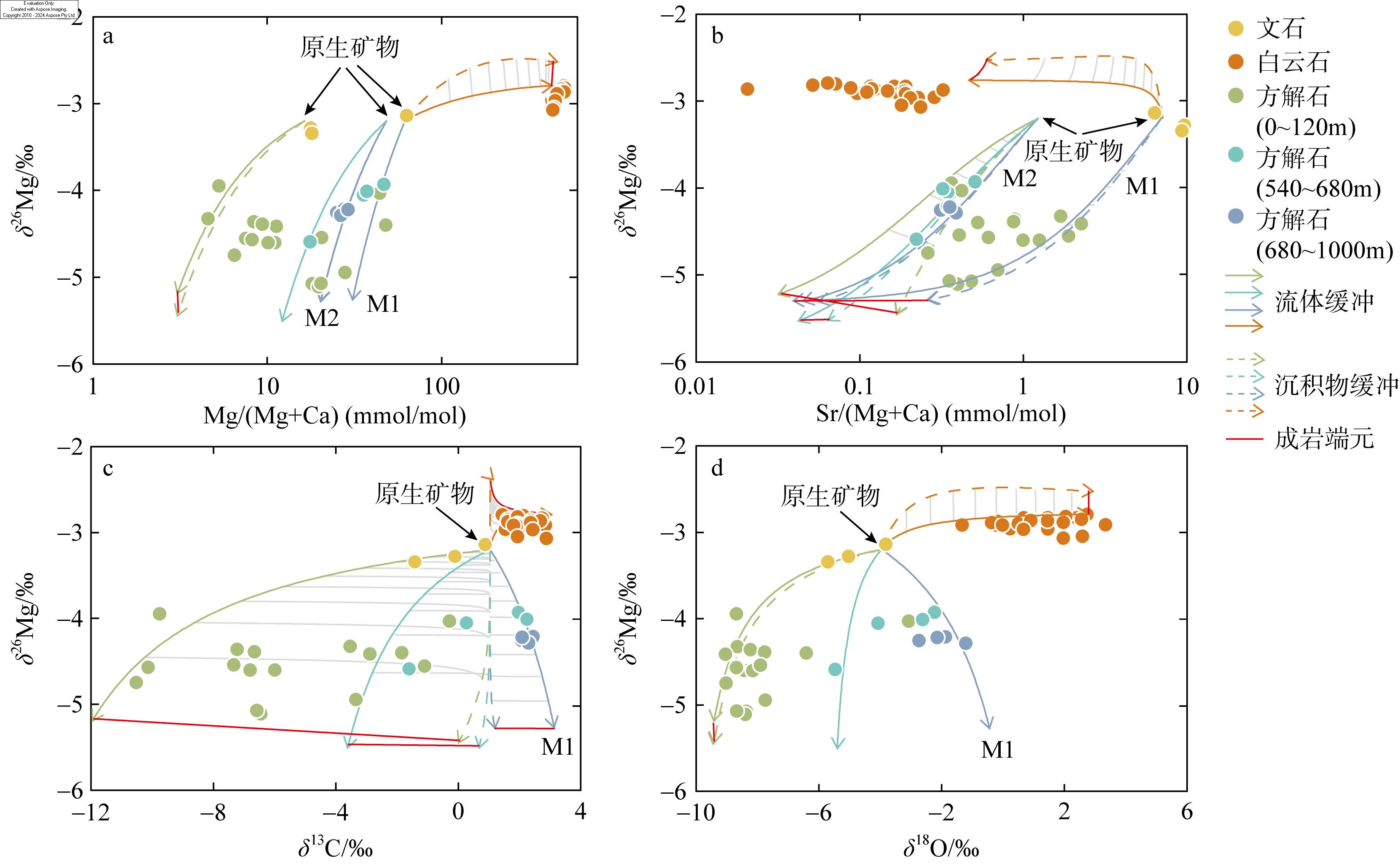
Fig. 4
Fig. 5
Crossplots of δ13C vs δ18O (a), Mn/Sr vs δ26Mg (b), and δ26Mg vs Mg/(Mg+Ca) (c), Sr/(Mg+Ca) (d), δ13C (e), and δ18O (f) for samples from the upper 120 m section of Well NK-1. Black dashed lines in (b) and (c) represent linear regression trends, with two samples showing elevated δ26Mg values (b) or high Mg/(Mg+Ca) ratios (c) excluded (outlined with dashed circles). In (c−f), arrows of the modeled lines indicate the direction of increasing diagenetic alteration; gray lines represent percentiles of the degree of alteration (from 0 to 100%). Endmember compositions in binary mixing lines in (c): δ26Mg of −5.5‰, −4.5‰, and −3.2‰, with Mg/(Mg+Ca) of 5 and 55, 3 and 91 (mmol/mol); in (d): δ26Mg of −5.5‰, −4.5‰, and −3.2‰, with Sr/(Mg+Ca) of 0.34 and 4, and 0.22 and 6 (mmol/mol); in (f): δ26Mg of −5.5‰, −4.5‰, and −3.3‰, with δ18O of −8.8‰, −5‰, and −9.5‰ and −3.6‰"
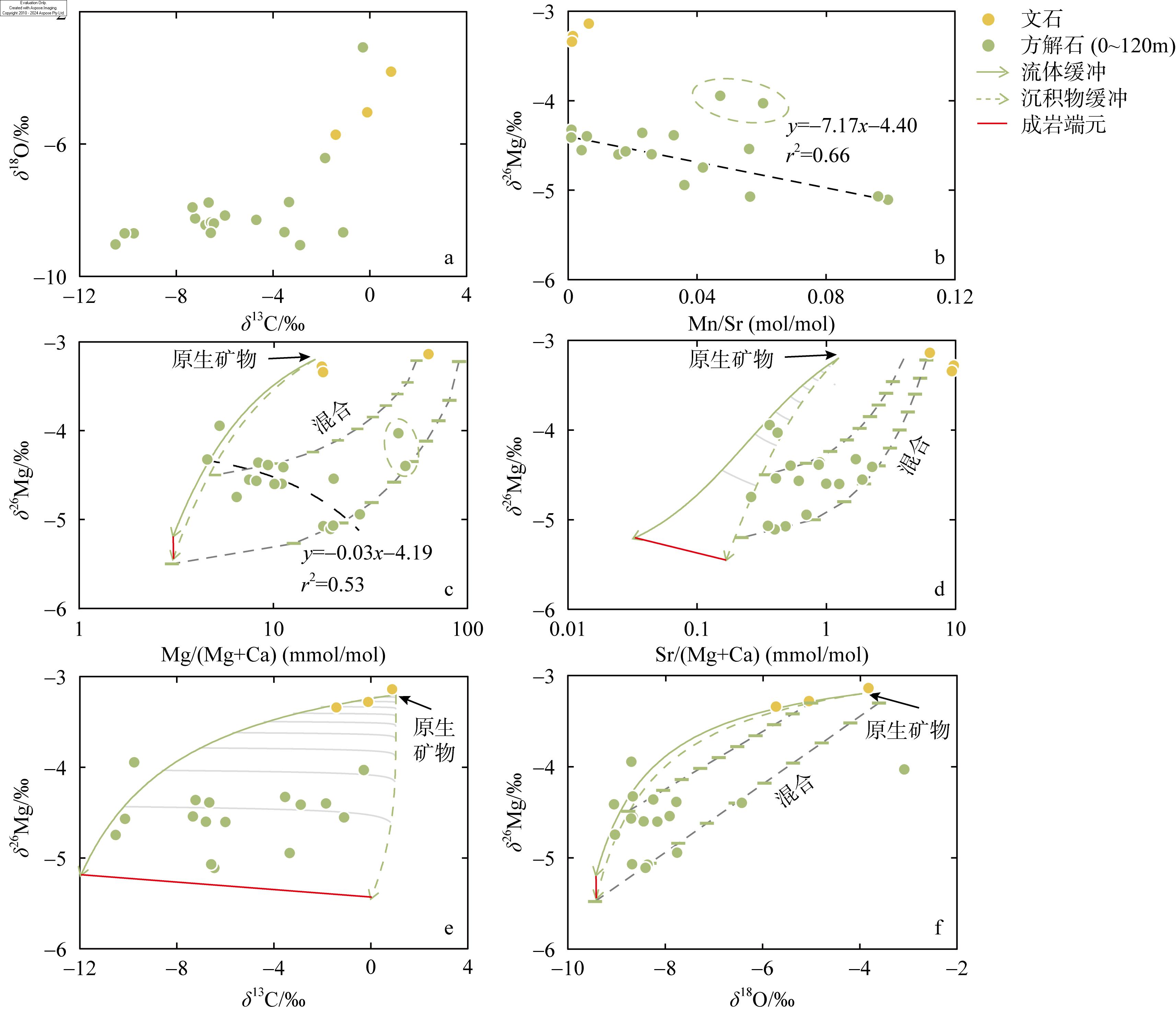
Fig. 5
Fig. 6
Crossplots of δ13C vs δ18O (a), Mn/Sr vs δ26Mg (b), and δ26Mg vs Mg/(Mg+Ca) (c), Sr/(Mg+Ca) (d), δ13C (e), and δ18O (f) for samples from the 540-1000 m section of Well NK-1. Black dashed lines represent linear regression trends for samples at 540-680 m. Two primary sediments with different geochemical compositions (M1 and M2) were used when modeling marine diagenesis; the mixing zone diagenetic trajectory involves a 50% addition of meteoric water and spans seawater to freshwater endmembers. In (c−f), arrows of the modeled lines indicate the direction of increasing diagenetic alteration; gray lines between sediment-buffered and fluid-buffered lines represent percentiles of the degree of alteration (from 0 to 100%). Sediment-buffered lines are obscured where they overlap with fluid-buffered lines"
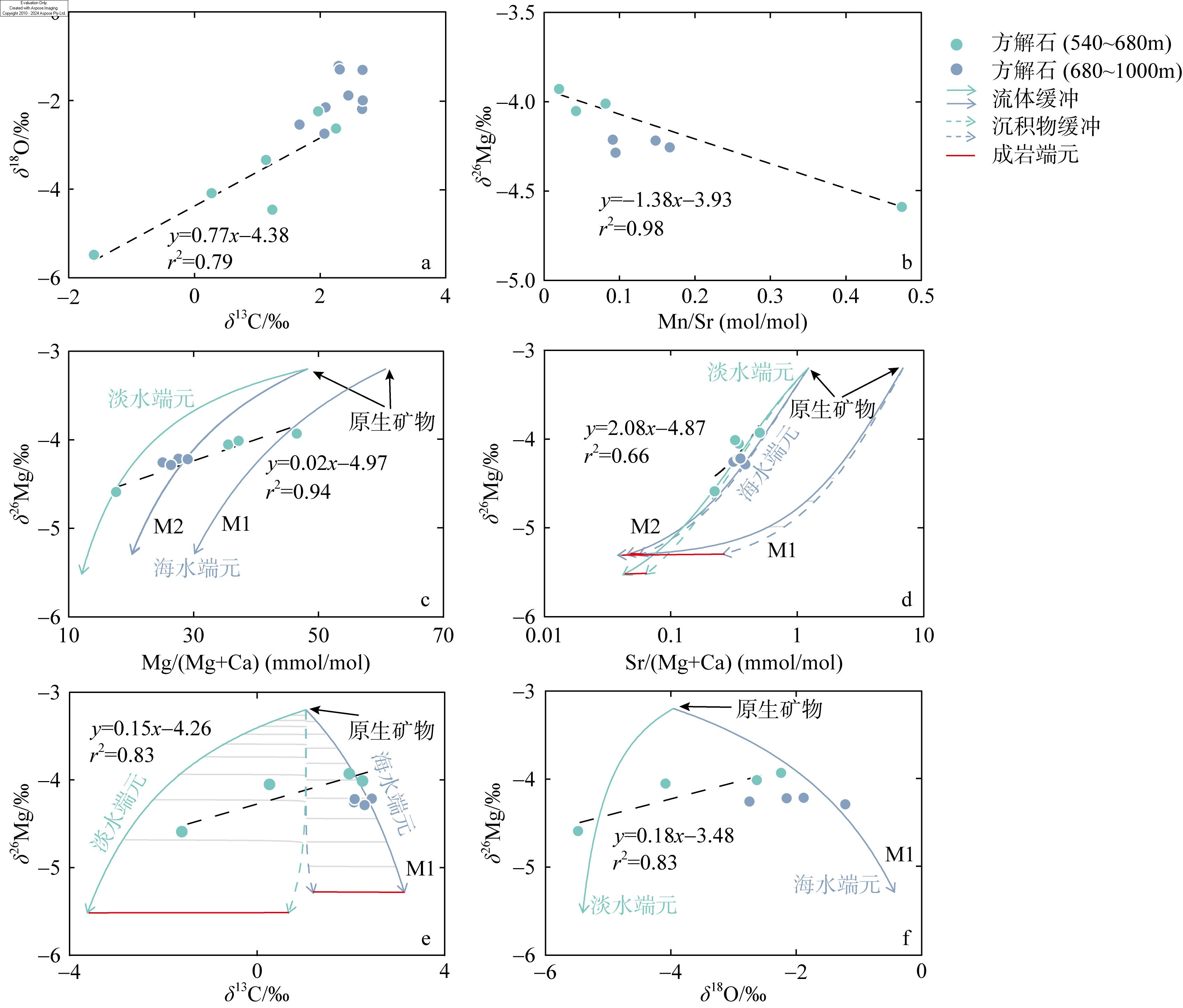
Fig. 6
Fig. 7
Comparisons of limestone geochemistry of primary (Pri) samples and samples that have undergone marine (Mar) and meteoric (Meo) diagenesis from global sites. Bahamian samples are all from Higgins et al (2018), with the top ~200 m samples from sites 1003/1007 considered as primary sediments. Australian primary and marine diagenesis samples are from ODP1131 (top ~100 m samples) and ODP1196A respectively (Fantle and Higgins, 2014; Higgins et al, 2018), with Mn/Sr data for marine diagenesis sourced from the Great Barrier Reef in Akhtar et al (2024), and all meteoric diagenesis data are from Akhtar et al (2024). Xisha Islands carbonates are from Well NK-1 (Wei et al, 2023), and Nansha Islands carbonates are from Wells NK-1 and Jiuzhang (Li et al, 2025; Liu et al, 2022; Wei et al, 2023; this study). The edges and whiskers of the box represent quartiles and 1.5× interquartile ranges, respectively, and center lines represent medians. Mg isotope data are unavailable for Xisha Islands samples"
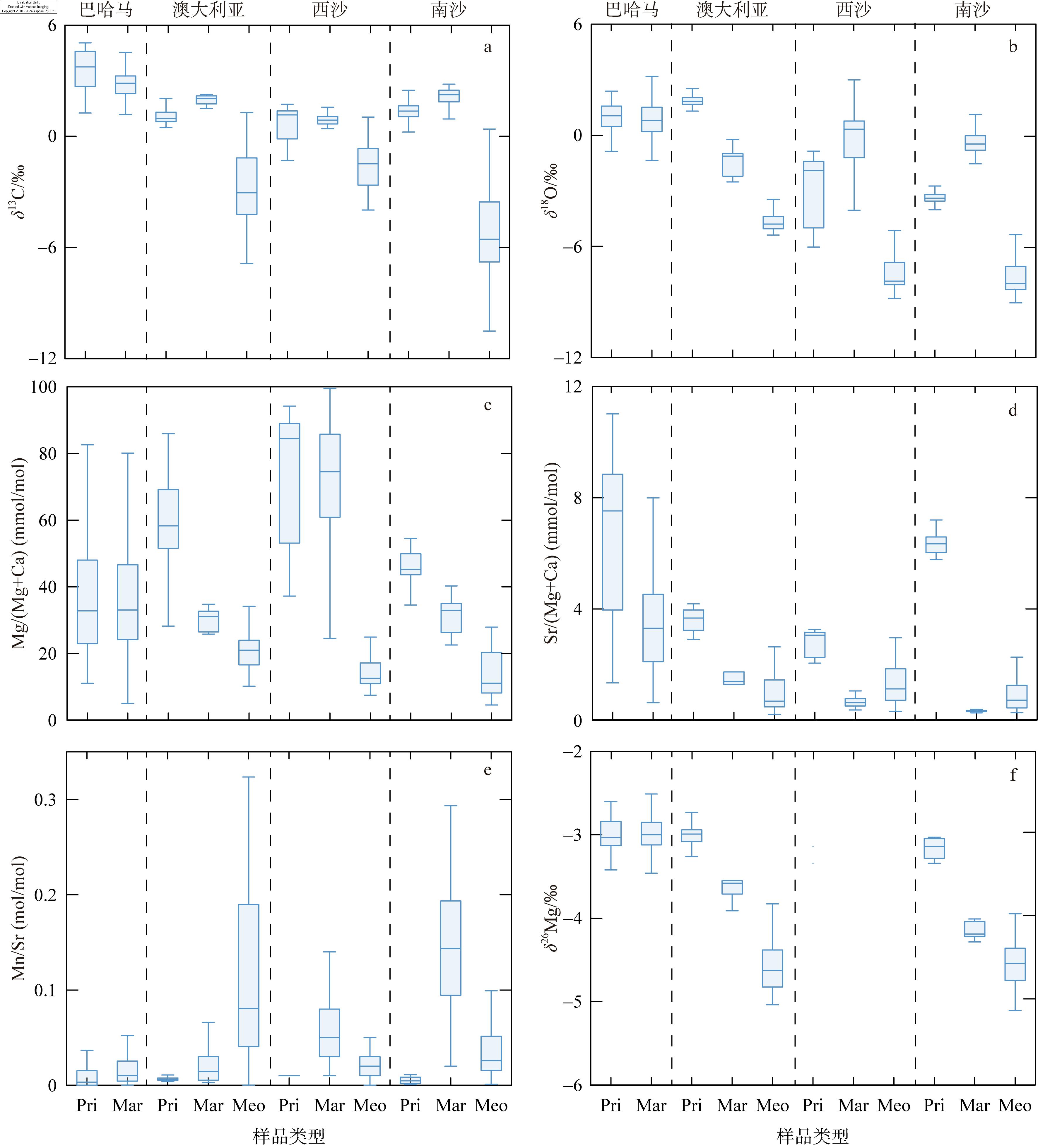
Fig. 7
| [1] |
黄康俊, 滕方振, 沈冰, 等, 2022. 镁同位素示踪表生地质过程的原理及应用[J]. 矿物岩石地球化学通报, 41(2): 213-234.
|
|
|
|
| [2] |
甯濛, 黄康俊, 沈冰, 2018. 镁同位素在“白云岩问题”研究中的应用及进展[J]. 岩石学报, 34(12): 3690-3708.
|
|
|
|
| [3] |
夏攀, 甯濛, 文华国, 等, 2021. 镁同位素示踪碳酸盐岩沉积-成岩过程: 对恢复深时海水镁同位素组成的启示[J]. 沉积学报, 39(6): 1546-1564.
|
|
|
|
| [4] |
doi: 10.1016/j.gca.2018.02.042 |
| [5] |
doi: 10.1016/j.gca.2024.08.002 |
| [6] |
doi: 10.1039/C9JA00002J |
| [7] |
doi: 10.1039/D0JA00059K |
| [8] |
|
| [9] |
doi: 10.1016/j.jseaes.2023.105981 |
| [10] |
doi: 10.1016/j.gca.2012.04.005 |
| [11] |
doi: 10.1016/j.gca.2017.01.010 |
| [12] |
doi: 10.1016/j.gca.2020.04.033 |
| [13] |
doi: 10.1016/j.jseaes.2022.105202 |
| [14] |
doi: 10.1146/earth.2020.48.issue-1 |
| [15] |
doi: 10.1016/j.gca.2014.07.025 |
| [16] |
doi: 10.1111/sed.2015.62.issue-6 |
| [17] |
doi: 10.1016/j.margeo.2021.106513 |
| [18] |
doi: 10.1016/j.chemgeo.2020.119876 |
| [19] |
doi: 10.1016/j.gca.2017.09.046 |
| [20] |
doi: 10.1016/j.epsl.2015.01.003 |
| [21] |
doi: 10.1016/j.gca.2009.07.031 |
| [22] |
doi: 10.1016/j.epsl.2022.117755 |
| [23] |
doi: 10.1016/j.gca.2010.05.006 |
| [24] |
doi: 10.1016/S0009-2541(99)00086-8 |
| [25] |
doi: 10.1002/ggge.v15.12 |
| [26] |
doi: 10.1130/B36365.1 |
| [27] |
doi: 10.1016/j.gca.2015.02.024 |
| [28] |
doi: 10.1016/j.gca.2019.01.029 |
| [29] |
doi: 10.1016/j.epsl.2012.04.010 |
| [30] |
doi: 10.1016/j.gloplacha.2025.104757 |
| [31] |
doi: 10.1002/rcm.5172 pmid: 21913261 |
| [32] |
doi: 10.1016/j.gca.2022.12.017 |
| [33] |
doi: 10.1016/j.palaeo.2022.110957 |
| [34] |
doi: 10.1016/j.sedgeo.2021.105933 |
| [35] |
doi: 10.1016/j.gca.2024.12.011 |
| [36] |
doi: 10.1016/j.gca.2013.03.024 |
| [37] |
doi: 10.1016/j.gca.2017.03.020 |
| [38] |
doi: 10.1038/s41467-020-20248-3 pmid: 33420047 |
| [39] |
doi: 10.1038/ncomms5672 pmid: 25135457 |
| [40] |
doi: 10.1016/j.gca.2013.07.002 |
| [41] |
|
| [42] |
doi: 10.1016/j.chemgeo.2012.01.025 |
| [43] |
doi: 10.1016/j.gca.2018.06.008 |
| [44] |
doi: 10.1016/j.quascirev.2014.01.014 |
| [45] |
doi: 10.1016/j.chemgeo.2013.09.017 |
| [46] |
doi: 10.1016/j.chemgeo.2016.03.011 |
| [47] |
doi: 10.1016/j.sedgeo.2022.106147 |
| [48] |
doi: 10.1111/sed.2015.62.issue-5 |
| [49] |
doi: 10.2138/rmg.2017.82.7 |
| [50] |
doi: 10.1111/ggr.2015.39.issue-3 |
| [51] |
doi: 10.1016/j.gca.2010.04.021 |
| [52] |
doi: 10.1016/j.epsl.2006.07.037 |
| [53] |
doi: 10.1016/S0009-2541(99)00081-9 |
| [54] |
doi: 10.1016/j.gca.2012.10.022 |
| [55] |
doi: 10.1016/j.epsl.2024.118806 |
| [56] |
doi: 10.1016/j.gca.2023.01.013 |
| [57] |
|
| [58] |
doi: 10.1016/j.palaeo.2021.110278 |
| [59] |
doi: 10.1016/j.scib.2020.08.014 pmid: 36654321 |
| [60] |
doi: 10.1016/j.chemgeo.2025.122827 |
| [61] |
doi: 10.1016/j.gca.2024.07.019 |
| [1] | LI Gang, XU Weihai, LUO Yun, LIU Jianguo, ZHAO Jianxin, FENG Yuexing, CHENG Jun, SUN Zhen, XIANG Rong, XU Min, YAN Wen. The Cenozoic tectonic evolution of the southern South China Sea: stratigraphic evidence from a deep borehole in Meiji Atoll [J]. Journal of Tropical Oceanography, 2026, 45(5): 16-34. |
| [2] | ZHU Xiaowei, MO Ziyi, MAO Shengyi, TIAN Yuhang, LUO Yun, MIAO Li, XU Weihai, LI Gang, YAN Wen. Distribution characteristics of biomarker components and their environmental indications at Well NK-1 on Meiji Atoll, Nansha Islands* [J]. Journal of Tropical Oceanography, 2026, 45(5): 162-177. |
| [3] | LUO Yun, LI Gang, ZHANG Xiyang, XU Weihai, ZHU Xiaowei, ZHOU Wanqiu, HUANG Huiwen, ZHONG Fuchang, YAN Wen. Differential dolomitization process of coral reefs in the South China Sea: a case study based on a deep borehole in Meiji Atoll [J]. Journal of Tropical Oceanography, 2026, 45(5): 108-127. |
| [4] | Jiarui XU, Yifeng CHEN, Baoyun WANG. Petrography of carbonate veins in basement basalts from the South China Sea Exp. 349 [J]. Journal of Tropical Oceanography, 2018, 37(6): 63-73. |
|
||