

Journal of Tropical Oceanography ›› 2026, Vol. 45 ›› Issue (4): 203-216.doi: 10.11978/2025186CSTR: 32234.14.2025186
Previous Articles Next Articles
The morphodynamic process of Wanwei Jintan Beach in the Beibu Gulf in response to typhoon impacts
LU Biyu1( ), PANG Wenhong2(), XI Yangyang3, QIN Xujian1, YANG Min1, WANG Tianji1, GU Jinghua4
- 1
Guangxi Zhuang Autonomous Region Marine Geological Survey Institute
2Pinglu Canal and Beibu Gulf Coastal Ecosystem Observation and Research Station of Guangxi ,Guangxi Key Laboratory of Marine Environmental Disaster Processes and Ecological Protection Technology, Beibu Gulf University
3Guangxi Academy of Marine Sciences ,Guangxi Academy of Sciences
4State Key Laboratory of Estuarine and Coastal Research ,East China Normal University
-
Received:2025-10-09Revised:2025-11-04Online:2026-07-10Published:2026-07-31 -
Contact:PANG Wenhong. email: whpang@bbgu.edu.cn -
Supported by:National Natural Science Foundation of China(42406166); Guangxi Universities and Colleges Young and Middle-aged Teachers' Research Basic Ability Improvement Project(2024KY0431); Financial Project of Bureau of Geology and Mineral Exploration and Development of Guangxi Zhuang Autonomous Region(GXDK202439); Joint Funds of the National Natural Science Foundation of China(U20A2099)

CLC Number:
- P736
Cite this article
LU Biyu, PANG Wenhong, XI Yangyang, QIN Xujian, YANG Min, WANG Tianji, GU Jinghua. The morphodynamic process of Wanwei Jintan Beach in the Beibu Gulf in response to typhoon impacts[J].Journal of Tropical Oceanography, 2026, 45(4): 203-216.
share this article
Add to citation manager EndNote|Reference Manager|ProCite|BibTeX|RefWorks
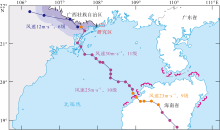
Fig. 1
Location of the study area and typhoon track"
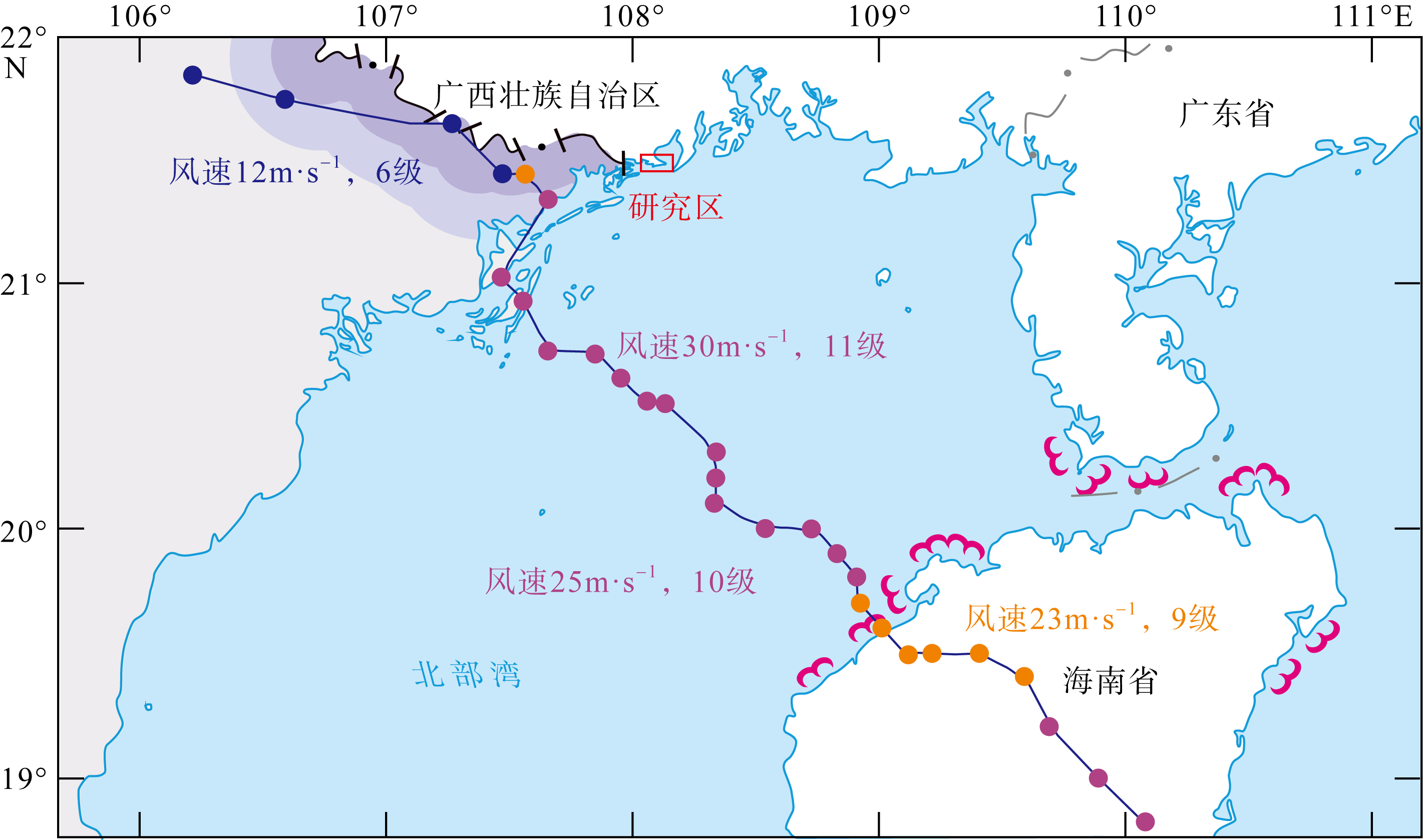
Fig. 1
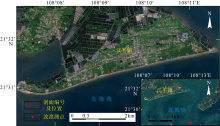
Fig. 2
Survey line layout and location of a wave measurement point"

Fig. 2
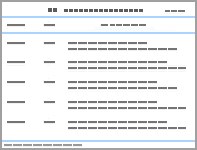
Tab. 1
Distances from sediment sampling points to artificial seawalls and their corresponding zoned positions alone the profile"
| 剖面编号 | 剖面形态 | CT01距离/位置 | CT02距离/位置 | CT03距离/位置 | CT04距离/位置 | CT05距离/位置 |
|---|---|---|---|---|---|---|
| L1 | 沙丘型剖面 | 2.8m/ | 22.2m/ | 51.9m/ | 86.0m/ | 122.8m/ |
| 后滨 | 后滨 | 前滨上 | 前滨中 | 前滨下 | ||
| L2 | 平坦型剖面 | 8.7m/ | 20.1m/ | 49.2m/ | 73.3m/ | 96.8m/ |
| 后滨 | 后滨 | 前滨上 | 前滨中 | 前滨下 | ||
| L3 | 沙坝型剖面 | 10.7m/ | 24.2m/ | 42.2m/ | 85.8m/ | 108.4m/ |
| 后滨 | 前滨上 | 前滨上 | 前滨中 | 前滨下 |
Tab. 1
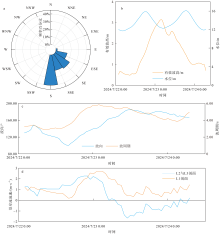
Fig. 3
Wave, tide and current variation processes before and after the passage of typhoon “Prapiroon” (the fourth typhoon of 2024). (a) Rose diagram of wave direction frequency; (b) variation curves of significant wave height and water level; (c) variations in wave direction and wave period; (d) variations in alongshore current magnitude across different profiles (positive values indicate west-to-east direction, negative values indicate east-to-west direction)"
Fig. 3
Tab. 2
Statistical table of geomorphic states of different profiles"
| 剖面形态 | 台风前 | 台风后 | ||
|---|---|---|---|---|
| 破波尺度参数ε | 海滩地貌状态 | 破波尺度参数ε | 海滩地貌状态 | |
| 沙丘型剖面 | 219 | 耗散型 | 211 | 耗散型 |
| 平坦型剖面 | 324 | 耗散型 | 384 | 耗散型 |
| 沙坝型剖面 | 380 | 耗散型 | 400 | 耗散型 |
Tab. 2
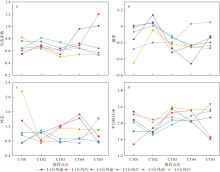
Fig. 4
Changes in surface sediment grain size parameters along the profiles before and after the typhoon. (a) Sorting coefficient, (b) skewness, (c) kurtosis, (d) mean grain size"
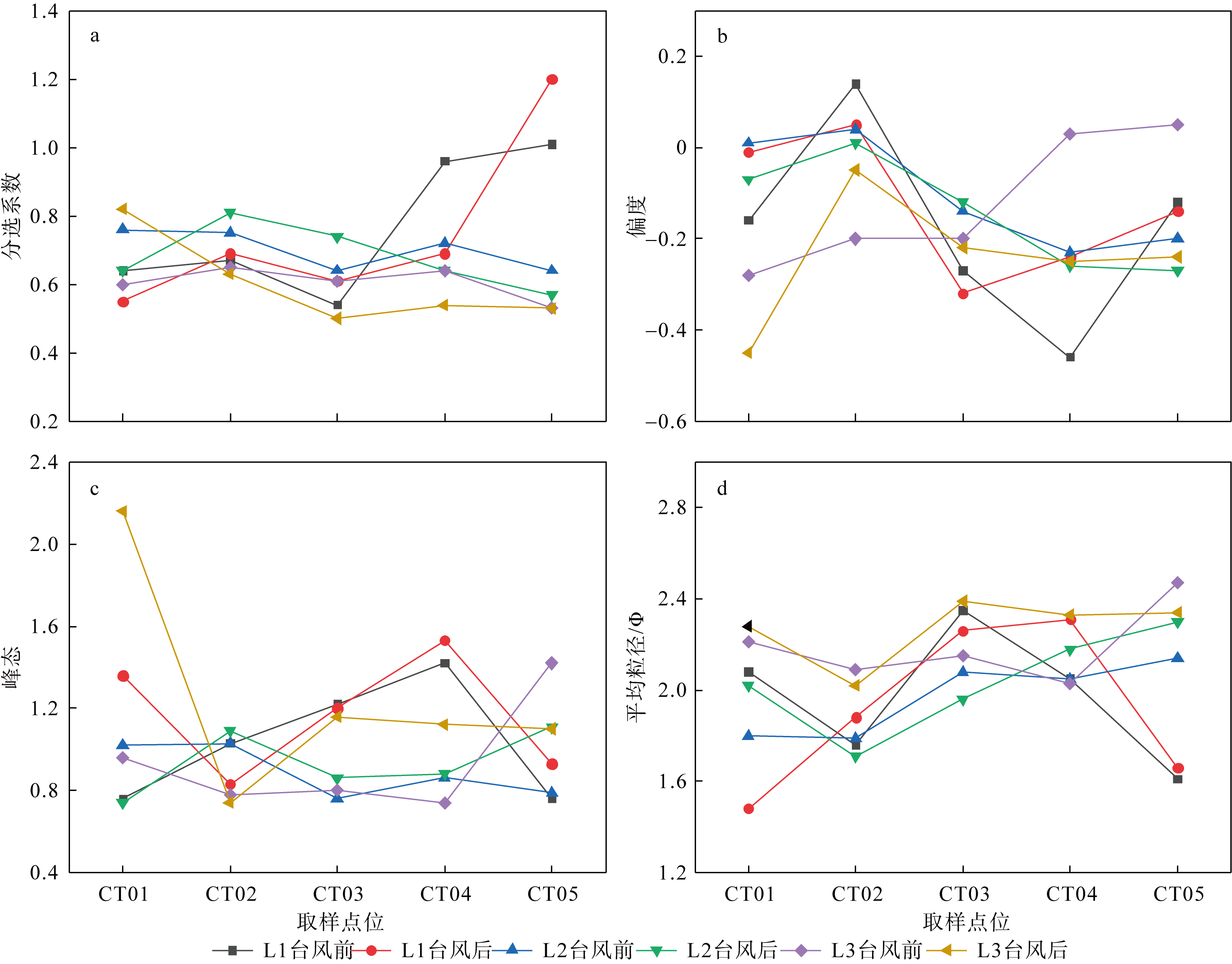
Fig. 4
Fig. 5
Changes in sediment components across different profiles before and after the typhoon. (a) Sand dune-type profile; (b) flat-type profile; (c) sandbar-type profile"
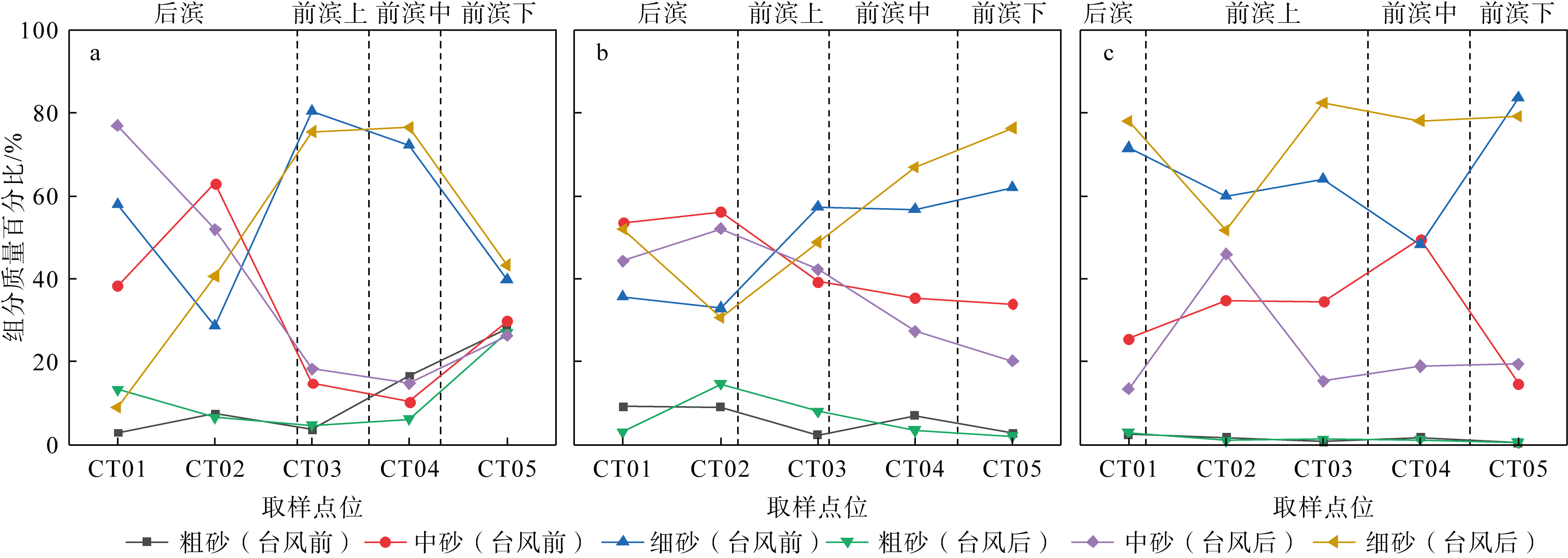
Fig. 5
Fig. 6
Elevation changes in the profiles before and after the typhoon. (a) Sand dune-type profile; (b) flat-type profile; (c) sandbar-type profile. The red and green lines represent the elevation changes before the typhoon (July 22, 2024) and after the typhoon (July 24, 2024), respectively; circles indicate sediment sampling locations; vertical dashed lines divide the profile into five zones: backshore, upper foreshore, middle foreshore, lower foreshore, and inner shore"
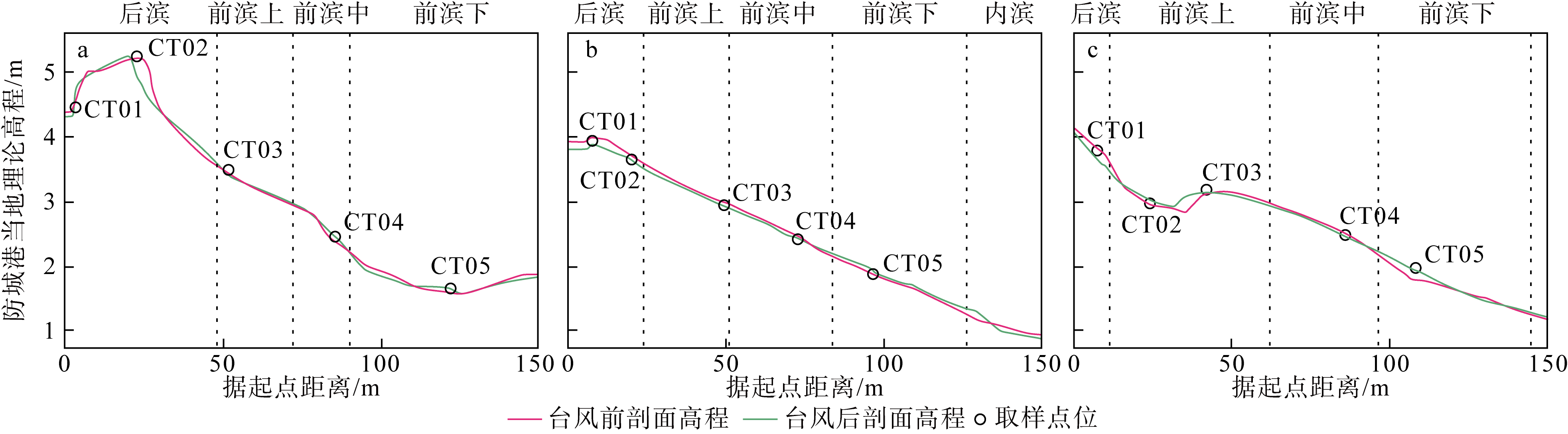
Fig. 6
Tab. 3
Statistical table of elevation and slope changes at different positions of different profiles"
| 剖面形态 | 位置 | 单宽体积变化量S/m3 | 最大冲淤高度h1/cm | 平均冲淤高度h2/cm | 台风前坡度/% | 台风后坡度/% |
|---|---|---|---|---|---|---|
| 沙丘型剖面 | 后滨 | −0.65 | −48.55 | −1.35 | 7.09* | 6.19* |
| 前滨上 | 0.19 | 2.12 | 0.81 | 2.58 | 2.54 | |
| 前滨中 | 0.63 | 9.00 | 3.53 | 4.24 | 4.39 | |
| 前滨下 | −0.93 | 9.36 | −1.56 | 0.56 | 0.64 | |
| 整个剖面 | −0.75 | −0.50 | ||||
| 平坦型剖面 | 后滨 | -2.57 | -16.38 | −10.91 | 1.48 | 1.31 |
| 前滨上 | −1.46 | -11.22 | −5.39 | 2.37 | 2.28 | |
| 前滨中 | −0.95 | -7.52 | −2.91 | 2.50 | 2.21 | |
| 前滨下 | 1.83 | 7.34 | 4.28 | 2.20 | 2.05 | |
| 整个剖面 | -3.15 | −2.50 | ||||
| 沙坝型剖面 | 后滨 | −1.60 | −19.10 | −13.77 | 4.88 | 5.57 |
| 前滨上 | 1.15 | 28.00 | 2.27 | 1.27 | 0.98 | |
| 前滨中 | −0.61 | −3.65 | −1.78 | 2.94 | 2.23 | |
| 前滨下 | 1.99 | 17.90 | 4.13 | 1.55 | 2.02 | |
| 整个剖面 | 0.93 | 0.64 |
Tab. 3
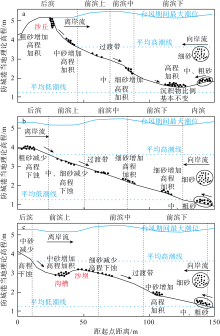
Fig. 7
Schematic diagrams illustrating changes in different profiles. (a) Sand dune-type profile; (b) flat-type profile; (c) sandbar-type profile"
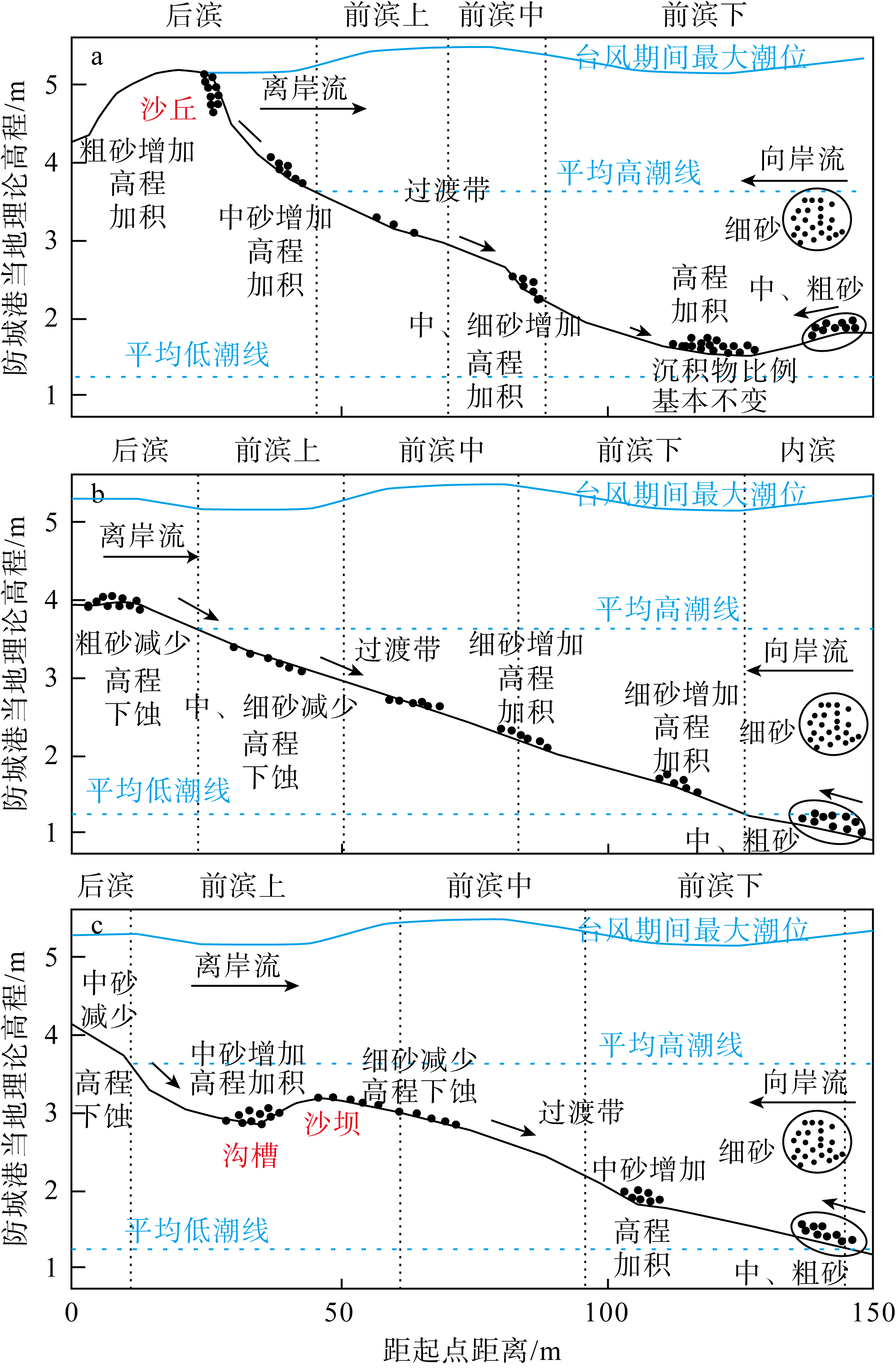
Fig. 7
Fig. 8
Sediment cumulative probability curves in each zoned area of Jintan beach profiles"
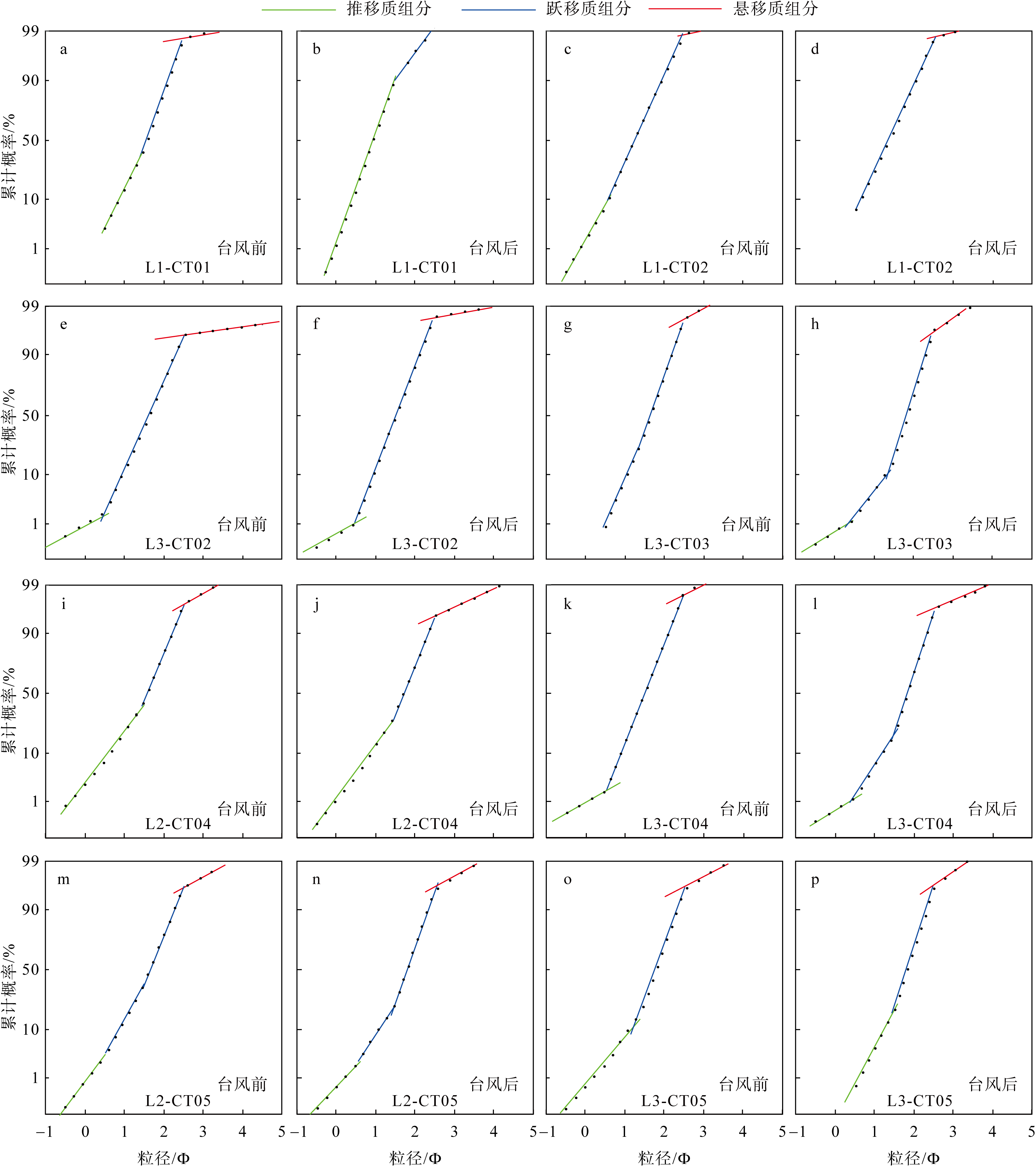
Fig. 8
| [1] |
陈海南, 杨丽中, 付玉成, 等, 2022. 台风 “巴威” 对威海楮岛沙滩的侵蚀研究[J]. 海洋湖沼通报, 44(4): 82-88.
|
|
|
|
| [2] |
蔡锋, 雷刚, 苏贤泽, 等, 2006. 台风"艾利"对福建沙质海滩影响过程研究[J]. 海洋工程, 24(1): 98-109.
|
|
|
|
| [3] |
蔡锋, 苏贤泽, 曹惠美, 等, 2005. 华南砂质海滩的动力地貌分析[J]. 海洋学报, 27(2): 106-114.
|
|
|
|
| [4] |
陈子燊, 1995. 弧形海岸海滩地貌对台风大浪的响应特征[J]. 科学通报, 40(23): 2168-2170 (in Chinese).
|
| [5] |
戴志军, 陈子燊, 李春初, 2001. 岬间海滩剖面短期变化的动力作用分析[J]. 海洋科学, 25(11): 38-41.
|
|
|
|
| [6] |
戴志军, 陈子燊, 欧素英, 2002. 粤东汕尾岬间海滩剖面月内日变化过程特征分析[J]. 热带海洋学报, 21(1): 27-32.
|
|
|
|
| [7] |
戴志军, 路海亭, 欧素英, 等, 2008. 海滩体积时空变化和波浪场的奇异谱分析[J]. 海洋学报, 30(3): 133-139.
|
|
|
|
| [8] |
龚昊, 陈沈良, 钟小菁, 等, 2017. 海南岛东北部海滩侵蚀与恢复对连续台风的复杂响应[J]. 海洋学报, 39(5): 68-77.
|
|
|
|
| [9] |
郭俊丽, 时连强, 陈沈良, 等, 2022. 台风季节朱家尖岛砂、砾质岬湾海滩的不同沉积地貌动态变化[J]. 热带海洋学报, 41(4): 82-96.
|
|
doi: 10.11978/2021091 |
|
| [10] |
黄祖明, 戴志军, 黎树式, 等, 2021. 中强潮海滩剖面冲淤过程研究--以北海银滩为例[J]. 海洋地质与第四纪地质, 41(4): 36-47.
|
|
|
|
| [11] |
雷刚, 蔡锋, 2005. 福建江田下沙沙滩沉积地貌组合对台风的响应模式[J]. 台湾海峡, 24(3): 395-403+419.
|
|
|
|
| [12] |
黎树式, 戴志军, 葛振鹏, 等, 2017. 强潮海滩响应威马逊台风作用动力沉积过程研究--以北海银滩为例[J]. 海洋工程, 35(3): 89-98.
|
|
|
|
| [13] |
黎奕宏, 雷刚, 蔡锋, 等, 2019. 我国硬式护岸、渔港工程和人工岛等3类典型海岸工程对相邻海滩的影响研究[J]. 应用海洋学学报, 38(1): 118-125.
|
|
|
|
| [14] |
李志龙, 陈子燊, 2006. 岬间砂质海岸平衡形态模型及其在华南海岸的应用[J]. 台湾海峡, 25(1): 123-129.
|
|
|
|
| [15] |
刘涛, 王增军, 张建兵, 2020. 广西北海银滩侵蚀动力研究[J]. 海洋学报, 42(7): 147-154.
|
|
|
|
| [16] |
罗时龙, 靳瑞芳, 于帆, 等, 2016. 海岸沙丘风暴侵蚀研究现状与展望[J]. 海洋地质前沿, 32(2): 1-7.
|
|
|
|
| [17] |
彭俊, 蔡锋, 雷刚, 2008. 0418号台风过境后近岸沉积物粒度特征参数的变化分析[J]. 海洋湖沼通报, (2): 37-45.
|
|
|
|
| [18] |
邵超, 戚洪帅, 蔡锋, 等, 2016. 海滩-珊瑚礁系统风暴响应特征研究: 以1409号台风“威马逊”对清澜港海岸影响为例[J]. 海洋学报, 38(2): 121-130.
|
|
|
|
| [19] |
束芳芳, 蔡锋, 戚洪帅, 等, 2019. 不同沉积物养护海滩对台风响应的差异性研究[J]. 海洋学报, 41(7): 103-115.
|
|
|
|
| [20] |
王爱军, 叶翔, 陈坚, 2009. 台风作用下的港湾型潮滩沉积过程以2008年“凤凰”台风对福建省罗源湾的影响为例[J]. 海洋学报, 31(6): 77-86.
|
|
|
|
| [21] |
王立杨, 付玉成, 杨丽中, 等, 2021. 台风“利奇马”对威海楮岛海滩演化过程的影响[J]. 海洋科学进展, 39(4): 608-617.
|
|
|
|
| [22] |
王永红, 黄伊恒, 2024. 全球海滩重金属污染的研究进展[J]. 中国海洋大学学报(自然科学版), 54(10): 51-65.
|
|
|
|
| [23] |
喜扬洋, 王日明, 冯炳斌, 等, 2022. 北海银滩响应台风作用的动力地貌过程[J]. 热带海洋学报, 41(4): 97-104.
doi: 10.11978/2021097 |
|
doi: 10.11978/2021097 |
|
| [24] |
杨林, 董玉祥, 黄德全, 等, 2017. 海岸沙席形态及近表层沉积物粒度对台风的响应[J]. 地理科学, 37(8): 1243-1250.
doi: 10.13249/j.cnki.sgs.2017.08.015 |
|
doi: 10.13249/j.cnki.sgs.2017.08.015 |
|
| [25] |
张雪琴, 董玉祥, 杨林, 等, 2016. 海岸沙丘近表层粒度对台风的响应[J]. 中国沙漠, 36(6): 1519-1526.
doi: 10.7522/j.issn.1000-694X.2016.00072 |
|
doi: 10.7522/j.issn.1000-694X.2016.00072 |
|
| [26] |
朱士兵, 李志强, 张会领, 等, 2020. 基于地貌动力学的雷州半岛海滩状态分类研究[J]. 地理研究, 39(6): 1269-1282.
doi: 10.11821/dlyj020190444 |
|
|
|
| [27] |
中华人民共和国国家质量监督检验检疫总局, 中国国家标准化管理委员会, 2007. GB/T12763.8-2007海洋调查规范第8部分: 海洋地质地球物理调查[S]. 北京: 中国标准出版社.
|
|
General Administration of Quality Supervision, Inspection and Quarantine of the People's Republic of China, Standardization Administration of the People's Republic of China, 2007. Specifications for oceanographic survey - Part 8: marine geology and geophysics survey (GB/T12763.8-2007)[S]. Beijing: Standards Press of China (in Chinese).
|
|
| [28] |
doi: 10.1061/(ASCE)NH.1527-6996.0000593 |
| [29] |
doi: 10.1016/j.ecss.2004.04.004 |
| [30] |
|
| [31] |
doi: 10.1306/74D70646-2B21-11D7-8648000102C1865D |
| [32] |
doi: 10.1016/j.margeo.2017.08.008 |
| [33] |
doi: 10.1029/JC080i021p02997 |
| [34] |
|
| [35] |
|
| [36] |
|
| [37] |
doi: 10.1038/s41598-018-24630-6 pmid: 29703960 |
| [38] |
doi: 10.1016/j.csr.2019.104006 |
| [39] |
doi: 10.1002/esp.5036 |
| [40] |
doi: 10.1016/j.margeo.2010.06.005 |
| [41] |
|
| [42] |
doi: 10.1306/D4269774-2B26-11D7-8648000102C1865D |
| [43] |
|
| [44] |
doi: 10.1016/0025-3227(84)90008-2 |
| [45] |
doi: 10.1016/j.coastaleng.2008.11.004 |
| [1] | XI Yangyang, WANG Riming, FENG Bingbin, CHEN Bo. Morphodynamic processes of the Yintan Beach in response to typhoon [J]. Journal of Tropical Oceanography, 2022, 41(4): 97-104. |
|
||