

热带海洋学报 ›› 2026, Vol. 45 ›› Issue (4): 41-62.doi: 10.11978/2025225CSTR: 32234.14.2025225
基于宏条形码技术的北部湾近岸海域无脊椎动物多样性的季节动态和群落构建
李晓婷1( ), 甫佳1, 邱梦涵1, 吴宗奇1, 李皓琛1, 刘莹1, 彭春艳1, 唐建辉1,2, 龚斌1()
- 1
北部湾大学海洋学院 ,广西海洋环境灾害过程与生态保护技术重点实验室, 平陆运河河口海湾生态系统广西野外科学观测研究站
2中国科学院烟台海岸带研究所 ,海岸带环境过程与生态修复研究室
-
收稿日期:2025-09-01修回日期:2025-09-25出版日期:2026-07-10发布日期:2026-07-31 -
通讯作者:龚斌。email: gongbin@bbgu.edu.cn -
作者简介:李晓婷(2001—), 女, 广西壮族自治区防城港市人, 硕士研究生, 从事海洋微生物生态研究。email: lxt1941227248@foxmail.com
-
基金资助:广西重点研发项目(GuikeAB24010146); 广西自然科学基金重点项目(2020GXNSFDA238015)
Seasonal dynamics and community assembly of invertebrate in the coastal waters of the Beibu Gulf based on metabarcoding technology
LI Xiaoting1(), FU Jia1, QIU Menghan1, WU Zongqi1, LI Haochen1, LIU Ying1, PENG Chunyan1, TANG Jianhui1,2, GONG Bin1()
- 1
Pinglu Canal and Beibu Gulf Coastal Ecosystem Observation and Research Station of Guangxi ,Guangxi Key Laboratory of Marine Environmental Disaster Processes and Ecological Protection Technology, College of Marine Sciences, Beibu Gulf University
2Laboratory of Coastal Environmental Processes and Ecological Remediation ,Yantai Institute of Coastal Zone Research, Chinese Academy of Sciences
-
Received:2025-09-01Revised:2025-09-25Online:2026-07-10Published:2026-07-31 -
Contact:GONG Bin. email: gongbin@bbgu.edu.cn -
Supported by:Guangxi Key Research and Development Program(GuikeAB24010146); Key Project of Guangxi Natural Science Foundation(2020GXNSFDA238015)

摘要:
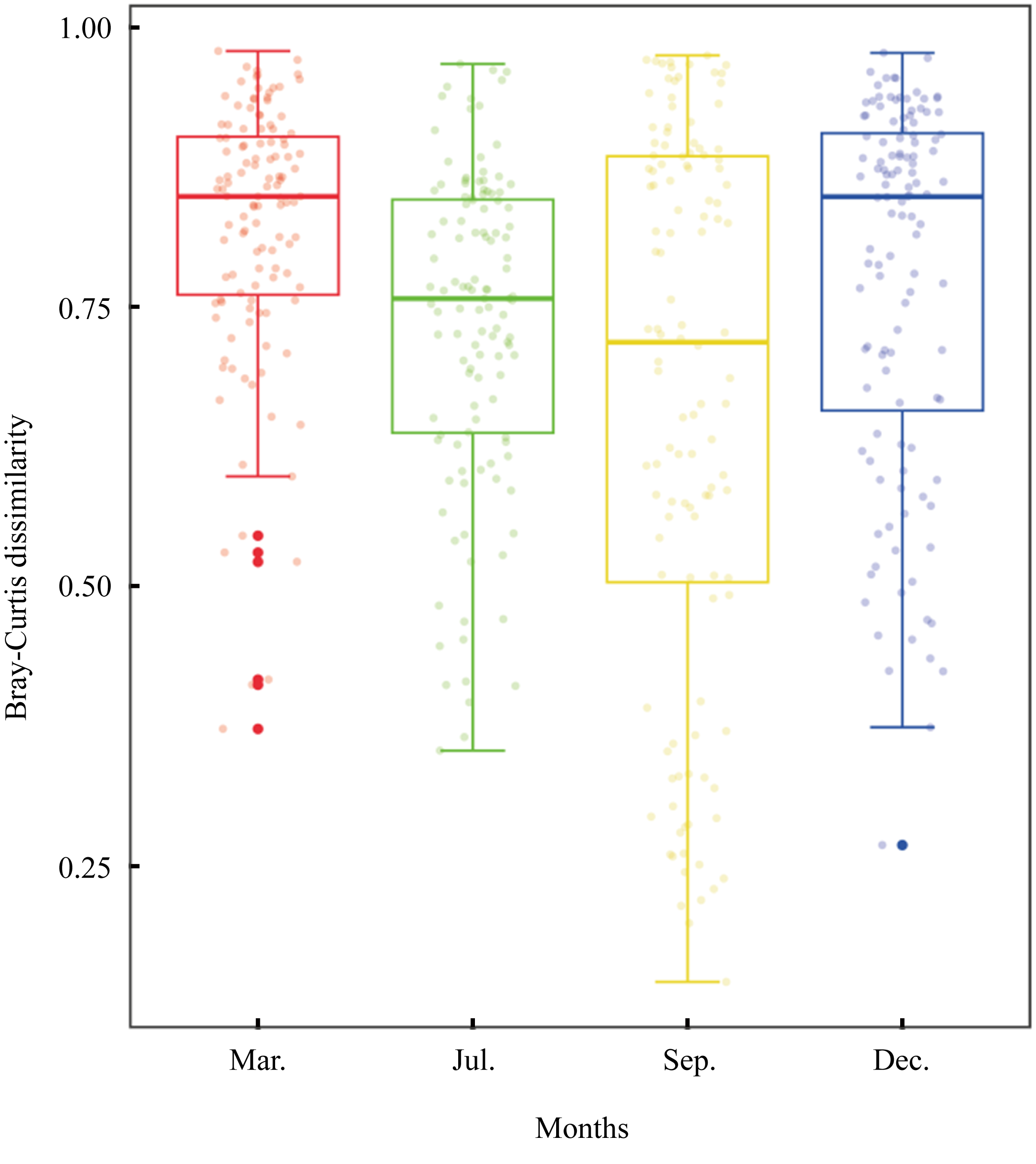
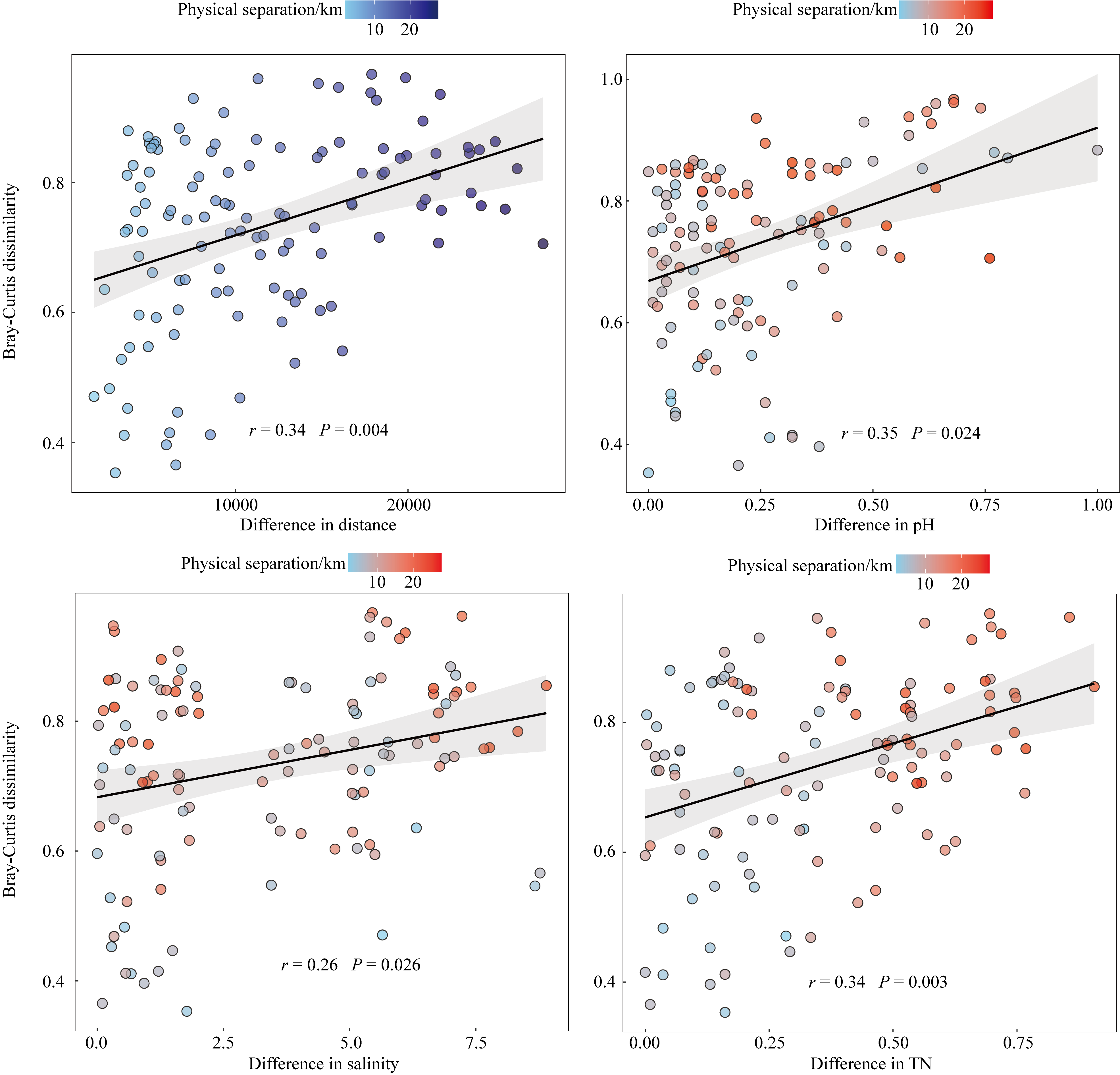
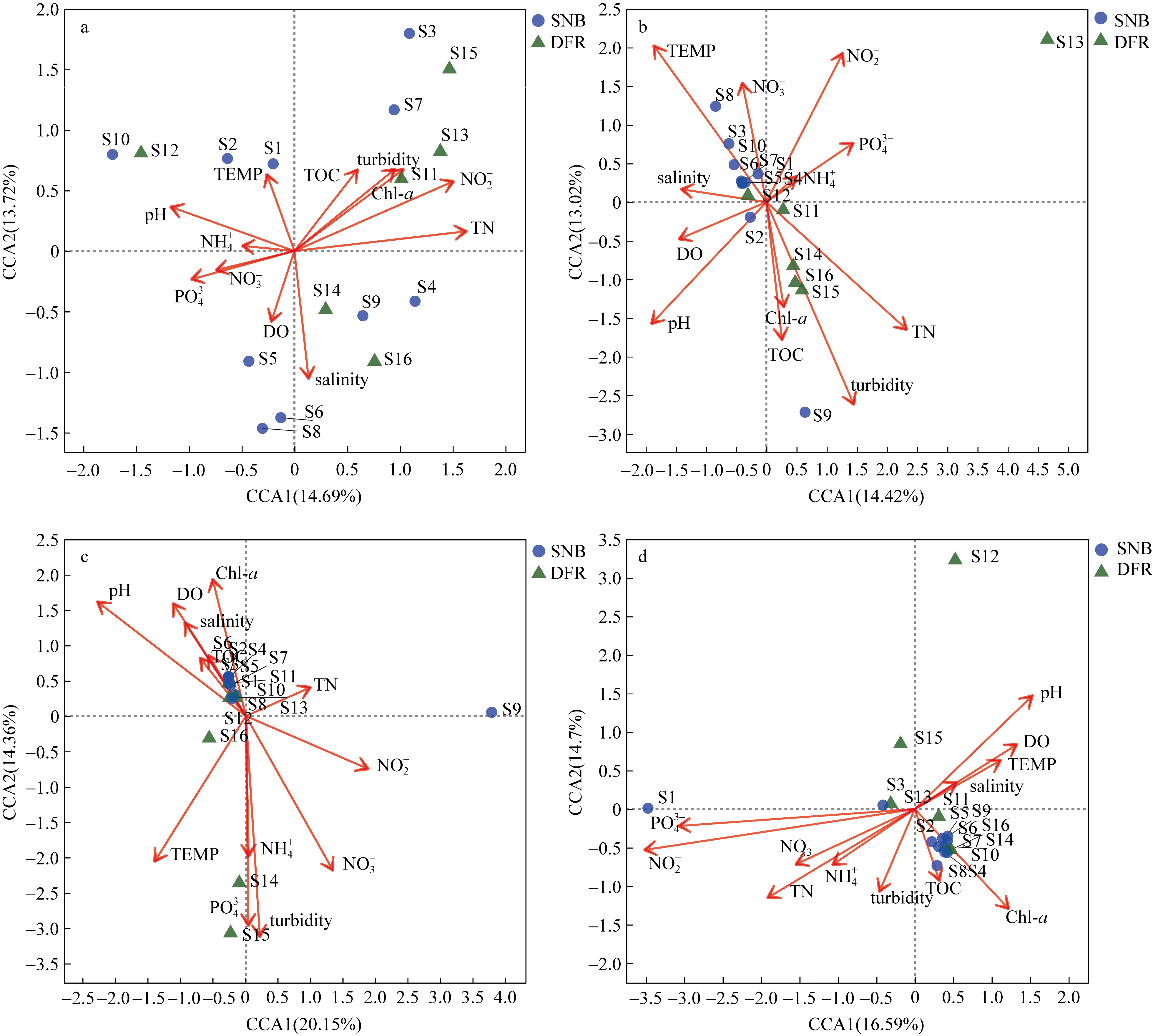
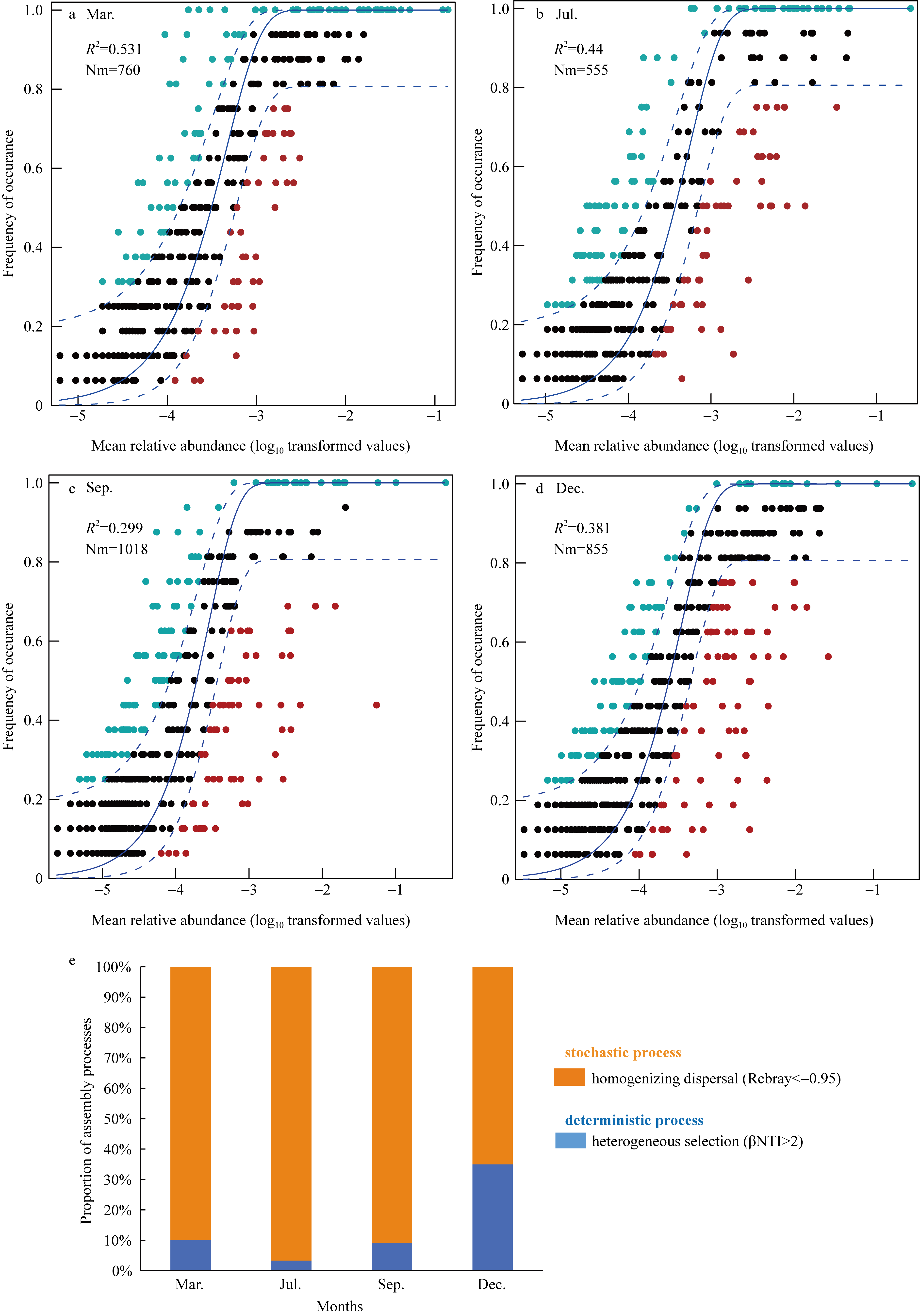
近岸海域无脊椎动物在维持海洋生态系统健康方面发挥着关键作用。然而, 阐明影响其多样性及群落构建的环境因素仍是一项颇具挑战性的课题。本研究采用18S rRNA 基因(V4区)高通量测序技术(high-throughput sequencing, HTS), 探究了环境变量对中国北部湾“三娘湾—大风江”区域无脊椎动物多样性、共现网络与群落构建过程的影响。研究结果表明, 无脊椎动物的α多样性、β多样性及共现网络存在显著的季节差异。无脊椎动物α多样性与环境因素呈现复杂关联, 其中对温度变化的适应可解释环境因素对α多样性的大部分影响。除12月外, 地理距离衰减效应对β多样性具有显著影响。在无脊椎动物群落构建过程中, 确定性过程的贡献在不同季节有所差异: 其他季节为3.3%~10%, 而12月则升高至35%。在 9月高温或 12月低温条件下, 无脊椎动物群落对海水理化性质变化的敏感性增强, 这一结果与偏最小二乘路径模型(partial least-squares path modeling, PLS-PM)分析结论一致。无脊椎动物群落对环境因素的响应存在差异, 这可能与不同季节优势浮游动物种类不同有关。无脊椎动物群落的季节变化, 可能主要受其对环境温度的适应能力影响, 进而不同季节呈现出独特的网络特征。本研究结果为理解构建北部湾海域无脊椎动物群落的环境特征与季节变化规律提供了参考依据。
中图分类号:
- P735
引用本文
李晓婷, 甫佳, 邱梦涵, 吴宗奇, 李皓琛, 刘莹, 彭春艳, 唐建辉, 龚斌. 基于宏条形码技术的北部湾近岸海域无脊椎动物多样性的季节动态和群落构建[J]. 热带海洋学报, 2026, 45(4): 41-62.
LI Xiaoting, FU Jia, QIU Menghan, WU Zongqi, LI Haochen, LIU Ying, PENG Chunyan, TANG Jianhui, GONG Bin. Seasonal dynamics and community assembly of invertebrate in the coastal waters of the Beibu Gulf based on metabarcoding technology[J]. Journal of Tropical Oceanography, 2026, 45(4): 41-62.
"
"
"
"
| months | alpha-diversity metric | pH | TN | TEMP | $\text{NO}_{3}^{-}$ | Turbidity | DO | Chl-a | TOC |
|---|---|---|---|---|---|---|---|---|---|
| March | Shannon | 0.44** | 0.24 | 0.25* | 0.0025 | 0.006 | 0.001 | 0.015 | 0.005 |
| Simpson | 0.34* | 0.35* | 0.20 | 0.11 | 0.017 | 0.008 | 0.007 | 0.004 | |
| Richness | 0.23 | 0.002 | 0.22 | 0.26* | 0.019 | 0.099 | 0.16 | 0.025 | |
| July | Shannon | 0.11 | 0.28* | 0.24 | 0.27* | 0.50* | 0.18 | 0.32* | 0.23 |
| Simpson | 0.051 | 0.26* | 0.21 | 0.38* | 0.47** | 0.27* | 0.28* | 0.16 | |
| Richness | 0.093 | 0.32* | 0.22 | 0.13 | 0.55*** | 0.041 | 0.26* | 0.25* | |
| September | Shannon | 0.003 | 0.015 | 0.31* | 0.035 | 0.081 | 0.0007 | 0.12 | 0.0009 |
| Simpson | 0.004 | 0.035 | 0.32* | 0.057 | 0.10 | 0.0004 | 0.11 | 0.0056 | |
| December | Shannon | 0.16 | 0.006 | 0.21 | 0.16 | 0.19 | 0.002 | 0.35* | 0.11 |
| Simpson | 0.049 | 0.0011 | 0.094 | 0.091 | 0.21 | 0.001 | 0.40** | 0.13 |
"
"

"
"

"

"
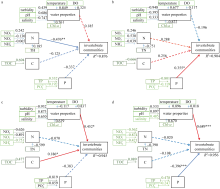
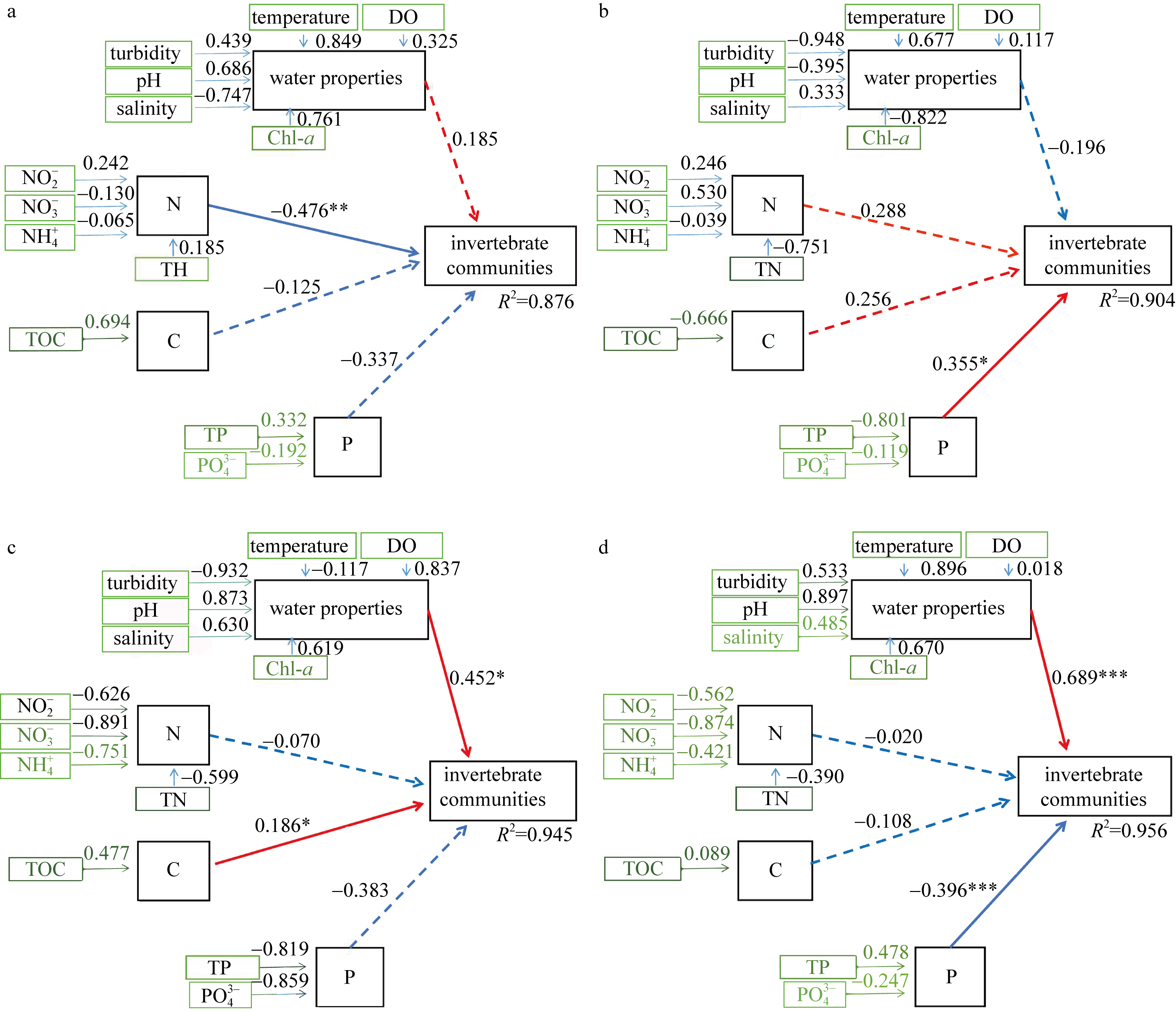
"
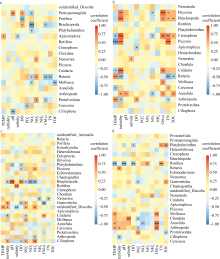
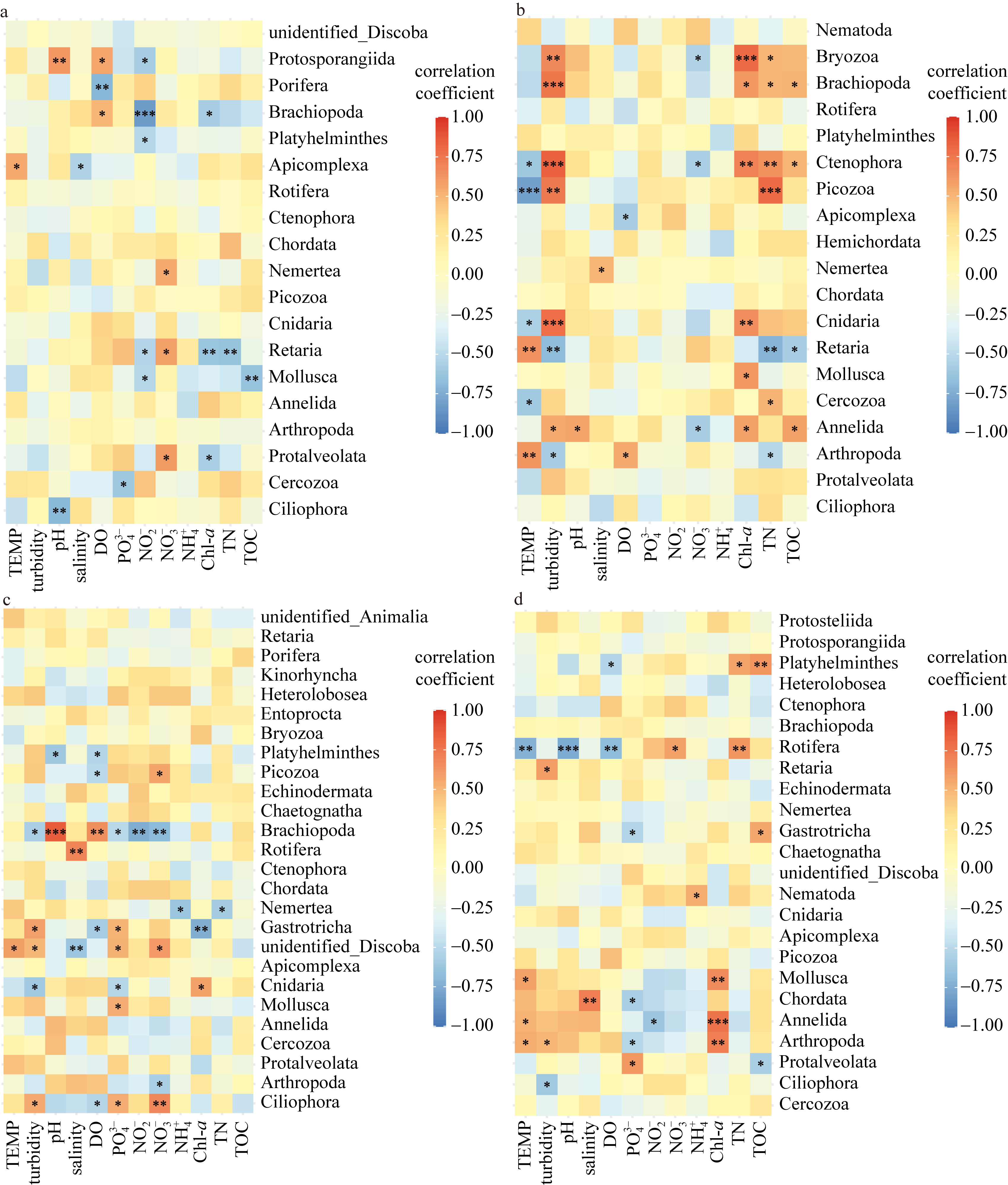
"
"

"
| [1] |
贺成, 宋书群, 李才文, 2019. 广西北部湾海域球形棕囊藻囊体时空分布及其影响因素[J]. 海洋与湖沼, 50(3): 630-643.
|
|
|
|
| [2] |
蓝文陆, 李天深, 刘勐伶, 等, 2015. 钦州湾丰水期和枯水期浮游动物群落特征[J]. 海洋学报, 37(4): 124-133.
|
|
|
|
| [3] |
李连春, 廖文波, 吕海强, 等, 2010. 一座热带城市型水库浮游动物群落结构的特征[J]. 南方水产科学, 6(6): 32-40.
|
|
|
|
| [4] |
刘悦, 李丽, 翟晓辉, 等, 2022a. 深圳大鹏湾一次球形棕囊藻藻华的发生过程及成因分析[J]. 热带海洋学报, 41(3): 164-171.
|
|
|
|
| [5] |
doi: 10.1007/s10750-018-3593-0 |
| [6] |
doi: 10.1609/icwsm.v3i1.13937 |
| [7] |
doi: 10.1016/j.ecolmodel.2005.09.008 |
| [8] |
doi: 10.1038/s41396-019-0459-z |
| [9] |
doi: 10.1016/j.marpolbul.2022.113327 |
| [10] |
doi: 10.1111/jvs.2003.14.issue-6 |
| [11] |
doi: 10.1002/lom3.10237 pmid: 29937700 |
| [12] |
doi: 10.1038/ismej.2016.96 |
| [13] |
doi: 10.1002/imt2.13 pmid: 38868563 |
| [14] |
doi: 10.1007/s11356-018-3976-9 |
| [15] |
doi: 10.1016/j.soilbio.2022.108604 |
| [16] |
doi: 10.1093/ismeco/ycae007 |
| [17] |
doi: 10.1038/s41558-023-01630-7 |
| [18] |
|
| [19] |
|
| [20] |
|
| [21] |
doi: 10.3389/fmars.2021.806208 |
| [22] |
doi: 10.1016/j.jenvman.2024.121497 |
| [23] |
doi: 10.1093/bioinformatics/btq166 pmid: 20395285 |
| [24] |
doi: 10.1017/S0376892902000061 |
| [25] |
doi: 10.1016/j.ygeno.2011.05.009 pmid: 21651976 |
| [26] |
|
| [27] |
doi: 10.1002/aqc.v28.1 |
| [28] |
doi: 10.1007/s11802-022-5164-2 pmid: 35582547 |
| [29] |
doi: 10.1016/j.scitotenv.2019.135156 |
| [30] |
doi: 10.1016/j.marchem.2018.09.006 |
| [31] |
doi: 10.3389/fmars.2024.1416359 |
| [32] |
doi: 10.1016/j.ecoenv.2021.113009 |
| [33] |
|
| [34] |
|
| [35] |
doi: 10.1016/j.ecolind.2022.108695 |
| [36] |
doi: 10.1007/s11802-019-3630-2 |
| [37] |
|
| [38] |
doi: 10.1016/j.scitotenv.2022.157197 |
| [39] |
doi: 10.1038/s41598-023-30228-4 pmid: 36813945 |
| [40] |
doi: 10.1002/lno.v63.2 |
| [41] |
doi: 10.1016/j.ecolind.2022.108587 |
| [42] |
|
| [43] |
doi: 10.3390/microorganisms13081945 |
| [44] |
doi: 10.3390/ani12080950 |
| [45] |
doi: 10.1093/nar/gks1219 |
| [46] |
doi: 10.1023/A:1016509016852 |
| [47] |
doi: 10.1038/s41467-023-36241-5 pmid: 36732509 |
| [48] |
doi: 10.7717/peerj.2584 |
| [49] |
doi: 10.1186/s13104-016-1900-2 |
| [50] |
doi: 10.4319/lo.2007.52.5.2135 |
| [51] |
doi: 10.1146/annurev-marine-010814-015924 pmid: 27814033 |
| [52] |
doi: 10.1038/ncomms5114 pmid: 24916345 |
| [53] |
doi: 10.3389/fmars.2018.00387 |
| [54] |
doi: 10.1186/s40793-024-00630-0 pmid: 39501349 |
| [55] |
doi: 10.1016/j.chemosphere.2021.132770 |
| [56] |
doi: 10.1016/j.ecolind.2021.108355 |
| [57] |
doi: 10.1016/j.rsma.2017.12.009 |
| [58] |
doi: 10.1016/j.envpol.2019.113225 |
| [59] |
|
| [60] |
doi: 10.1111/geb.2016.25.issue-8 |
| [61] |
doi: 10.1016/j.envpol.2022.120386 |
| [62] |
doi: 10.1016/j.scitotenv.2021.150303 |
| [63] |
doi: 10.3389/fmicb.2023.1132925 |
| [64] |
doi: 10.1038/s41598-017-05312-1 pmid: 28684750 |
| [65] |
doi: 10.1111/1749-4877.12531 pmid: 33725414 |
| [66] |
doi: 10.1007/s10452-020-09816-3 |
| [67] |
doi: 10.1016/j.watres.2022.118057 |
| [68] |
doi: 10.1016/j.scitotenv.2022.154285 |
| [69] |
doi: 10.1016/j.envpol.2021.117256 |
| [70] |
doi: 10.1016/j.apsoil.2017.08.019 |
| [71] |
doi: 10.1080/02705060.2025.2501975 |
| [72] |
|
| [73] |
doi: 10.4319/lo.2009.54.1.0262 |
| [1] | 牛浩然, 王喜冬, 高振博, 陈志强. 基于逐步订正的国产卫星遥感海表温度数据融合*[J]. 热带海洋学报, 2025, 44(6): 1-11. |
| [2] | 李林, 王喜冬, 何子康, 陈志强, 曹源, 刘科峰, 陈建. 基于变分法与卫星海表信息重构西北太平洋涡旋三维结构[J]. 热带海洋学报, 2025, 44(5): 39-49. |
| [3] | 周相润, 王莹, 智海. 2022年夏季西北太平洋海洋热浪分布特征及形成机制*[J]. 热带海洋学报, 2025, 44(1): 82-92. |
| [4] | 孙泽铭, 韩树宗, 王明杰, 苏翰祥. 不同路径台风对中国近海海温的影响特征统计分析[J]. 热带海洋学报, 2024, 43(5): 17-31. |
| [5] | 齐焕东, 朱程, 李序春, 景昕蒂, 宋德瑞. 基于规则集和多层感知机的Argo温度数据质量控制方法*[J]. 热带海洋学报, 2024, 43(5): 190-202. |
| [6] | 林桂焕, 严幼芳, 刘颖. 印度尼西亚—澳大利亚海盆上层海洋层结变化及其影响因素[J]. 热带海洋学报, 2024, 43(4): 57-67. |
| [7] | 唐超礼, 陶鑫华, 魏圆圆, 戴聪明, 魏合理. 东亚及西太平洋地表温度时空模态分析及预测研究*[J]. 热带海洋学报, 2022, 41(6): 183-192. |
| [8] | 陈克海, 解学通, 张金兰, 郑艳. 一种温度相关的HY-2A散射计地球物理模型函数[J]. 热带海洋学报, 2022, 41(2): 90-102. |
| [9] | 李杨, 黄鹏起, 鲁远征, 屈玲, 郭双喜, 岑显荣, 周生启, 张佳政, 丘学林. 基于精细温度观测的南海东北部陆坡-深海盆底层湍流混合*[J]. 热带海洋学报, 2022, 41(1): 62-74. |
| [10] | 汪浩, 王静, 郑佳喻. 南印度洋热带气旋快速增强事件气候特征及其年际变率[J]. 热带海洋学报, 2022, 41(1): 94-105. |
| [11] | 郑承志, 左丽明, 马旺, 朱琴, 王火火, 吕颂辉, 陈亨, 黄凯旋. 不同温度下抑食金球藻、中肋骨条藻和海洋卡盾藻间的相互作用[J]. 热带海洋学报, 2021, 40(3): 124-131. |
| [12] | 刘磊, 许兰芳, 管红香, 孙治雷, 王利波, 茅晟懿, 刘丽华, 吴能友. 冲绳海槽中部8.2ka以来GDGTs组成及温度重建*[J]. 热带海洋学报, 2020, 39(6): 77-92. |
| [13] | 严瑾, 林明晴, 曹文浩, 林岳光, 邹立. 温度对网纹纹藤壶幼虫发育和附着的生物学效应[J]. 热带海洋学报, 2020, 39(5): 55-61. |
| [14] | 刘叶取, 唐世林. 夏季琼东上升流的高频变化特征研究*[J]. 热带海洋学报, 2020, 39(4): 1-12. |
| [15] | 薛文璟, 余锦华, 陈林. 2016与1998年春季北大西洋海表温度异常的差异及成因[J]. 热带海洋学报, 2020, 39(3): 19-30. |
|
||