

Journal of Tropical Oceanography ›› 2026, Vol. 45 ›› Issue (2): 1-15.doi: 10.11978/2025058CSTR: 32234.14.2025058
Special Issue: 南海专题
• Review • Next Articles
Review and prospects of zooplankton ecology in the South China Sea
LI Kaizhi1( ), HUANG Liangmin1, YIN Jianqiang1, LIAN Xiping1, LIU Yuan1,2, TAN Yehui1,2()
- 1
Guangdong Provincial Key Laboratory of Applied Marine Biology (LAMB) ,South China Sea Institute of Oceanology, Chinese Academy of Sciences
2State Key Laboratory of Tropical Oceanography ,South China Sea Institute of Oceanology, Chinese Academy of Sciences
-
Received:2025-04-25Revised:2025-05-27Online:2026-03-10Published:2026-03-26 -
Contact:TAN Yehui -
Supported by:Biological Resources Program of Chinese Academy of Sciences(KFJ-BRP-017-095); Biological Resources Program of Chinese Academy of Sciences(CAS-TAX-24-044); Science and Technology Planning Project of Guangdong Province(2023B1212060047); Science and Technology Planning Project of Guangdong Province(2024B1212040008); Science and Technology Planning Project of Guangdong Province(2025A1515012008)

CLC Number:
- P735.12
Cite this article
LI Kaizhi, HUANG Liangmin, YIN Jianqiang, LIAN Xiping, LIU Yuan, TAN Yehui. Review and prospects of zooplankton ecology in the South China Sea[J].Journal of Tropical Oceanography, 2026, 45(2): 1-15.
share this article
Add to citation manager EndNote|Reference Manager|ProCite|BibTeX|RefWorks
Fig. 1
Major multidisciplinary cruises of scientific investigation in the South China Sea that included zooplankton sampling"
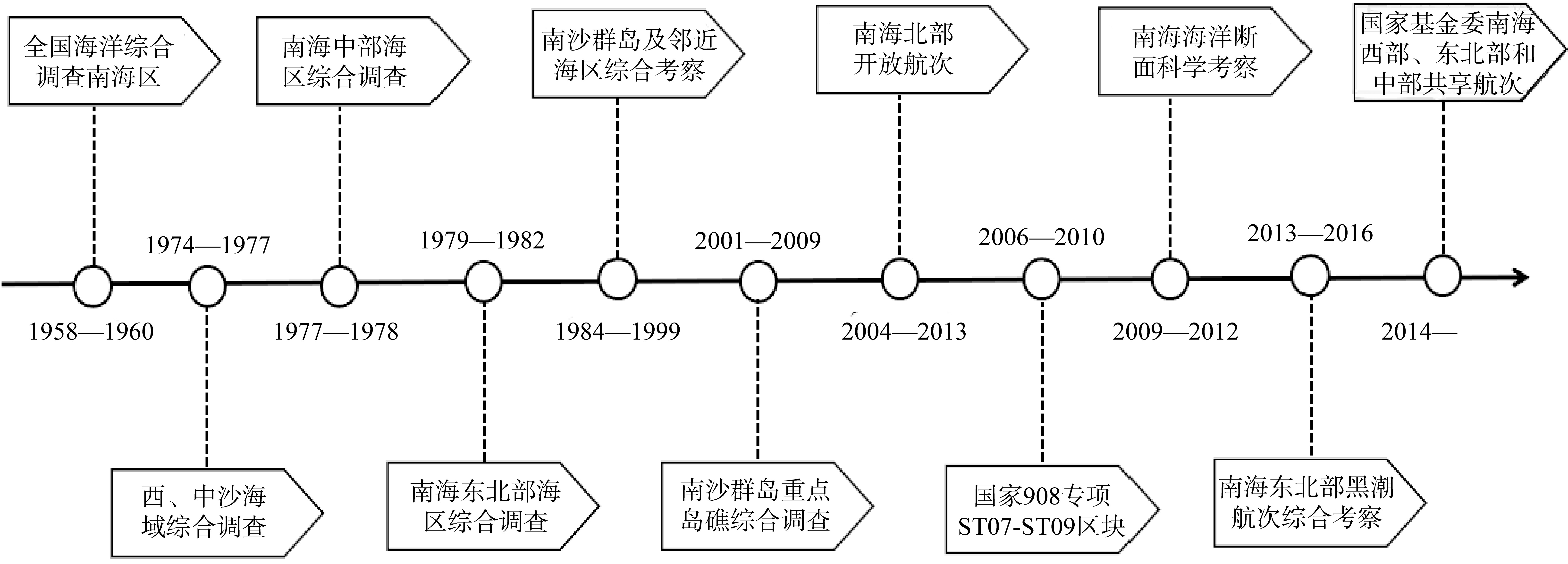
Fig. 1
Fig. 2
Distribution of zooplankton sampling stations in the South China Sea. (a) Vertical trawls in the upper 200 m water layer; (b) stratified trawls at depths ≥1000 m"
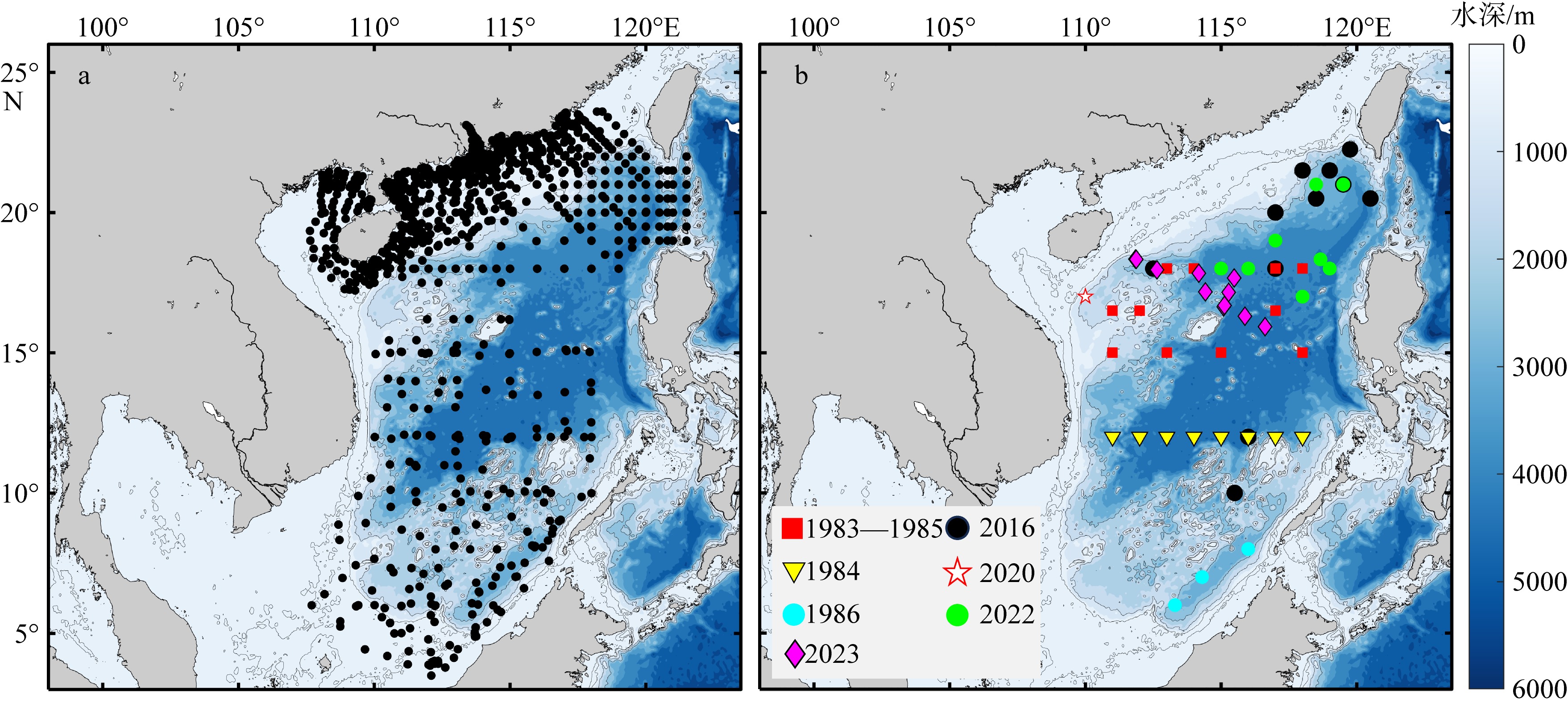
Fig. 2
Fig. 3
Zooplankton species numbers by group in the South China Sea [adapted from Zheng et al (1984)]"
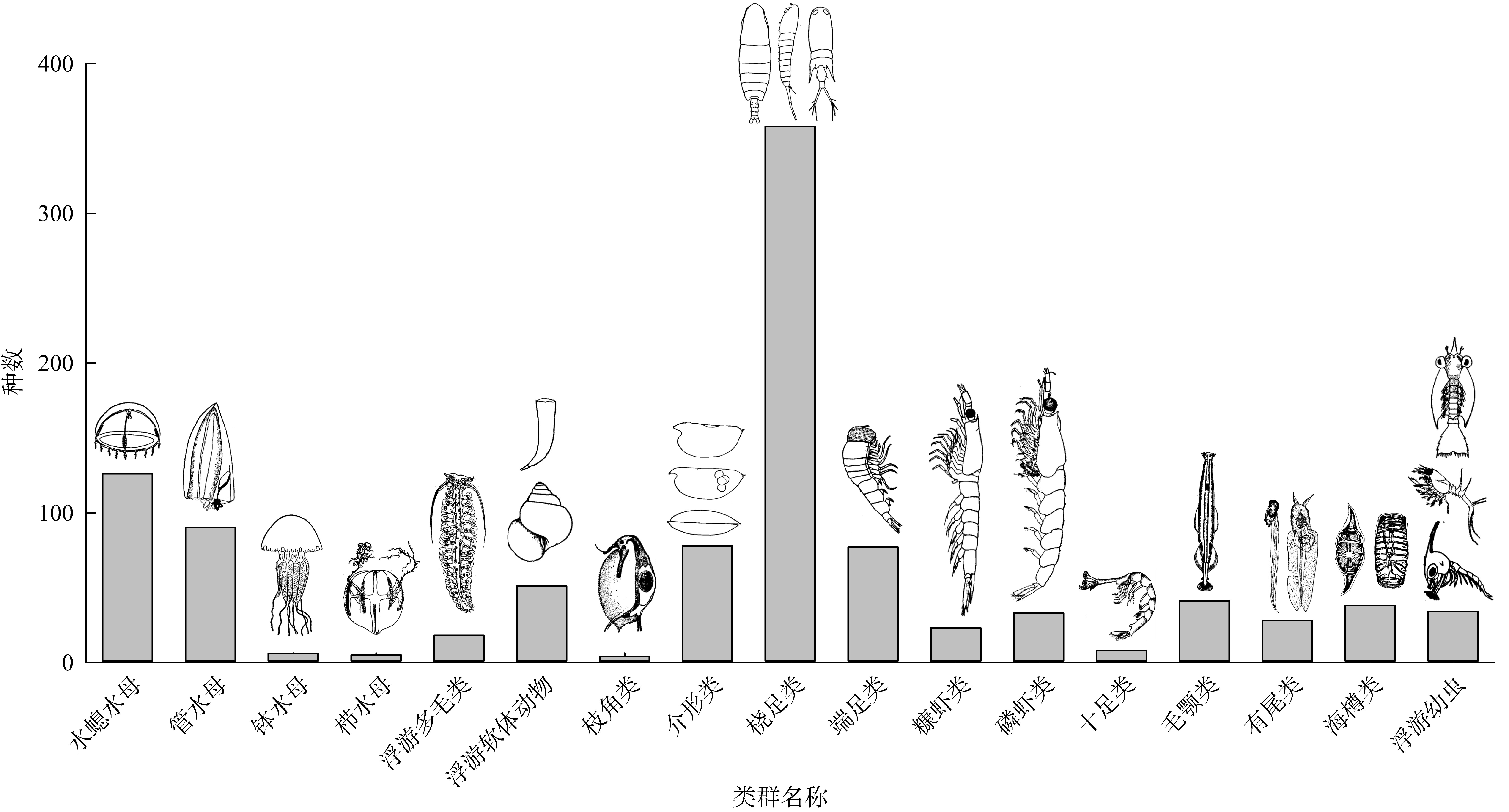
Fig. 3
Fig. 4
Schematic diagram of the influencing factors on zooplankton communities in different habitats of the South China Sea [The curves and arrows in the diagram represent ocean currents, adapted from Shu et al (2018)]"
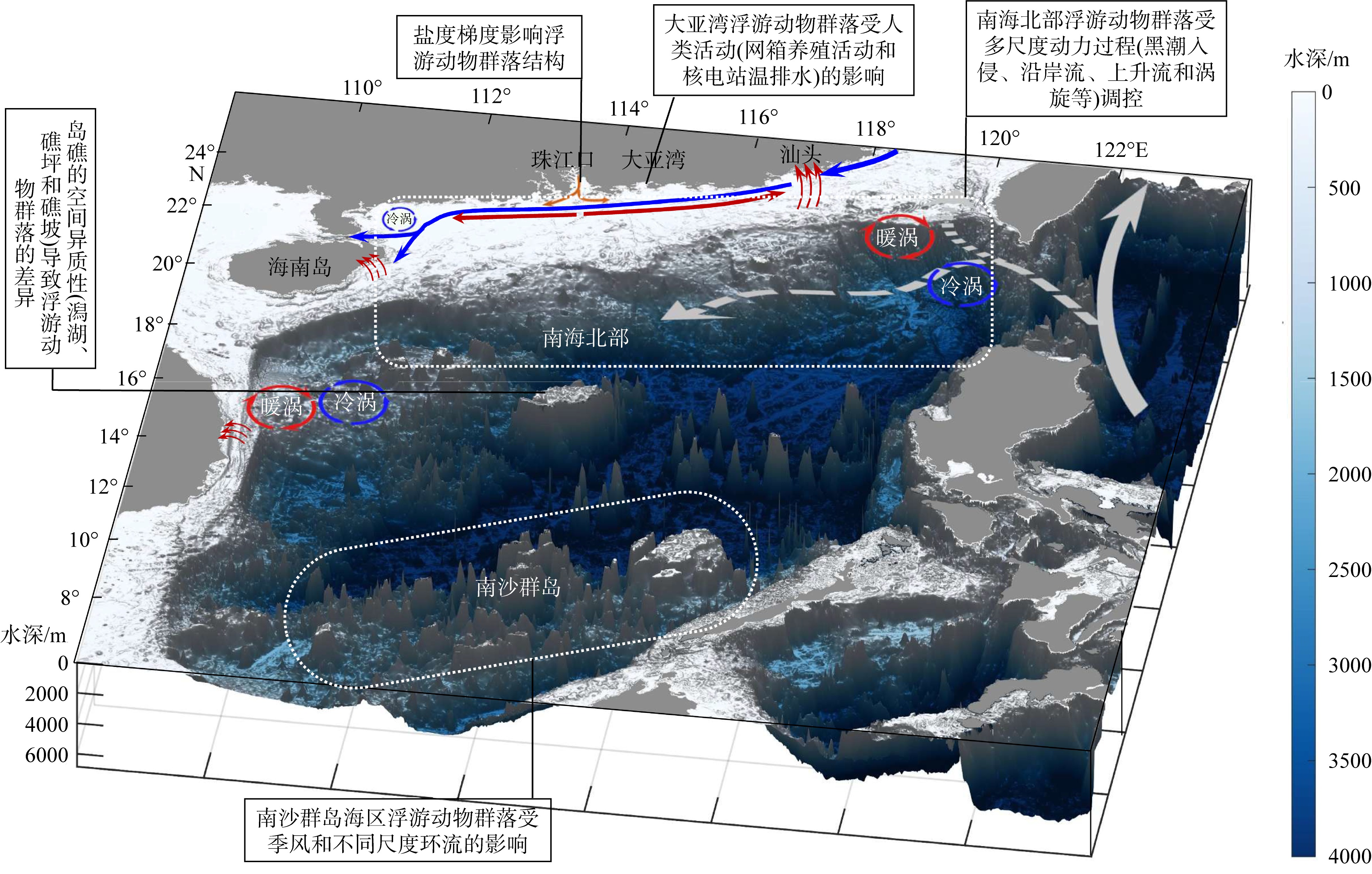
Fig. 4
| [27] |
|
| [28] |
黎爱韶, 陈清潮, 1991. 南沙群岛及其邻近海区水螅水母类: 种类组成、区系特征及动物地理划分[C]// 中国科学院南沙综合科学考察队. 南沙群岛海区海洋动物区系和动物地理研究专集. 北京: 海洋出版社: 1-63 (in Chinese).
|
| [29] |
李傲, 冯洋, 王云涛, 等, 2022. 基于OC-CCI数据的南海高叶绿素a浓度水域面积的时空变化研究[J]. 热带海洋学报, 41(2): 77-89.
doi: 10.11978/2021048 |
|
|
|
| [30] |
李纯厚, 贾晓平, 蔡文贵, 2004. 南海北部浮游动物多样性研究[J]. 中国水产科学, 11(2): 139-146.
|
|
|
|
| [31] |
黎洁丽, 邹立功, 杨宇峰, 等, 2025. 基于形态和环境DNA宏条形码技术的广西涠洲岛马尾藻场浮游动物群落结构及其粪便碳通量[J]. 热带海洋学报, 44(3): 104-120.
|
|
|
|
| [32] |
李开枝, 柯志新, 王军星, 等, 2022. 西沙群岛珊瑚礁海域浮游动物群落结构初步分析[J]. 热带海洋学报, 41(2): 121-131.
doi: 10.11978/2021036 |
|
|
|
| [33] |
李开枝, 任玉正, 柯志新, 等, 2021. 南海东北部陆坡区中上层浮游动物的垂直分布[J]. 热带海洋学报, 40(2): 61-73.
doi: 10.11978/2020061 |
|
|
|
| [34] |
李开枝, 谭烨辉, 黄良民, 等, 2024. 南海浮游动物多样性及其生态学[M]. 北京: 科学出版社.
|
|
|
|
| [35] |
李开枝, 谭烨辉, 黄良民, 等, 2012. 珠江口浮游桡足类摄食研究[J]. 热带海洋学报, 31(6): 90-96.
doi: 10.11978/j.issn.1009-5470.2012.06.014 |
|
|
|
| [36] |
李开枝, 尹健强, 陈清潮, 2015. 南海浮游被囊动物火体虫科(Pyrosomatidae)一新记录种的形态特征[J]. 海洋学报, 37(06): 128-133.
|
|
|
|
| [37] |
李开枝, 尹健强, 黄良民, 等, 2010. 南海西北部陆架区住筒虫属(Fritillaria)的种类描述及其丰度分布[J]. 海洋学报, 32(5): 76-86.
|
|
doi: 10.1007/s13131-013-0279-3 |
|
| [38] |
李开枝, 尹健强, 黄良民, 等, 2005. 珠江口浮游动物的群落动态及数量变化[J]. 热带海洋学报, 24(5): 60-68.
|
|
|
|
| [39] |
李若飞, 柯志新, 李开枝, 等, 2023. 基于ZooScan图像分析“海马”冷泉区浮游动物垂直分布特征[J]. 热带海洋学报, 42(2): 87-96.
|
|
|
|
| [40] |
李亚芳, 杜飞雁, 王亮根, 等, 2016. 南海中沙西沙海域海樽类群落结构特征研究[J]. 南方水产科学, 12(4): 64-70.
|
|
|
|
| [41] |
连喜平, 谭烨辉, 黄良民, 等, 2011. 大亚湾大中型浮游动物的时空变化及其影响因素[J]. 海洋环境科学, 30(5): 640-645.
|
|
|
|
| [42] |
连喜平, 谭烨辉, 刘永宏, 等, 2013. 吕宋海峡浮游动物群落结构的初步研究[J]. 生物学杂志, 30(1): 31-35.
|
|
|
|
| [43] |
梁竣策, 2025. 南海终生浮游软体动物的形态分类及多样性研究[D]. 广州: 中国科学院大学(中国科学院南海海洋研究所).
|
|
|
|
| [44] |
林强, 尹健强, 黄良民, 等, 2010. 南沙群岛海区上层毛颚类的种类组成和丰度分布[J]. 海洋学报, 32(5): 100-109.
|
|
|
|
| [45] |
马婕, 2019. 大亚湾浮游动物主要功能群的摄食及其对环境变化的响应[D]. 上海: 上海海洋大学.
|
|
|
|
| [46] |
舒业强, 王强, 俎婷婷, 2018. 南海北部陆架陆坡流系研究进展[J]. 中国科学: 地球科学, 48(3): 276-287.
|
|
|
|
| [47] |
孙松, 孙晓霞, 2014. 海洋生物功能群变动与生态系统演变[J]. 地球科学进展, 29(7): 854-858.
doi: 10.11867/j.issn.1001-8166.2014.07.0854 |
|
doi: 10.11867/j.issn.1001-8166.2014.07.0854 |
|
| [1] |
陈畅, 傅亮, 毕乃双, 等, 2018. 南海西沙永乐龙洞浮游动物的群落组成及昼夜垂直分布特征[J]. 海洋与湖沼, 49(3): 594-603.
|
|
|
|
| [2] |
陈瑞祥, 蔡秉及, 林茂, 等, 1988. 南海中部海域浮游动物的垂直分布[J]. 海洋学报, 10(03): 337-341.
|
|
|
|
| [3] |
陈清潮, 2011. 南海生物多样性的保护[J]. 生物多样性, 19(6): 834-836.
doi: 10.3724/SP.J.1003.2011.03127 |
|
doi: 10.3724/SP.J.1003.2011.03127 |
|
| [4] |
陈清潮, 1992. 南沙群岛海区综合科学考察取得一批重要成果[J]. 中国科学院院刊, 7(3): 251-253.
|
|
|
|
| [5] |
陈清潮, 1983. 南海的浮游桡足类Ⅲ[C]// 中国科学院南海海洋研究所. 南海海洋生物研究论文集(一). 北京: 海洋出版社: 133-138 (in Chinese).
|
| [6] |
陈清潮, 石长泰, 2002. 中国动物志无脊椎动物节肢动物门甲壳动物亚门端足目[M]. 北京: 科学出版社 (in Chinese).
|
| [7] |
陈清潮, 尹健强, 1982. 黄岩环礁的浮游动物[C]// 中国科学院南海海洋研究所. 南海海区综合调查研究报告(一). 北京: 科学出版社: 273-277 (in Chinese).
|
| [8] |
陈清潮, 张谷贤, 1983. 南海北部和中部的磷虾类[C]// 中国科学院南海海洋研究所. 南海海洋生物研究论文集(一). 北京: 海洋出版社: 139-172 (in Chinese).
|
| [9] |
陈清潮, 章淑珍, 1974. 南海浮游桡足类Ⅰ[J]. 海洋科学集刊, 9: 101-116 (in Chinese).
|
| [10] |
杜飞雁, 王雪辉, 谷阳光, 等, 2014. 南沙群岛西南大陆斜坡海域浮游动物的垂直分布[J]. 海洋学报, 36(6): 94-103.
|
|
|
|
| [11] |
杜飞雁, 王雪辉, 贾晓平, 等, 2013. 大亚湾海域浮游动物种类组成和优势种的季节变化[J]. 水产学报, 37(8): 1213-1219.
|
|
doi: 10.3724/SP.J.1231.2013.38591 |
|
| [12] |
杜飞雁, 王雪辉, 林昭进, 2015. 南沙群岛美济礁海域夏季浮游动物群落特征[J]. 生态学报, 35(4): 1014-1021.
|
|
|
|
| [13] |
杜飞雁, 许振祖, 黄加祺, 等, 2009. 南海北部近海水螅虫总纲四新种和二种新纪录研究(刺胞动物门, 自育水母纲, 水螅水母纲)[J]. 动物分类学报, (4): 854-861.
|
|
|
|
| [14] |
杜明敏, 刘镇盛, 王春生, 等, 2013. 中国近海浮游动物群落结构及季节变化[J]. 生态学报, 33(17): 5407-5418.
|
| [48] |
谭烨辉, 黄良民, 董俊德, 等, 2004. 三亚湾秋季桡足类分布与种类组成及对浮游植物现存量的摄食压力[J]. 热带海洋学报, 23(5): 17-24.
|
|
|
|
| [49] |
谭烨辉, 黄良民, 尹健强, 2003. 南沙群岛海区浮游动物次级生产力及转换效率估算[J]. 热带海洋学报, 22(6): 29-34.
|
|
|
|
| [50] |
唐启升, 苏纪兰, 2001. 海洋生态系统动力学研究与海洋生物资源可持续利用[J]. 地球科学进展, 16(1): 5-11.
|
|
|
|
| [51] |
王博文, 郭东晖, 2019. 九龙江口伪镖水蚤科一新种: 沈氏伪镖水蚤[J]. 海洋学报, 41(6): 93-102.
|
|
|
|
| [52] |
王东晓, 2024. 南海海洋环流与海气相互作用[M]. 北京: 科学出版社.
|
|
|
|
| [53] |
汪品先, 2009. 南海: 我国深海研究的突破口[J]. 热带海洋学报, 28(3): 1-4.
doi: 10.11978/j.issn.1009-5470.2009.03.001 |
| [14] |
doi: 10.5846/stxb |
| [15] |
龚玉艳, 杨玉滔, 范江涛, 等, 2017. 南海北部陆架斜坡海域夏季浮游动物群落的空间分布[J]. 南方水产科学, 13(5): 8-15.
|
|
|
|
| [16] |
龚之頔, 王龙升, 郭东晖, 2023. 中国纺锤水蚤属一新记录种[J]. 厦门大学学报(自然科学版), 62(5): 881-886.
|
|
|
|
| [17] |
管秉贤, 袁耀初, 2006. 中国近海及其附近海域若干涡旋研究综述 Ⅰ. 南海和台湾以东海域[J]. 海洋学报, 28(3): 1-16.
|
|
|
|
| [18] |
国家海洋局, 1988. 南海中部海域环境资源综合调查报告[M]. 北京: 海洋出版社.
|
|
STATE OCEANIC ADMINISTRATION, 1988. Comprehensive investigation report on environmental resources in the central South China Sea[M]. Beijing: Ocean Press (in Chinese).
|
|
| [19] |
黄邦钦, 刘光兴, 史大林, 等, 2019. 海洋生态系统储碳过程的多尺度调控及其对全球变化的响应研究进展[J]. 中国基础科学, 21(3): 17-23.
|
|
|
|
| [53] |
|
| [54] |
王友绍, 王肇鼎, 黄良民, 2004. 近20年来大亚湾生态环境的变化及其发展趋势[J]. 热带海洋学报, 23(5): 85-95.
|
|
|
|
| [55] |
肖春凤, 孙启顺, 陈亮, 等, 2023. 南海西北部16 kaBP以来沉积物的环境磁学特征及其物源指示意义[J]. 海洋地质与第四纪地质, 43(1): 13-26.
|
|
|
|
| [56] |
徐奎栋, 2021. 印太交汇区海洋生物多样性中心形成演化机制研究进展与展望[J]. 海洋与湖沼, 52(2): 262-273.
|
|
|
|
| [57] |
尹健强, 陈清潮, 1991. 南沙群岛及其邻近海区浮游介形类的种类、动物区系和动物地理[C]// 中国科学院南沙综合科学考察队. 南沙群岛海区海洋动物区系和动物地理研究专集. 北京: 海洋出版社: 64-139 (in Chinese).
|
| [58] |
尹健强, 陈清潮, 谭烨辉, 等, 2003. 南沙群岛渚碧礁春季浮游动物群落特征[J]. 热带海洋学报, 22(6): 1-8.
|
|
|
|
| [59] |
尹健强, 陈清潮, 张谷贤, 等, 2006. 南沙群岛海区上层浮游动物种类组成与数量的时空变化[J]. 科学通报, 51(S3): 129-138.
|
| [20] |
黄邦钦, 柳欣, 2015. 边缘海浮游生态系统对生物泵的调控作用[J]. 地球科学进展, 30(3): 385-395.
doi: 10.11867/j.issn.1001-8166.2015.03.0385 |
|
doi: 10.11867/j.issn.1001-8166.2015.03.0385 |
|
| [21] |
黄彬彬, 郑淑娴, 蔡伟叙, 等, 2017. 珠江口枯水期和丰水期中小型桡足类种类组成、丰度分布及其与环境因子的关系[J]. 厦门大学学报(自然科学版), 56(6): 852-858.
|
|
|
|
| [22] |
黄加祺, 许振祖, 郭东晖, 2021. 南海北部多管水母属2新种[J]. 厦门大学学报(自然科学版), 60(5): 951-954.
|
|
|
|
| [23] |
黄加祺, 许振祖, 郭东晖, 等, 2019. 南海海域花水母亚纲面具水母科2新种[J]. 厦门大学学报(自然科学版), 58(1): 139-143.
|
|
|
|
| [24] |
黄良民, 2022. 追忆南沙群岛科学考察: 深切缅怀陈清潮先生诞辰九十周年[J]. 热带海洋学报, 41(3): 191-194.
|
|
|
|
| [59] |
|
| [60] |
尹健强, 黄良民, 李开枝, 等, 2013. 南海西北部陆架区沿岸流和上升流对中华哲水蚤分布的影响[J]. 海洋学报, 35(2): 143-153.
|
|
|
|
| [61] |
尹健强, 黄良民, 李开枝, 等, 2011. 南沙群岛珊瑚礁浮游动物多样性与群落结构[J]. 生物多样性, 19(6): 685-695.
doi: 10.3724/SP.J.1003.2011.11130 |
|
doi: 10.3724/SP.J.1003.2011.11130 |
|
| [62] |
尹健强, 李开枝, 谭烨辉, 2022. 南海南部海域浮游介形类新种: 南沙深海浮萤[J]. 热带海洋学报, 41(2): 193-197.
doi: 10.11978/2021042 |
|
|
|
| [63] |
尹天齐, 王庆, 杨宇峰, 等, 2022. 基于形态学和DNA分子鉴定的珠江口浮游动物群落结构比较研究[J]. 热带海洋学报, 41(3): 172-185.
doi: 10.11978/2021151 |
|
doi: 10.11978/2021151 |
|
| [25] |
黄良民, 1997. 南沙群岛海区生态过程研究(一)[M]. 北京: 科学出版社 (in Chinese).
|
| [26] |
黄良民, 谭烨辉, 宋星宇, 等, 2020. 南沙群岛海区生态过程研究[M]. 北京: 科学出版社.
|
|
|
|
| [27] |
黄企洲, 方文东, 陈荣裕, 2001. 南沙群岛海区西南季风变化与表层流结构和演变关系的探讨[J]. 热带海洋学报, 20(1): 18-26.
|
| [64] |
张才学, 黄加祺, 孙省利, 等, 2019. 湛江湾和平水母属2新种(软水母亚纲, 锥螅水母目, 和平水母科)[J]. 海洋学报, 41(12): 172-176.
|
|
|
|
| [65] |
张谷贤, 陈清潮, 1991. 南海及其邻近海区的磷虾类[C]// 中国科学院南沙综合科学考察队. 南沙群岛海区海洋动物区系和动物地理研究. 北京: 海洋出版社: 140-270 (in Chinese).
|
| [66] |
张谷贤, 陈清潮, 1983. 南海北部和中部的毛颚类[C]// 中国科学院南海海洋研究所. 南海海洋生物研究论文集(一). 北京: 海洋出版社: 17-63 (in Chinese).
|
| [67] |
张金标, 2005. 中国海洋浮游管水母类[M]. 北京: 海洋出版社.
|
|
|
|
| [68] |
章淑珍, 李纯厚, 1997. 南沙群岛珊瑚礁潟湖生态系小型浮游动物的营养作用[C]// 中国科学院南沙综合科学考察队. 南沙群岛珊瑚礁潟湖化学与生物学研究. 北京: 海洋出版社: 64-69 (in Chinese)
|
| [69] |
张武昌, 陶振铖, 孙军, 等, 2007. 南海北部浮游桡足类对浮游植物的摄食压力[J]. 生态学报, 27(10): 4342-4348.
|
|
|
|
| [70] |
郑重, 李少菁, 许振祖, 1984. 海洋浮游生物学[M]. 北京: 海洋出版社.
|
|
|
|
| [71] |
中国科学院南沙综合科学考察队, 1991a. 南沙群岛海区海洋动物区系和动物地理研究专集[M]. 北京: 海洋出版社 (in Chinese).
|
| [72] |
中国科学院南沙综合科学考察队, 1991b. 南沙群岛及其邻近海区海洋生物研究论文集(二)[M]. 北京: 海洋出版社 (in Chinese).
|
| [73] |
doi: 10.1038/s41558-019-0420-1 |
| [74] |
doi: 10.1146/annurev-marine-121916-063304 pmid: 29298137 |
| [75] |
pmid: 12040196 |
| [76] |
doi: 10.1038/s41467-021-25385-x pmid: 34471105 |
| [77] |
|
| [78] |
doi: 10.1093/plankt/fbaa022 |
| [79] |
doi: 10.11865/zs.201922 |
| [80] |
doi: 10.1016/j.ecss.2025.109376 |
| [81] |
doi: 10.1016/j.tree.2005.03.004 |
| [82] |
doi: 10.1038/s41558-023-01630-7 |
| [83] |
doi: 10.4319/lo.2006.51.6.2607 |
| [84] |
doi: 10.1093/plankt/fbv014 |
| [85] |
doi: 10.1093/plankt/fbh162 |
| [86] |
doi: 10.1016/j.csr.2008.11.008 |
| [87] |
doi: 10.1016/j.gloplacha.2024.104657 |
| [88] |
doi: 10.1007/s00343-019-7190-5 |
| [89] |
doi: 10.1007/s11802-021-4602-x |
| [90] |
doi: 10.1016/j.jmarsys.2016.03.014 |
| [91] |
doi: 10.1093/plankt/fbs035 |
| [92] |
doi: 10.1016/j.csr.2011.03.004 |
| [93] |
doi: 10.1016/j.ecss.2010.06.001 |
| [94] |
doi: 10.1016/j.ecss.2005.12.008 |
| [95] |
|
| [96] |
doi: 10.1007/s00343-019-8219-5 |
| [97] |
|
| [98] |
doi: 10.1016/j.ecoinf.2025.103206 |
| [99] |
doi: 10.1111/fog.v31.5 |
| [100] |
doi: 10.1002/lno.v66.1 |
| [101] |
|
| [102] |
doi: 10.1186/s40555-014-0066-7 |
| [103] |
doi: 10.1007/s10236-011-0426-3 |
| [104] |
doi: 10.1016/j.pocean.2014.05.012 |
| [105] |
doi: 10.1016/j.cub.2016.11.003 |
| [106] |
doi: 10.1038/s41467-023-36241-5 pmid: 36732509 |
| [107] |
doi: 10.1016/j.jmarsys.2021.103529 |
| [108] |
|
| [109] |
doi: 10.1890/15-0234.1 |
| [110] |
doi: 10.1016/j.ecss.2019.05.019 |
| [111] |
doi: 10.1016/j.csr.2012.07.016 |
| [112] |
doi: 10.1093/plankt/fbae046 |
| [113] |
doi: 10.1146/annurev-marine-010814-015924 pmid: 27814033 |
| [114] |
doi: 10.1016/j.csr.2004.06.005 |
| [115] |
doi: 10.1016/j.marenvres.2023.106306 |
| [116] |
doi: 10.1016/j.csr.2004.06.018 |
| [117] |
doi: 10.1016/j.marpolbul.2025.117857 |
| [118] |
doi: 10.1016/j.marenvres.2024.106482 |
| [119] |
|
| [120] |
|
| [121] |
doi: 10.11865/zs.2021301 |
| [122] |
doi: 10.1016/j.marpolbul.2021.112331 |
| [123] |
doi: 10.1163/15685403-00003340 |
| [124] |
doi: 10.1016/j.csr.2011.06.010 |
| [125] |
doi: 10.1163/15685403-00003620 |
| [126] |
doi: 10.1007/s10750-009-9955-x |
| [127] |
doi: 10.1016/j.scitotenv.2022.157627 |
| [128] |
doi: 10.5194/bg-12-6809-2015 |
| [129] |
doi: 10.1080/17451000.2014.904882 |
| [130] |
|
| [131] |
doi: 10.1007/s10872-013-0180-x |
| [132] |
doi: 10.1016/j.csr.2011.06.017 |
| [133] |
doi: 10.1016/j.watres.2024.122147 |
| [134] |
doi: 10.3897/zookeys.1232.144830 |
| [1] | FANG Yang, TANG Junyi, LUO Yuchi, YE Kuangmin, DENG Weihua. Impacts of exotic mangrove introduction on ecosystem health and service functions: A case study of three representative regions in Guangdong Province [J]. Journal of Tropical Oceanography, 2026, 45(2): 173-190. |
| [2] | LIANG Shun, HUANG Guibin, HE Guomei, ZHANG Yongchui, ZHOU Yi, WANG Yang, HONG Mei. Analysis of spatiotemporal variation characteristics of local typhoons in the South China Sea [J]. Journal of Tropical Oceanography, 2026, 45(2): 59-70. |
| [3] | CHEN Yuchen, FU Dongyang, TAO Bangyi, LI Jizhe, ZHU Yixian, LIU Bei, LIN Ye, CHAI Xia. Study on remote sensing monitoring and time series change of shallow sea topography of typical islands and reefs in the South China Sea* [J]. Journal of Tropical Oceanography, 2025, 44(5): 140-153. |
| [4] | YU Zhen, GUO Xiangrui, LIU Xuerui, SUN Hao, ZHANG Yanying. Community structure of rhizosphere eukaryotic microorganisms and its influencing factors of three seagrass species along the coast of Shandong Province [J]. Journal of Tropical Oceanography, 2025, 44(5): 86-96. |
| [5] | ZHU Xiaoyu, YANG Hua, MAO Beibei, ZHENG Yuxuan. Observations of fine-scale structure and study of turbulent mixing in the deep northeastern South China Sea* [J]. Journal of Tropical Oceanography, 2025, 44(5): 22-30. |
| [6] | LI Chunshan, ZHANG Jiandong, LONG Chao, LONG Lijuan, HUANG Sijun. Microzooplankton grazing rates and viral lysis rates on prokaryotes in summer Sanya Bay* [J]. Journal of Tropical Oceanography, 2025, 44(5): 97-107. |
| [7] | LI Da, WANG Yunzhong, QI Jiguang, YANG Cuihua. Effects of water quality changes on community structures of Symbiodiniaceae and symbiotic bacteria in soft coral Lobophytum sp. [J]. Journal of Tropical Oceanography, 2025, 44(4): 136-144. |
| [8] | LI Ruoan, LI Xuqing, CHEN Tianran. Graded responses of coral skeletal δ18O and Sr/Ca to ENSO in the southern South China Sea [J]. Journal of Tropical Oceanography, 2025, 44(4): 45-55. |
| [9] | HE Chen, WANG Jianing, ZHOU Linbin, KE Zhixin, LIU Weiwei, LIU Jiaxing, WANG Junxing, TAN Yehui, CHEN Zhiyun. Comparison of macrobenthic community structure between seagrass beds in Xincungang and Li’angang, Hainan [J]. Journal of Tropical Oceanography, 2025, 44(4): 106-118. |
| [10] | ZHOU Zhiqian, LIAN Xiping, TAN Yehui. Morphological characteristics of a newly recorded species of the genus Stylocheiron (Euphausiidae) from the South China Sea* [J]. Journal of Tropical Oceanography, 2025, 44(3): 66-71. |
| [11] | LI Jieli, ZOU Ligong, YANG Yufeng, WANG Qing. Zooplankton community structure and fecal carbon flux in the seaweed Sargassum beds of Weizhou Island, Guangxi, based on morphological and environmental DNA metabarcoding [J]. Journal of Tropical Oceanography, 2025, 44(3): 104-120. |
| [12] | XIONG Xin, FENG Yingci, YANG Renhui, SUN Jie, LI Jian, ZHAN Wenhuan, LYU Kaiyun. Study on the characteristics of internal solitary waves in the Dongsha area of the northern South China Sea based on acoustic backscatter data* [J]. Journal of Tropical Oceanography, 2025, 44(3): 14-23. |
| [13] | ZHENG Yuanning, LI Cai, ZHOU Wen, XU Zhantang, SHI Zhen, ZHANG Xianqing, LIU Cong, ZHAO Jincheng. Estimation of Chlorophyll-a in the western South China Sea based on hydro-meteorological parameters* [J]. Journal of Tropical Oceanography, 2025, 44(2): 18-29. |
| [14] | HUANG Hongwei, ZHANG Zhixin, ZHONG Jia, LIN Qiang, GUO Baoying, YAN Xiaojun. The genetic structure and connectivity of eight fish species in the Indo-Pacific Convergence Region [J]. Journal of Tropical Oceanography, 2025, 44(1): 9-23. |
| [15] | LIU Jie, YAN Tong, JING Zhiyou. Observations of near-inertial waves generated by three successive typhoons in the northwestern South China Sea [J]. Journal of Tropical Oceanography, 2025, 44(1): 66-81. |
|
||