

Journal of Tropical Oceanography ›› 2026, Vol. 45 ›› Issue (2): 59-70.doi: 10.11978/2025064CSTR: 32234.14.2025064
Special Issue: 南海专题
Previous Articles Next Articles
Analysis of spatiotemporal variation characteristics of local typhoons in the South China Sea
LIANG Shun1( ), HUANG Guibin1(), HE Guomei2(), ZHANG Yongchui1(), ZHOU Yi3, WANG Yang1, HONG Mei1
- 1
College of Meteorology and Oceanography of National University of Defense Technology
292886 of Chinese People’s Liberation Army
392682 of Chinese People’s Liberation Army
-
Received:2025-05-13Revised:2025-07-21Online:2026-03-10Published:2026-03-26 -
Contact:He Guomei. email: heguomei20@nudt.edu.cn;Zhang Yongchui. email: zyc@nudt.edu.cn

CLC Number:
- P732.31
Cite this article
LIANG Shun, HUANG Guibin, HE Guomei, ZHANG Yongchui, ZHOU Yi, WANG Yang, HONG Mei. Analysis of spatiotemporal variation characteristics of local typhoons in the South China Sea[J].Journal of Tropical Oceanography, 2026, 45(2): 59-70.
share this article
Add to citation manager EndNote|Reference Manager|ProCite|BibTeX|RefWorks
Fig. 1
Annual variation series of local typhoon frequency in the South China Sea"
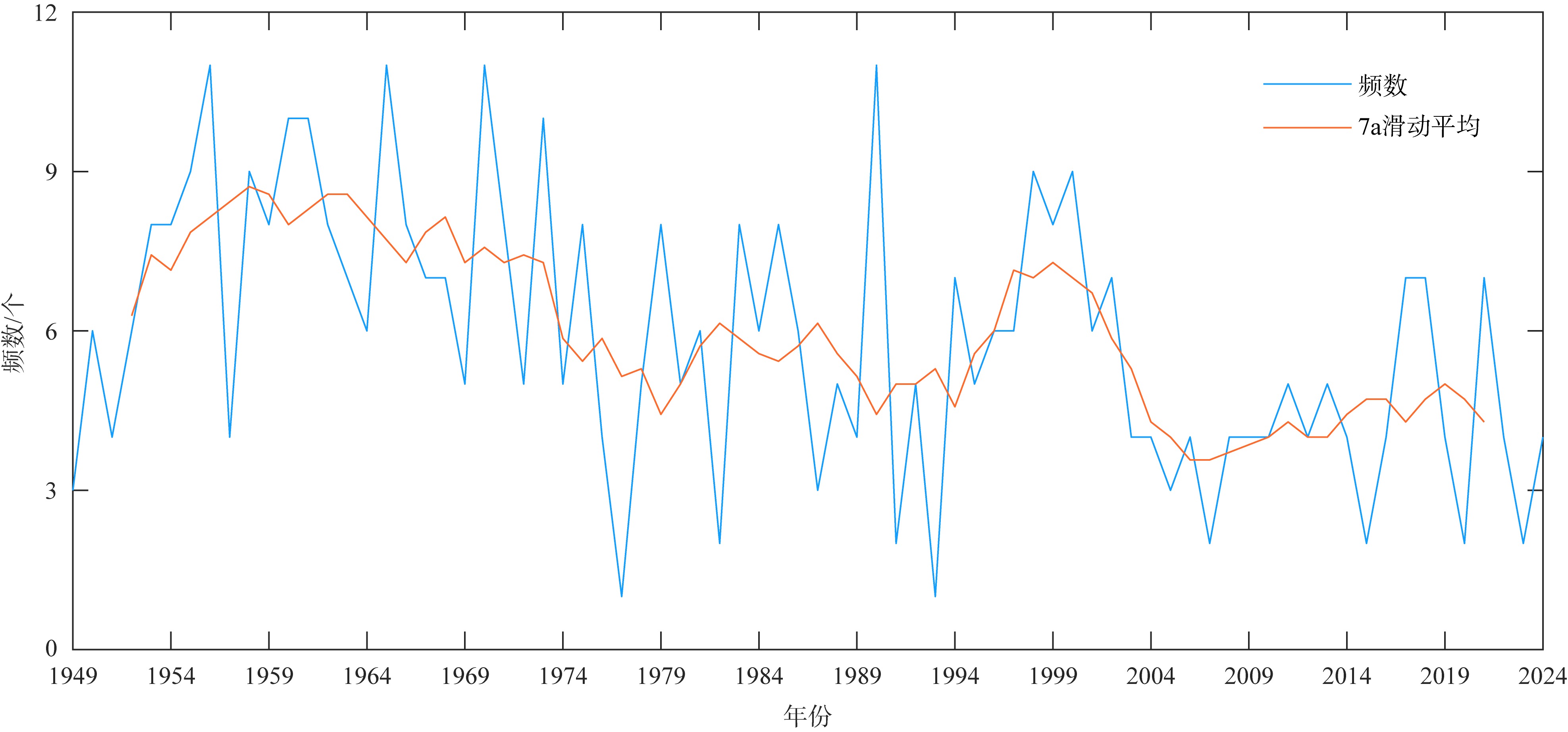
Fig. 1
Fig. 2
Monthly distribution of local typhoons in the South China Sea"
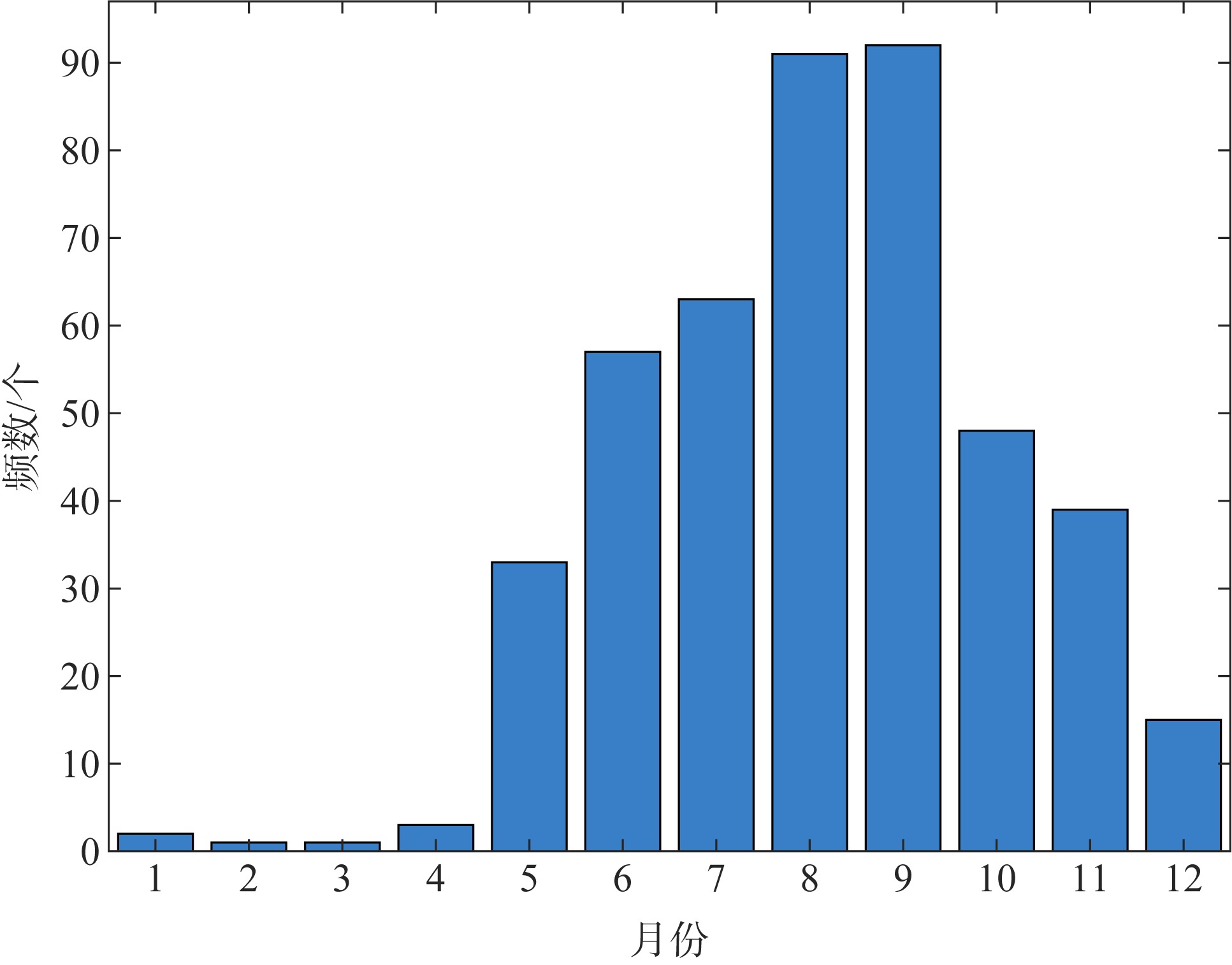
Fig. 2
Fig. 3
Boxplot of the central minimum pressure of local typhoons in the South China Sea. The box indicates the upper and lower quartiles, the ends of the whiskers represent the maximum and minimum values, the solid line represents the linear trend line of the annual average central minimum pressure, the “” symbol denotes the median, the “°” symbol signifies the mean, and the “+” symbols mark outliers"
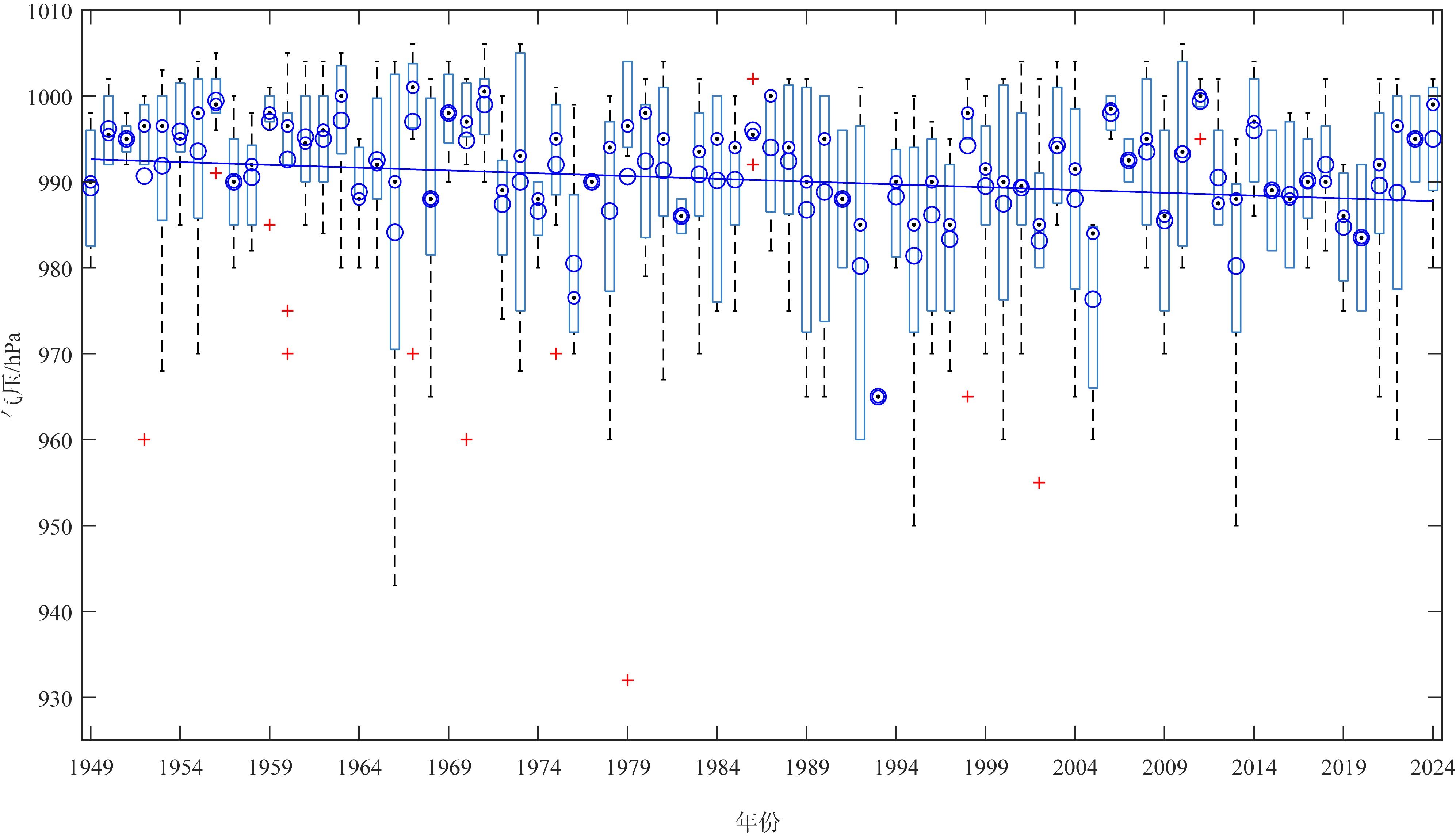
Fig. 3
Fig. 4
Track distribution of local typhoons in the South China Sea from May to December between 1949 and 2024. Red indicates west/northwest-moving tracks, orange indicates north-moving tracks, blue indicates east/northeast-moving tracks, and green indicates irregular tracks"
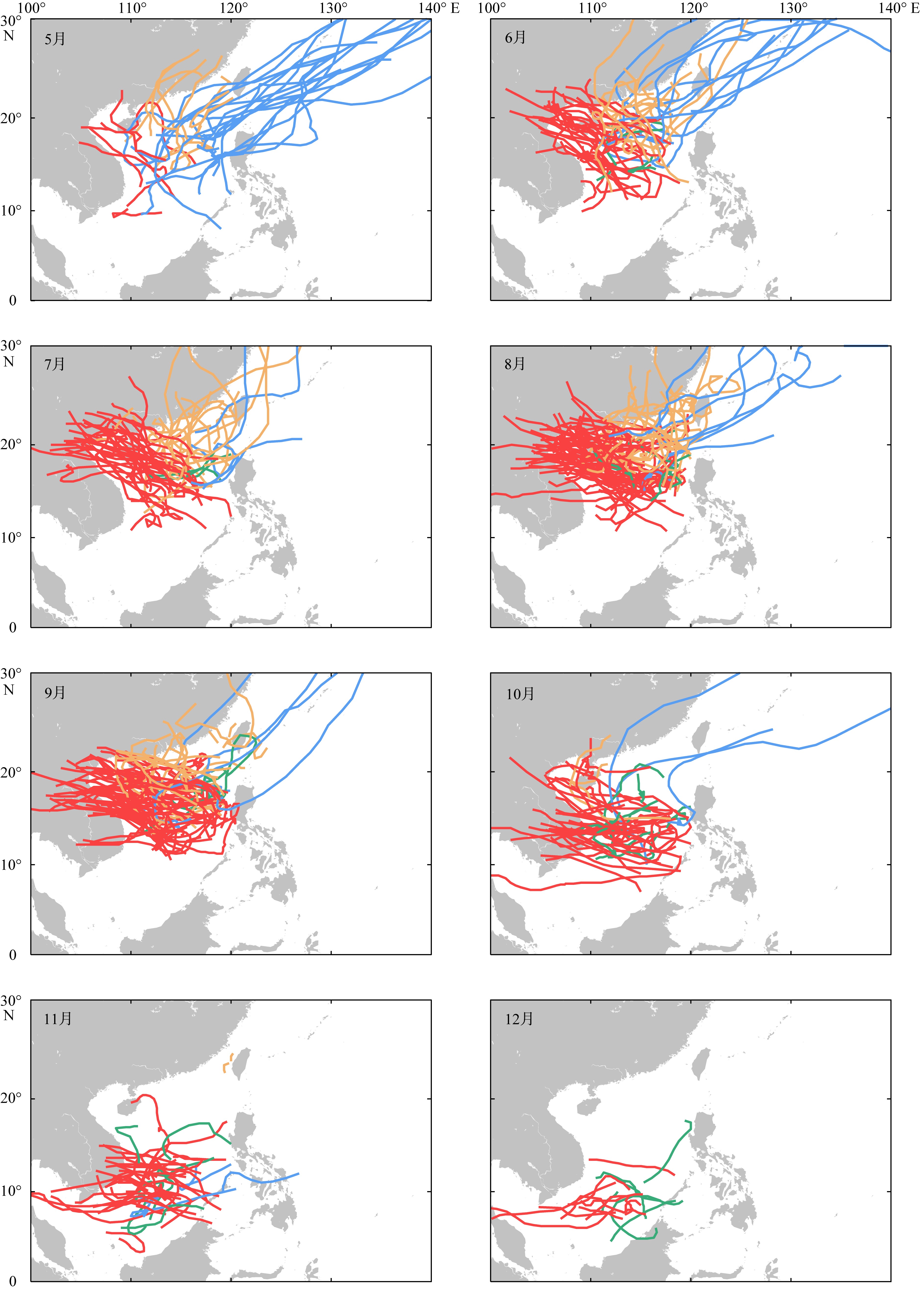
Fig. 4
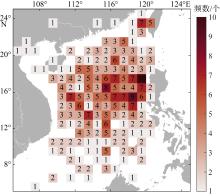
Fig. 5
Distribution of genesis locations for local typhoons in the South China Sea"
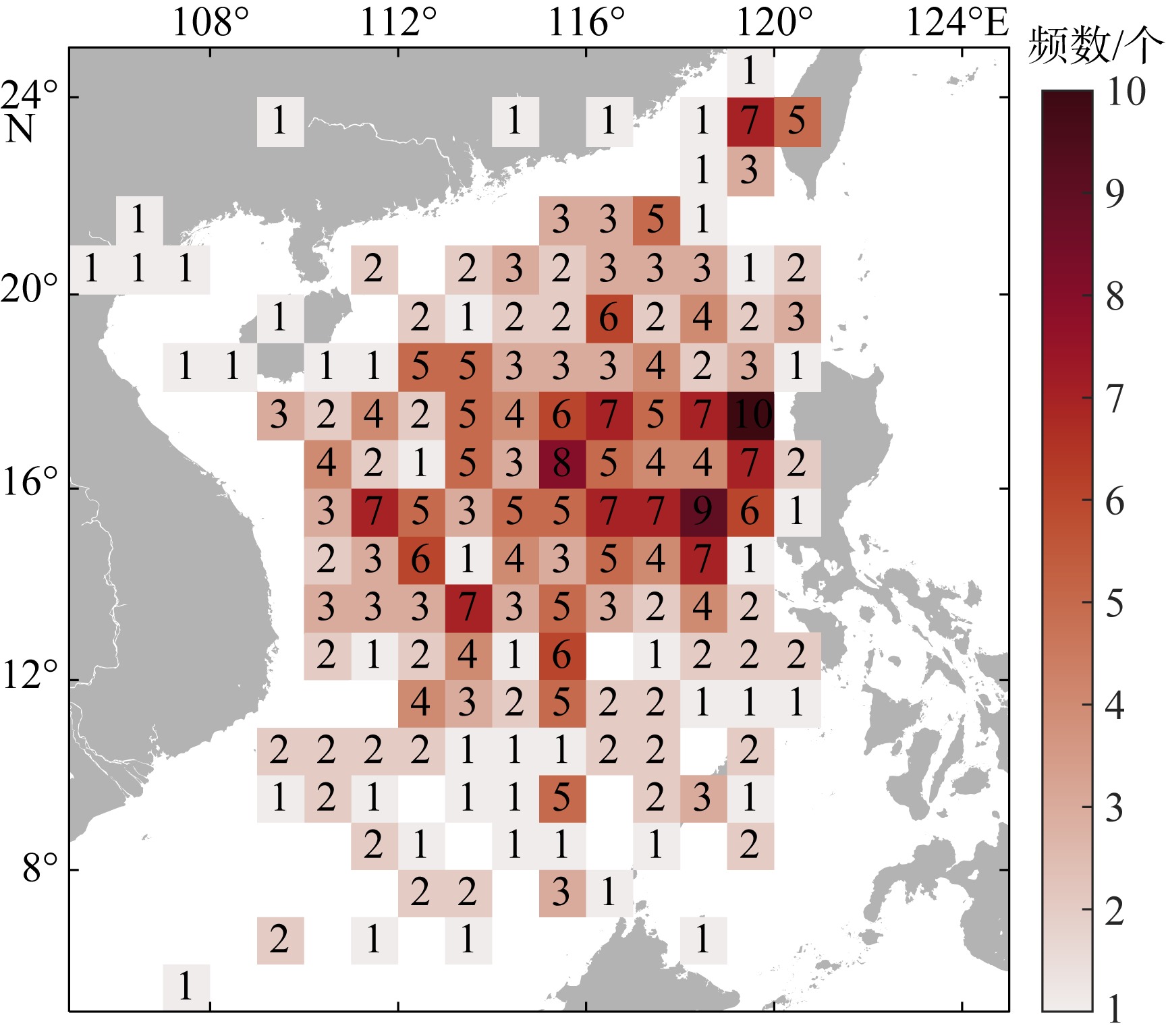
Fig. 5
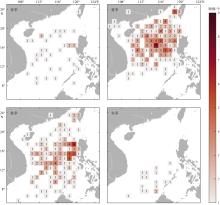
Fig. 6
Seasonal distribution of genesis locations for local typhoons in the South China Sea"
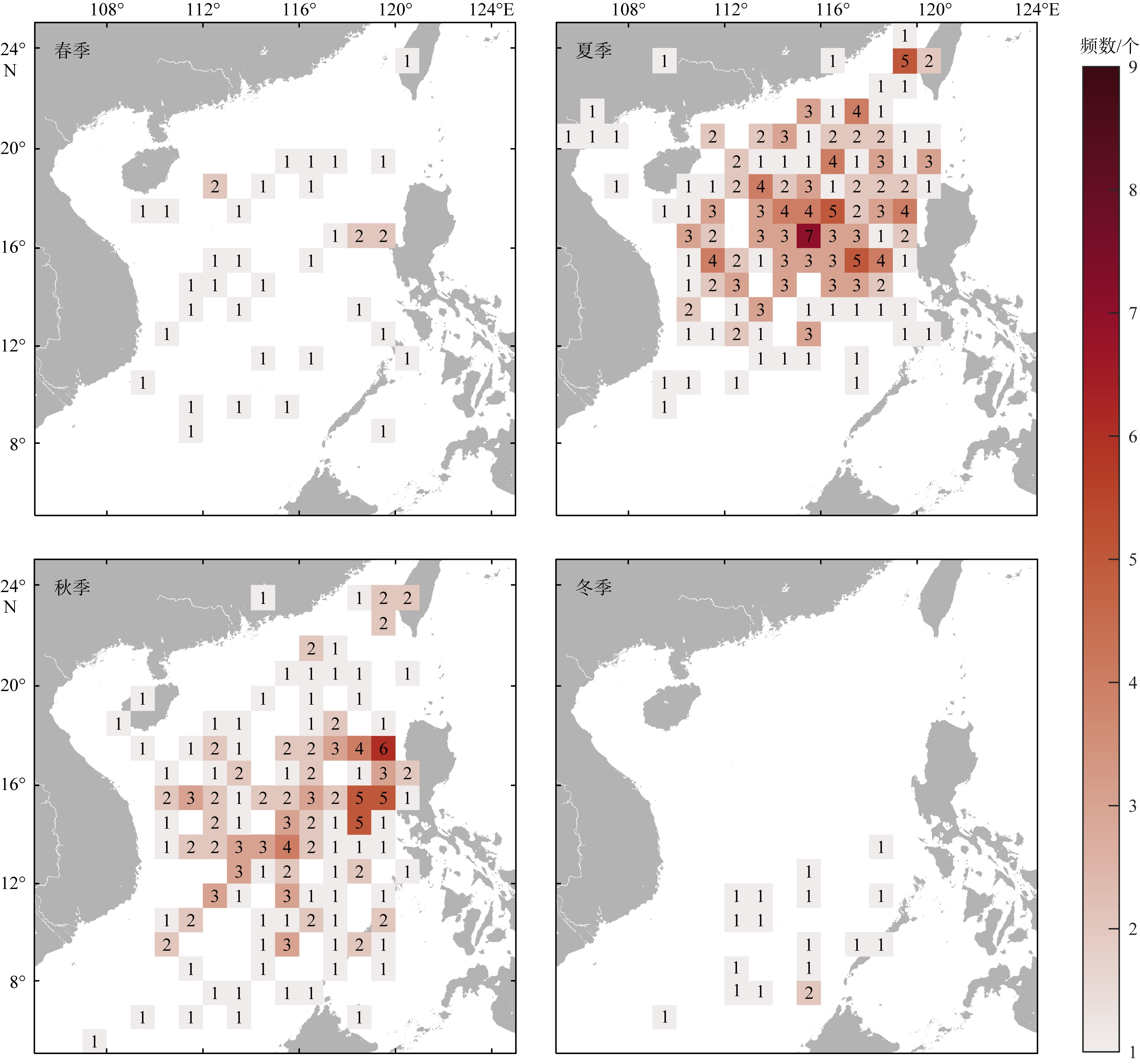
Fig. 6
Fig. 7
Comparison of interannual frequency time series between local typhoons and non-local typhoons. Red and blue lines represent non-local typhoons and local typhoons respectively, the broken line represents the interannual frequency, and the straight line represents the linear trend line of interannual frequency"
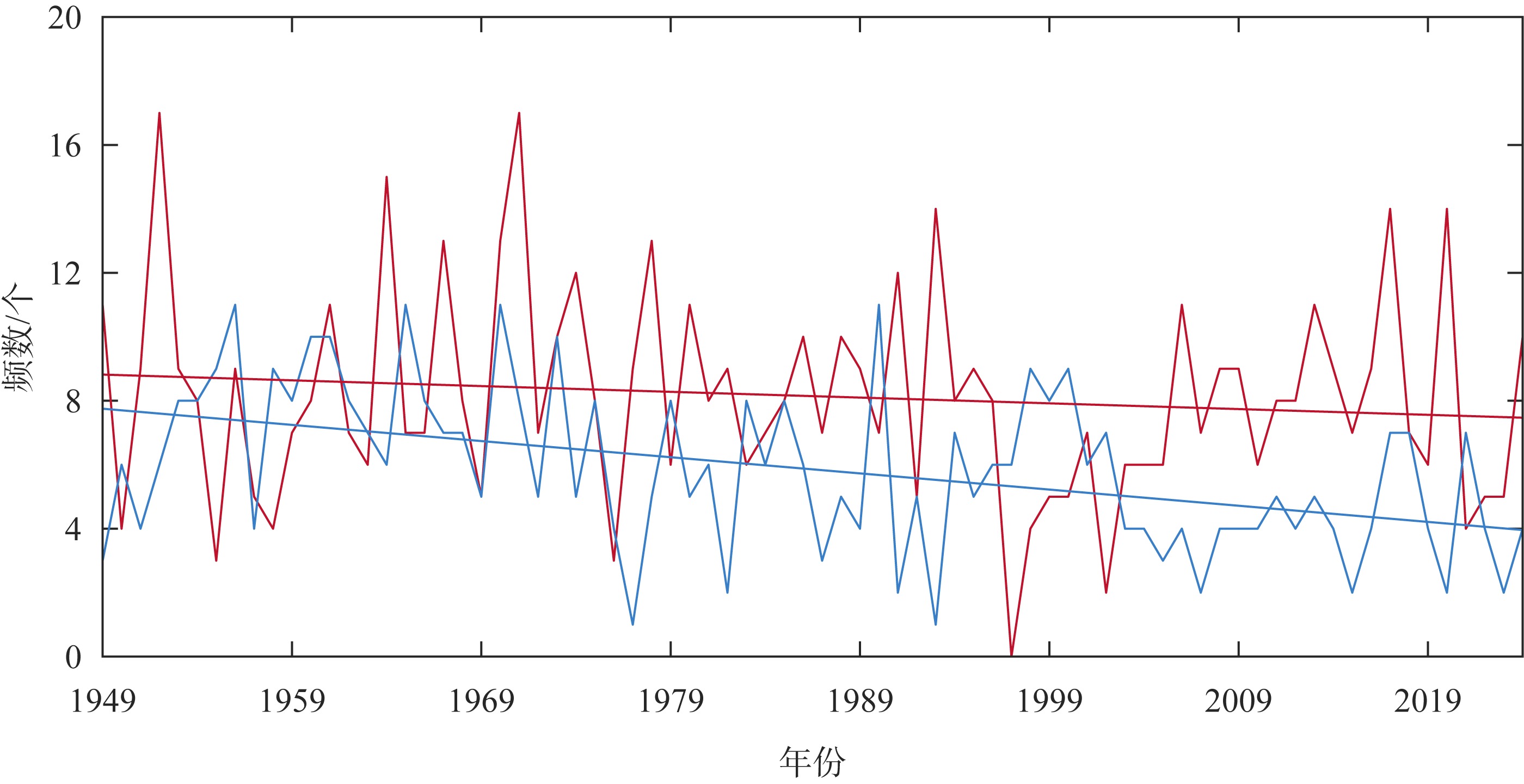
Fig. 7
Fig. 8
Comparison of frequency between local typhoons and non-local typhoons by intensity category"
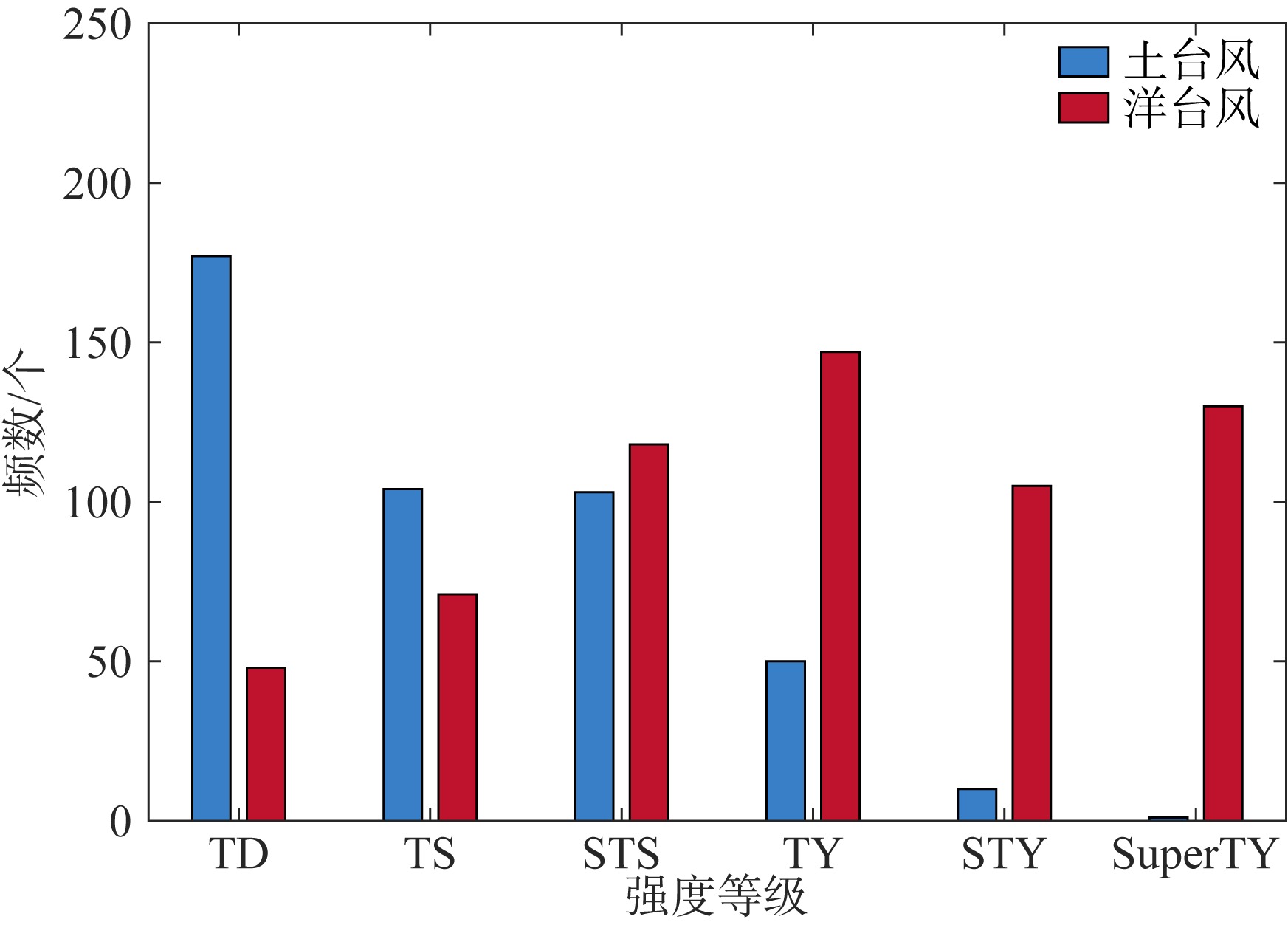
Fig. 8
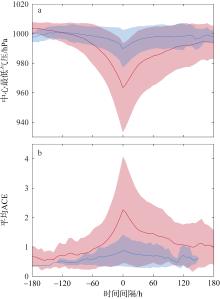
Fig. 9
Comparison of the minimum central pressure changes and the accumulated cyclone energy (ACE) index between local typhoons and non-local typhoons. The time “0” represents the moment when the typhoon reached its maximum intensity. Solid red and blue lines represent non-local typhoons and local typhoons respectively, and the shaded areas indicate the standard deviation"
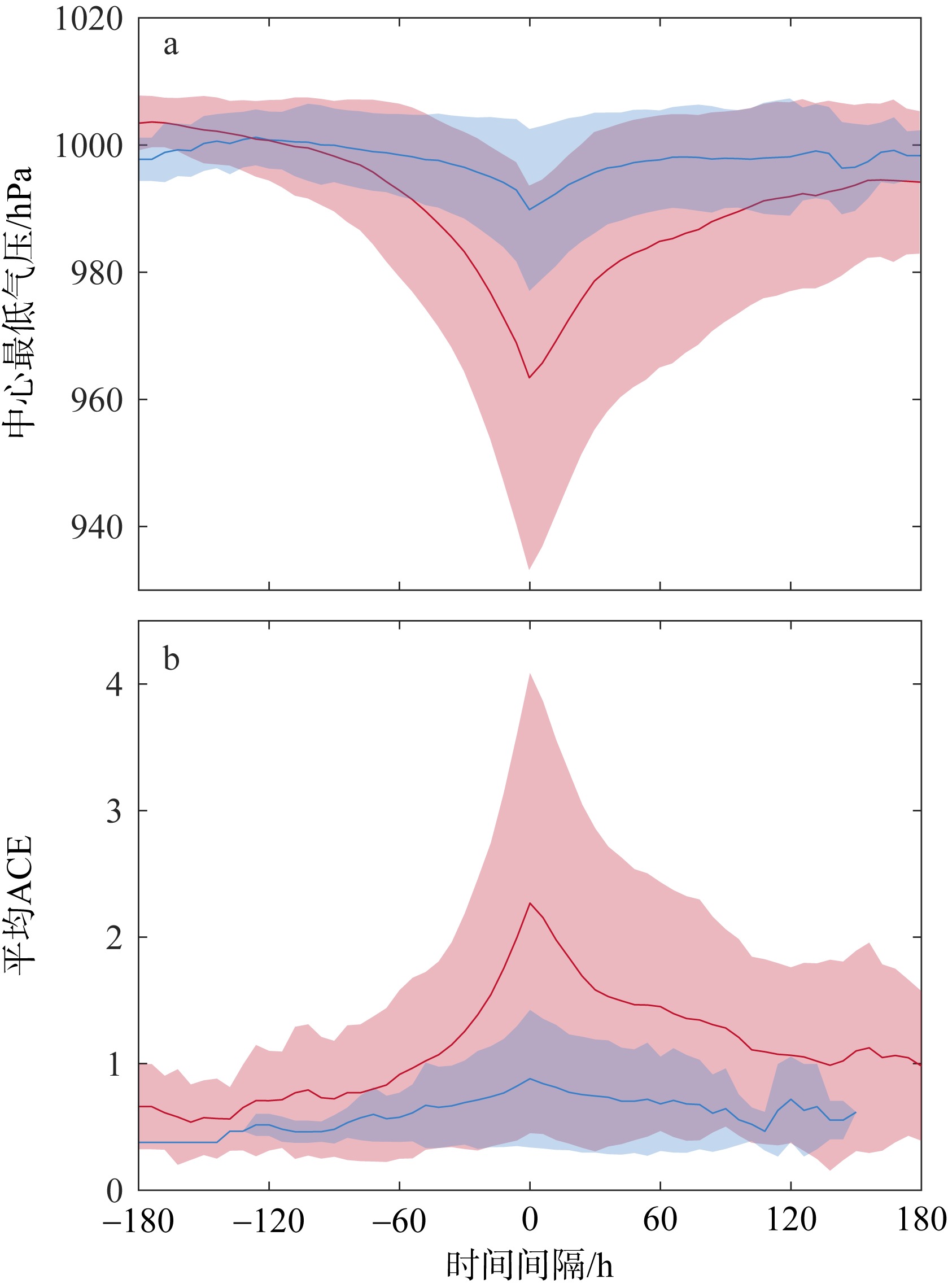
Fig. 9
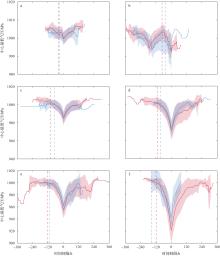
Fig. 10
Comparison of minimum central pressure changes between local typhoons and non-local typhoons by intensity category. Panels (a), (b), (c), (d), (e), and (f) represent TD, TS, STS, TY, STY, and superTY, respectively. The time “0” represents the moment when the typhoon reached its maximum intensity. Solid red and blue lines indicate non-local typhoons and local typhoons respectively, with shading representing the standard deviation, and dashed red and blue lines represent the average time from initial intensification to maximum intensity for non-local typhoons and local typhoons, respectively. A value closer to “0” indicates a shorter duration required"
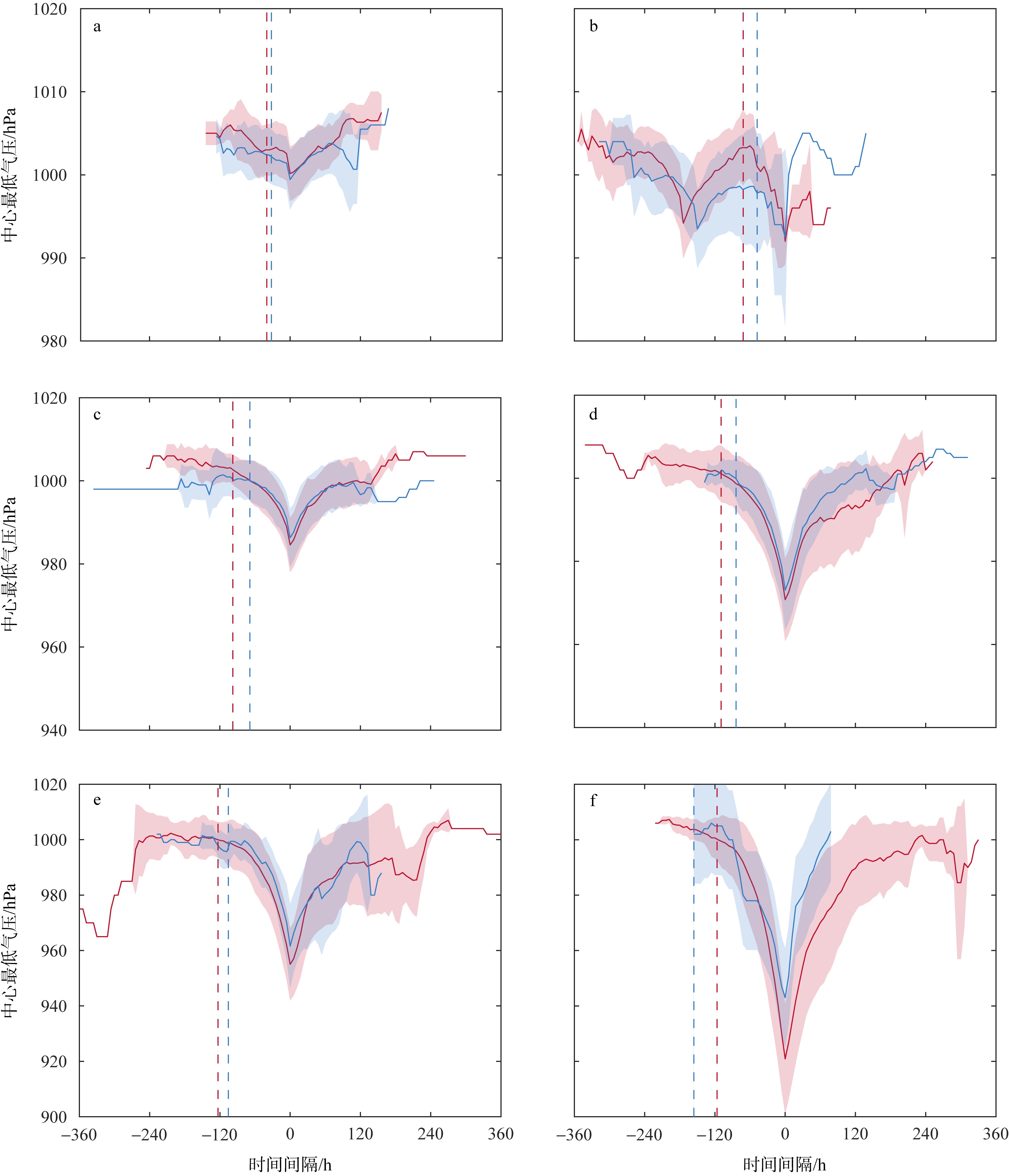
Fig. 10
Fig. 11
Activity regions of non-local typhoons (a) and local typhoons (b) in the Northwest Pacific"
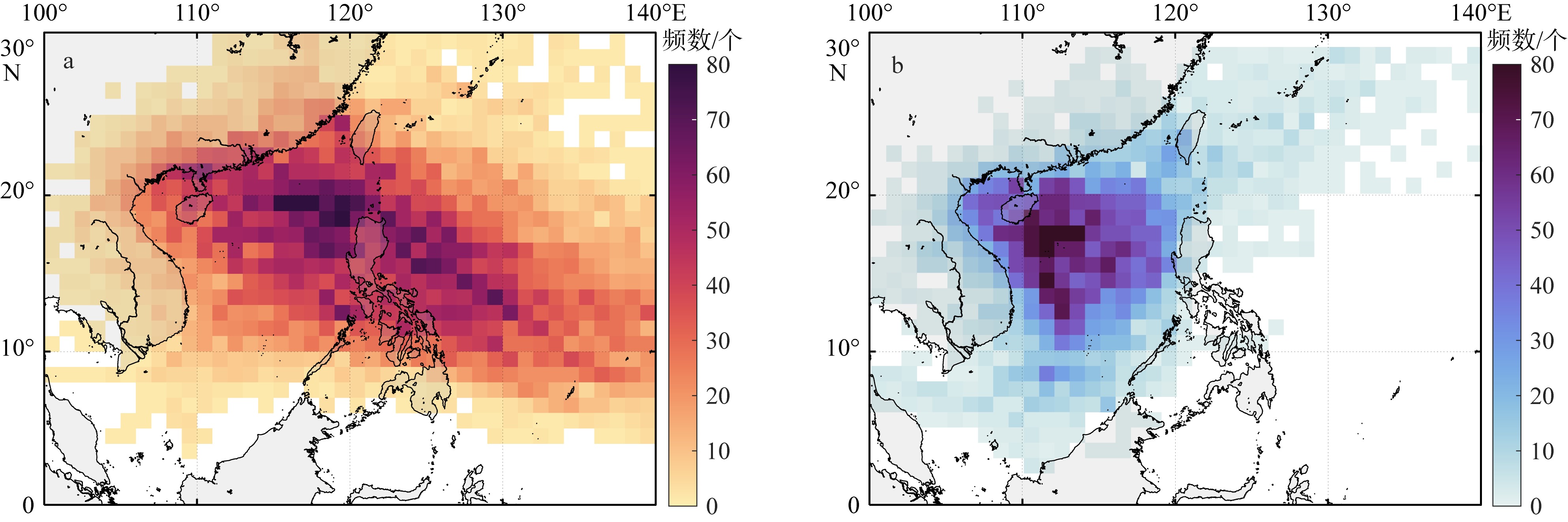
Fig. 11
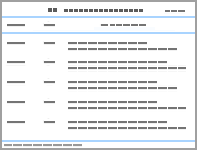
Tab. 1
Main characteristics of local typhoons and their comparison with non-local typhoons"
| 对比项目 | 土台风特征 | 洋台风特征 | 差异说明 |
|---|---|---|---|
| 生成频数 | 共445个, 年均5.86个, 年频数存在下降趋势 | 共619个, 年均8.14个, 无显著线性趋势 | 洋台风年均生成量显著多 于土台风, 二者基本不相关 |
| 强度特征 | 热带低压为主(39.8%), 中心气压平均989.8hPa, 强度突变快, ACE指数小, 持续时间短(4.66d) | 台风和超强台风为主(23.7%和21.0%), 中心气压平均961.3hPa, 强度变化慢, ACE指数大, 持续时间长(8.00d) | 洋台风强度更高, 发展更缓慢; 土台风强度 变化更具突发性; 洋台风ACE指数更大, 持续时间更长 |
| 活动区域 | 东北—西南分布, 集中南海中北部, 直接登陆比例高(海南岛、广东) | 西北—东南分布, 主要分布菲律宾东西两侧, 登陆区域分散(中国华南至越南) | 土台风活动范围小但登陆集中; 洋台风活动范围广且路径多样 |
| 移动特征 | 西/西北行路径为主, 陆上活动 不超过30°N, 生命周期较短 | 西北/转向路径为主, 可深入内陆, 中国台湾岛东侧活动更频繁 | 土台风受南海局地环流影响显著; 洋台风受大尺度环流主导 |
Tab. 1
| [1] |
白莉娜, 王元, 2009. 南海源地热带气旋生成和登陆频数的气候变异[J]. 南京大学学报(自然科学), 45(6): 757-768.
|
|
|
|
| [2] |
毕鑫鑫, 陈光华, 周伟灿, 2018. 超强台风“天鹅”(2015)路径突变过程机理研究[J]. 大气科学, 42(1): 227-238.
|
|
|
|
| [3] |
陈敏, 郑永光, 陶祖钰, 1999. 近50年(1949—1996)西北太平洋热带气旋气候特征的再分析[J]. 热带气象学报, 15(1): 10-16.
|
|
|
|
| [4] |
陈世荣, 1990. 西北太平洋的热带风暴源地[J]. 气象, 16(2): 23-27.
|
|
|
|
| [5] |
程撼, 梁楚进, 董昌明, 等, 2014. 南海土台风和非局地台风的对比研究[J]. 海洋学研究, 32(1): 19-30.
doi: 10.3969/j.issn.1001-909X.2014.01.003 |
|
doi: 10.3969/j.issn.1001-909X.2014.01.003 |
|
| [6] |
郝赛, 毛江玉, 2015. 西北太平洋与南海热带气旋活动季节变化的差异及可能原因[J]. 气候与环境研究, 20(4): 380-392.
|
|
|
|
| [7] |
胡皓, 端义宏, 2016. 南海热带气旋迅速加强环境场因子的影响分析[J]. 热带气象学报, 32(3): 299-310.
|
|
|
|
| [8] |
黄小燕, 管兆勇, 何洁琳, 等, 2017. 南海ITCZ异常变化及其对非移入性南海热带气旋(TC)活动的可能影响[J]. 大气科学, 41(1): 1-14.
|
|
|
|
| [9] |
江文, 王东海, 张春燕, 等, 2022. 近70年不同路径的南海热带气旋的统计特征[J]. 热带气象学报, 38(3): 433-443.
|
|
|
|
| [10] |
梁梅, 钟校尧, 徐建军, 等, 2020. 1960—2017年南海热带气旋强度突变特征[J]. 广东海洋大学学报, 40(3): 83-91.
|
|
|
|
| [11] |
乔光全, 冯曦, 冯卫兵, 等, 2019. 南中国海热带气旋时空分布及强度特征统计分析[J]. 海洋预报, 36(6): 53-61.
|
|
|
|
| [12] |
吴迪生, 白毅平, 张红梅, 等, 2003. 赤道西太平洋暖池次表层水温变化对热带气旋的影响[J]. 热带气象学报, 19(3): 253-259.
|
|
|
|
| [13] |
吴迪生, 赵雪, 冯伟忠, 等, 2005. 南海灾害性土台风统计分析[J]. 热带气象学报, 21(3): 309-314.
|
|
|
|
| [14] |
毋浩亮, 胡松, 2018. 环境因子对南海土台风“蝴蝶”与“银河”强度的影响[J]. 热带海洋学报, 37(3): 26-34.
doi: 10.11978/2017073 |
|
doi: 10.11978/2017073 |
|
| [15] |
杨舒楠, 路屹雄, 张芳华, 等, 2021. 热带风暴艾云尼持续性强降水成因分析[J]. 气象, 47(1): 106-116.
|
|
|
|
| [16] |
杨亚新, 2024. 1971—2020年南海生成热带气旋的活动规律与大风分布特征[J]. 海洋预报, 41(1): 104-111.
|
|
|
|
| [17] |
张小龙, 韩娇娇, 陈泊舟, 等, 2024. 南海“土台风”发生过程对ENSO事件的响应分析[J]. 农业灾害研究, 14(3): 112-115.
|
|
|
|
| [18] |
张亚杰, 陈升孛, 吴慧, 等, 2017. 对南海不同区域热带气旋气候特征的分析[J]. 海南大学学报(自然科学版), 35(1): 44-53.
|
|
|
|
| [19] |
赵雪, 2008. 影响南海的热带气旋与西太平洋副热带高压的关系研究[D]. 青岛: 中国海洋大学.
|
|
|
|
| [20] |
doi: 10.3389/feart.2022.980220 |
| [1] | LI Kaizhi, HUANG Liangmin, YIN Jianqiang, LIAN Xiping, LIU Yuan, TAN Yehui. Review and prospects of zooplankton ecology in the South China Sea [J]. Journal of Tropical Oceanography, 2026, 45(2): 1-15. |
| [2] | ZHOU Weihua, YAO Yukun, LUO Yong, LI Tao, LONG Aimin, HUANG Hui. Long-term variation of dissolved organic carbon and its influencing factors in Sanya Bay* [J]. Journal of Tropical Oceanography, 2026, 45(2): 106-116. |
| [3] | CHEN Yuchen, FU Dongyang, TAO Bangyi, LI Jizhe, ZHU Yixian, LIU Bei, LIN Ye, CHAI Xia. Study on remote sensing monitoring and time series change of shallow sea topography of typical islands and reefs in the South China Sea* [J]. Journal of Tropical Oceanography, 2025, 44(5): 140-153. |
| [4] | ZHU Xiaoyu, YANG Hua, MAO Beibei, ZHENG Yuxuan. Observations of fine-scale structure and study of turbulent mixing in the deep northeastern South China Sea* [J]. Journal of Tropical Oceanography, 2025, 44(5): 22-30. |
| [5] | LI Ruoan, LI Xuqing, CHEN Tianran. Graded responses of coral skeletal δ18O and Sr/Ca to ENSO in the southern South China Sea [J]. Journal of Tropical Oceanography, 2025, 44(4): 45-55. |
| [6] | ZHOU Zhiqian, LIAN Xiping, TAN Yehui. Morphological characteristics of a newly recorded species of the genus Stylocheiron (Euphausiidae) from the South China Sea* [J]. Journal of Tropical Oceanography, 2025, 44(3): 66-71. |
| [7] | XIONG Xin, FENG Yingci, YANG Renhui, SUN Jie, LI Jian, ZHAN Wenhuan, LYU Kaiyun. Study on the characteristics of internal solitary waves in the Dongsha area of the northern South China Sea based on acoustic backscatter data* [J]. Journal of Tropical Oceanography, 2025, 44(3): 14-23. |
| [8] | ZHENG Yuanning, LI Cai, ZHOU Wen, XU Zhantang, SHI Zhen, ZHANG Xianqing, LIU Cong, ZHAO Jincheng. Estimation of Chlorophyll-a in the western South China Sea based on hydro-meteorological parameters* [J]. Journal of Tropical Oceanography, 2025, 44(2): 18-29. |
| [9] | LIU Jie, YAN Tong, JING Zhiyou. Observations of near-inertial waves generated by three successive typhoons in the northwestern South China Sea [J]. Journal of Tropical Oceanography, 2025, 44(1): 66-81. |
| [10] | XU Chao, LONG Lijuan, LI Sha, YUAN Li, XU Xiaolu. Systematic reorganization of historical data of scientific investigation in the South China Sea and its affiliated islands and reefs 3. data sharing service and application [J]. Journal of Tropical Oceanography, 2024, 43(5): 158-165. |
| [11] | XU Chao, LONG Lijuan, LI Sha, HE Yunkai, YUAN Li, XU Xiaolu. Systematic reorganization of historical data of scientific investigation in the South China Sea and its affiliated islands and reefs 1. data reorganization technology and application [J]. Journal of Tropical Oceanography, 2024, 43(5): 143-149. |
| [12] | XU Chao, LONG Lijuan, LI Sha, XU Xiaolu, YUAN Li. Systematic reorganization of historical data of scientific investigation in the South China Sea and its affiliated islands and reefs 2. data curation and application [J]. Journal of Tropical Oceanography, 2024, 43(5): 150-157. |
| [13] | LIU Yuan, KE Zhixin, LI Kaizhi, TAN Yehui, LIANG Junce, ZHOU Weihua. Zooplankton community in the coastal waters of eastern Guangdong under the influence of human activities and ocean currents [J]. Journal of Tropical Oceanography, 2024, 43(4): 98-111. |
| [14] | LIU Didi, ZHANG Xiyang, SUN Fulin, WANG Mingzhuang, TAN Fei, SHI Qi, WANG Guan, YANG Hongqiang. Microbial communities and specific strains within beachrocks of the South China Sea: implications for the origin of beachrock* [J]. Journal of Tropical Oceanography, 2024, 43(4): 112-122. |
| [15] | JIANG Lyumiao, CHEN Tianran, ZHAO Kuan, ZHANG Ting, XU Lijia. Experimental study on bioerosion of marginal reefs in the Weizhou Island, northern South China Sea [J]. Journal of Tropical Oceanography, 2024, 43(3): 155-165. |
|
||