

Journal of Tropical Oceanography ›› 2026, Vol. 45 ›› Issue (3): 39-49.doi: 10.11978/2025094CSTR: 32234.14.2025094
Previous Articles Next Articles
Three-dimensional numerical investigation of hydrodynamic characteristics over complex coral reefs with tsunami-like waves
ZHANG Ze1( ), QU Ke1,2,3(), WANG Aoyu1, LI Wei1, WANG Chao1
- 1
School of Hydraulic and Ocean Engineering ,Changsha University of Science & Technology
2Hunan Provincial Key Laboratory for Environmental Governance and Ecological Restoration of Dongting Lake
3Key Laboratory of Water-Sediment Sciences and Water Disaster Prevention of Hunan Province
-
Received:2025-07-01Revised:2025-10-26Online:2026-05-10Published:2026-05-28 -
Contact:QU Ke. email: kqu@csust.edu.cn -
Supported by:National Key Research and Development Program of China(2022-36)

CLC Number:
- P737.2
Cite this article
ZHANG Ze, QU Ke, WANG Aoyu, LI Wei, WANG Chao. Three-dimensional numerical investigation of hydrodynamic characteristics over complex coral reefs with tsunami-like waves[J].Journal of Tropical Oceanography, 2026, 45(3): 39-49.
share this article
Add to citation manager EndNote|Reference Manager|ProCite|BibTeX|RefWorks
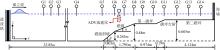
Fig. 1
Layout of the experimental area and measurement points"
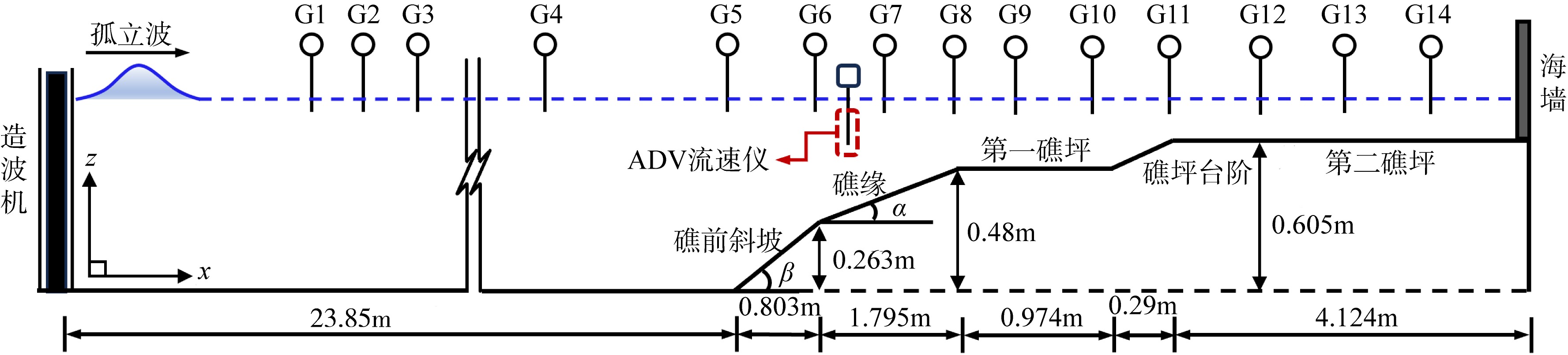
Fig. 1
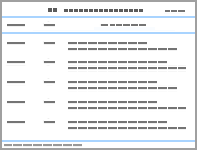
Tab. 1
Measurement point locations"
| 编号 | 位置(x) | 编号 | 位置(x) |
|---|---|---|---|
| G1 | 12.8 | G8 | 26.468 |
| G2 | 13.121 | G9 | 26.963 |
| G3 | 13.679 | G10 | 27.434 |
| G4 | 19.372 | G11 | 27.612 |
| G5 | 23.85 | G12 | 27.883 |
| G6 | 24.642 | G13 | 28.747 |
| G7 | 25.535 | G14 | 30.224 |
Tab. 1
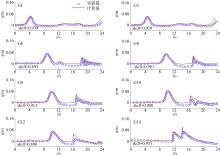
Fig. 2
Validation results of free surface elevation by the FUNWAVE-TVD model for selected measurement points on a two-dimensional uneven coral reef"
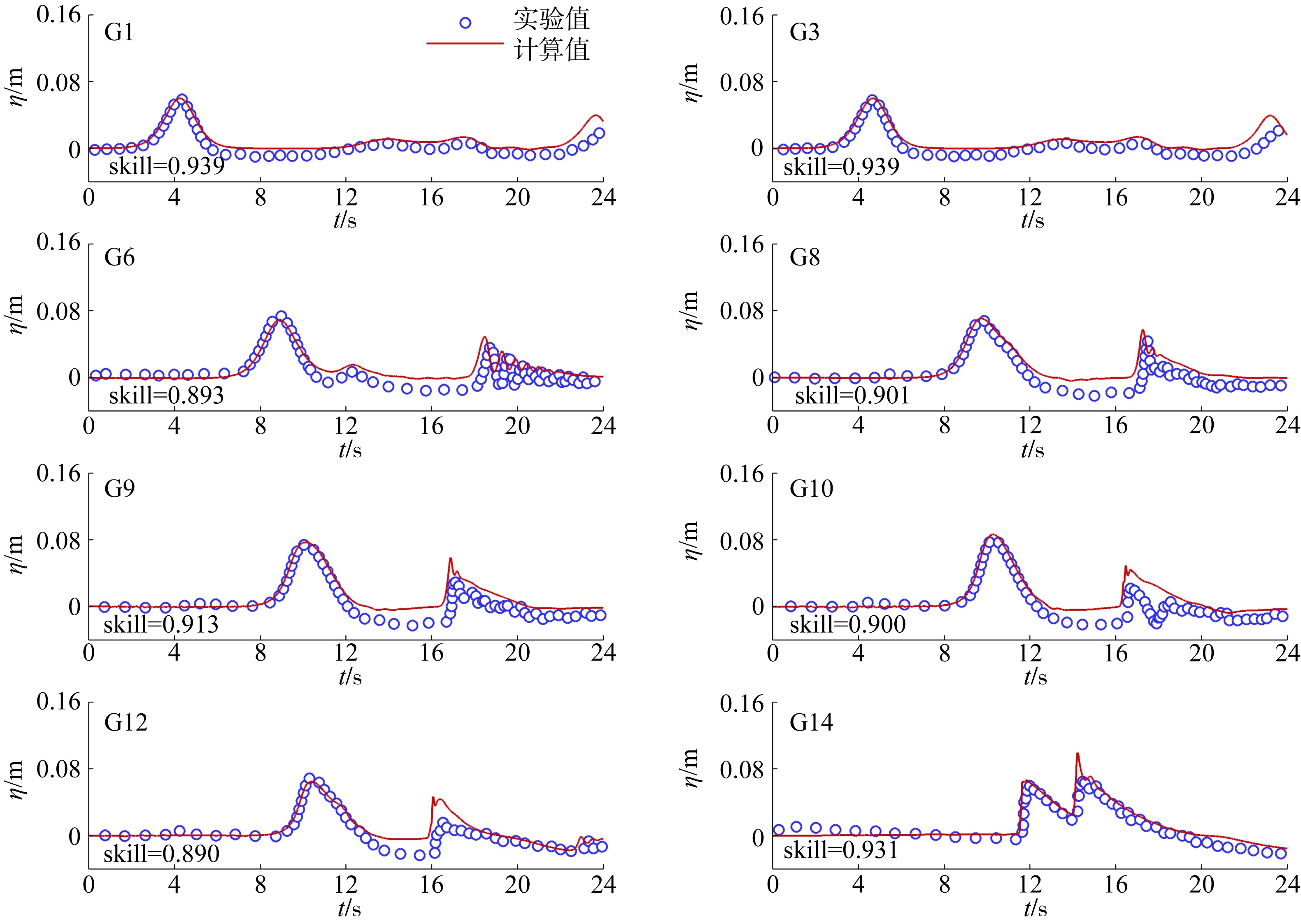
Fig. 2
Fig. 3
Validation results of flow velocity by the FUNWAVE-TVD model for selected measurement points on a two-dimensional uneven coral reef"
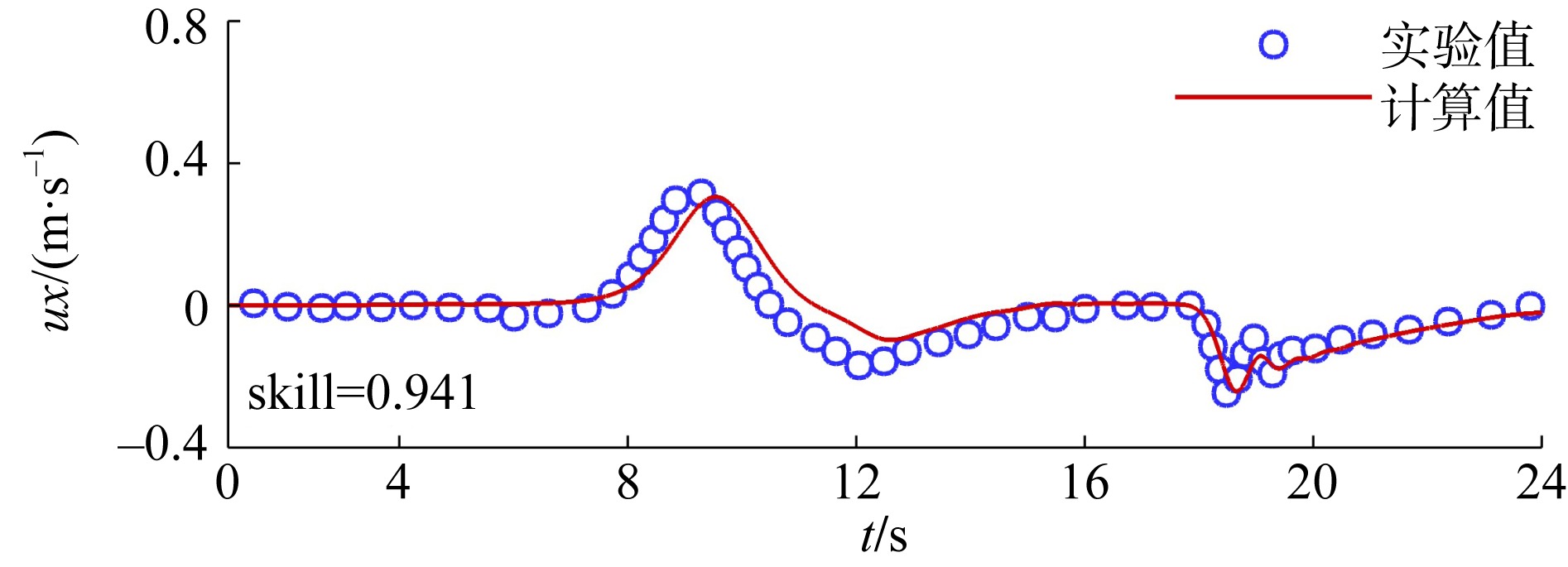
Fig. 3
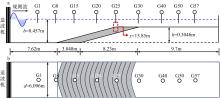
Fig. 4
Layout of the experimental area and measurement points. (a)Front view; (b) top view"
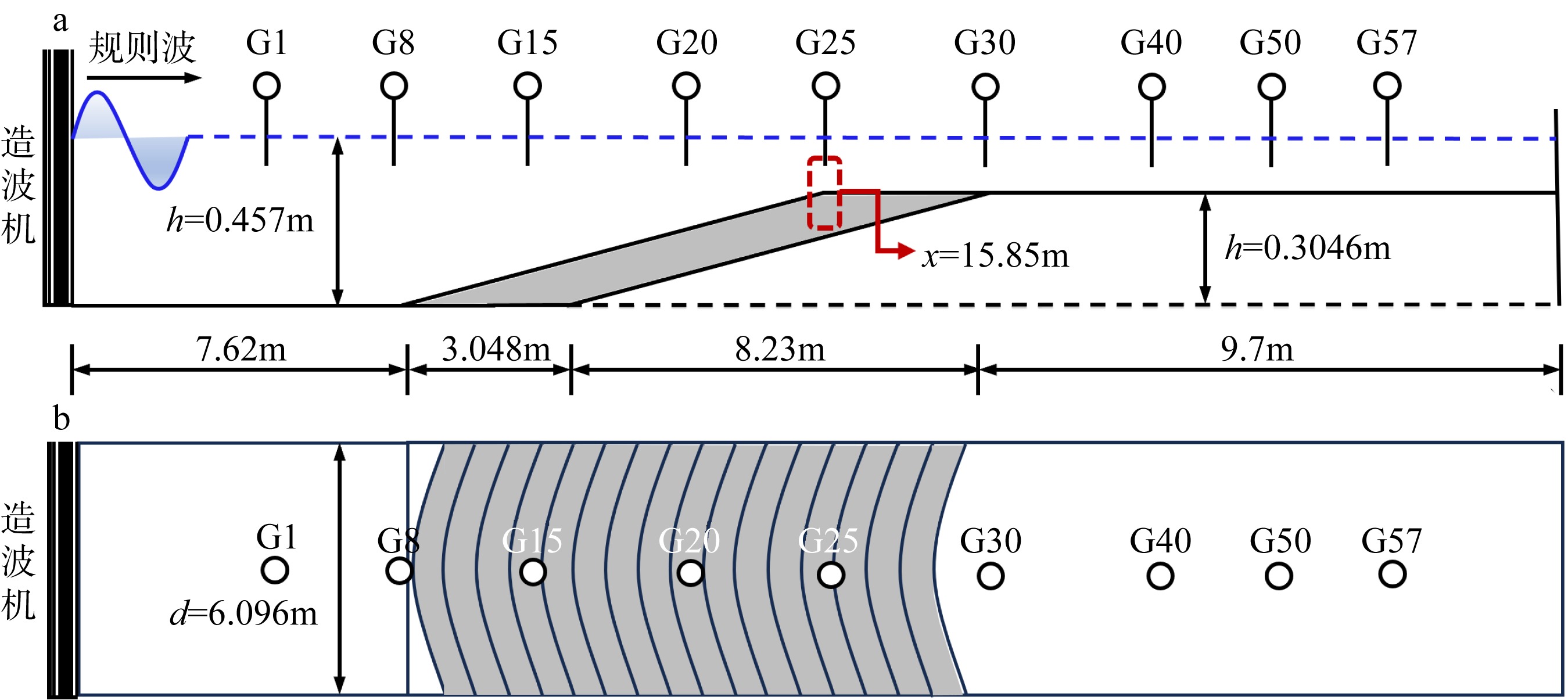
Fig. 4
Fig. 5
Validation results of the along-path variations of first-, second-, and third-order harmonic wave amplitudes at selected measurement points on three-dimensional uneven coral reefs by the FUNWAVE-TVD model"
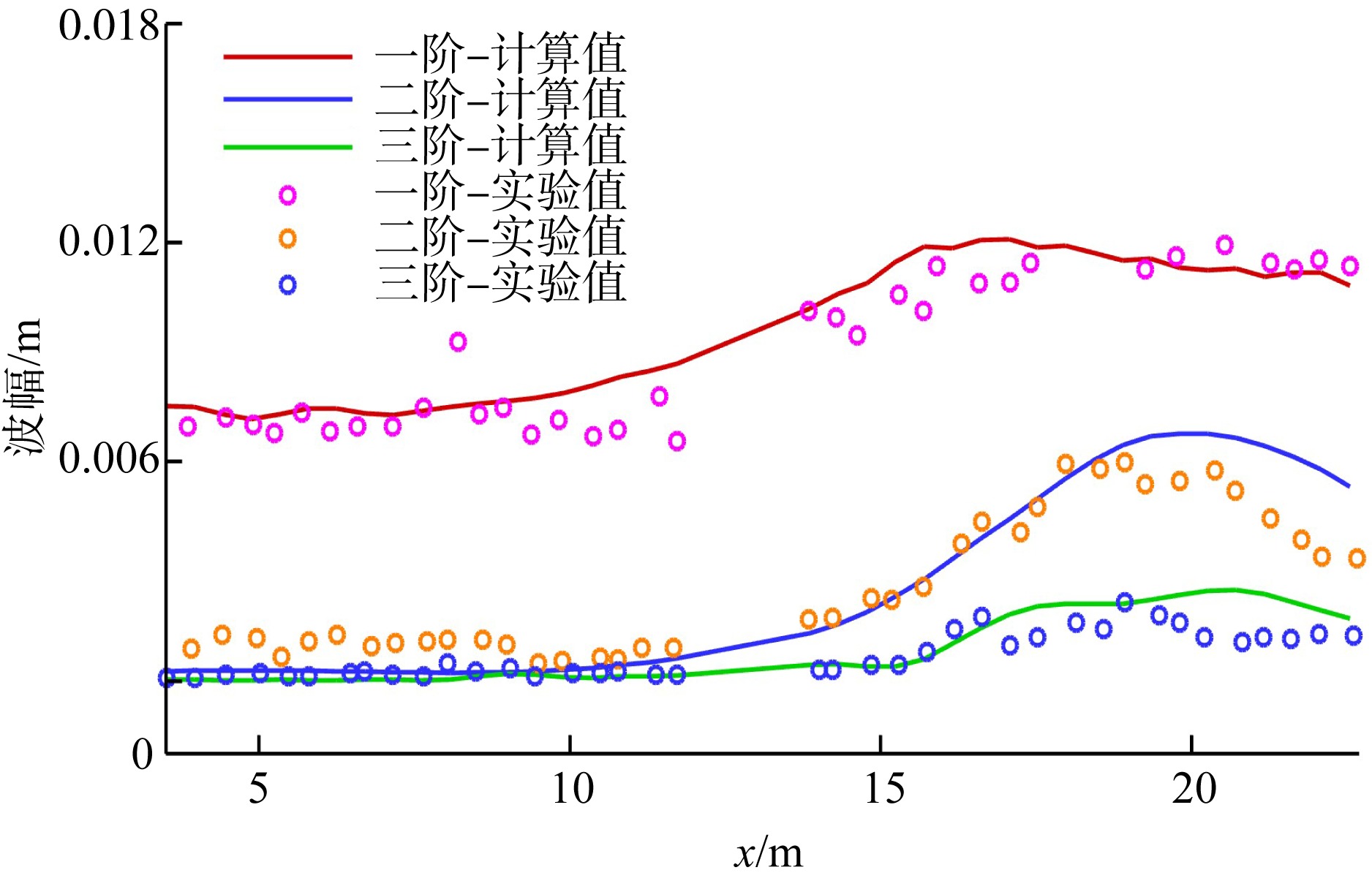
Fig. 5
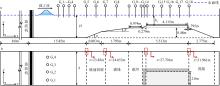
Fig. 6
Layout of the computational domain for the numerical wave flume. (a)Front view; (b) top view. H represents the water depth, b represents the width of the flume, and hr represents the water depth over the reef flat"
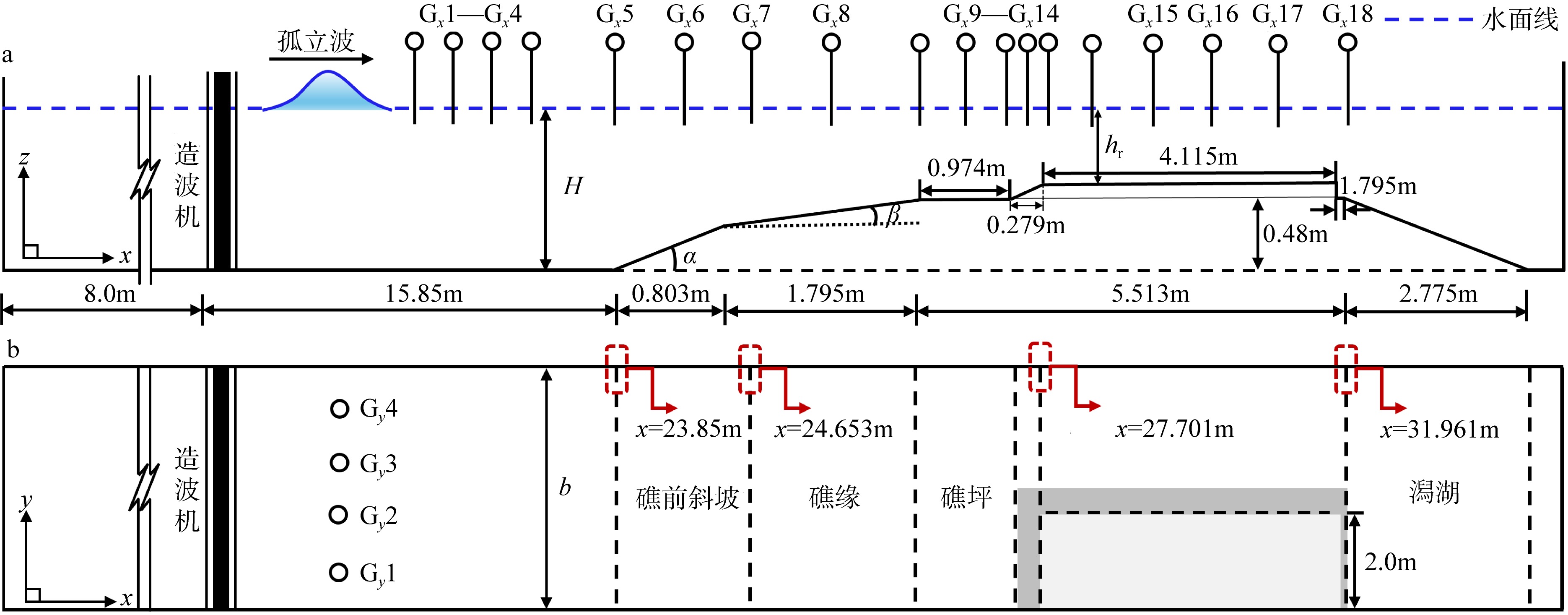
Fig. 6
Tab. 2
Measurement point locations"
| 编号 | 位置(x) | 编号 | 位置(x) |
|---|---|---|---|
| G1 G2 | 17 18 | G10 G11 | 26.935 27.422 |
| G3 | 19 | G12 | 27.6 |
| G4 | 20 | G13 | 27.721 |
| G5 G6 G7 G8 G9 | 23.85 24.22 24.68 25.68 26.448 | G14 G15 G16 G17 G18 | 28.521 29.231 30.121 30.921 31.836 |
Tab. 2
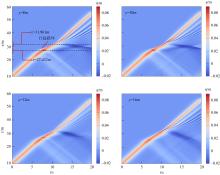
Fig. 7
Comparison of the time evolution in the free liquid level at different cross-sections under standard conditions"
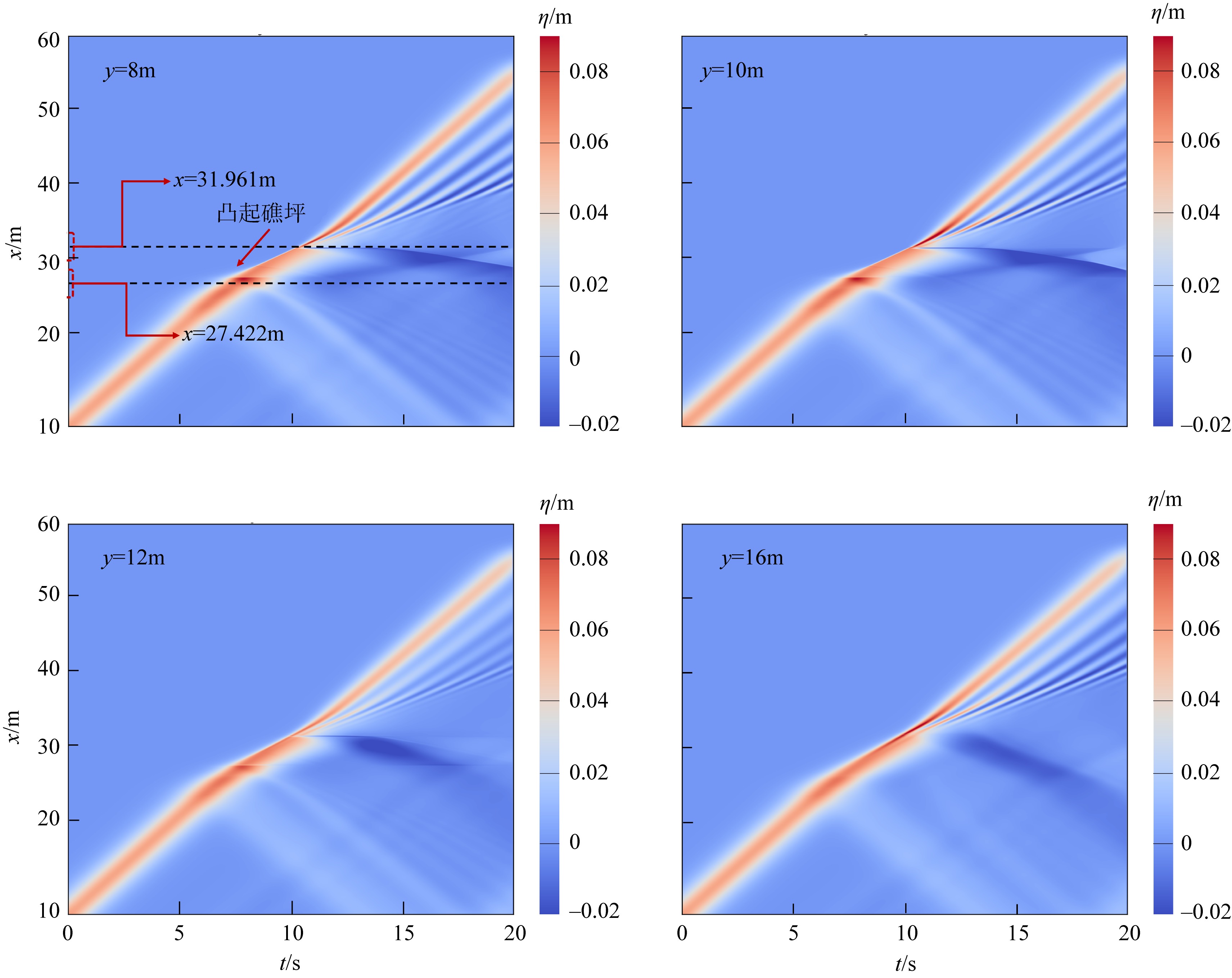
Fig. 7
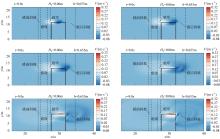
Fig. 8
Velocity contours in the y-direction at different times under standard conditions"
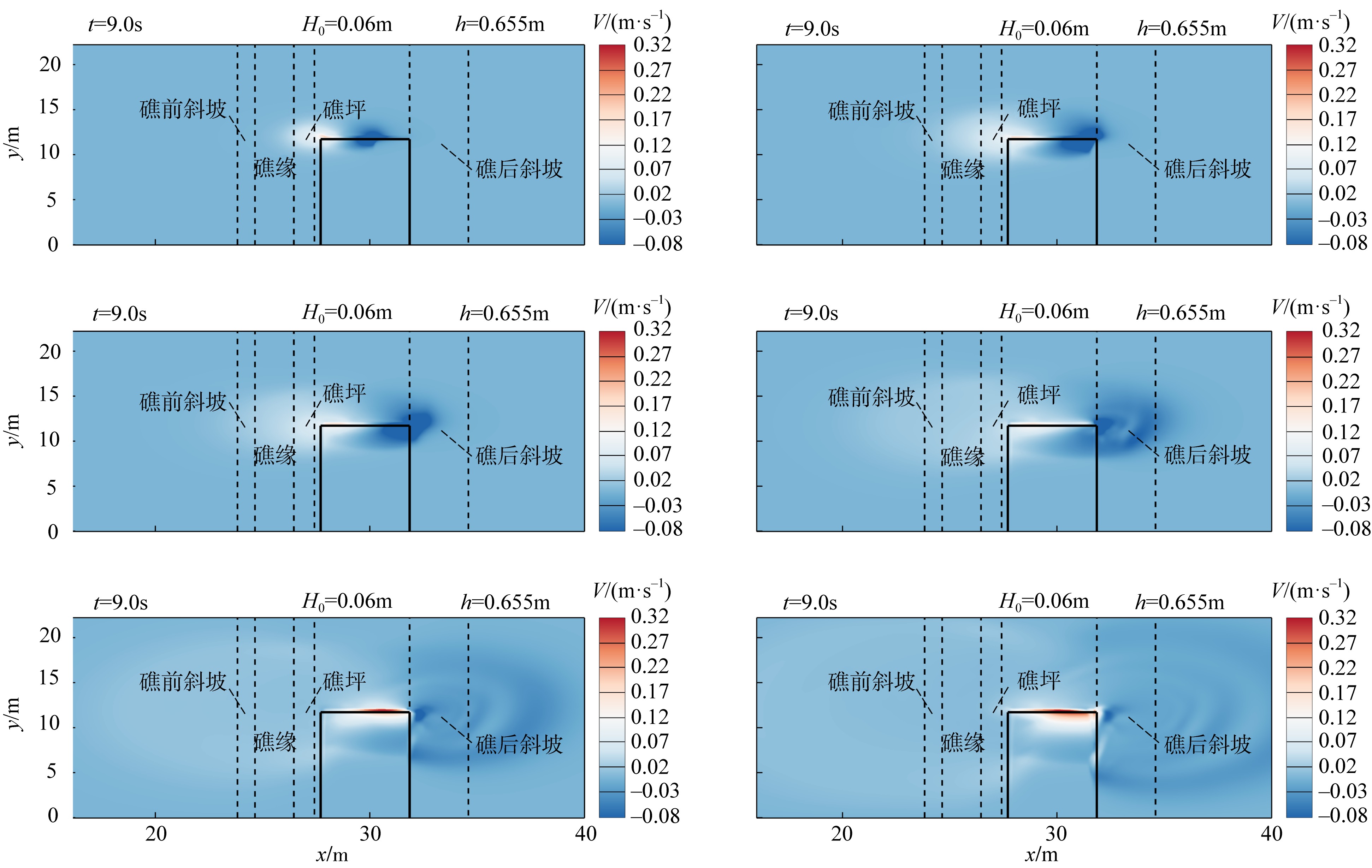
Fig. 8
Fig. 9
Comparison of along-path maximum wave heights (Hi) at different cross-sectional positions"
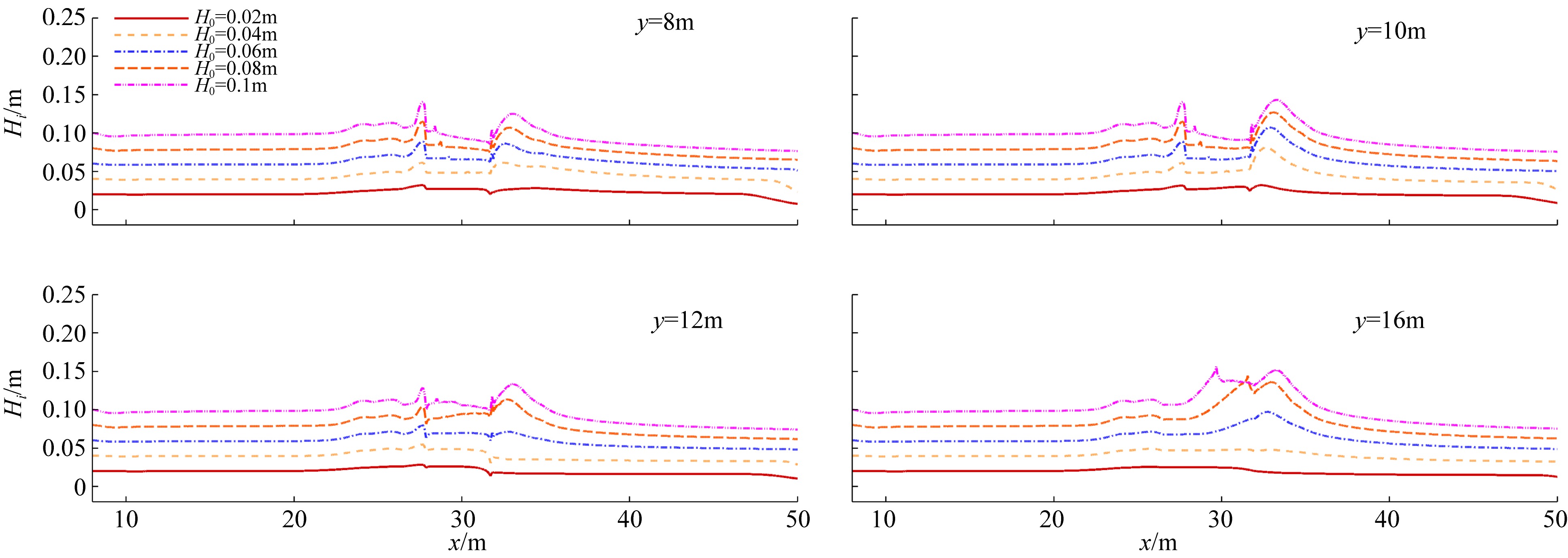
Fig. 9
Fig. 10
Comparison of along-path maximum flow velocities at different cross-sectional positions"
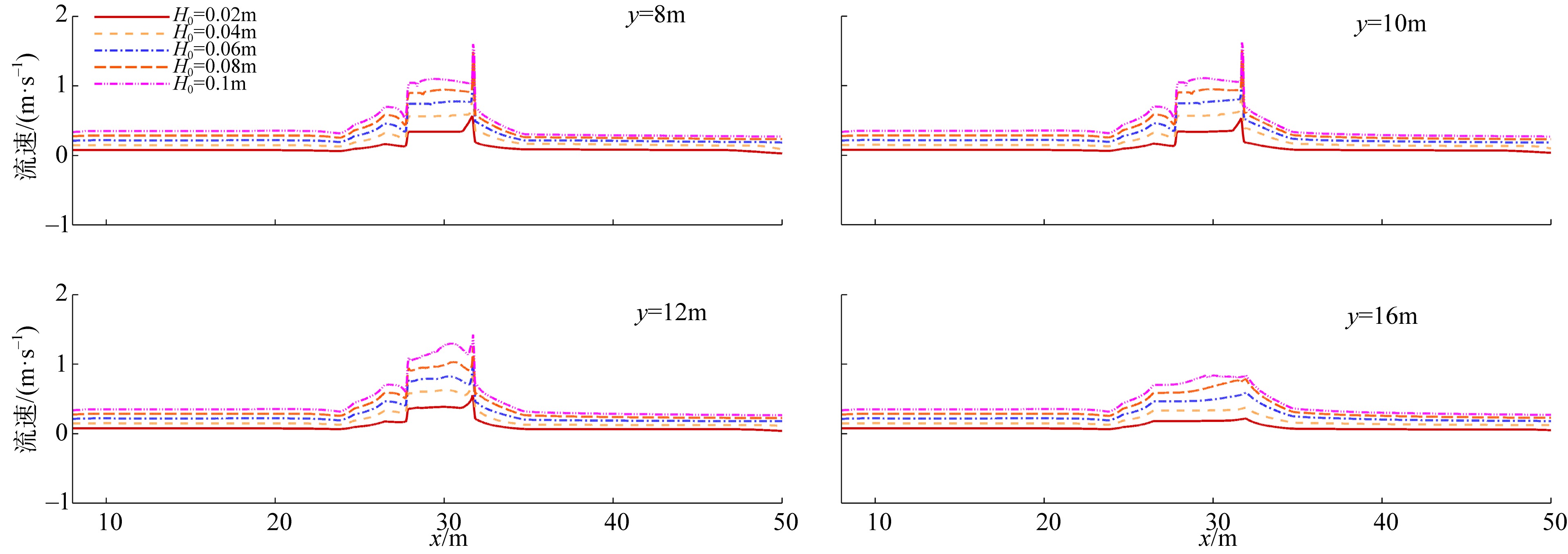
Fig. 10
Fig. 11
Comparison of along-path maximum wave heights at different cross-sectional positions"
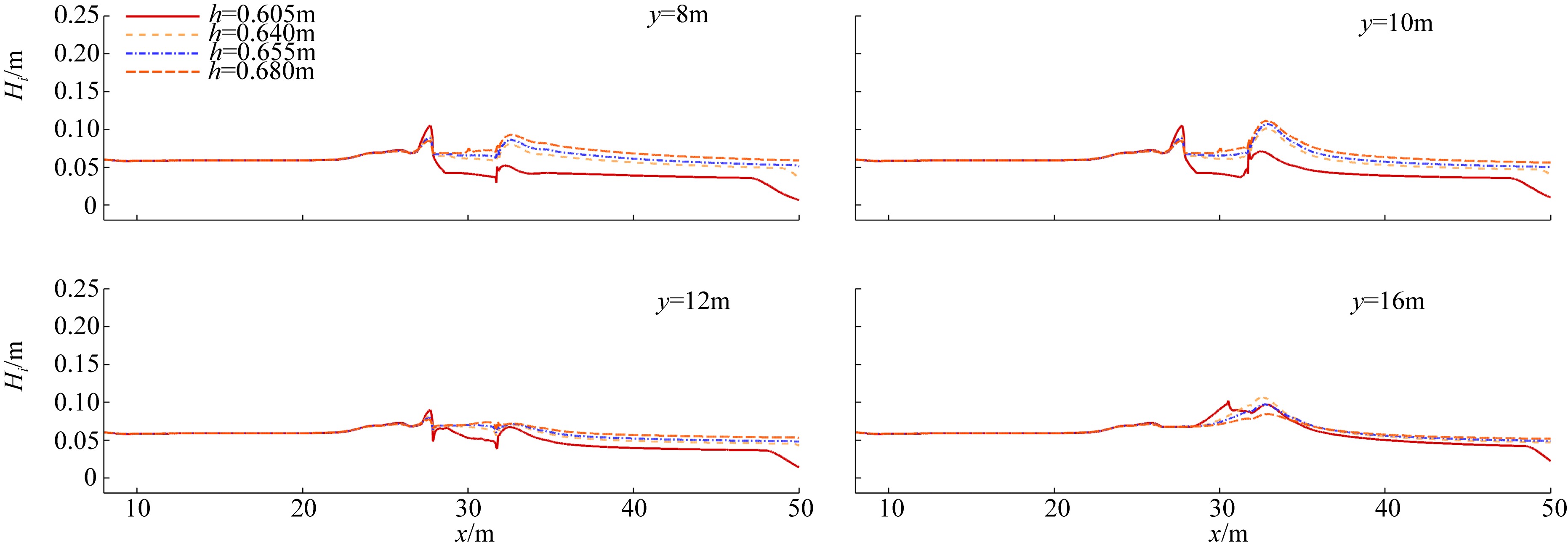
Fig. 11
Fig. 12
Comparison of along-path maximum flow velocities at different cross-sectional positions"
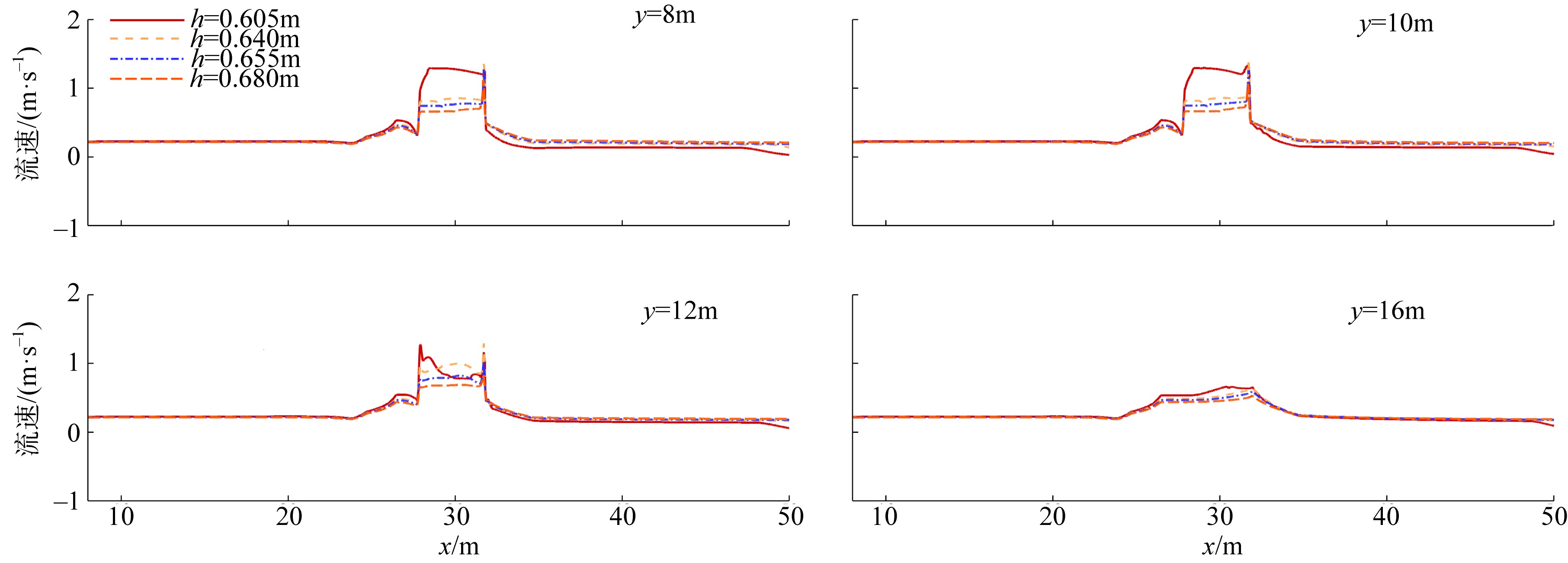
Fig. 12
| [1] |
高俊亮, 张一兆, 何志伟, 等, 2021. 孤立波作用下水平板的水动力特性数值研究[J]. 哈尔滨工程大学学报, 42(9): 1287-1294.
|
|
|
|
| [2] |
李玮, 屈科, 王超, 等, 2025. 潜堤对岛礁次重力波波浪特性影响的试验研究[J]. 热带海洋学报, 44(4): 177-186.
|
|
|
|
| [3] |
刘林平, 刘维杰, 孙志林, 2021. 珊瑚岛礁孤立波爬坡的平面二维数值模拟研究[J]. 海洋工程, 39(4): 96-103.
|
|
|
|
| [4] |
刘铁威, 屈科, 黄竞萱, 等, 2021. 孤立波在透水岸礁上水动力特性数值模拟研究[J]. 水动力学研究与进展(A辑), 36(2): 180-191.
|
|
|
|
| [5] |
刘维杰, 宁越, 2023. 基于精确色散Boussinesq方程的珊瑚礁波浪传播模拟[J]. 长沙理工大学学报(自然科学版), 20(4): 47-54.
|
|
|
|
| [6] |
任智源, 赵曦, 闪迪, 等, 2017. 海啸波对近岸岛礁影响的数值模拟研究[J]. 海洋学报, 39(3): 1-13.
|
|
|
|
| [7] |
王傲宇, 屈科, 王旭, 等, 2025. 基于非静压模型数值模拟与卷积神经网络的滑坡涌浪水动力特性预测[J]. 热带海洋学报, 44(2): 187-195.
|
|
|
|
| [8] |
王超, 屈科, 王旭, 等, 2024. 类海啸波在非平整岛礁上传播与演变的试验研究[J]. 热带地理, 44(10): 1838-1846.
doi: 10.13284/j.cnki.rddl.20240428 |
|
doi: 10.13284/j.cnki.rddl.20240428 |
|
| [9] |
王梓峻, 屈科, 王旭, 等, 2024. 复杂岛礁地形下类海啸波在复合式岸礁上的传播演变特性及其对海墙的冲击作用[J]. 海洋学报, 46(12): 87-99.
|
|
|
|
| [10] |
吴丹红, 刘海江, 2019. 床面粗糙度对孤立波爬高影响的试验研究[C]// 中国海洋工程学会. 第十九届中国海洋 (岸) 工程学术讨论会论文集(上). 北京: 海洋出版社 (in Chinese).
|
| [11] |
肖理, 房克照, 孙家文, 等, 2021. 孤立波对礁坪上直墙冲击试验和RANS数值模拟[J]. 海洋工程, 39(4): 86-95.
|
|
|
|
| [12] |
doi: 10.1038/ncomms4794 pmid: 24825660 |
| [13] |
|
| [14] |
|
| [15] |
doi: 10.1098/rsos.241128 |
| [16] |
|
| [17] |
doi: 10.1007/s00773-018-0571-1 |
| [18] |
doi: 10.1016/j.coastaleng.2020.103704 |
| [19] |
doi: 10.1016/j.apor.2017.01.003 |
| [20] |
doi: 10.1016/j.oceaneng.2021.110228 |
| [21] |
doi: 10.1016/j.oceaneng.2022.113553 |
| [22] |
doi: 10.1016/j.csr.2024.105243 |
| [23] |
doi: 10.1016/j.coastaleng.2013.05.002 |
| [24] |
doi: 10.3390/jmse12122349 |
| [25] |
doi: 10.1080/1943815X.2019.1614071 |
| [26] |
doi: 10.1016/j.ocemod.2011.12.004 |
| [27] |
doi: 10.1007/s11069-021-04686-w |
| [28] |
|
| [29] |
doi: 10.1080/02723646.1981.10642213 |
| [30] |
doi: 10.1016/j.oceaneng.2017.12.020 |
| [31] |
doi: 10.1016/j.coastaleng.2020.103700 |
| [32] |
|
|
||