

Journal of Tropical Oceanography ›› 2025, Vol. 44 ›› Issue (6): 165-175.doi: 10.11978/2025029CSTR: 32234.14.2025029
• Exploitation of Marine Resources • Previous Articles Next Articles
Discussion on classification methods of clastic sediment suitable for marine sand exploration
LIN Mingzhi1,2( ), CHEN Bo1,2(), CHEN Yang1,2
- 1
Hainan Key Laboratory of Marine Geological Resources and Environment
2Marine Geological Institute of Hainan Province
-
Received:2025-02-25Revised:2025-04-11Online:2025-11-10Published:2025-12-03 -
Contact:CHEN Bo. email: bochen_hyy@163.com -
Supported by:Financial Project of Hainan Province, China(46000025T000001444979); Financial Project of Hainan Province, China(46000021T000000002276); Financial Project of Hainan Province, China(T100732); Open Project of Hainan Key Laboratory of Marine Geological Resources and Environment(24-HNHYDZZYHJKF044)

CLC Number:
- P744.2
Cite this article
LIN Mingzhi, CHEN Bo, CHEN Yang. Discussion on classification methods of clastic sediment suitable for marine sand exploration[J].Journal of Tropical Oceanography, 2025, 44(6): 165-175.
share this article
Add to citation manager EndNote|Reference Manager|ProCite|BibTeX|RefWorks
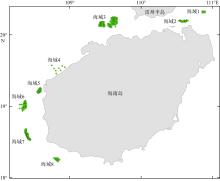
Fig. 1
Distribution of research stations"

Fig. 1
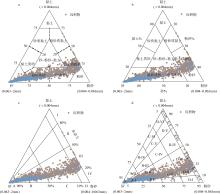
Fig. 2
Gravel-free triangle patterns and sediment type distribution of Shepard (a), Xue Chunting (b), Pejrup (c), and Flemming (d) classification methods"

Fig. 2
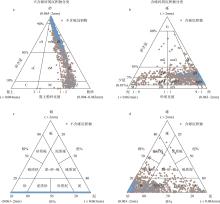
Fig. 3
Triangle patterns and sediment type distribution of Folk (a, b) and Ni Yugen (c, d) classification methods"

Fig. 3
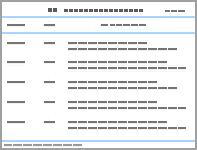
Tab. 1
Classification and naming of marine sand sediments in this paper"
| 沉积物类型 | 分类依据 | 沉积物细分类型 | 细分依据 |
|---|---|---|---|
| 砾 | 砾≥80% | 砾 | |
| 砂质砾 | 砾≥30%, 砂/粉土≥1 | 砂质砾、泥质砂质砾 | 砂/粉土比值9:1 |
| 泥质砾 | 砾≥30%, 砂/粉土<1 | 泥质砾 | |
| 砾质砂 | 0%<砾<30%, 砂/粉土≥1 | 砾质砂、砾质泥质砂、含砾砂、含砾泥质砂 | 砂/粉土比值9:1 |
| 砾质泥 | 0%<砾<30%, 砂/粉土<1 | 砾质泥、含砾泥 | 砂/粉土比值9:1 |
| 砂 | 砂≥90% | 砂 | |
| 泥质砂 | 50%≤砂<90% | 粉砂质砂、泥质砂、黏土质砂 | 粉砂/黏土比值2:1和1:2 |
| 砂质泥 | 10%≤砂<50% | 砂质粉砂、砂质泥、砂质黏土 | 粉砂/黏土比值2:1和1:2 |
| 泥 | 砂<10% | 粉砂、泥、黏土 | 粉砂/黏土比值2:1和1:2 |
Tab. 1
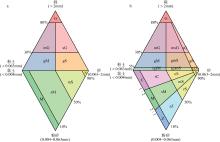
Fig. 4
Classification (a) and detailed classification (b) diamond diagrams of marine sand sediments in this paper"

Fig. 4
Tab. 2
Comparison between the classification of marine sand sediments in this paper and Folk’s classification"
| 本文的沉积物类型 | Folk分类沉积物类型 | ||
|---|---|---|---|
| 简分类型 | 细分类型 | 含砾分类 | 不含砾分类 |
| 砾(G) | 砾(G) | 砾(G) | |
| 砂质砾(sG) | 砂质砾(sG) | 砂质砾(sG) | |
| 泥质砂质砾(msG) | 泥质砂质砾(msG) | ||
| 泥质砾(mG) | 泥质砾(mG) | 泥质砾(mG) | |
| 砾质砂(gS) | 砾质砂(gS) | 砾质砂(gS) | |
| 砾质泥质砂(gmS) | 砾质泥质砂(gmS) | ||
| 含砾砂((g)S) | 含砾砂((g)S) | ||
| 含砾泥质砂((g)mS) | 含砾泥质砂((g)mS) | ||
| 砾质泥(gM) | 砾质泥(gM) | 砾质泥(gM) | |
| 含砾泥((g)m) | 含砾泥((g)m) | ||
| 砂(S) | 砂(S) | 砂(S) | 砂(S) |
| 泥质砂(mS) | 粉砂质砂(zS) | 泥质砂(mS) | 粉砂质砂(zS) |
| 泥质砂(mS) | 泥质砂(mS) | 泥质砂(mS) | |
| 黏土质砂(cS) | 泥质砂(mS) | 黏土质砂(cS) | |
| 砂质泥(sM) | 砂质粉砂(sZ) | 砂质泥(sM) | 砂质粉砂(sZ) |
| 砂质泥(sM) | 砂质泥(sM) | 砂质泥(sM) | |
| 砂质黏土(sC) | 砂质泥(sM) | 砂质黏土(sC) | |
| 泥(M) | 粉砂(Z) | 泥(M) | 粉砂(Z) |
| 泥(M) | 泥(M) | 泥(M) | |
| 黏土(C) | 泥(M) | 黏土(C) | |
Tab. 2
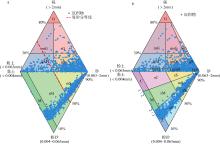
Fig. 5
Classification (a) and detailed classification (b) of sediments in the waters around Hainan Island"

Fig. 5
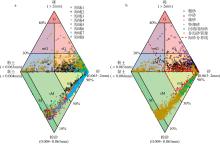
Fig. 6
Distribution of sediment types (a) and marine sand resources (b) in the waters around Hainan Island"

Fig. 6

Fig. 7
Simple classification (a) and detailed classification (b) of the types of seafloor surface sediments in Area 6 of the sea region"
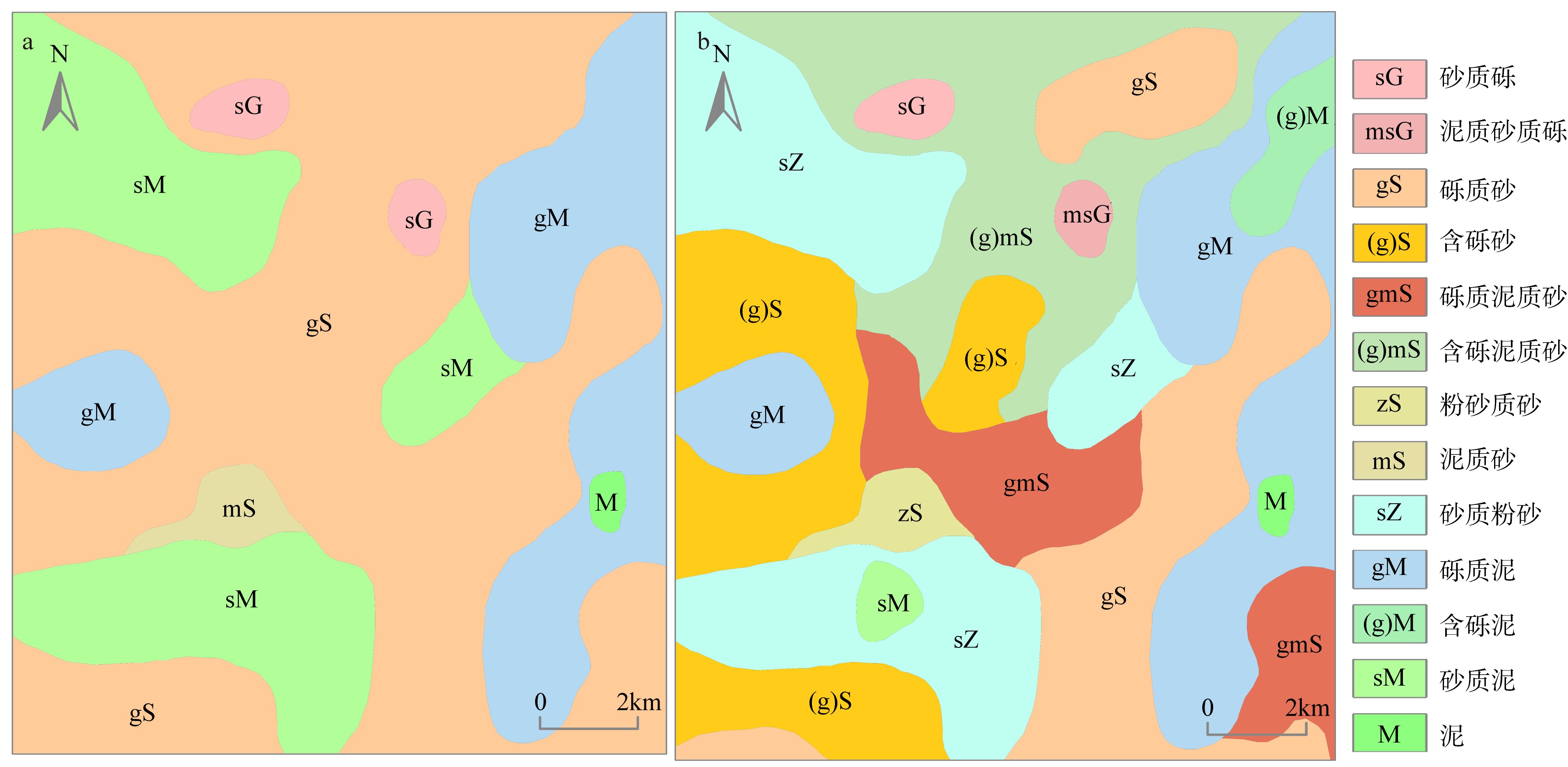
Fig. 7
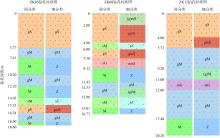
Fig. 8
Simple classification and detailed classification of the drilling columnar diagram in Area 6 of the sea region"

Fig. 8
| [1] |
国家海洋局, 1975. 海洋调查规范(第四分册: 海洋地质调查)[M]. 北京: 海洋出版社 (in Chinese).
|
| [2] |
国家市场监督管理总局, 国家标准化管理委员会, 2022. 建设用砂: GB/T 14684—2022[S]. 北京: 中国标准出版社.
|
|
State Administration for Market Regulation, National Standardization Administration, 2022. Sand for construction: GB/T 14684—2022[S]. Beijing: Standards Press of China (in Chinese).
|
|
| [3] |
海南省市场监督管理局, 2024. 海砂地质勘查规范: DB46/T 637—2024[S].
|
|
Hainan Provincial Administration for Market Regulation, 2024. Specifications for marine sand exploration: DB46/T 637—2024[S]. (in Chinese).
|
|
| [4] |
郝连成, 远继东, 郑立龙, 等, 2022. 湛江湾海域表层沉积物粒度特征及沉积环境[J]. 海洋地质前沿, 38(8): 1-10.
|
|
|
|
| [5] |
何起祥, 李绍全, 刘健, 2002. 海洋碎屑沉积物的分类[J]. 海洋地质与第四纪地质, 22(1): 115-121.
|
|
|
|
| [6] |
刘志杰, 殷汝广, 2011. 浅海沉积物分类方法研讨[J]. 海洋通报, 30(2): 194-199.
|
|
|
|
| [7] |
吕纪轩, 胡日军, 李毅, 等, 2020. 烟台北部近岸海域表层沉积物粒度分布及沉积动力环境特征[J]. 海洋地质前沿, 36(4): 27-36.
|
|
|
|
| [8] |
倪玉根, 李建国, 习龙, 2021. 海砂粒级划分标准和沉积物命名方法探讨[J]. 热带海洋学报, 40(3): 143-151.
doi: 10.11978/2020062 |
|
doi: 10.11978/2020062 |
|
| [9] |
瞿洪宝, 苟鹏飞, 孙龙飞, 等, 2021. 海南岛崖州湾表层沉积物空间分布特征及其受控机制[J]. 海洋学报, 43(12): 70-81.
|
|
|
|
| [10] |
王中波, 杨守业, 张志珣, 2007. 两种碎屑沉积物分类方法的比较[J]. 海洋地质动态, 23(3): 36-40.
|
|
|
|
| [11] |
王中波, 何起祥, 杨守业, 等, 2008. 谢帕德和福克碎屑沉积物分类方法在南黄海表层沉积物编图中的应用与比较[J]. 海洋地质与第四纪地质, 28(1): 1-8.
|
|
|
|
| [12] |
肖晓, 石要红, 冯秀丽, 等, 2016. 北部湾表层沉积物粒度分布规律及沉积动力分区[J]. 中国海洋大学学报(自然科学版), 46(5): 83-89.
|
|
|
|
| [13] |
薛春汀, 1994. 两种碎屑沉积物分类的比较[J]. 海洋地质与第四纪地质, 14(2): 109-113.
|
|
|
|
| [14] |
赵东波, 2009. 常用沉积物粒度分类命名方法探讨[J]. 海洋地质动态, 25(8): 41-44+46 (in Chinese).
|
| [15] |
赵京涛, 阚靖, 胡邦琦, 等, 2024. 中国重点海域海砂资源调查和潜力评价进展[J]. 海洋地质与第四纪地质, 44(3): 90-97.
|
|
|
|
| [16] |
中华人民共和国国家技术监督局, 1992. 海洋调查规范-海洋地质地球物理调查: GB/T 13909—1992[S]. 北京: 中国标准出版社.
|
|
State Bureau of Quality and Technical Supervision of the People’s Republic of China, 1992. Specification for oceanographic survey-Marine geology and geophysics investigation: GB/T 13909—1992[S]. Beijing: Standards Press of China (in Chinese).
|
|
| [17] |
中华人民共和国国家质量监督检疫总局, 中国国家标准化管理委员会, 2007. 海洋调查规范第8部分: 海洋地质地球物理调查: GB/T 12763. 8—2007[S]. 北京: 中国标准出版社.
|
|
General Administration of Quality Supervision, Inspection and Quarantine of the People’s Republic of China, Standardization Administration of the People’s Republic of China, 2007. Specifications for oceanographic survey: Part 8: Marine geology and geophysics survey: GB/T 12763. 8—2007[S]. Beijing: Standards Press of China (in Chinese).
|
|
| [18] |
中华人民共和国自然资源部, 2024. 矿产地质勘查规范海砂: DZ/T 0494—2024[S]. 北京: 地质出版社.
|
|
Ministry of Natural Resources of the People's Republic of China, 2024. Specification for marine sand exploration: DZ/T 0494—2024[S]. Beijing: Geological Publishing House (in Chinese).
|
|
| [19] |
doi: 10.1016/S0278-4343(00)00015-7 |
| [20] |
doi: 10.1080/00288306.1970.10418211 |
| [21] |
|
| [22] |
|
| [1] | ZHOU Kexin, ZHEN Wenjing, ZHANG Wenwen, WANG Jiangyong. Morphological classification and phagocytosis of haemocytes in Spondylus sp. [J]. Journal of Tropical Oceanography, 2025, 44(2): 84-91. |
| [2] | CHEN Jie, BIAN Cheng, JIANG Changbo, YAO Zhen, JIANG Chao, LIANG Hai. Advances in the characterization of bioclastic sediment motion [J]. Journal of Tropical Oceanography, 2024, 43(4): 33-41. |
| [3] | SHEN Jian, JIAN Zhuokai, OUYANG Xuemin, AI Bin. Remote sensing monitoring of mangrove wetland changes combined with tidal level correction in the Leizhou Peninsula [J]. Journal of Tropical Oceanography, 2024, 43(1): 137-153. |
| [4] | ZHANG Chengfei, REN Guangbo, WU Peiqiang, HU Yabin, MA Yi, YAN Yu, ZHANG Jingrui. Mangrove species classification in the Hainan Bamen Bay based on GF optics and fully polarimetric SAR [J]. Journal of Tropical Oceanography, 2023, 42(2): 153-168. |
| [5] | LI Yonghang, JIA Lei, NI Yugen, HE Jian, MU Zelin, WEN Mingming, SHAN Chenchen. Geophysical characteristics and favorable occurrence signs of marine sand-gravel body in Taiwan banks* [J]. Journal of Tropical Oceanography, 2021, 40(5): 101-110. |
| [6] | NI Yugen, LI Jianguo, XI Long. Discussion on grain-size grading scale and sediment classification for marine sand and gravel [J]. Journal of Tropical Oceanography, 2021, 40(3): 143-151. |
| [7] | MENG Tian, CHEN Zuo, ZHU Jun, ZOU Xiaoxiao, FU Qingyan, BAO Shixiang. Morphological and molecular study on marine green alga, Halimeda velasquezii, first recorded in Hainan Island [J]. Journal of Tropical Oceanography, 2020, 39(6): 114-121. |
| [8] | ZHENG Yinggang, ZHANG Hongsheng, LI Xiaolian, ZHANG Zhouhao. Detection algorithm of internal waves in the South China Sea based on boundary characteristics of remote sensing image [J]. Journal of Tropical Oceanography, 2020, 39(6): 41-56. |
| [9] | Ting ZHANG, Minhang HU, Wenjing ZHANG, Tianran CHEN, Meng LIU. Coral reef growth of Weizhou Island and its response to climate change in the past millennium [J]. Journal of Tropical Oceanography, 2020, 39(4): 70-79. |
| [10] | Juan DONG, Guangbo REN, Yabin HU, Jinzhao PANG, Yi MA. Construction and classification of coral reef geomorphic unit system based on high-resolution remote sensing: using 8-band Worldview-2 Image as an example [J]. Journal of Tropical Oceanography, 2020, 39(4): 116-129. |
| [11] | Di DONG, Jisheng ZENG, Zheng WEI, Jinhui YAN. Integrating spaceborne optical and SAR imagery for monitoring mangroves and Spartina alterniflora in Zhangjiang Estuary [J]. Journal of Tropical Oceanography, 2020, 39(2): 107-117. |
| [12] | ZHU Kai, WANG Xuehui, ZHANG Peng, DU Feiyan, QIU Yongsong. A study on morphological variations and discrimination of medium and dwarf forms of purple flying squid Sthenoteuthis oualaniensis in the southern South China Sea [J]. Journal of Tropical Oceanography, 2016, 35(6): 82-88. |
| [13] | CAO Shi, LIU Xiang-nan, LIU Mei-ling, WU Ling, ZHOU Bo-tian. Monitoring marine suspended particulate matter concentration using full polarimetric SAR data of Radarsat-2 [J]. Journal of Tropical Oceanography, 2013, 32(4): 107-112. |
| [14] | SU Xiu, ZHAO Dong-zhi, WANG Xiang, ZHONG Cai-rong. Remote sensing classification of mangrove based on SPOT5 image [J]. Journal of Tropical Oceanography, 2012, 31(6): 128-134. |
|
||