

Journal of Tropical Oceanography ›› 2025, Vol. 44 ›› Issue (6): 155-164.doi: 10.11978/2025013CSTR: 32234.14.2025013
Previous Articles Next Articles
Forest biomass and carbon storage of different mangrove communities in Shenzhen, China
SU Chunqing( ), GAO Yuhui, LUO Xinwu, HAN Mengmeng, GONG Yanzhang, ZHENG Weiguo()
Guangdong Wenke Green Technology Corp. ,Ltd., Guangdong Landscape and Ecological Restoration Engineering Technology Research Center
-
Received:2025-01-22Revised:2025-03-06Online:2025-11-10Published:2025-12-03 -
Contact:ZHENG Weiguo. email: 57959061@qq.com -
Supported by:Shenzhen Municipal Science and Technology Plan Project(KCXFZ202002011006491)

CLC Number:
- S718.54
Cite this article
SU Chunqing, GAO Yuhui, LUO Xinwu, HAN Mengmeng, GONG Yanzhang, ZHENG Weiguo. Forest biomass and carbon storage of different mangrove communities in Shenzhen, China[J].Journal of Tropical Oceanography, 2025, 44(6): 155-164.
share this article
Add to citation manager EndNote|Reference Manager|ProCite|BibTeX|RefWorks
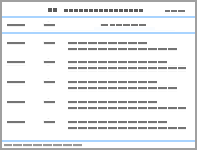
Tab. 1
Information of three mangrove sampling sites in Shenzhen"
| 样点 | 所在区位 | 面积/hm2 | 红树林生境类型 | 流经河流 | 土壤质地 | 样方号 |
|---|---|---|---|---|---|---|
| 宝安西湾红树林 | 深圳西部 | 7.34 | 河口边缘开阔海岸 | 铁岗水库排洪河、南昌涌 | 粉砂土 | A1—A15 |
| 大鹏鹿咀山庄红树林 | 深圳东部 | 8.00 | 浅滩潟湖 | 鹿咀河 | 粉砂土 | B1—B8 |
| 福田红树林保护区 | 深圳南部 | 100 | 河口内湾 | 凤塘河 | 黏壤土 | C1—C18 |
Tab. 1
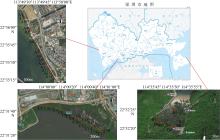
Fig. 1
Distribution of mangrove community plots in three sampling sites in Shenzhen. Upper left: plot distribution in Bao'an Xiwan mangrove community; Lower left: plot distribution in Futian Mangrove Nature Reserve; Lower right: plot distribution in Luzui Mountain Villa mangrove community. Image sources: Shenzhen Geospatial Information Service Platform, Baidu Map"

Fig. 1
Tab. 2
Allometric growth equations of different mangrove species"
| 红树树种 | 异速生长方程 | 参考文献 |
|---|---|---|
| 秋茄Kandelia obovata | WAGB=0.0341(D2H)1.03; WBGB =0.0483(D2H)0.834 | Clough et al, |
| 木榄Bruguiera gymnorrhiza | WAGB=0.186D2.31; WBGB=0.4697D1.5541 | Clough et al, |
| 桐花树Aegiceras corniculata | WTGB=0.251ρD2.46 | Howard et al, |
| 海桑Sonneratia caseolaris | WTGB=0.251ρD2.46 | Howard et al, |
| 无瓣海桑Sonneratia apetala | WAGB=0.280(D2H)0.693; WBGB=0.038(D2H)0.759 | Ren et al, |
| 拉关木Laguncularia racemosa | WTGB=0.251ρD2.46 | Howard et al, |
| 白骨壤Avicennia marina | lgWAGB=2.113lgD−0.511 lgWBGB=1.171lgD+0.106 | Comley et al, |
| 红海榄Rhizophora stylosa | WAGB =0.2206D2.4292 WBGB=0.261D1.86 | Tamai et al, |
| 海漆Excoecaria agallocha | WAGB=0.1029D2.46 WBGB=0.08928D2.22 | Komiyama et al, |
Tab. 2
Tab. 3
Characteristics of main community parameters of mangroves in three sampling sites in Shenzhen"
| 样点 | 群落类型 | 样方号 | 样方数 | 每100m2 平均株数 | 平均树 高/m | 平均胸 径/cm | 平均间 距/m | 树种组成 |
|---|---|---|---|---|---|---|---|---|
| 宝安西湾红树林 | 秋茄 | A1—A4, A11—A15 | 9 | 30 | 6.29 | 12.73 | 1.83 | 多为秋茄纯林, 个别样方伴生有海桑 |
| 海桑+无瓣海桑 | A5—A10 | 6 | 22 | 7.96 | 22.98 | 2.00 | 以海桑、无瓣海桑为优势种, 个别样方伴生有秋茄 | |
| 大鹏鹿咀山庄红树林 | 无瓣海桑 | B1、B2、B6 | 3 | 38 | 2.96 | 5.46 | 1.59 | 以无瓣海桑为优势种, 伴生种海漆, 多见木榄、白骨壤、秋茄、红海榄、桐花树等幼苗 |
| 红海榄 | B5、B7 | 2 | 39 | 1.85 | 3.41 | 1.58 | 以红海榄为优势种, 伴生种秋茄、无瓣海桑 | |
| 海漆 | B3、B8 | 2 | 30 | 2.95 | 5.11 | 1.78 | 以海漆为优势种, 伴生种秋茄、桐花树、拉关木 | |
| 拉关木 | B4 | 1 | 37 | 4.12 | 4.44 | 1.62 | 以拉关木为优势种, 伴生种秋茄、海漆 | |
| 福田红树林保护区 | 秋茄 | C1—C11, C14—C18 | 16 | 41 | 5.42 | 10.29 | 1.48 | 以秋茄占绝对优势种, 伴生种木榄、桐花树, 林下老鼠簕、木榄、卤蕨幼苗密布 |
| 海桑+无瓣海桑 | C12—C13 | 2 | 19 | 8.46 | 20.34 | 2.14 | 以海桑为优势种, 伴生种无瓣海桑, 林下老鼠簕密布 |
Tab. 3
Tab. 4
Biomass and vegetation carbon density of mangroves in three sampling sites in Shenzhen"
| 样点 | 群落类型 | 总生物量/(t·hm-2) | 植被碳密度/(t·hm-2) |
|---|---|---|---|
| 宝安西湾红树林 | 秋茄 | 203.81 | 88.03 |
| 海桑+无瓣海桑 | 494.61 | 233.56 | |
| 大鹏鹿咀山庄红树林 | 无瓣海桑 | 44.37 | 21.64 |
| 红海榄 | 26.56 | 11.84 | |
| 海漆 | 37.24 | 15.40 | |
| 拉关木 | 35.51 | 17.87 | |
| 福田红树林保护区 | 秋茄 | 189.14 | 81.67 |
| 海桑+无瓣海桑 | 313.05 | 146.46 |
Tab. 4
Tab. 5
Soil organic carbon and carbon density of mangrove communities in three sampling sites in Shenzhen"
| 样点 | 群落/均值 | 含水量/% | 容重/(g·cm-3) | 土壤有机碳/(g·kg-1) | 土壤有机碳密度/(t·hm-2) |
|---|---|---|---|---|---|
| 西湾红树林 | 秋茄 | 85.74 | 1.40 | 16.91 | 39.16 |
| 海桑+无瓣海桑 | 89.71 | 1.32 | 15.73 | 38.73 | |
| 地区均值 | 87.59±3.92a | 1.36±0.09a | 16.40±4.58b | 38.94±9.78b | |
| 大鹏鹿咀山庄红树林 | 无瓣海桑 | 84.66 | 1.36 | 17.01 | 44.63 |
| 红海榄 | 78.9 | 1.33 | 27.52 | 72.46 | |
| 海漆 | 76.9 | 1.34 | 23.52 | 64.41 | |
| 拉关木 | 76.5 | 1.68 | 25.92 | 86.92 | |
| 地区均值 | 80.26±4.91b | 1.39±0.17a | 22.38±3.82b | 61.82±22.77b | |
| 福田红树林保护区 | 秋茄 | 74.55 | 1.02 | 64.80 | 139.42 |
| 海桑+无瓣海桑 | 81.15 | 1.21 | 26.24 | 63.67 | |
| 地区均值 | 74.96±6.10c | 1.04±0.13b | 63.10±23.75a | 134.65±49.96a |
Tab. 5
Tab. 6
Organic carbon content of mangrove plants in three sampling sites in Shenzhen"
| 样点 | 序号 | 有机碳含量/(g·kg-1) | |||||
|---|---|---|---|---|---|---|---|
| 树种 | 叶 | 茎 | 果 | 花托 | 平均值 | ||
| 宝安西湾红树林 | 1 | 秋茄 | 398.90±7.38B | 379.37±5.58B | 446.32±17.42 | 463.06±11.39 | 421.91±36.99B |
| 2 | 无瓣海桑 | 373.79±12.78A | 437.95±10.06A | 404.48±15.53 | - | 405.41±29.98A | |
| 大鹏鹿咀山庄红树林 | 1 | 秋茄 | 387.39±7.17Bb | 417.19±14.33Aa | - | - | 402.29±19.21Ba |
| 2 | 无瓣海桑 | 379.26±9.77Abc | 379.26±12.41Bbc | 387.39±13.27 | - | 381.97±12.04Bb | |
| 3 | 红海榄 | 363.01±11.81c | 360.30±8.13cde | - | - | 361.66±9.75cd | |
| 4 | 海漆 | 414.48±16.48a | 387.39±10.84b | - | - | 400.94±19.38a | |
| 5 | 桐花树 | 390.10±12.41b | 371.14±7.16bcd | - | - | 380.62±13.79b | |
| 6 | 木榄 | 360.30±8.13cd | 365.72±9.77cd | 403.65±11.06 | - | 376.56±22.46bc | |
| 7 | 拉关木 | 330.50±9.77e | 344.05±8.13e | - | - | 337.28±10.94e | |
| 8 | 白骨壤 | 341.34±11.81de | 352.17±10.84de | - | - | 346.76±11.75de | |
| 福田红树林保护区 | 1 | 秋茄 | 446.32±8.37Aa | 432.37±10.06Aa | 482.58±14.76a | - | 453.76±24.52Aa |
| 2 | 无瓣海桑 | 393.32±8.37Ab | 362.63±12.78Bbc | - | - | 377.98±19.39Bc | |
| 3 | 海桑 | 446.32±15.53a | 373.79±12.16b | 404.48±5.85b | - | 408.20±33.15b | |
| 4 | 桐花树 | 398.90±5.58b | 367.19±9.78b | - | - | 383.05±18.77bc | |
| 5 | 木榄 | 343.11±7.38c | 345.90±10.05c | 401.69±13.95b | - | 363.57±30.11c | |
| 6 | 老鼠簕 | 304.06±12.16d | 267.79±8.37d | - | - | 285.92±21.95d | |
Tab. 6
| [1] |
曹庆先, 2010. 北部湾沿海红树林生物量和碳贮量的遥感估算[D]. 北京: 中国林业科学研究院.
|
|
|
|
| [2] |
陈瑶瑶, 张雅松, 娄铎, 等, 2019. 广东英罗湾不同潮位红树林-滩涂系统碳密度差异[J]. 生态环境学报, 28(6): 1134-1140.
doi: 10.16258/j.cnki.1674-5906.2019.06.008 |
|
|
|
| [3] |
陈毅青, 陈宗铸, 陈小花, 等, 2020. 石梅湾3种植物叶片与其群落凋落物C, N, P生态化学计量特征研究[J]. 林业资源管理 (4): 66-73.
|
|
|
|
| [4] |
陈顺洋, 安文硕, 陈彬, 等, 2021. 红树林生态修复固碳效果的主要影响因素分析[J]. 应用海洋学学报, 40(1): 34-42.
|
|
|
|
| [5] |
樊月, 潘云龙, 陈志为, 等, 2019. 四种红树植物根茎叶的碳氮磷化学计量特征[J]. 生态学杂志, 38(4): 1041-1048.
|
|
|
|
| [6] |
高天伦, 2018. 广东省雷州附城主要红树林群落碳储量及其影响因子[D]. 北京: 中国林业科学研究院.
|
|
|
|
| [7] |
郭梦晴, 杨颖, 许叶, 等, 2020. 高州油茶人工林碳储量分布特征[J]. 华南农业大学学报, 41(3): 86-92.
|
|
|
|
| [8] |
广东省市场监督管理局, 2024. 滨海湿地生态系统固碳量评估技术规程: DB44/T 2504—2024[S]. 广州: 广东省市场监督管理局.
|
| [9] |
胡懿凯, 2019. 淇澳岛不同恢复类型红树林碳密度和固碳速率比较研究[D]. 长沙: 中南林业科技大学.
|
|
|
|
| [10] |
胡柳柳, 谭敏, 罗琴, 等, 2024. 基于WorldView-3遥感影像的福田红树林碳储量年际变化[J]. 广西植物, 44(8): 1403-1414.
|
|
|
|
| [11] |
姜生秀, 赵鹏, 张俊年, 等, 2024. 祁连山典型植被土壤有机碳分布特征及其影响因素[J]. 林草资源研究 (2): 1-7.
|
|
|
|
| [12] |
李海生, 董华杰, 张彩婵, 等, 2019. 深圳鹿咀红树林资源现状及保护[J]. 安徽农业科学, 47(20): 110-112.
|
|
|
|
| [13] |
李艺蝉, 2021. 红树植物木质部结构特征及其对环境因子的响应[D]. 南宁: 广西大学.
|
|
|
|
| [14] |
毛子龙, 杨小毛, 赵振业, 等, 2012. 深圳福田秋茄红树林生态系统碳循环的初步研究[J]. 生态环境学报, 21(7): 1189-1199.
doi: 10.16258/j.cnki.1674-5906(2012)07-1189-11 |
|
|
|
| [15] |
彭聪姣, 钱家炜, 郭旭东, 等, 2016. 深圳福田红树林植被碳储量和净初级生产力[J]. 应用生态学报, 27(7): 2059-2065.
doi: 10.13287/j.1001-9332.201607.029 |
|
|
|
| [16] |
彭逸生, 庄雪茵, 赵丽丽, 等, 2023. 树种选择和滩地高程对红树林修复早期系统碳储量的影响[J]. 中山大学学报(自然科学版)(中英文), (2): 37-46.
|
|
|
|
| [17] |
邱瑾, 戴洪涛, 邢永泽, 等, 2023. 广西山口不同演替阶段红树植物叶茎根的生态化学计量特征[J]. 热带海洋学报, 42(3): 149-157.
|
|
|
|
| [18] |
覃国铭, 张靖凡, 周金戈, 等, 2023. 广东省红树林土壤碳储量及固碳潜力研究[J]. 热带地理, 43(1): 23-30.
doi: 10.13284/j.cnki.rddl.003606 |
|
doi: 10.13284/j.cnki.rddl.003606 |
|
| [19] |
孙学超, 黄展鹏, 张琼锐, 等, 2022. 珠海淇澳岛人工次生无瓣海桑纯林的植被碳储量变化[J]. 华南师范大学学报(自然科学版), 54(4): 89-100.
|
|
|
|
| [20] |
温远光, 1999. 广西英罗港5种红树植物群落的生物量和生产力[J]. 广西科学, 6(2): 142-147.
|
|
|
|
| [21] |
徐芳, 2020. 基于Sentinel-2的红树林提取及碳储量估算研究[D]. 兰州: 兰州交通大学.
|
|
|
|
| [22] |
颜葵, 2015. 海南东寨港红树林湿地碳储量及固碳价值评估[D]. 海口: 海南师范大学.
|
|
|
|
| [23] |
朱德煌, 2023. 深圳福田土著和外来红树物种叶片的化学计量特征[J]. 湿地科学, 21(5): 681-688.
|
|
|
|
| [24] |
张子鸣, 王艺杰, 王莹, 等, 2023. 珠江口红树林湿地土壤碳的分布特征和影响因素研究[J]. 环境科学学报, 43(1): 297-306.
|
|
|
|
| [25] |
张欢欢, 马胜中, 常晓红, 等, 2024. 红树林碳汇研究现状及未来对策[J/OL]. 地球化学:1-10. (2024-10-29) [2025-01-22]. https://link.cnki.net/doi/10.19700/j.0379-1726.2024.01.150
|
|
|
|
| [26] |
周丽丽, 李树斌, 王万萍, 等, 2020. 福建漳江口4种红树植物叶片碳氮磷化学计量及养分重吸收特征[J]. 应用与环境生物学报, 26(3): 674-680.
|
|
|
|
| [27] |
周元慧, 2020. 广西北部湾红树林生态系统的生态化学计量特征研究[D]. 南宁: 南宁师范大学.
|
|
|
|
| [28] |
周治刚, 岳文, 李辉权, 等, 2024. 树种类型和潮滩高程对广东湛江高桥红树林碳储量的影响[J]. 热带海洋学报, 43(2): 108-120.
|
|
|
|
| [29] |
朱利永, 黄泓杰, 2019. 深圳市宝安区西海岸红树林恢复与重建研究[J]. 林业科技, 44(4): 59-62 (in Chinese).
|
| [30] |
doi: 10.1016/j.seares.2024.102504 |
| [31] |
doi: 10.1016/0378-1127(89)90034-0 |
| [32] |
doi: 10.1071/BT04162 |
| [33] |
doi: 10.1038/ngeo1123 |
| [34] |
|
| [35] |
doi: 10.1017/S0266467405002476 |
| [36] |
doi: 10.1016/j.jenvman.2013.11.037 pmid: 24374165 |
| [37] |
|
| [38] |
doi: 10.1109/TAC.2005.846556 |
| [39] |
doi: 10.1007/BF02348582 |
| [40] |
|
| [41] |
doi: 10.1016/j.scitotenv.2020.137142 |
| [1] | WANG Riming, SU Jinheng, DAI Zhijun, WU Tianliang, XIE Xiaowen, HUANG Chunmei, LI Xingrong, ZHANG Shangyu. Dynamic changes in mangrove wetland of the Maolingjiang Estuary, Qinzhou Gulf [J]. Journal of Tropical Oceanography, 2025, 44(6): 143-154. |
| [2] | XIE Xiaokui, LI Xingrong, WANG Riming, DAI Zhijun, GONG Shouji, PANG Wenhong, ZHANG Shangyu. Spatiotemporal succession of the exotic mangrove Sonneratia apetala in the Maowei Sea tidal flats, Beibu Gulf [J]. Journal of Tropical Oceanography, 2025, 44(6): 132-142. |
| [3] | HU Xin, XIONG Lanlan, CHEN Shunyang, ZHANG Huangchen, ZOU Yiyang, ZHANG Jichao, LIU Dongxi, HE Jialu, WU Yuqi, ZHU Zhenjie. Study on biomass models of juvenile mangroves and carbon storage in young mangrove ecosystems* [J]. Journal of Tropical Oceanography, 2025, 44(4): 187-199. |
| [4] | TIAN Mi, ZHONG Cairong, LYU Xiaobo, FANG Zanshan, HUANG Danmin. Comparison of mangrove community characteristics in different pond-to-mangrove models in Dongzhaigang [J]. Journal of Tropical Oceanography, 2025, 44(3): 58-65. |
| [5] | YUAN Yujie, ZHONG Shiquan, JIANG Weiguo, CHU Aiping, LING Ziyan. Study on mangrove pests and diseases monitoring for Tieshan Port in 2023 based on HJ-2A/B satellites [J]. Journal of Tropical Oceanography, 2025, 44(3): 188-196. |
| [6] | LIU Sini, BAI Meng, ZHU Yiguang, LUO Xiaowei, GAO Chenghai, LIU Yonghong, XU Xinya, JIANG Xiaodong. 2-Hydroxyphenyl thiazoline derivatives and their biosynthetic gene clusters from the mangroves-derived Strepomyces ardesiacus [J]. Journal of Tropical Oceanography, 2025, 44(2): 64-72. |
| [7] | WU Xue, ZHAO Xin, GU Weifang, ZHU Kehua, GE Zhenming. Comparative study on soil carbon sinks of artificial Kandelia obovate mangrove and Spartina alterniflora salt marsh in the southern Zhejiang coastal zone [J]. Journal of Tropical Oceanography, 2025, 44(1): 172-181. |
| [8] | HUANG Liangmin, LIN Qiang, TAN Yehui, HUANG Xiaoping, ZHOU Linbin, HUANG Hui. Thoughts on the restoration, reconstruction and protection of typical tropical marine ecosystems [J]. Journal of Tropical Oceanography, 2024, 43(6): 1-12. |
| [9] | AN Fan, JIANG Yue, WANG Yu, CAO Guangping, GAO Chenghai, LIU Yonghong, YI Xiangxi, BAI Meng. Studies on secondary metabolites of endophytic fungus Aspergillus terreus GXIMD 03158 isolated from mangroves Acanthus ilicifolius L. [J]. Journal of Tropical Oceanography, 2024, 43(5): 41-48. |
| [10] | WU Hongbo, LUO Feng, CHEN Zhipeng, ZHU Fei, ZENG Jingwei, ZHANG Chi, LI Ruijie. A novel pattern for predicting the effects of mangrove ecological reconstruction [J]. Journal of Tropical Oceanography, 2024, 43(4): 86-97. |
| [11] | ZHENG Fa, HUANG Fulin, CHEN Zeheng, DING Weipin. Mangrove wetland dynamics in Shankou, Guangxi based on LUCC and landscape pattern change [J]. Journal of Tropical Oceanography, 2024, 43(4): 165-173. |
| [12] | HUANG Yuan, CEN Jingyi, LIANG Qianyan, LYU Songhui, WANG Jianyan. Study on the community structure of eukaryotic phytoplankton in the Shenzhen Bay based on high-throughput sequencing technology [J]. Journal of Tropical Oceanography, 2024, 43(2): 21-33. |
| [13] | ZHOU Zhigang, YUE Wen, LI Huiquan, LIN Yangyang. Influence of tree species and intertidal elevations on the carbon storage of the Gaoqiao mangrove area in Zhanjiang, Guangdong Province [J]. Journal of Tropical Oceanography, 2024, 43(2): 108-120. |
| [14] | SHEN Jian, JIAN Zhuokai, OUYANG Xuemin, AI Bin. Remote sensing monitoring of mangrove wetland changes combined with tidal level correction in the Leizhou Peninsula [J]. Journal of Tropical Oceanography, 2024, 43(1): 137-153. |
| [15] | GENG Wanlu, XING Yongze, ZHANG Qiufeng, GUAN Weibing. Structural characteristics of macrobenthic communities at intertidal zone for mangrove in Beihai, Guangxi [J]. Journal of Tropical Oceanography, 2024, 43(1): 107-115. |
|
||