

Journal of Tropical Oceanography ›› 2026, Vol. 45 ›› Issue (2): 191-204.doi: 10.11978/2025092CSTR: 32234.14.2025092
• Marine Environmental Protection • Previous Articles
Assessment of the threat status of seagrass bed ecosystems in Hainan Island
REN Jing1,2( ), JIANG Zhijian1,2,3,4(), CHEN Guoke2,5, QI Wenqian1,2, LONG Xu1,2, LIU Songlin1,2,3,4, WU Yunchao1,2,3,4, HUANG Xiaoping1,2,3,4
- 1
State Key Laboratory of Tropical Oceanography ,Key Laboratory of Tropical Marine Bio-resources and Ecology, Guangdong Provincial Key Laboratory of Applied Marine Biology (South China Sea Institute of Oceanology, Chinese Academy of Sciences)
2University of Chinese Academy of Sciences
3Sanya National Marine Ecosystem Research Station ,Tropical Marine Biological Research Station in Hainan, Chinese Academy of Sciences
4Key Laboratory of Tropical Marine Biotechnology of Hainan Province ,Sanya Institute of Ocean Eco-Environmental Engineering, South China Sea Institute of Oceanology, Chinese Academy of Sciences
5State Key Laboratory of Vegetation and Environmental Change ,Institute of Botany, Chinese Academy of Sciences
-
Received:2025-06-27Revised:2025-08-28Online:2026-03-10Published:2026-03-26 -
Contact:JIANG Zhijian. email: jiangzj1982@scsio.ac.cn -
Supported by:National Key Research and Development Program of China(2022YFF1301402); Hainan Provincial Natural Science Foundation of China(425CXTD622); National Natural Science Foundation of China(42176158); National Natural Science Foundation of China(U25A20795); National Natural Science Foundation of China(42576139); Science and Technology Planning Project of Guangdong Province, China(2024B1212050003); Science and Technology Planning Project of Guangdong Province, China(2023B1212060047); Special Fund of South China Sea Institute of Oceanology of Chinese Academy of Sciences(SCSIO2023QY04)

CLC Number:
- P763.3
Cite this article
REN Jing, JIANG Zhijian, CHEN Guoke, QI Wenqian, LONG Xu, LIU Songlin, WU Yunchao, HUANG Xiaoping. Assessment of the threat status of seagrass bed ecosystems in Hainan Island[J].Journal of Tropical Oceanography, 2026, 45(2): 191-204.
share this article
Add to citation manager EndNote|Reference Manager|ProCite|BibTeX|RefWorks
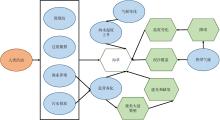
Fig. 1
Schematic diagram of threat factors to seagrass beds in Hainan Island"
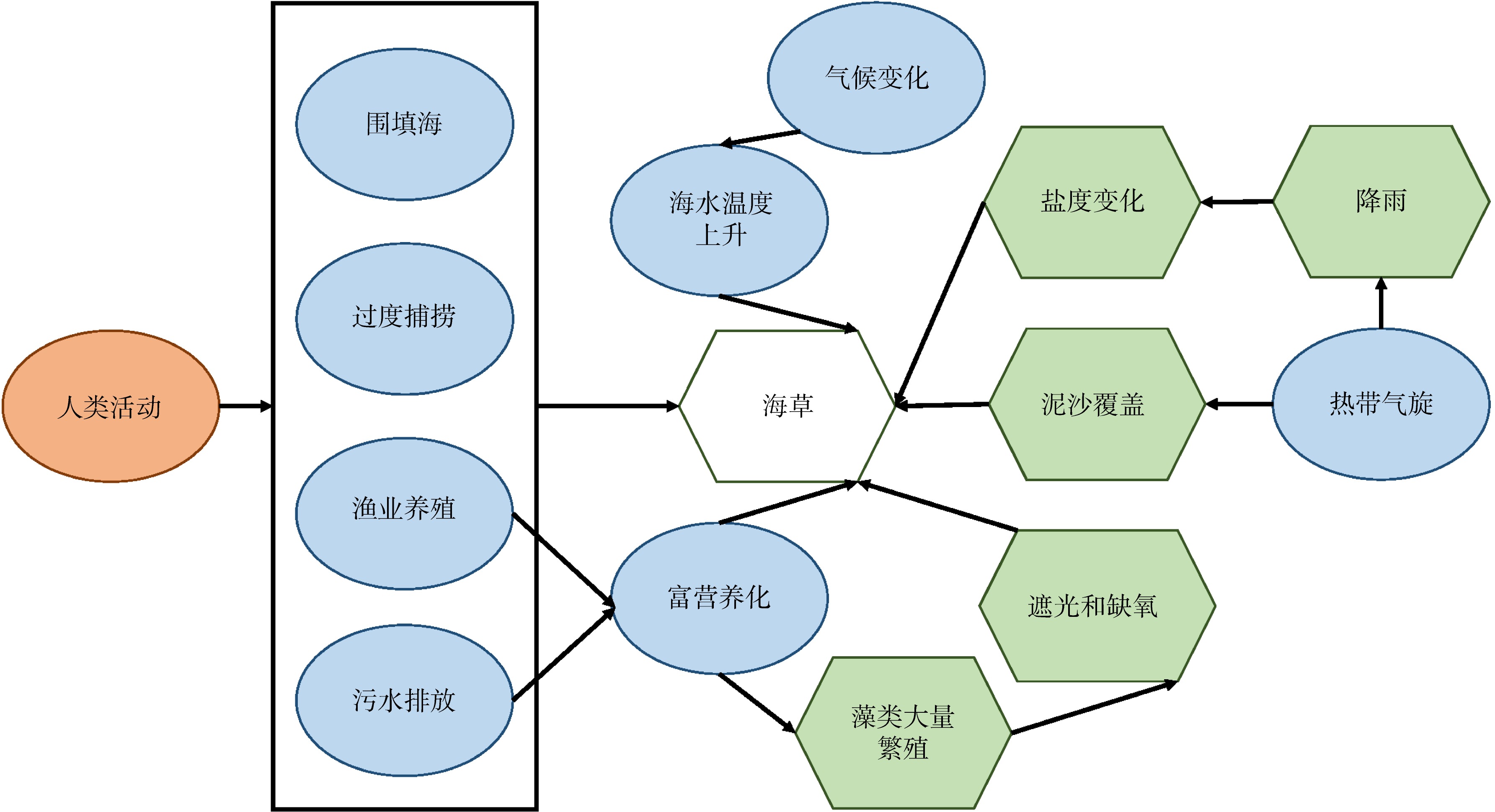
Fig. 1
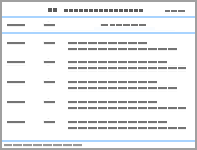
Tab. 1
Red List Assessment framework for the Red List of seagrass bed ecosystems in Hainan Island (based on the guidelines of IUCN Red List of Ecosystems)"
| 次级标准 | 时间框架 | 面积退化程度 | 受威胁等级 | |||
|---|---|---|---|---|---|---|
| A2b | 从过去到未来50年 | ≥80% | 极危 | |||
| ≥50% | 濒危 | |||||
| ≥30% | 易危 | |||||
| 次级标准 | 时间框架 | 相对严重程度 | ||||
| C1 | 过去50年内 | 退化程度 | ≥80% | ≥50% | ≥30% | |
| ≥80% | 极危 | 濒危 | 易危 | |||
| ≥50% | 濒危 | 易危 | ||||
| ≥30% | 易危 | |||||
| C2b | 从过去到未来50年 | |||||
| ≥80% | 极危 | 濒危 | 易危 | |||
| ≥50% | 濒危 | 易危 | ||||
| ≥30% | 易危 | |||||
Tab. 1
Tab. 2
Collapse thresholds of decline indicators for seagrass bed ecosystems in Hainan Island"
| 标准 | 指标 | 崩溃阈值 |
|---|---|---|
| 标准A | 面积 | 剩余0 |
| 标准C | 无机氮 | 0.30mg∙L-1 |
| 热带气旋 | 6次 | |
| 水温 | 36℃ |
Tab. 2
Tab. 3
Assessment results of Criterion A"
| 地区 | 2009年面积/km² | 2016年面积/km² | 生态系统50年变化幅度/% | 面积增加/降低 | 数据来源 | 受威胁等级 |
|---|---|---|---|---|---|---|
| 文昌 | 31.5820 | 26.6493 | >80 | 降低 | 吴钟解等( | 极危 |
| 琼海 | 15.9600 | 14.9397 | >30 | 降低 | 易危 | |
| 陵水 | 5.7400 | 5.2400 | >50 | 降低 | 濒危 | |
| 澄迈 | 0.4000 | 0.8900 | >80 | 增加 | 无危 | |
| 三亚 | 1.6400 | 0.5036 | >80 | 降低 | 极危 | |
| 儋州 | 1.0287(2016年) | 4.8900(2019年) | >80 | 增加 | 黄小平等( | 无危 |
Tab. 3
Tab. 4
Assessment results of inorganic nitrogen"
| 地区 | 退化程度/% | 相对严重程度/% | 数据 | 受威胁等级 |
|---|---|---|---|---|
| 文昌 | >80 | >80 | 海南省海洋与渔业科学院( 国家海洋局海口海洋环境监测中心站( | 极危 |
| 琼海 | >30 | <30 | 海南省海洋与渔业科学院( 海南省生态环境厅(hnsthb.hainan.gov.cn) | 无危 |
| 陵水 | >80 | <30 | Jiang等( | 近危 |
| 澄迈 | >80 | <30 | 陈娴等( | 近危 |
| 三亚 | >80 | >80 | 黄良民等( | 极危 |
| 儋州 | >30 | <30 | 海南省生态环境厅(hnsthb.hainan.gov.cn) | 无危 |
Tab. 4
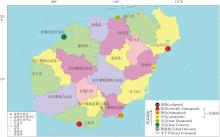
Fig. 2
Schematic diagram of threat levels of seagrass bed ecosystems in Hainan Island"
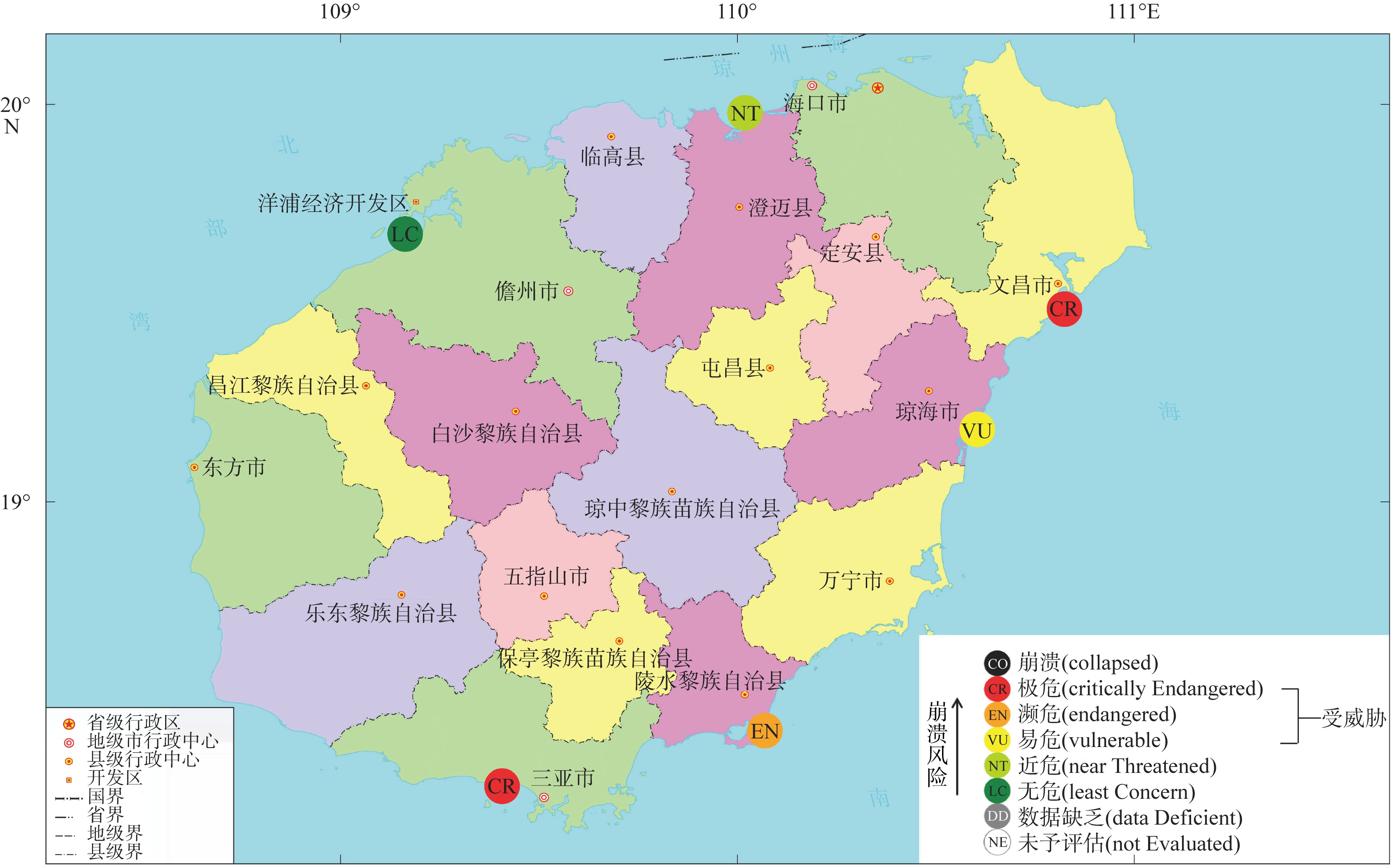
Fig. 2
Fig. 3
Schematic diagram of threat factors to seagrass bed ecosystems in Hainan Island"
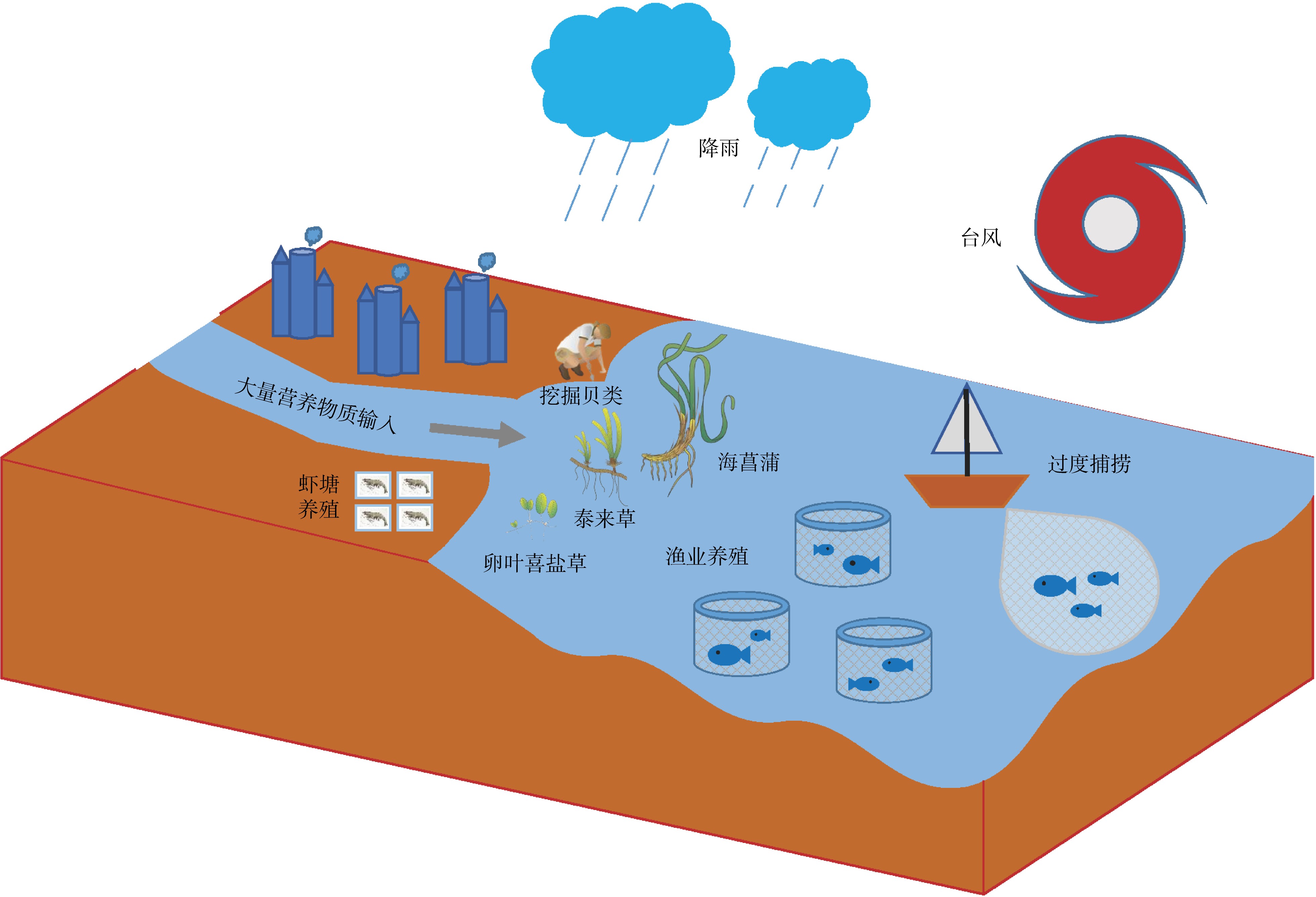
Fig. 3
Fig. 4
Changes in total sewage discharge from direct marine pollution sources in Hainan Province (Data source: 2016-2022 Hainan Ecological and Environmental Status Bulletins)"
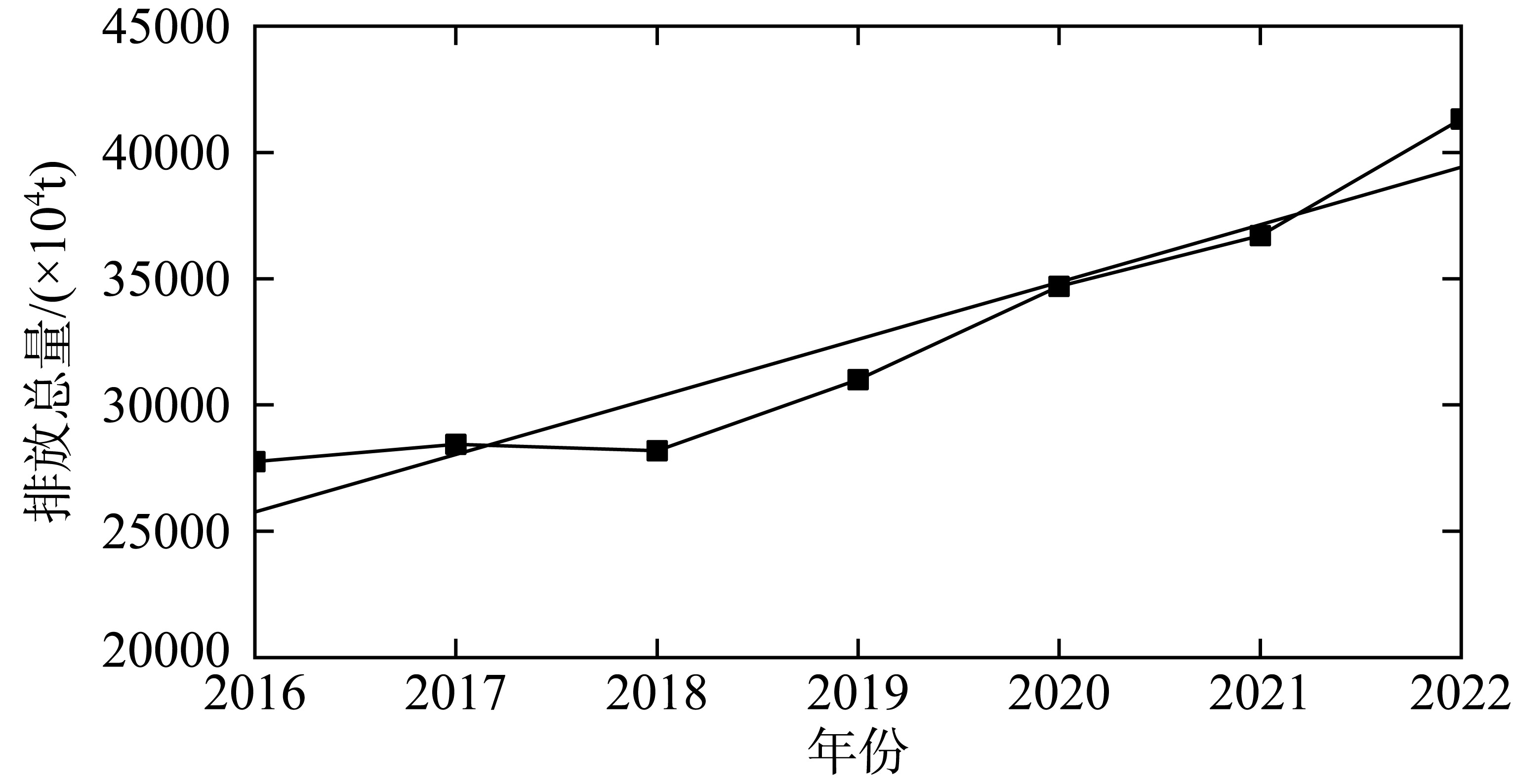
Fig. 4
Fig. 5
Changes in total nitrogen emissions from direct marine pollution sources in Hainan Province (Data source: 2016-2022 Hainan Ecological and Environmental Status Bulletins)"
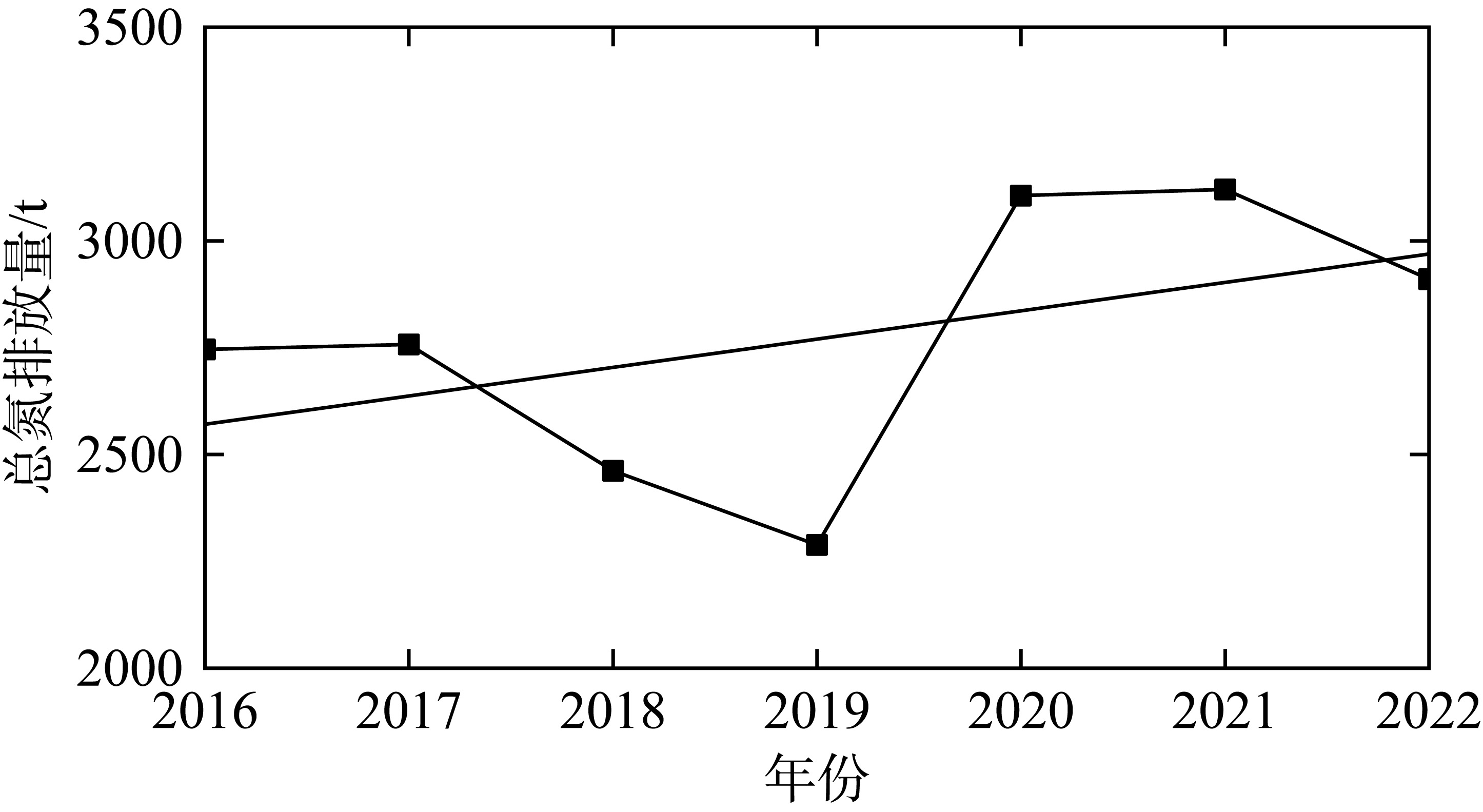
Fig. 5
Fig. 6
Changes in the frequency of tropical cyclones making landfall in Hainan Province from 1990 to 2024"
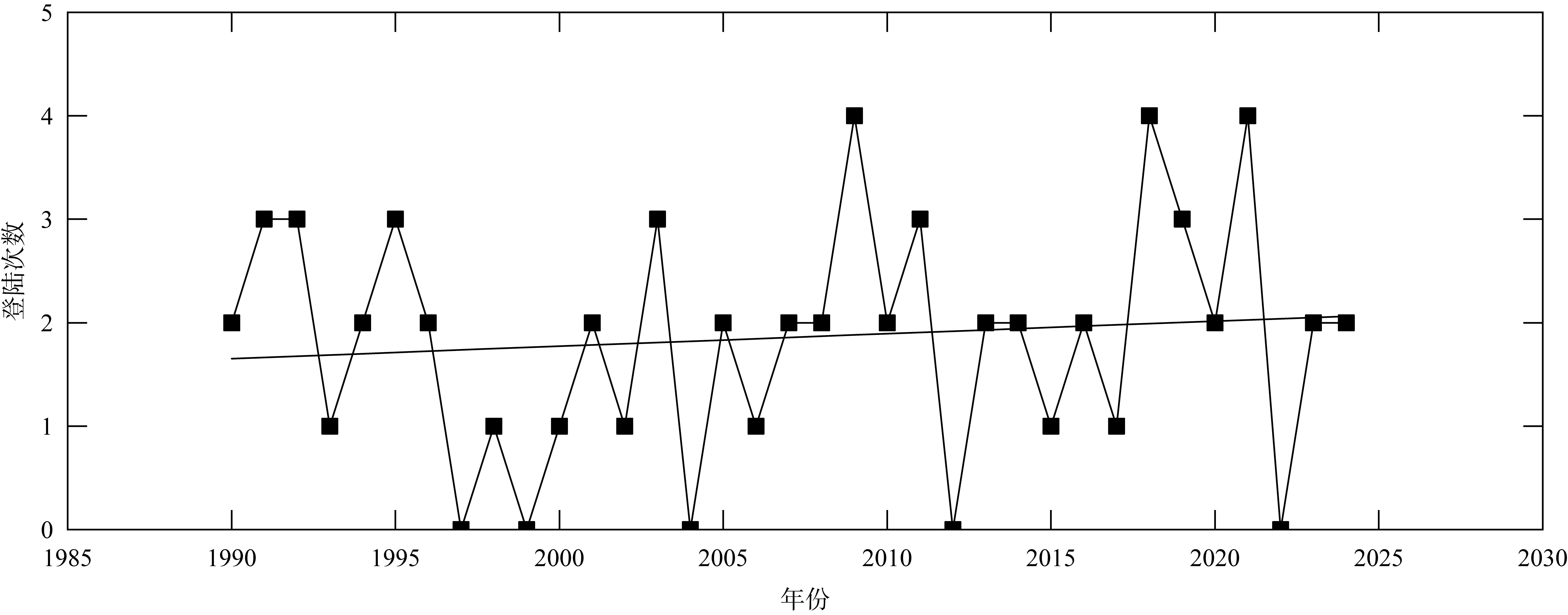
Fig. 6
| [36] |
|
| [37] |
周毅, 江志坚, 邱广龙, 等, 2023. 中国海草资源分布现状、退化原因与保护对策[J]. 海洋与湖沼, 54(5): 1248-1257.
|
|
|
|
| [38] |
朱志雄, 马坤, 方彰胜, 等, 2017. 海南省麒麟菜自然保护区海草资源分布及保护建议[J]. 广东农业科学, 44(4): 90-98.
|
|
|
|
| [39] |
doi: 10.1016/j.scitotenv.2023.168675 |
| [40] |
|
| [41] |
doi: 10.1016/j.biocon.2018.08.019 |
| [42] |
doi: 10.1016/j.biocon.2020.108636 |
| [43] |
doi: 10.1016/j.marpolbul.2021.113122 |
| [44] |
doi: 10.3389/fmars.2024.1366939 |
| [45] |
doi: 10.1371/journal.pone.0065735 |
| [46] |
|
| [47] |
doi: 10.3389/fmars.2020.00194 |
| [48] |
doi: 10.1186/s12870-022-03647-0 |
| [49] |
doi: 10.1007/s11104-018-3604-y |
| [50] |
|
| [51] |
|
| [1] |
陈石泉, 蔡泽富, 沈捷, 等, 2021. 海南高隆湾海草床修复成效及影响因素[J]. 应用海洋学学报, 40(1): 65-73.
|
|
|
|
| [2] |
陈石泉, 庞巧珠, 蔡泽富, 等, 2020. 海南黎安港海草床分布特征、健康状况及影响因素分析[J]. 海洋科学, 44(11): 57-64.
|
|
|
|
| [3] |
陈石泉, 王道儒, 吴钟解, 等, 2015. 海南岛东海岸海草床近10a变化趋势探讨[J]. 海洋环境科学, 34(1): 48-53.
|
|
|
|
| [4] |
陈娴, 李洋, 薛东梁, 2020. 海南澄迈近岸海域水质环境分析及评价[J]. 广东化工, 47(8): 41-43.
|
|
|
|
| [5] |
杜建国, 叶观琼, 周秋麟, 等, 2015. 近海海洋生态连通性研究进展[J]. 生态学报, 35(21): 6923-6933.
|
|
|
|
| [52] |
doi: 10.1371/journal.pone.0062111 |
| [53] |
doi: 10.3390/environments11070151 |
| [54] |
doi: 10.1007/s00376-020-0211-7 |
| [55] |
doi: 10.1038/s41477-023-01608-5 pmid: 38278954 |
| [56] |
doi: 10.1002/fee.2017.15.issue-4 |
| [57] |
doi: 10.3390/su12031084 |
| [58] |
|
| [59] |
doi: 10.1641/0006-3568(2006)56[987:AGCFSE]2.0.CO;2 |
| [60] |
doi: 10.1007/s12237-023-01252-4 |
| [6] |
符妙, 廖立国, 刘应帅, 等, 2022. 光照减少对海草的影响研究进展[J]. 海洋渔业, 44(5): 648-656.
|
|
|
|
| [7] |
国家海洋局海口海洋环境监测中心站, 2022. 文昌市清澜湾和琼海麒麟菜保护区海藻场生态系统生态现状调查报告[R]. 海南: 海南省海洋监测预报中心: 62-63 (in Chinese).
|
| [8] |
国家环境保护局, 1997. 海水水质标准GB3097—1997[S]. 北京: 中国标准出版社 (in Chinese).
|
| [9] |
郭晋宇, 耿晓晓, 尹雷, 等, 2023. 海南儋州湾贝克喜盐草资源分布特征及影响因素分析[J]. 海洋湖沼通报, 45(2): 123-132.
doi: 10.13984/j.cnki.cn37-1141.2023.02.016 |
|
|
|
| [10] |
海南南海海岸工程与生态环境研究所, 2020. 海南东寨港国家级自然保护区实验区生态旅游一期项目海洋环境影响报告书[R]. 海南: 海南红树林旅游股份有限公司: 147-152 (in Chinese).
|
| [11] |
海南省海洋与渔业科学院, 2020a. 海南省麒麟菜水产自然资源保护区文昌片区资源调查与评估报告[R]. 海南: 文昌市林业局: 19 (in Chinese).
|
| [12] |
海南省海洋与渔业科学院, 2020b. 海南麒麟菜省级自然保护区琼海片区主要生物资源调查与评估报告[R]. 海南: 琼海市林业局: 15-16 (in Chinese).
|
| [13] |
韩宗奇, 张云岭, 安鑫龙, 等, 2023. 海草床修复与鳗草移植栽培技术研究进展[J]. 河北渔业, (2): 32-36 (in Chinese).
|
| [14] |
贺山峰, 李铮, 陈超冰, 等, 2023. 海南省登陆台风特征演变及其危险性分析[J]. 地理科学进展, 42(7): 1355-1364.
doi: 10.18306/dlkxjz.2023.07.010 |
|
doi: 10.18306/dlkxjz.2023.07.010 |
|
| [61] |
doi: 10.1016/j.jhazmat.2025.138005 |
| [62] |
doi: 10.3354/meps08925 |
| [63] |
doi: 10.1016/j.scitotenv.2024.173523 |
| [64] |
doi: 10.1016/j.ecolind.2014.03.020 |
| [65] |
doi: 10.1111/j.1523-1739.2010.01598.x pmid: 21054525 |
| [66] |
doi: 10.1016/S0304-3770(98)00117-X |
| [67] |
doi: 10.1016/j.biocon.2011.04.010 |
| [68] |
doi: 10.1016/j.ecolind.2020.106489 |
| [69] |
doi: 10.1007/s13280-018-1115-y pmid: 30456457 |
| [15] |
侯小健, 李劲松, 2007. 海南在全国首建海草特别保护区[N]. 海南日报, 2007-07-04(1) (in Chinese).
|
| [16] |
黄道建, 黄小平, 黄良民, 2007. 海南岛新村湾营养负荷对海菖蒲的影响研究[J]. 海洋科学进展, 25(2): 200-207.
|
|
|
|
| [17] |
黄良民, 张偲, 王汉奎, 等, 2007. 三亚湾生态环境与生物资源[M]. 北京: 科学出版社.
|
|
|
|
| [18] |
黄小平, 黄良民, 李颖虹, 等, 2007. 中国南海海草研究[M]. 广州: 广东经济出版社 (in Chinese).
|
| [19] |
黄小平, 江志坚, 刘松林, 等, 2019. 中国热带海草生态学研究[M]. 北京: 科学出版社 (in Chinese).
|
| [20] |
刘伟妍, 韩秋影, 唐玉琴, 等, 2017. 营养盐富集和全球温度升高对海草的影响[J]. 生态学杂志, 36(4): 1087-1096.
|
|
|
|
| [21] |
吕永龙, 苑晶晶, 李奇锋, 等, 2016. 陆源人类活动对近海生态系统的影响[J]. 生态学报, 36(5): 1183-1191.
|
|
|
|
| [22] |
毛伟, 赵杨赫, 何博浩, 等, 2022. 海草生态系统退化机制及修复对策综述[J]. 中国沙漠, 42(1): 87-95.
doi: 10.7522/j.issn.1000-694X.2021.00161 |
|
doi: 10.7522/j.issn.1000-694X.2021.00161 |
|
| [23] |
任福民, 杨慧, 2019. 1949年以来我国台风暴雨及其预报研究回顾与展望[J]. 暴雨灾害, 38(5): 526-540.
|
|
|
|
| [24] |
田思泉, 柳晓雪, 花传祥, 等, 2024. 南海渔业资源状况及其管理挑战[J]. 上海海洋大学学报, 33(3): 786-798.
|
|
|
|
| [25] |
王慧祺, 潘剑宇, 车志伟, 2012. 三亚湾海水中无机氮、无机磷的时空分布和氮磷比值变化研究[J]. 科技传播, 4(17): 99-100.
|
|
|
|
| [26] |
王锁民, 崔彦农, 刘金祥, 等, 2016. 海草及海草场生态系统研究进展[J]. 草业学报, 25(11): 149-159.
doi: 10.11686/cyxb2016025 |
|
|
|
| [70] |
doi: 10.1073/pnas.0905620106 pmid: 19587236 |
| [71] |
doi: 10.1175/JTECH-D-12-00119.1 |
| [72] |
doi: 10.1016/j.scitotenv.2021.148398 |
| [73] |
doi: 10.1016/j.marpolbul.2023.115043 |
| [27] |
王小康, 杨海杰, 赵鹏, 2023. 海草恢复生态学与修复技术研究进展[J]. 海洋通报, 42(2): 232-240.
|
|
|
|
| [28] |
吴钟解, 陈石泉, 蔡泽富, 等, 2021. 海南岛海草床分布变化及恢复建议[J]. 海洋环境科学, 40(4): 542-549.
|
|
|
|
| [29] |
徐步欣, 张剑, 郎尚昆, 等, 2022. 海南文昌沿岸海草床的现状及其退化因素分析[J]. 应用海洋学学报, 41(4): 614-624.
|
|
|
|
| [30] |
徐淑升, 董迪, 黄华梅, 2024. 中国化的基于自然解决方案(NbS)背景下海草床生态修复建议[J]. 海洋开发与管理, 41(6): 144-150.
|
|
|
|
| [31] |
姚旭莹, 林钟扬, 章伟艳, 等, 2015. 海南省三亚市三亚湾珊瑚礁区环境特征[J]. 海洋开发与管理, 32(11): 98-103 (in Chinese).
|
| [32] |
张璐璐, 韩秋影, 史云峰, 等, 2018. 富营养化和海水盐度对日本鳗草生物量和碳氮含量的协同影响[J]. 海洋科学, 42(12): 55-61.
|
|
|
|
| [33] |
张秋丰, 靳玉丹, 李希彬, 等, 2017. 围填海工程对近岸海域海洋环境影响的研究进展[J]. 海洋科学进展, 35(4): 454-461.
|
|
|
|
| [34] |
郑凤英, 邱广龙, 范航清, 等, 2013. 中国海草的多样性、分布及保护[J]. 生物多样性, 21(5): 517-526.
doi: 10.3724/SP.J.1003.2013.10038 |
|
doi: 10.3724/SP.J.1003.2013.10038 |
|
| [35] |
钟超, 廖亚琴, 刘伟杰, 等, 2024. 广东沿海海草床的现状、面临的威胁与保护建议[J]. 生物多样性, 32(2): 118-135.
|
|
|
|
| [36] |
周沉冤, 江志坚, 连忠廉, 等, 2014. 海南新村湾海草泰来藻凋落叶特征及其对网箱养殖的响应[J]. 生态学杂志, 33(6): 1546-1552.
|
| [1] | HE Chen, WANG Jianing, ZHOU Linbin, KE Zhixin, LIU Weiwei, LIU Jiaxing, WANG Junxing, TAN Yehui, CHEN Zhiyun. Comparison of macrobenthic community structure between seagrass beds in Xincungang and Li’angang, Hainan [J]. Journal of Tropical Oceanography, 2025, 44(4): 106-118. |
| [2] | HUANG Liangmin, LIN Qiang, TAN Yehui, HUANG Xiaoping, ZHOU Linbin, HUANG Hui. Thoughts on the restoration, reconstruction and protection of typical tropical marine ecosystems [J]. Journal of Tropical Oceanography, 2024, 43(6): 1-12. |
| [3] | ZHAO Zhongwei, WU Lingyun, GAO Weijian, LI Wei. A study of the effect of shore platform morphology on coastal erosion of rocky cliffs in the Wucaiwan Bay, E’man, Hainan Island [J]. Journal of Tropical Oceanography, 2024, 43(5): 106-115. |
| [4] | ZENG Weite, ZHANG Dongqiang, LIU Bing, YANG Yongpeng, ZHANG Hangfei, WU Duoyu, WANG Xiaolin. Distribution, main controlling factors and pollution assessment of heavy metals in surface seawater of the Northern Bay of Hainan Island, south China [J]. Journal of Tropical Oceanography, 2023, 42(6): 156-167. |
| [5] | WANG Yuanqi, YANG Yang, ZHOU Liang, WANG Yaping, GAO Shu. Interpreting the origin of coastal boulders on a coral reef flat at Xiaodonghai of Hainan Island based on storm wave energy analysis [J]. Journal of Tropical Oceanography, 2021, 40(4): 110-121. |
| [6] | MENG Tian, CHEN Zuo, ZHU Jun, ZOU Xiaoxiao, FU Qingyan, BAO Shixiang. Morphological and molecular study on marine green alga, Halimeda velasquezii, first recorded in Hainan Island [J]. Journal of Tropical Oceanography, 2020, 39(6): 114-121. |
| [7] | CHEN Qiming, LIU Songlin, ZHANG Chi, CUI Lijun, JIANG Zhijian, WU Yunchao, HUANG Xiaoping. Growth characteristics of four representative fishes and their responses to seagrass resource changes in typical tropical seagrass beds of Hainan Island [J]. Journal of Tropical Oceanography, 2020, 39(5): 62-70. |
| [8] | Xingru FENG, Jinyuan LI, Baoshu YIN, Dezhou YANG, Haiying CHEN, Guandong GAO. Characteristics of ocean waves in coastal area of Dongfang, Hainan Island based on observations [J]. Journal of Tropical Oceanography, 2018, 37(3): 1-8. |
| [9] | Tiantian GUO, Shengbo CHEN, Tianqi LU. The inversion of multiple-phase SSTs based on the MODIS data: a case study on the southwest coastal waters of Hainan Island [J]. Journal of Tropical Oceanography, 2017, 36(1): 9-14. |
| [10] | CHEN Biao, WANG Jing, JING Zhiyou, LI Min. Seasonal and interannual variation of thermal fronts off the east coast of Hainan Island and the west coast of Guangdong [J]. Journal of Tropical Oceanography, 2016, 35(5): 1-9. |
| [11] | TIAN Yuhang, CHEN Zhong, LIU Jirui, HUANG Weixia, ZHONG Yi. Influence of the grain size on the porosity and acoustic velocity of offshore surface sediments in the Southeastern Hainan Island [J]. Journal of Tropical Oceanography, 2016, 35(3): 48-54. |
| [12] | WANG Yu, JING Zhiyou, QI Yiquan. Coastal upwelling off eastern Hainan Island observed in the summer of 2013 [J]. Journal of Tropical Oceanography, 2016, 35(2): 40-49. |
| [13] | XU Xiang-chun, YU Yu-bin, WANG Shi-gong, LI Xun, TIAN Guang-hui. Simulation on evolution of the inner-core structure of typhoon Damrey over Hainan Island [J]. Journal of Tropical Oceanography, 2012, 31(4): 66-74. |
| [14] | HUANG Hai-bo, QIU Xue-lin, XIA Shao-hong. Crustal structure and Poisson’s ratio beneath Hainan Island [J]. Journal of Tropical Oceanography, 2012, 31(3): 65-70. |
| [15] | LUO Chuan-xiu,CHEN Mu-hong,LIU Jian-guo,ZHANG Lan-lan,XIANG Rong,LU Jun. Pollen distribution in marine surface sediments of Guangdong coast and southeast Hainan Island and its environmental significance [J]. Journal of Tropical Oceanography, 2012, 31(2): 55-61. |
|
||