

Journal of Tropical Oceanography ›› 2025, Vol. 44 ›› Issue (6): 51-63.doi: 10.11978/2025019CSTR: 32234.14.2025019
Previous Articles Next Articles
Dynamics and controlling factors of scleractinian corals in Yongxing Island over the past 40 years
WU Mianxuan1,2( ), LUO Xiaowen2, ZHANG Yongzhan1,3,4()
- 1
School of Geography and Ocean Science ,Nanjing University
2State Key Laboratory of Submarine Geoscience ,Second Institute of Oceanography, MNR
3The Key Laboratory of Coast & Island Development ,Ministry of Education
4The Collaborative Innovation Center of South China Sea Studies
-
Received:2025-02-06Revised:2025-03-21Online:2025-11-10Published:2025-12-03 -
Contact:ZHANG Yongzhan. email: zhangyzh@nju.edu.cn -
Supported by:Consultation and Evaluation Projects of the Chinese Academy of Sciences(2016ZWH005A-005); Consultation and Evaluation Projects of the Chinese Academy of Sciences(2018-G01-B-005); Project of the Collaborative Innovation Center of South China Sea Studies; Special Fund for Natural Resources Development of Jiangsu Province (Marine Science and Technology Innovation) Project(JSZRHYKJ202104)

CLC Number:
- Q958.8
Cite this article
WU Mianxuan, LUO Xiaowen, ZHANG Yongzhan. Dynamics and controlling factors of scleractinian corals in Yongxing Island over the past 40 years[J].Journal of Tropical Oceanography, 2025, 44(6): 51-63.
share this article
Add to citation manager EndNote|Reference Manager|ProCite|BibTeX|RefWorks
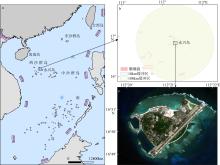
Fig. 1
Schematic diagram of Yongxing Island in the South China Sea. (a) Location map of Yongxing Island; (b) 10 km and 100 km buffer zones of Yongxing Island; (c) regional diagram of Yongxing Island"

Fig. 1
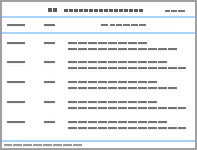
Tab. 1
Data sources"
| 数据指标 | 年份 | 资料来源 |
|---|---|---|
| 珊瑚覆盖率 | 1984 | 李元超 等( |
| 珊瑚覆盖率 | 2002 | 黄晖 等( |
| 珊瑚覆盖率、补充量、长棘海星密度 | 2005—2009 | 据资料图件估算(吴钟解 等, |
| 珊瑚覆盖率、补充量、长棘海星密度 | 2010—2019 | 据资料图件估算(李元超 等, |
| 珊瑚覆盖率、补充量、白化率、长棘海星密度 | 2020—2021 | 郎尚昆( |
| 珊瑚覆盖率、补充量 | 2007—2016 | 李元超 等( |
Tab. 1
Tab. 2
Annual variations in scleractinian coral coverage and recruitment at Yongxing Island and its southeastern side"
| 年份 | 东南侧覆盖率/% | 东南侧补充量/(ind.·m-2) | 永兴岛覆盖率/% | 永兴岛补充量/(ind.·m-2) |
|---|---|---|---|---|
| 1984 | —— | —— | 70.00 | —— |
| 2002 | 55.7 | —— | 68.40 | —— |
| 2005 | —— | —— | 64.39 | 1.21 |
| 2006 | —— | —— | 66.25 | 0.66 |
| 2007 | 46.67 | 0.37 | 53.80 | 0.20 |
| 2008 | 51.40 | 0.12 | 16.84 | 0.07 |
| 2009 | 24.50 | 0.11 | 7.93 | 0.06 |
| 2010 | 25.50 | 0.25 | 11.55 | 0.07 |
| 2011 | 1.97 | 0.00 | 2.15 | 0.07 |
| 2012 | 1.79 | 0.00 | 2.15 | 0.16 |
| 2013 | 6.67 | 0.20 | 5.25 | 0.41 |
| 2014 | 6.40 | 0.60 | 4.38 | 0.25 |
| 2015 | 3.00 | 0.10 | 2.65 | 0.12 |
| 2016 | 5.00 | 0.10 | 5.25 | 0.20 |
| 2017 | —— | —— | 7.45 | 0.55 |
| 2018 | —— | —— | 8.32 | 0.91 |
| 2019 | —— | —— | 14.99 | 3.46 |
| 2020 | —— | —— | 13.60 | —— |
| 2021 | —— | —— | 7.22 | 3.22 |
Tab. 2
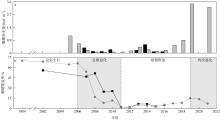
Fig. 2
Interannual variations in scleractinian coral coverage and recruitment at Yongxing Island and its southeastern side from 1984 to 2021. (a) Annual variations in scleractinian coral recruitment; (b) annual variations in scleractinian coral coverage"

Fig. 2
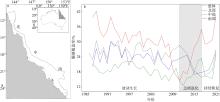
Fig. 3
Interannual variations in coral coverage at Australia’s Great Barrier Reef from 1986 to 2021. (a) Schematic map of the study area; (b) variations in coral coverage for the entire reef and its northern, central and southern sections"

Fig. 3
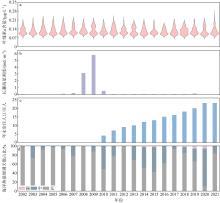
Fig. 4
Interannual variations in degradation control factors at Yongxing Island from 2002 to 2021. (a) Chlorophyll-a concentration; (b) density of crown-of-thorns starfish; (c) year-end resident population; (d) percentage of days with marine heatwave levels"

Fig. 4
Tab. 3
Coral disease types on northern and southern sides of Yongxing Island, 2010-2011 (Zhu et al, 2012)"
| 位置 | 疾病类型 | ||||||||
|---|---|---|---|---|---|---|---|---|---|
| 黄色炎症样病症 | 黑化 | 白化 | 白斑病 | 粉化 | 粉带病症 | 粉红色线状综合征 | 粉红颗粒状综合征 | ||
| 南侧 | + | + | + | + | + | ||||
| 北侧 | + | + | + | + | + | + | |||
Tab. 3
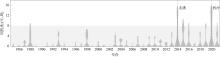
Fig. 5
Violin plots of annual degree heating weeks in coral reef areas of the Xisha Islands"

Fig. 5
| [1] |
海南省海洋与渔业厅, 2013. 2012年海南省海洋环境状况公报[N]. 海南日报, 06-27(A07) (in Chinese).
|
| [2] |
黄晖, 练健生, 黄小平, 等, 2006. 用珊瑚覆盖率作为干扰指标: 永兴岛石珊瑚生物多样性研究[J]. 科学通报, 51(S3): 108-113 (in Chinese).
|
| [3] |
黄晖, 尤丰, 练健生, 等, 2011. 西沙群岛海域造礁石珊瑚物种多样性与分布特点[J]. 生物多样性, 19(6): 710-715.
doi: 10.3724/SP.J.1003.2011.06132 |
|
doi: 10.3724/SP.J.1003.2011.06132 |
|
| [4] |
黄晖, 2021. 中国珊瑚礁状况报告(2010—2019)[M]. 北京: 海洋出版社.
|
|
|
|
| [5] |
黄晖, 俞晓磊, 黄林韬, 等, 2024. 珊瑚礁生态学研究现状和展望[J]. 热带海洋学报, 43(3): 3-12.
|
|
|
|
| [6] |
旷芳芳, 张俊鹏, 查晶, 等, 2023. 不同SST资料在海南岛和北部湾珊瑚白化预警中的适用性比较[J]. 应用海洋学学报, 42(3): 371-381.
|
|
|
|
| [7] |
郎尚昆, 2022. 海南岛和西沙群岛珊瑚白化状况及原因分析[D]. 三亚: 海南热带海洋学院.
|
|
|
|
| [8] |
李淑, 余克服, 2007. 珊瑚礁白化研究进展[J]. 生态学报, 27(5): 2059-2069.
|
|
|
|
| [9] |
李颖虹, 黄小平, 岳维忠, 2004. 西沙永兴岛环境质量状况及管理对策[J]. 海洋环境科学, 23(1): 50-53.
|
|
|
|
| [10] |
李元超, 黄晖, 董志军, 等, 2008. 珊瑚礁生态修复研究进展[J]. 生态学报, 28(10): 5047-5054.
|
|
|
|
| [11] |
李元超, 韩有定, 陈石泉, 等, 2015. 砗磲采挖对珊瑚礁生态系统的破坏: 以西沙北礁为例[J]. 应用海洋学学报, 34(4): 518-524.
|
|
|
|
| [12] |
李元超, 吴钟解, 陈石泉, 等, 2017. 永兴岛及七连屿浅水礁区珊瑚礁鱼类多样性探讨[J]. 海洋环境科学, 36(4): 509-516.
|
|
|
|
| [13] |
李元超, 陈石泉, 郑新庆, 等, 2018. 永兴岛及七连屿造礁石珊瑚近10年变化分析[J]. 海洋学报, 40(8): 97-109.
|
|
|
|
| [14] |
李元超, 吴钟解, 梁计林, 等, 2019a. 近15年西沙群岛长棘海星暴发周期及暴发原因分析[J]. 科学通报, 64(33): 3478-3484.
|
|
|
|
| [15] |
李元超, 梁计林, 吴钟解, 等, 2019b. 长棘海星的暴发及其防治[J]. 海洋开发与管理, 36(8): 9-12.
|
|
|
|
| [16] |
龙笛, 2024. OCNET 全球每日叶绿素-a产品数据集(2001-2021年)[Z/OL]. (2024-07-27)[2025-0205]. 国家冰川冻土沙漠科学数据中心. https://cstr.cn/CSTR:11738.11.NCDC.ZENODO.DB6671.2024
|
|
|
|
| [17] |
陆永强, 陈正华, 余克服, 等, 2022. 1985-2019年南海诸岛珊瑚礁区热压力时空变化研究分析[J]. 海洋学报, 44(11): 179-190.
|
|
|
|
| [18] |
时小军, 刘元兵, 陈特固, 等, 2008. 全球气候变暖对西沙、南沙海域珊瑚生长的潜在威胁[J]. 热带地理, 28(4): 342-345+368.
|
|
|
|
| [19] |
王丽荣, 余克服, 赵焕庭, 等, 2014. 南海珊瑚礁经济价值评估[J]. 热带地理, 34(1): 44-49.
|
|
|
|
| [20] |
王雪辉, 杜飞雁, 林昭进, 等, 2011. 西沙群岛主要岛礁鱼类物种多样性及其群落格局[J]. 生物多样性, 19(4): 463-469+501-504.
doi: 10.3724/SP.J.1003.2011.07267 |
|
doi: 10.3724/SP.J.1003.2011.07267 |
|
| [21] |
吴程宏, 刘维, 符丹凤, 等, 2023. 西沙群岛海域砗磲资源的调查[J]. 热带生物学报, 14(2): 197-202.
|
|
|
|
| [22] |
吴钟解, 王道儒, 涂志刚, 等, 2011. 西沙生态监控区造礁石珊瑚退化原因分析[J]. 海洋学报, 33(4): 140-146.
|
|
|
|
| [23] |
许强, 刘维, 高菲, 等, 2018. 发展中国南海热带岛礁海洋牧场——机遇、现状与展望[J]. 渔业科学进展, 39(5): 173-180.
|
|
|
|
| [24] |
姚秋翠, 余克服, 廖芝衡, 等, 2022. 棘冠海星暴发及其对珊瑚礁的生态影响研究进展[J]. 生态学报, 42(18): 7517-7528.
|
|
|
|
| [25] |
余克服, 宋朝景, 赵焕庭, 1995. 西沙群岛永兴岛地貌与现代沉积特征[J]. 热带海洋, 14(2): 24-31.
|
|
|
|
| [26] |
袁钰, 徐海明, 马静, 等, 2024. AMO对ENSO与初夏西太平洋海洋热浪年际关系的年代际调制作用[J]. 热带海洋学报, 43(5): 1-16.
|
|
|
|
| [27] |
曾昭璇, 梁景芬, 丘世钧, 1997. 中国珊瑚礁地貌研究[M]. 广州: 广东人民出版社:1-474.
|
|
|
|
| [28] |
赵焕庭, 王丽荣, 2017. 南海诸岛珊瑚礁人工岛建造研究[J]. 热带地理, 37(5): 681-693.
doi: 10.13284/j.cnki.rddl.002974 |
|
doi: 10.13284/j.cnki.rddl.002974 |
|
| [29] |
朱志雄, 周永灿, 柯韶文, 等, 2012. 西沙群岛造礁石珊瑚主要疾病调查与初步研究[J]. 海洋学报, 34(6): 195-204.
|
|
|
|
| [30] |
邹仁林, 2001. 中国动物志:腔肠动物门, 珊瑚虫纲, 石珊瑚目, 造礁石珊瑚[M]. 北京: 科学出版社: 1-289.
|
|
|
|
| [31] |
pmid: 14144838 |
| [32] |
doi: 10.1038/nature02691 |
| [33] |
doi: 10.1007/s00338-003-0353-y |
| [34] |
doi: 10.1073/pnas.1208909109 pmid: 23027961 |
| [35] |
doi: 10.1007/BF00258224 |
| [36] |
doi: 10.1007/s00338-024-02498-5 |
| [37] |
doi: 10.1007/s00338-010-0628-z |
| [38] |
doi: 10.1038/s41586-018-0383-9 |
| [39] |
doi: 10.1126/science.1232310 pmid: 23559247 |
| [40] |
doi: 10.3390/d9010016 |
| [41] |
doi: 10.1038/s41467-020-18241-x pmid: 32859903 |
| [42] |
doi: 10.1371/journal.pone.0012210 |
| [43] |
doi: 10.1016/j.pocean.2015.12.014 |
| [44] |
|
| [45] |
doi: 10.1007/s00338-020-01946-2 |
| [46] |
doi: 10.1007/s12526-014-0236-1 |
| [47] |
doi: 10.1038/nature21707 |
| [48] |
doi: 10.1126/science.aan8048 pmid: 29302011 |
| [49] |
doi: 10.1038/s41467-021-26786-8 pmid: 34880205 |
| [50] |
doi: 10.1007/s00338-013-1112-3 |
| [51] |
doi: 10.1186/s12898-016-0057-0 |
| [52] |
doi: 10.1029/2003EO150001 |
| [53] |
doi: 10.1016/j.tree.2011.07.008 |
| [54] |
doi: 10.1371/journal.pone.0298073 |
| [55] |
doi: 10.1007/BF00349178 |
| [56] |
doi: 10.1038/s41598-019-47307-0 |
| [57] |
doi: 10.1007/s00338-010-0602-9 |
| [58] |
|
| [59] |
doi: 10.3390/d9040041 |
| [60] |
doi: 10.1007/BF00258219 |
| [61] |
doi: 10.1038/s41467-022-30213-x pmid: 35534497 |
| [62] |
|
| [63] |
doi: 10.1007/s13280-011-0245-2 pmid: 22270528 |
| [64] |
|
| [65] |
doi: 10.1038/s41598-021-87350-4 |
| [66] |
|
| [67] |
doi: 10.1016/j.marpolbul.2015.08.049 pmid: 26460182 |
| [68] |
doi: 10.1071/MF15110 |
| [1] | HUANG Qinyu, LYU Lina, LI Jie, JU Huimin, SU Hongfei. Microbial diversity of potential EHMC-degrading bacteria from coral [J]. Journal of Tropical Oceanography, 2025, 44(1): 133-145. |
| [2] | HUANG Wen, FENG Yi, LI Ming, WU Qian, LUO Yanqiu, CHEN Yinmin, WANG Lirong, YU Kefu. A review on the population genetics of scleractinian corals [J]. Journal of Tropical Oceanography, 2024, 43(6): 13-26. |
| [3] | HUANG Liangmin, LIN Qiang, TAN Yehui, HUANG Xiaoping, ZHOU Linbin, HUANG Hui. Thoughts on the restoration, reconstruction and protection of typical tropical marine ecosystems [J]. Journal of Tropical Oceanography, 2024, 43(6): 1-12. |
| [4] | XU Lijia, LIAO Zhiheng, CHEN Hui, WANG Yongzhi, HUANG Baiqiang, LIN Qiaoyun, GAN Jianfeng, YANG Jing. Community structure of scleractinian corals in the northern South China Sea and their responses to the marine heatwaves [J]. Journal of Tropical Oceanography, 2024, 43(3): 58-71. |
| [5] | LEI Mingfeng, YU Kefu, LIAO Zhiheng, CHEN Biao, HUANG Xueyong, CHEN Xiaoyan. The rapid ecological degradation and its impact on fish of the Yinyu Island in the Xisha Islands [J]. Journal of Tropical Oceanography, 2024, 43(3): 87-99. |
| [6] | ZHANG Yuyang, LIU Chengyue, YU Xiaolei, LUO Yong, ZHOU Tiancheng, LIAN Jiansheng, HUANG Hui. Study on relocation effect of scleractinian coral in the Fenghuang Island, Sanya* [J]. Journal of Tropical Oceanography, 2024, 43(3): 177-186. |
| [7] | LIANG Yuxian, YU Xiaolei, GUO Yajuan, HUANG Hui, ZHOU Weihua, YUAN Xiangcheng. Applicability and calibration methods of three traditional surface area measurement methods for different coral species — based on 3D scanning technology [J]. Journal of Tropical Oceanography, 2020, 39(1): 85-93. |
| [8] | Fenghua ZHOU, Rongwang ZHANG, Rui SHI, Yunkai HE, Ju CHEN, Dongxiao WANG, Qiang XIE. A study of data processing and quality assessment of the eddy convariance system off Yongxing Island [J]. Journal of Tropical Oceanography, 2017, 36(4): 48-59. |
| [9] | LIN Jie-zhen, JIN Hui. Research on the driving force of degraded coastal wetlands based on multi-source remote sensing data [J]. Journal of Tropical Oceanography, 2014, 33(3): 66-71. |
| [10] | ZHOU Jie, SHI Qi, YU Ke-fu. Exploration of factors that influence photosynthetic efficiency of symbiotic zooxanthellae of scleractinian corals in a Sanya fringing reef [J]. Journal of Tropical Oceanography, 2014, 33(1): 81-89. |
| [11] | GUO Shao-hua, HUANG Hui, LIU Sheng, YUAN Xiang-cheng, LIAN Jian-sheng, LEI Xin-ming, CHEN Biao. Variation of lipid and fatty acid contents in the reef coral Acropora hyacinthus between prereproduction and postreproduction [J]. Journal of Tropical Oceanography, 2014, 33(1): 74-80. |
| [12] | DING Wei-wei, LI Jia-biao, LI Jun, HAN Xi-bin. Formation process and controlling factors of the Pearl River Canyon in the South China Sea [J]. Journal of Tropical Oceanography, 2013, 32(6): 63-72. |
| [13] |
LI Tuan-jie,MA Yu,WANG Di,WANG Ai-jun,ZHOU Ying.
Status, degradation causes, and protection measures of the Pearl River Estuary seashore wetland [J]. Journal of Tropical Oceanography, 2011, 30(4): 77-84. |
| [14] | SUN Yun-jie,WU Ying,ZHANG Jing. Composition and degradation of lipid biomarkers in mangrove forest sediments of Hainan Island, China [J]. Journal of Tropical Oceanography, 2011, 30(2): 94-101. |
| [15] | LI Shu,YU Ke-fu,CHEN Tian-ran,SHI Qi,CHEN Te-gu. Seasonal patterns of densities of symbiotic zooxanthellae in scleractinian corals from Daya Bay, northern South China Sea, and relation to coral bleaching [J]. Journal of Tropical Oceanography, 2011, 30(2): 39-45. |
|
||