

Journal of Tropical Oceanography ›› 2026, Vol. 45 ›› Issue (4): 162-178.doi: 10.11978/2025242CSTR: 32234.14.2025242
• Marine Environmental Science • Previous Articles Next Articles
Monthly variability of nutrient concentrations and influencing factors in surface seawater of Qinzhou Bay*
SUN Kangwei1( ), LIAO Riquan1,2,3(), LI Han1, WENG Peiyao4, TANG Jianhui1,2,5
- 1
College of Marine Sciences ,Beibu Gulf University
2Pinglu Canal and Beibu Gulf Coastal Ecosystem Observation and Research Station of Guangxi ,College of Marine Sciences, Beibu Gulf University
3Guangxi Key Laboratory of Marine Environmental Disaster Processes and Ecological Protection Technology ,College of Marine Sciences, Beibu Gulf University
4Qinzhou Marine Environment Monitoring and Forecasting Center
5Key Laboratory of Coastal Environmental Processes and Ecological Remediation ,Yantai Institute of Coastal Zone Research, Chinese Academy of Sciences
-
Received:2025-12-18Revised:2025-12-28Online:2026-07-10Published:2026-07-31 -
Contact:LIAO Riquan. email: liaorq@bbgu.edu.cn -
Supported by:Project for Enhancing Young and Middle-aged Teacher's Research Basis Ability in Colleges of Guangxi(2021KY0440); National Natural Science Foundation of China(42476043); Scientific Research and Technology Development project of Qinzhou(202116623); China College Students' Innovation and Entrepreneurship Training Program Project(S202411607021)

CLC Number:
- P734
Cite this article
SUN Kangwei, LIAO Riquan, LI Han, WENG Peiyao, TANG Jianhui. Monthly variability of nutrient concentrations and influencing factors in surface seawater of Qinzhou Bay*[J].Journal of Tropical Oceanography, 2026, 45(4): 162-178.
share this article
Add to citation manager EndNote|Reference Manager|ProCite|BibTeX|RefWorks
Fig. 1
Sampling stations in Qinzhou Bay"
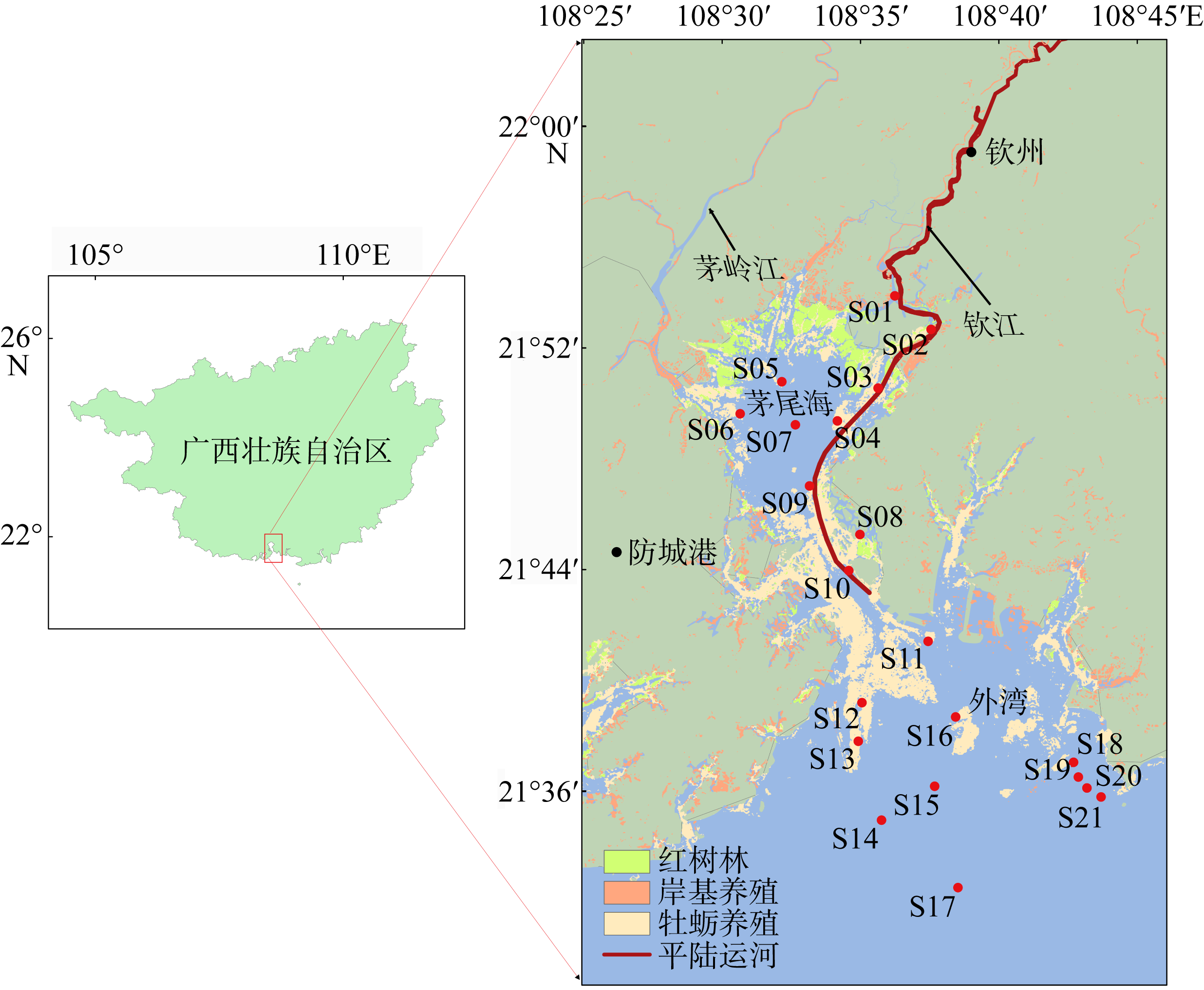
Fig. 1
Fig. 2
Precipitation in Qinzhou City during the study period"
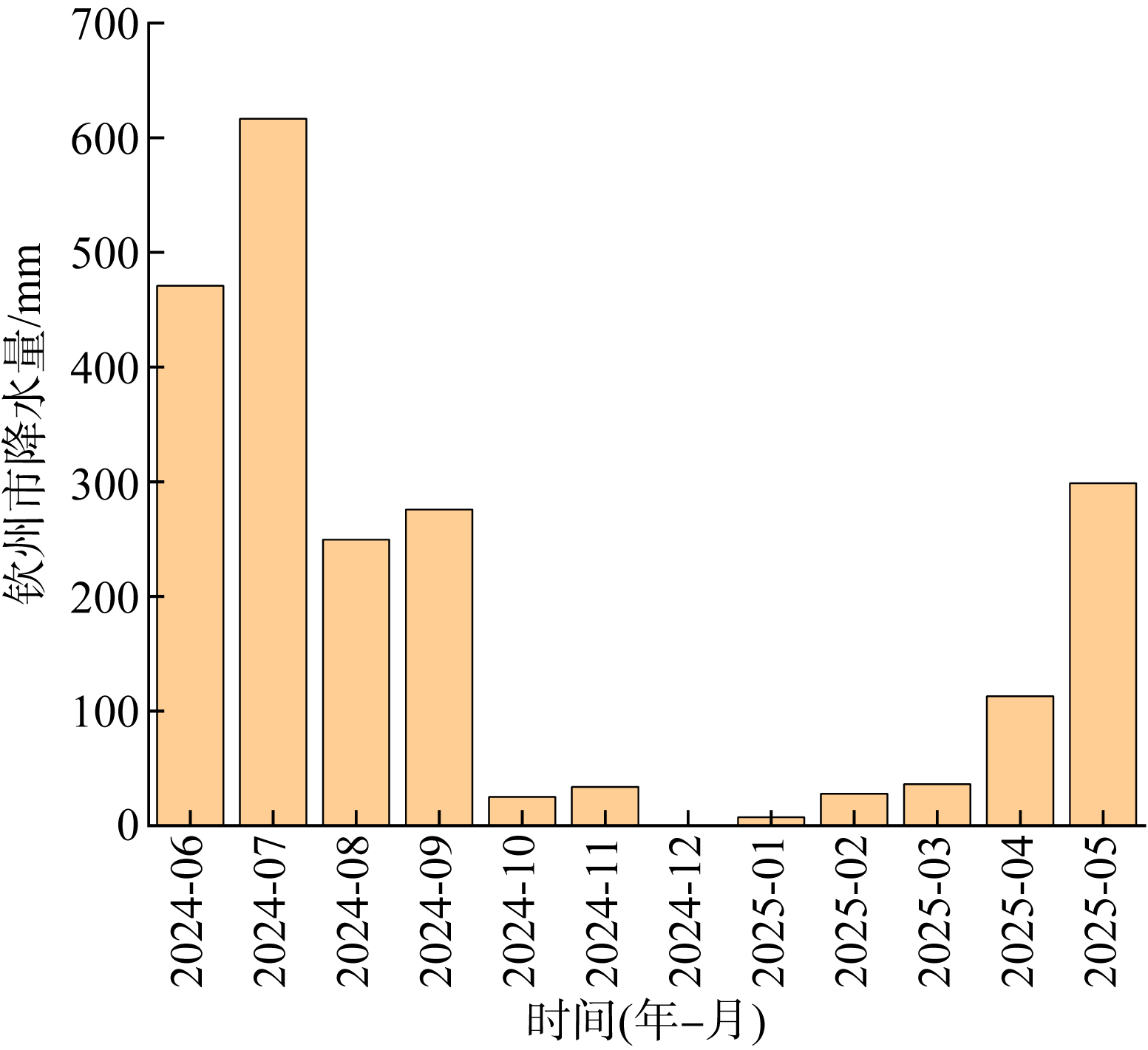
Fig. 2
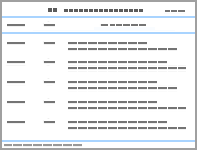
Tab. 1
Environmental factors and eutrophication indices of surface seawater in Qinzhou Bay from June 2024 to May 2025"
| 时间 | 区域 | pH | S/‰ | DO含量/(mg∙L−1) | COD含量/(mg∙L−1) | Chl a含量 /(μg∙L−1) | T/℃ | DIN浓度 /(mg∙L−1) | DIP浓度 /(mg∙L−1) | DSi浓度/(mg∙L−1) | DIN/DIP | EI | NQI |
|---|---|---|---|---|---|---|---|---|---|---|---|---|---|
| 2024-06 | 钦州湾 | 8.23 ± 0.83 | 11.39 ± 9.57 | 7.16 ± 0.63 | 2.51 ± 0.69 | 3.66 ± 3.07 | 31.59 ± 1.30 | 0.70 ± 0.41 | 0.031 ± 0.027 | 1.98 ± 1.52 | 69.45 ± 42.40 | 19.26 ± 26.58 | 4.84 ± 2.41 |
| 2024-07 | 钦州湾 | 5.77 ± 0.31 | 11.01 ± 8.88 | 6.47 ± 1.36 | 4.15 ± 1.09 | 1.92 ± 0.74 | 29.29 ± 0.68 | 0.95 ± 0.92 | 0.043 ± 0.019 | 2.80 ± 1.38 | 39.28 ± 39.19 | 44.55 ± 42.33 | 6.39 ± 3.47 |
| 2024-08 | 钦州湾 | 8.03 ± 0.53 | 15.72 ± 8.41 | 5.95 ± 1.17 | 1.59 ± 0.32 | 2.53 ± 2.78 | 31.61 ± 0.59 | 0.59 ± 0.44 | 0.027 ± 0.016 | 1.68 ± 0.87 | 55.10 ± 51.85 | 6.85 ± 6.73 | 3.91 ± 1.51 |
| 2024-09 | 钦州湾 | 8.08 ± 0.58 | 14.12 ± 9.79 | 6.81 ± 0.69 | 1.32 ± 0.84 | 2.59 ± 2.24 | 30.53 ± 0.46 | 0.73 ± 0.66 | 0.011 ± 0.011 | 2.52 ± 1.31 | 175.35 ± 145.20 | 4.44 ± 6.79 | 3.80 ± 2.60 |
| 2024-10 | 钦州湾 | 7.25 ± 0.40 | 22.17 ± 7.29 | 6.67 ± 0.22 | 1.01 ± 0.59 | 1.69 ± 0.75 | 27.39 ± 1.62 | 0.32 ± 0.40 | 0.006 ± 0.001 | 1.50 ± 1.19 | 110.96 ± 121.11 | 0.76 ± 1.56 | 1.96 ± 1.51 |
| 2024-11 | 钦州湾 | 8.15 ± 1.02 | 23.24 ± 8.19 | 8.25 ± 0.27 | 0.43 ± 0.30 | 1.69 ± 0.44 | 20.46 ± 0.72 | 0.42 ± 0.56 | 0.010 ± 0.008 | 1.44 ± 1.09 | 105.54 ± 140.60 | 1.40 ± 2.59 | 2.41 ± 1.98 |
| 2024-12 | 钦州湾 | 8.22 ± 0.60 | 27.52 ± 3.86 | 9.14 ± 0.62 | 1.62 ± 0.71 | 1.55 ± 0.62 | 16.37 ± 0.96 | 0.25 ± 0.30 | 0.026 ± 0.020 | 0.52 ± 0.53 | 23.08 ± 16.63 | 5.28 ± 9.24 | 2.49 ± 1.71 |
| 2025-01 | 钦州湾 | 8.31 ± 0.09 | 26.94 ± 3.54 | 10.12 ± 0.18 | 1.14 ± 0.44 | 2.17 ± 0.71 | 15.40 ± 0.43 | 0.12 ± 0.22 | 0.019 ± 0.012 | 0.20 ± 0.25 | 10.70 ± 10.41 | 1.86 ± 5.89 | 1.62 ± 0.64 |
| 2025-02 | 钦州湾 | 8.11 ± 0.13 | 28.11 ± 3.67 | 9.56 ± 0.21 | 0.79 ± 0.41 | 1.61 ± 0.46 | 16.01 ± 0.80 | 0.23 ± 0.30 | 0.027 ± 0.023 | 0.34 ± 0.28 | 17.15 ± 17.90 | 2.36 ± 3.59 | 2.10 ± 1.40 |
| 2025-03 | 钦州湾 | 8.05 ± 0.10 | 27.48 ± 3.54 | 8.32 ± 0.70 | 1.22 ± 0.60 | 5.25 ± 5.35 | 23.28 ± 1.25 | 0.23 ± 0.27 | 0.019 ± 0.014 | 0.26 ± 0.22 | 81.70 ± 158.70 | 1.13 ± 1.31 | 2.80 ± 2.08 |
| 2025-04 | 钦州湾 | 7.92 ± 0.20 | 27.07 ± 4.64 | 7.94 ± 0.61 | 1.37 ± 0.66 | 10.86 ± 21.46 | 25.72 ± 0.97 | 0.26 ± 0.29 | 0.033 ± 0.041 | 0.36 ± 0.31 | 64.09 ± 194.23 | 4.91 ± 10.79 | 4.60 ± 5.06 |
| 2025-05 | 钦州湾 | 7.91 ± 0.28 | 23.36 ± 6.95 | 7.42 ± 0.93 | 1.69 ± 0.85 | 4.87 ± 2.21 | 29.73 ± 2.25 | 0.43 ± 0.36 | 0.036 ± 0.030 | 0.84 ± 0.72 | 27.86 ± 19.11 | 36.52 ± 41.81 | 5.45 ± 1.99 |
| 2024-06至2025-05 | 茅尾海 | 7.62 ± 0.69 | 16.19 ± 8.51 | 7.63 ± 1.46 | 1.93 ± 1.06 | 3.74 ± 4.41 | 24.66 ± 6.34 | 0.69 ± 0.34 | 0.036 ± 0.019 | 1.82 ± 1.29 | 88.81 ± 70.49 | 19.53 ± 24.88 | 4.96 ± 2.05 |
| 外湾 | 8.04 ± 0.75 | 26.94 ± 4.18 | 8.04 ± 1.16 | 1.20 ± 0.79 | 3.17 ± 1.56 | 24.87 ± 6.33 | 0.17 ± 0.13 | 0.012 ± 0.005 | 0.58 ± 0.50 | 40.89 ± 37.53 | 1.35 ± 2.02 | 2.08 ± 0.91 | |
| 钦州湾 | 7.84 ± 0.71 | 21.51 ± 6.63 | 7.82 ± 1.31 | 1.57 ± 0.96 | 3.37 ± 2.68 | 24.78 ± 6.29 | 0.44 ± 0.20 | 0.024 ± 0.011 | 1.20 ± 0.48 | 65.02 ± 48.02 | 10.78 ± 14.85 | 3.53 ± 1.54 | |
| (均值与范围) | (5.52~10.38) | (0.11~31.59) | (3.56~10.48) | (0.08~5.83) | (0.42~20.17) | (14.40~35.74) | (0.01~2.76) | (0.001~0.191) | (0.02~5.12) | (1.03~887.04) | (0.003~158.13) | (0.57~23.54) |
Tab. 1
Fig. 3
Temporal variation of nutrient concentrations in surface seawater of Qinzhou Bay"
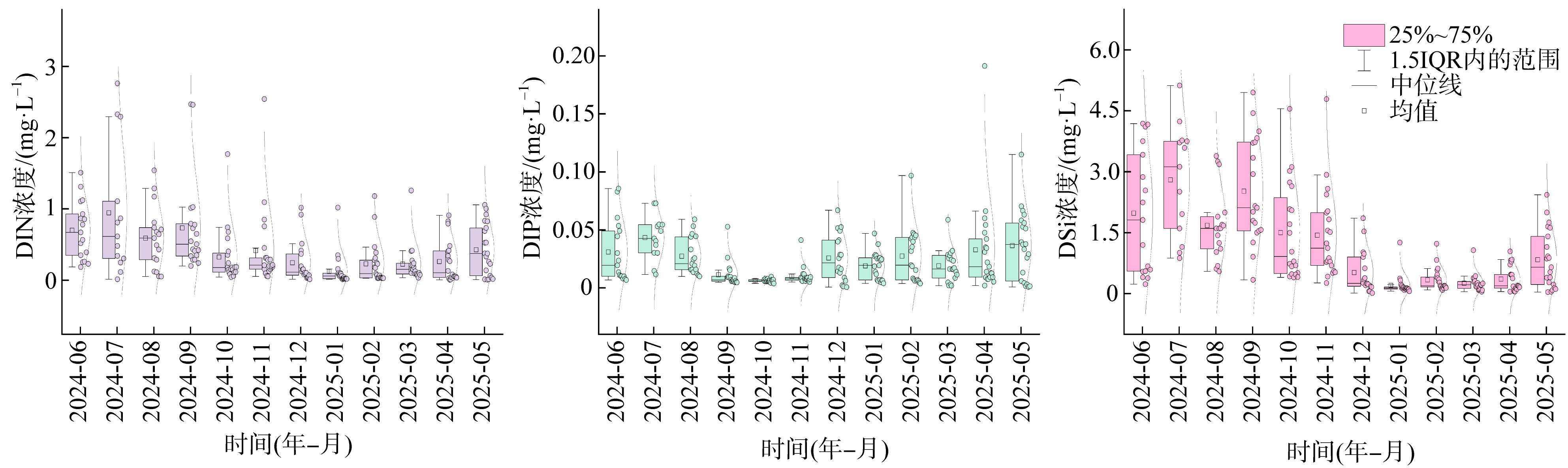
Fig. 3
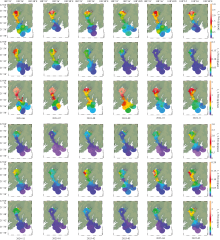
Fig. 4
Spatiotemporal distribution of nutrients in surface seawater of Qinzhou Bay"

Fig. 4
Fig. 5
Monthly variations of parameters related to nitrogen and phosphorus nutrients in Qinzhou Bay. (a) Percentage of DIN components in Maowei Sea; (b) percentage of DIN components in the outer bay; (c) DIN/DIP ratio in the Maowei Sea; (d) DIN/DIP ratio in the outer bay; In Fig. c and d, the DIN/DIP ratios are monthly averages and the red dashed lines represent the Redfield ratio (DIN/DIP = 16), which is used to indicate the nitrogen and phosphorus nutrient requirement benchmark for phytoplankton growth"
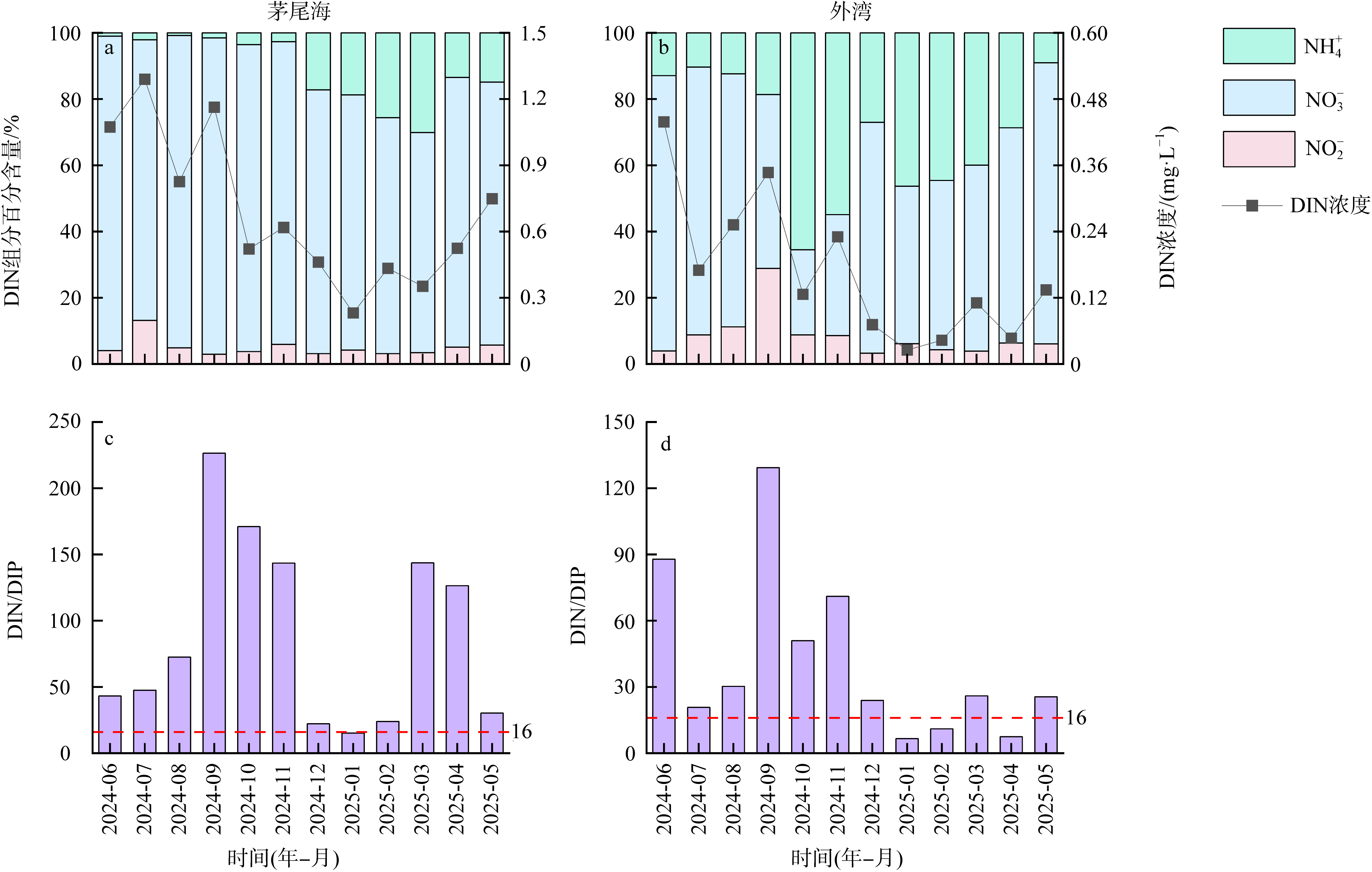
Fig. 5
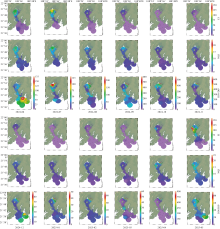
Fig. 6
Spatio-temporal distribution of EI, NQI, and DIN/DIP in surface seawater of Qinzhou Bay"

Fig. 6
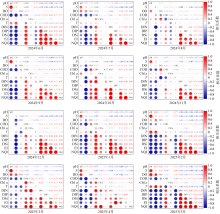
Fig. 7
Correlation analysis between various environmental factors in Qinzhou Bay and eutrophication indices. * indicates significant correlation at the 0.05 level (two-tailed); ** indicates significant correlation at the 0.01 level (two-tailed)"

Fig. 7
Tab. 2
Feature importance scores of random forest regression model"
| 特征名称 | DIN特征重要性 | DIP特征重要性 | DSi特征重要性 |
|---|---|---|---|
| 盐度 | 66.20% | 10.90% | 82.70% |
| COD | 14.60% | 32.70% | 4.60% |
| pH | 6.20% | 18.70% | 2.40% |
| DO | 5.40% | 7.80% | 4.70% |
| Chl a | 4.10% | 14.20% | 4.00% |
| T | 3.40% | 15.60% | 1.60% |
Tab. 2
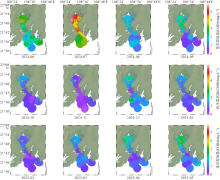
Fig. 8
Spatiotemporal distribution of chemical oxygen demand (COD) in surface sea water of Qinzhou Bay"

Fig. 8
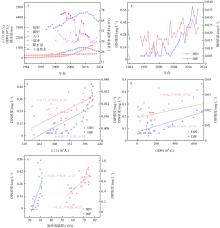
Fig. 9
Annual changes in GDP, population, and fertilizer usage in Qinzhou Bay and their correlation with annual changes in nutrient concentrations in the Qinzhou Bay sea area. (a) Changing trends of population, GDP, precipitation in Qinzhou City, and annual usage of nitrogen and phosphorus fertilizers in Guangxi; (b) interannual variation trends of DIN and DIP concentrations in Qinzhou Bay waters; (c) relationship between population and nutrient concentrations; (d) relationship between GDP and annual changes in nutrient concentrations; (e) relationship between the usage of nitrogen and phosphorus fertilizers and annual changes in nutrient concentrations"
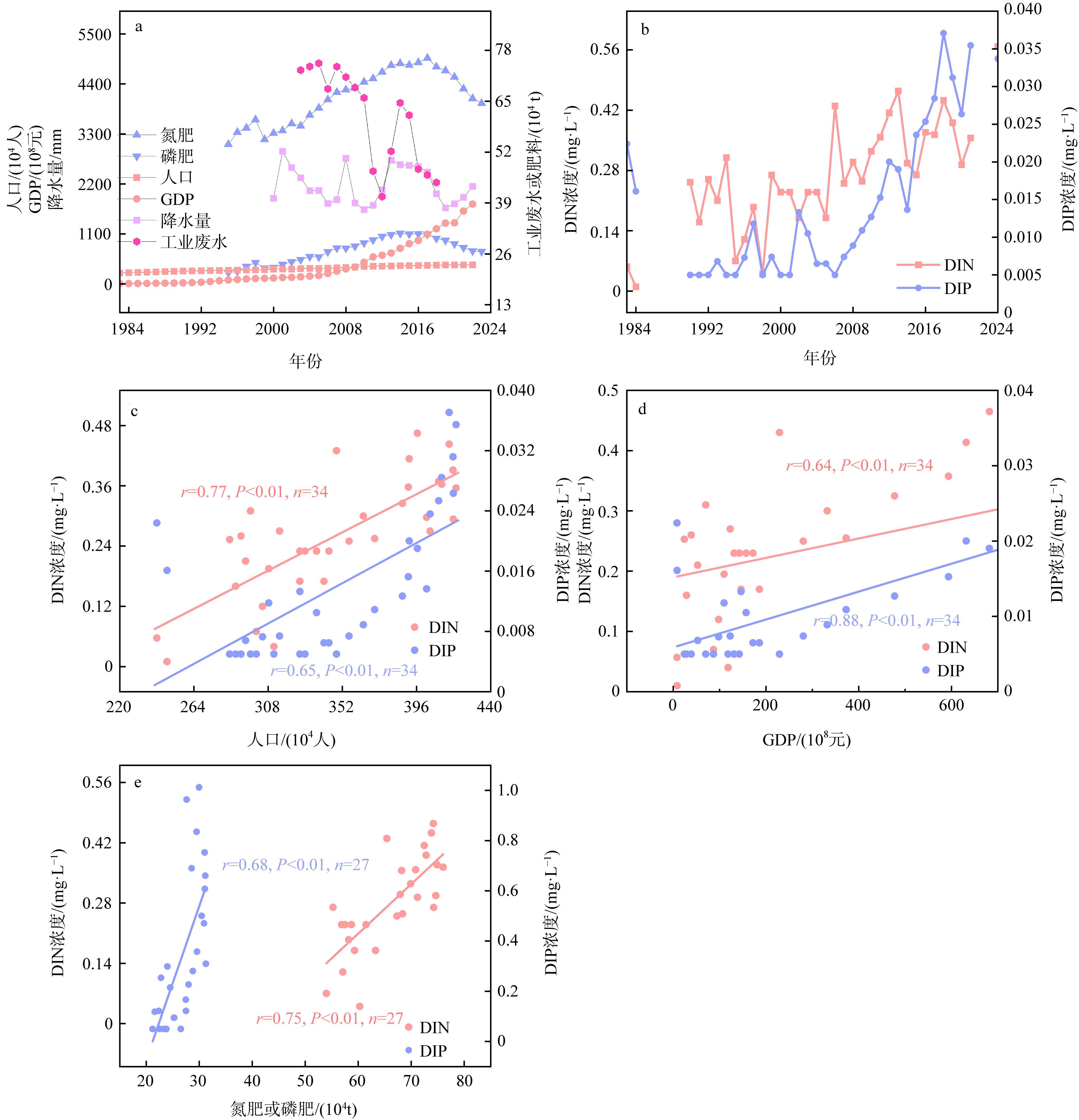
Fig. 9
| [1] |
曹雪峰, 陈波, 邢传玺, 等, 2019. 夏季波浪对钦州湾水交换能力的影响研究[J]. 广西科学, 26(6): 647-654.
|
|
|
|
| [2] |
陈燕, 彭梦微, 李莉梅, 等, 2024. 钦州湾2011-2021年营养盐年际变化趋势分析[J]. 环境科学导刊, 43(4): 88-91.
|
|
|
|
| [3] |
董纹妤, 2025. 近海水产养殖对海洋渔业环境影响的研究[J]. 河北渔业(6): 83-86.
|
|
|
|
| [4] |
高金荣, 赵则春, 2021. 钦州茅尾海海域化学需氧量的分布特征及与富营养化的关系[J]. 海洋湖沼通报(中英文), 43(3): 145-150.
|
|
|
|
| [5] |
广西壮族自治区农业农村厅, 2023. 到2025年化肥减量化行动实施方案(桂农厅发[2023]9号)[Z/OL]. (2023-02-28)[2025-12-18]. http://nynct.gxzf.gov.cn/xxgk/jcxxgk/wjzl/gntf/t16707166.shtml.
|
| [6] |
国家环境保护局, 1997. 海水水质标准(GB 3097-1997)[S]. 北京: 中国标准出版社.
|
|
State Environmental Protection Administration of China, 1997. Sea Water Quality Standard (GB 3097-1997)[S]. Beijing: Standards Press of China (in Chinese).
|
|
| [7] |
洪雄业, 2022. 厦门湾营养盐长期动态变化与陆源污染关系分析[J]. 应用海洋学学报, 41(2): 249-258.
|
|
|
|
| [8] |
黄皓晨, 柯志新, 周志希, 等, 2025. 南澳岛周边海域表层海水营养盐分布及富营养化特征[J]. 热带海洋学报, 44(2): 196-207.
|
|
|
|
| [9] |
蒋聘凤, 童思陈, 黄国鲜, 等, 2023. 气候变化和人类活动对河流营养盐通量过程影响研究综述[J]. 水资源与水工程学报, 34(4): 23-34+44.
|
|
|
|
| [10] |
金梦, 兰亚琼, 丁淼, 等, 2024. 京杭运河上游河段磷污染时空分布特征及污染源解析[J]. 环境工程技术学报, 14(1): 43-51.
|
|
|
|
| [11] |
蓝文陆, 2011. 近20年广西钦州湾有机污染状况变化特征及生态影响[J]. 生态学报, 31(20): 5970-5976.
|
|
|
|
| [12] |
劳齐斌, 刘国强, 高劲松, 等, 2021. 钦州湾养殖区营养盐分布特征及富营养化状况研究[J]. 海洋环境科学, 40(3): 407-416.
|
|
|
|
| [13] |
李江, 王杰, 崔玉环, 等, 2025. 基于特征优化的随机森林模型探究河岸带景观对入湖河流总氮浓度的影响[J]. 湖泊科学, 37(4): 1290-1303.
|
|
doi: 10.18307/2025.0423 |
|
| [14] |
李俊龙, 郑丙辉, 张铃松, 等, 2016. 中国主要河口海湾富营养化特征及差异分析[J]. 中国环境科学, 36(2): 506-516.
|
|
|
|
| [15] |
林荣根, 1996. 海水富营养化水平评价方法浅析[J]. 海洋环境科学, 15(2): 28-31.
|
|
|
|
| [16] |
龙晓红, 蒋清华, 邓琰, 2011. 广西钦州湾近岸海域“十一·五”期间营养盐变化趋势分析及污染控制重点[J]. 环境科学与管理, 36(8): 65-68.
|
|
|
|
| [17] |
陆双龙, 2021. 月尺度下的茅尾海营养盐与环境因子的时空变化及空间自相关特征研究[D]. 南宁: 南宁师范大学.
|
|
|
|
| [18] |
陆艳妮, 李卓亭, 徐强胜, 等, 2025. 减量施氮对甘蔗产量、氮肥利用率及土壤呼吸的影响[J]. 甘蔗糖业, 54(6): 26-35.
|
|
|
|
| [19] |
骆鑫, 彭小燕, 蓝文陆, 2020. 钦州湾疏浚工程磷释放对海湾生态环境的影响[J]. 广西科学院学报, 36(4): 373-382.
|
|
|
|
| [20] |
吕赫, 张少峰, 宋德海, 等, 2021. 围填海累积效应对钦州湾水动力环境的影响[J]. 海洋与湖沼, 52(4): 823-833.
|
|
|
|
| [21] |
吕赫, 张少峰, 宋德海, 等, 2023. 基于大规模围填海和陆源排污压力下的广西钦州湾环境容量变化及损失评估[J]. 海洋学报, 45(2): 139-150.
|
|
|
|
| [22] |
彭小燕, 庞敏倩, 彭梦微, 等, 2025. 广西封闭式海水养殖尾水污染排放特征及防治对策研究[J]. 广西科学, 32(1): 27-36.
|
|
|
|
| [23] |
史华明, 王翔, 马玉, 等, 2023. 2017-2018年北部湾东北部海湾营养盐的时空分布特征[J]. 广西科学, 30(4): 663-671.
|
|
|
|
| [24] |
苏艺, 刘佳, 韩晓庆, 等, 2012. 海水养殖对海洋生态环境的影响: 以河北省昌黎县为例[J]. 江苏农业科学, 40(3): 306-309 (in Chinese).
|
| [25] |
孙慧慧, 刘西汉, 孙西艳, 等, 2017. 莱州湾浮游植物群落结构与环境因子的时空变化特征研究[J]. 海洋环境科学, 36(5): 662-669.
|
|
|
|
| [26] |
王富玉, 周姣娣, 武康悦, 等, 2025. 2022-2023年钦州湾营养盐分布特征及水质状态评估[J]. 北部湾大学学报, 40(6): 1-13.
|
|
|
|
| [27] |
王腾, 刘广鹏, 赵世烨, 等, 2016. 台风事件对闽江口上游营养盐和有机碳含量及通量的影响[J]. 应用海洋学学报, 35(1): 38-46.
|
|
|
|
| [28] |
王兆泽, 2024. 茅尾海水体和表层沉积物磷的分布特征及沉积物磷释放潜力[D]. 钦州: 北部湾大学.
|
|
|
|
| [29] |
韦蔓新, 赖廷和, 何本茂, 2002. 钦州湾近20a来水环境指标的变化趋势Ⅰ平水期营养盐状况[J]. 海洋环境科学, 21(3): 49-52.
|
|
|
|
| [30] |
韦蔓新, 赖廷和, 何本茂, 2003. 钦州湾丰、枯水期营养状况变化趋势及其影响因素[J]. 热带海洋学报, 22(3): 16-21.
|
|
|
|
| [31] |
韦重霄, 赵爽, 宋立荣, 等, 2017. 钦州湾内湾茅尾海营养状况分析与评价研究[J]. 环境科学与管理, 42(9): 148-153.
|
|
|
|
| [32] |
谢佳俐, 丁鑫功, 邹芬, 2025. 广西茅尾海牡蛎产业调查分析及管理政策建议[J]. 中国水产, 591(2): 60-62 (in Chinese).
|
| [33] |
徐程, 2020. 茅尾海主要入海河口区不同介质磷形态分布特征及迁移转化研究[D]. 桂林: 桂林理工大学.
|
|
|
|
| [34] |
向晨晖, 刘甲星, 柯志新, 等, 2021. 大亚湾浮游植物粒级结构和种类组成对淡澳河河口水加富的响应[J]. 热带海洋学报, 40(2): 49-60.
doi: 10.11978/2020040 |
|
doi: 10.11978/2020040 |
|
| [35] |
解子豪, 李晓光, 杜义炜, 等, 2025. 2018-2022年浙江省近岸海域氮磷营养盐时空分布及富营养化状况[J]. 浙江海洋大学学报(自然科学版), 44(5): 413-422.
|
|
|
|
| [36] |
徐敏, 韩保新, 龙颖贤, 2012. 钦州湾海域氮磷营养盐近30年变化规律及其来源分析[J]. 环境工程技术学报, 2(3): 253-258.
|
|
|
|
| [37] |
杨建强, 2023. 广西钦州湾污染扩散特征及其对生态敏感区影响研究[D]. 南宁: 南宁师范大学.
|
|
|
|
| [38] |
杨平, 金宝石, 谭立山, 等, 2017. 九龙江河口区养虾塘沉积物-水界面营养盐交换通量特征[J]. 生态学报, 37(1): 192-203.
|
|
|
|
| [39] |
杨文超, 黄道建, 陈继鑫, 等, 2020. 大亚湾海域2009-2015年氮、磷营养盐时空分布及富营养化评价[J]. 南方水产科学, 16(2): 54-61.
|
|
|
|
| [40] |
杨宇锋, 武暕, 王璐, 等, 2022. 基于随机森林模型的辽河高时间分辨率氮、磷浓度模拟与预测[J]. 环境科学学报, 42(12): 384-391.
|
|
|
|
| [41] |
张栋, 2020. 钦州湾营养盐时空变化的影响因素与陆源TDN的量化减排研究[D]. 南宁: 广西大学.
|
|
|
|
| [42] |
郑艺妃, 2016. 北部湾生态动力过程的模型分析研究[D]. 厦门: 厦门大学.
|
|
|
|
| [43] |
中华人民共和国国家质量监督检验检疫总局, 中国国家标准化管理委员会, 2007a. GB17378.4-2007海洋监测规范第4 部分: 海水分析[S]. 北京: 中国标准出版社.
|
|
General Administration of Quality Supervision, Inspection and Quarantine of the People's Republic of China, Standardization Administration of the People's Republic of China, 2007a. Specifications for marine monitoring-Part 4: seawater analysis(GB17378.4-2007)[S]. Beijing: Standards Press of China (in Chinese).
|
|
| [44] |
中华人民共和国国家质量监督检验检疫总局, 中国国家标准化管理委员会, 2007b. GB/T 12763.1-2007海洋调查规范第1部分: 总则[S]. 北京: 中国标准出版社.
|
|
General Administration of Quality Supervision, Inspection and Quarantine of the People's Republic of China, Standardization Administration of the People's Republic of China, 2007b. Specifications for oceanographic survey-Part 1: Genera l (GB/T 12763.1-2007)[S]. Beijing: Standards Press of China (in Chinese).
|
|
| [45] |
中华人民共和国生态环境部, 2020. HJ 442-2020近岸海域环境监测技术规范[S]. 北京: 中国环境出版集团有限公司.
|
|
Ministry of Ecology and Environment the People's Republic of China, 2020. Technical specification for offshore environmental monitoring (HJ 442-2020)[S]. Beijing: China Environment Publishing Group (in Chinese).
|
|
| [46] |
中华人民共和国生态环境部, 2024. 2023年中国海洋生态环境状况公报[R]. 北京: 中华人民共和国生态环境部 (in Chinese).
|
| [47] |
周毅频, 李绪录, 张军晓, 等, 2012. 大鹏湾中溶解态总氮和总磷的多年调查结果分析[J]. 生态环境学报, 21(4): 706-710.
doi: 10.16258/j.cnki.1674-5906(2012)04-0706-05 |
|
doi: 10.16258/j.cnki.1674-5906(2012)04-0706-05 |
|
| [48] |
邹景忠, 董丽萍, 秦保平, 1983. 渤海湾富营养化和赤潮问题的初步探讨[J]. 海洋环境科学, 2(2): 41-54 (in Chinese).
|
| [49] |
doi: 10.1016/j.petrol.2018.11.067 |
| [50] |
doi: 10.1016/j.scitotenv.2024.175390 |
| [51] |
doi: 10.1126/science.1167755 |
| [52] |
|
| [53] |
doi: 10.4319/lo.1967.12.2.0196 |
| [54] |
doi: 10.1007/s00343-011-0502-z |
| [55] |
doi: 10.3389/fevo.2023.1083315 |
| [56] |
doi: 10.1890/100008 |
| [57] |
doi: 10.1016/j.ecss.2014.03.014 |
| [58] |
doi: 10.1007/s10750-007-9276-x |
| [59] |
doi: 10.1002/jgrg.v121.11 |
| [60] |
doi: 10.1016/j.jhydrol.2022.128576 |
| [61] |
pmid: 10347046 |
| [62] |
|
| [63] |
doi: 10.1038/22941 |
| [64] |
doi: 10.1016/j.marpolbul.2024.117085 |
| [65] |
doi: 10.1038/srep36638 pmid: 27833110 |
| [66] |
doi: 10.1016/j.marpolbul.2025.117729 |
| [67] |
doi: 10.1111/ele.12658 pmid: 27501082 |
| [68] |
doi: 10.1016/j.marpolbul.2025.118499 |
| [69] |
doi: 10.1016/j.watres.2025.124927 |
| [70] |
doi: 10.1016/j.watres.2024.121150 |
| [71] |
doi: 10.1021/acs.est.3c03994 |
| [72] |
|
| [73] |
doi: 10.1016/j.scitotenv.2021.147736 |
| [1] | WANG Mengzhu, XU Shanshan, LI Shushi, LI Jianming, YANG Xialing, HUANG Sheng. Variations of suspended sediment concentration in the Qinjiang River in the past 60 years under the influence of human activities and climate change [J]. Journal of Tropical Oceanography, 2026, 45(4): 126-139. |
| [2] | TIAN Mi, ZHANG Jian, LIAO Riquan, DONG Fengfeng, TANG Jianhui. Spatiotemporal variation and source analysis of per- and polyfluoroalkyl substances (PFAS) in the surface seawater of Qinzhou Bay, China [J]. Journal of Tropical Oceanography, 2026, 45(4): 116-125. |
| [3] | LOU Zhifeng, LI Yuchen, YIN Xuehua, SUN Rong, TIAN Chongguo. Distribution characteristics and main sources of nitrate in the waters of Qinzhou Bay* [J]. Journal of Tropical Oceanography, 2026, 45(4): 153-161. |
| [4] | LI Xiaoting, FU Jia, QIU Menghan, WU Zongqi, LI Haochen, LIU Ying, PENG Chunyan, TANG Jianhui, GONG Bin. Seasonal dynamics and community assembly of invertebrate in the coastal waters of the Beibu Gulf based on metabarcoding technology [J]. Journal of Tropical Oceanography, 2026, 45(4): 41-62. |
| [5] | JIANG Shihao, LIAO Riquan, NIU Donglei, QIAO Zhen, LU Dongliang, TANG Jianhui. The distribution characteristics, compositions and sources of dissolved organic matter (DOM) in Qinzhou Bay [J]. Journal of Tropical Oceanography, 2026, 45(4): 190-202. |
| [6] | LIANG Xixing, DAI Zhijun, LI Yan, LI Shushi, LI Weihua, WANG Riming, WU Erjiang. Spatiotemporal dynamics of mangroves at the Pinglu Canal estuary based on Sentinel-2 [J]. Journal of Tropical Oceanography, 2026, 45(4): 77-88. |
| [7] | XIE Yajun, DAI Zhijun, CHEN Jianqing, ZHONG Mingtao, HUANG Qiang, WANG Riming. Analysis of changes in macrobenthic community in the Shajing Island intertidal zone of the Pinglu Canal estuary in response to near-natural restoration [J]. Journal of Tropical Oceanography, 2026, 45(4): 29-40. |
| [8] | JIN Song, ZOU Tao, LIAO Riquan, CHEN Chaohao, MI Huan, TANG Jianhui. Study on the spatial expansion mode of raft aquaculture in Qinzhou Bay since 2000 using remote sensing technology [J]. Journal of Tropical Oceanography, 2026, 45(4): 104-115. |
| [9] | LI Xinzheng, DU Xiaoli, XU Yong, ZHANG Yue, WANG Jinbao, SUI Jixing, CHEN Dan. Study on the community characteristics of macrozoobenthos and environmental influencing factors in Maowei Sea, Qinzhou Bay during summer and winter* [J]. Journal of Tropical Oceanography, 2026, 45(4): 15-28. |
| [10] | ZHOU Qiang, YANG Cuihua, CHEN Xueweijie, QI Jiguang, WANG Youkun, WANG Yunzhong. Effects of live bait types and feeding methods on the asexual reproductive ability of polyps of Chrysaora quinquecirrha [J]. Journal of Tropical Oceanography, 2026, 45(3): 164-173. |
| [11] | LUO Tengda, LIN Qiang, ZHANG Yanhong. The smallhead dragonet Callionymus erythraeus, a newly recorded dragonet (Syngnathiformes: Callionymoidei: Callionymidae) species from Chinese waters* [J]. Journal of Tropical Oceanography, 2026, 45(3): 122-128. |
| [12] | ZHANG Lianyi, ZHANG Yuhong, DU Yan. Quantifying impacts of ENSO and internal variability on the Indian Ocean Dipole* [J]. Journal of Tropical Oceanography, 2026, 45(1): 91-104. |
| [13] | LI Da, WANG Yunzhong, QI Jiguang, YANG Cuihua. Effects of water quality changes on community structures of Symbiodiniaceae and symbiotic bacteria in soft coral Lobophytum sp. [J]. Journal of Tropical Oceanography, 2025, 44(4): 136-144. |
| [14] | HUANG Haochen, KE Zhixin, ZHOU Zhixi, ZHOU Weihua. Distribution of nutrients and eutrophication characteristics in the surface water around Nan’ao Island [J]. Journal of Tropical Oceanography, 2025, 44(2): 196-207. |
| [15] | LUO Yong, HUANG Lintao, YANG Jianhui, LIAN Jiansheng, LIU Chengyue, JIANG Lei, LIANG Yuxian, CHEN Lunju, LEI Xinming, LIU Sheng, HUANG Hui. Community structure of reef-building corals and their environmental impact factors in the coastal waters of Hongpai-Maniao, Lingao, Hainan [J]. Journal of Tropical Oceanography, 2024, 43(3): 72-86. |
|
||