

Journal of Tropical Oceanography ›› 2026, Vol. 45 ›› Issue (4): 29-40.doi: 10.11978/2025199CSTR: 32234.14.2025199
• Marine Ecology • Previous Articles Next Articles
Analysis of changes in macrobenthic community in the Shajing Island intertidal zone of the Pinglu Canal estuary in response to near-natural restoration
XIE Yajun1( ), DAI Zhijun1,2(), CHEN Jianqing1,3(), ZHONG Mingtao1, HUANG Qiang1, WANG Riming1,3
- 1
College of Marine Sciences ,Beibu Gulf University
2National Key Laboratory of Estuarine and Coastal Research ,East China Normal University
3Pinglu Canal and Beibu Gulf Coastal Ecosystem Observation and Research Station of Guangxi/Guangxi Key Laboratory of Marine Environmental Disaster Processes and Ecological Protection Technology ,Beibu Gulf University
-
Received:2025-10-22Revised:2025-11-16Online:2026-07-10Published:2026-07-31 -
Contact:DAI Zhijun, email: zjdai@sklec.ecnu.edu.cn;CHEN Jianqing, email: chenjianqing@bbgu.edu.cn -
Supported by:Guangxi Key Laboratory of Marine Environmental Disaster Processes and Ecological Protection Technology, Beibu Gulf University(2023KA02); National Natural Science Key Foundation of China(41930537)

CLC Number:
- X82
Cite this article
XIE Yajun, DAI Zhijun, CHEN Jianqing, ZHONG Mingtao, HUANG Qiang, WANG Riming. Analysis of changes in macrobenthic community in the Shajing Island intertidal zone of the Pinglu Canal estuary in response to near-natural restoration[J].Journal of Tropical Oceanography, 2026, 45(4): 29-40.
share this article
Add to citation manager EndNote|Reference Manager|ProCite|BibTeX|RefWorks
Fig. 1
Study area, sampling sites, and satellite images before and after restoration. (a) Study area; (b) sampling sites; (c) satellite image of the study area before restoration; (d) satellite image of the study area after restoration (red arrows indicate the location of the restoration project); (e-h) field photos of the restoration project"
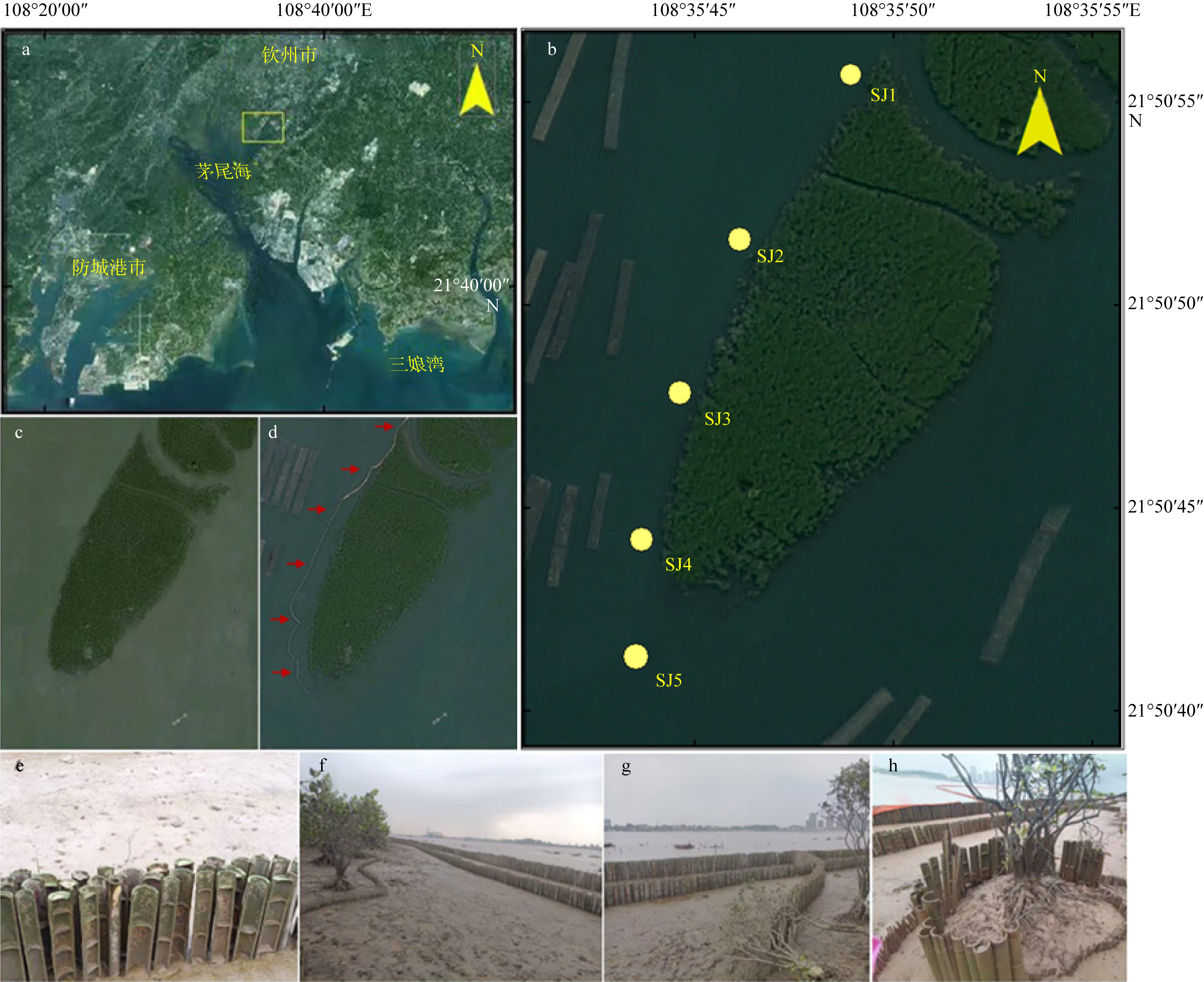
Fig. 1
Fig. 2
Characteristics of macrobenthic community structure before and after restoration. (a) Macrobenthic community structure before restoration; (b) macrobenthic community structure after restoration"
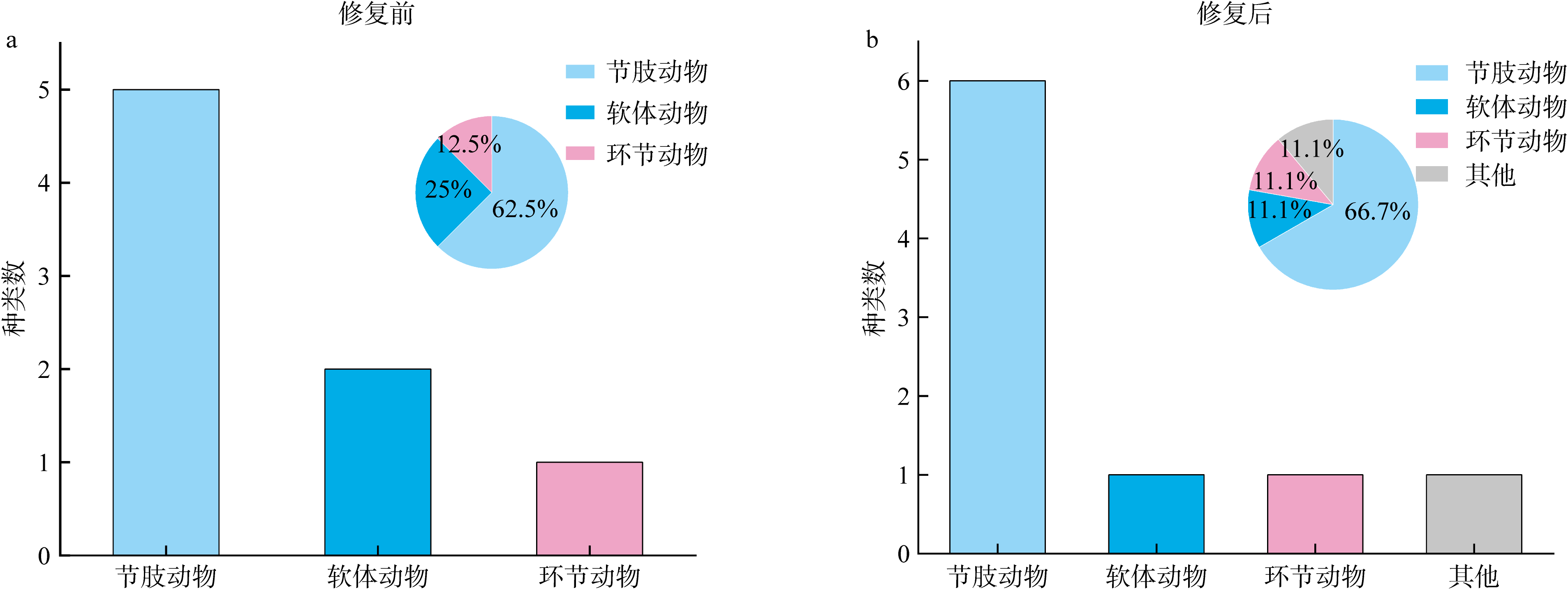
Fig. 2
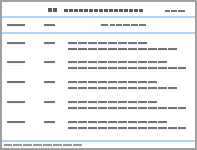
Tab. 1
Main species of macrobenthic community in the intertidal zone of the degraded western shore section of Shajing Island before and after restoration"
| 序号 | 物种 | 修复前相对重要性指数(IRI) | 修复后相对重要性指数(IRI) | ||||||||
|---|---|---|---|---|---|---|---|---|---|---|---|
| SJ1 | SJ2 | SJ3 | SJ4 | SJ5 | SJ1 | SJ2 | SJ3 | SJ4 | SJ5 | ||
| 1 | 疣吻沙蚕(Tylorrhynchus heterochaetus) | 19 | 0 | 0 | 0 | 0 | - | - | - | - | - |
| 2 | 太平大眼蟹(Macrophthalmus pacificus) | 0 | 43 | 57 | 0 | 0 | 57 | 111 | 20 | 70 | 16 |
| 3 | 彩拟蟹守螺(Cerithidea ornata) | 0 | 37 | 0 | 36 | 0 | - | - | - | - | - |
| 4 | 口虾蛄(Oratosquilla oratoria) | 0 | 0 | 23 | 0 | 14 | 9 | 29 | 23 | 0 | 6 |
| 5 | 双齿近相手蟹(Parasesarma bidens) | 0 | 0 | 0 | 0 | 24 | 0 | 67 | 0 | 50 | 80 |
| 6 | 四角蛤蜊(Mactra quadrangularis) | 0 | 0 | 0 | 0 | 9 | - | - | - | - | - |
| 7 | 宽身大眼蟹(Macrophthalmus abbreviatus) | 21 | 0 | 0 | 9 | 0 | - | - | - | - | - |
| 8 | 四齿大额蟹(Metopograpsus quadridentatus) | 0 | 0 | 0 | 22 | 80 | 0 | 3 | 0 | 0 | 0 |
| 9 | 大弹涂鱼(Boleophthalmus pectinirostri) | - | - | - | - | - | 15 | 0 | 0 | 0 | 0 |
| 10 | 日本大眼蟹(Macrophthalmus japonicus) | - | - | - | - | - | 0 | 0 | 30 | 0 | 0 |
| 11 | 蝼蛄虾[Upogebia major (De Haan, 1841)] | - | - | - | - | - | 0 | 0 | 0 | 9 | 0 |
| 12 | 秀丽织纹螺(Reticunassa festiva) | - | - | - | - | - | 0 | 0 | 0 | 0 | 7 |
Tab. 1
Tab. 2
Comparison of macrobenthic diversity indices at five sampling sites of Shajing Island before and after restoration"
| 修复阶段 | 采样站位 | 物种数 | 密度/(ind·m−2) | Simpson多样性指数(D) | Shannon-Wiener多样性指数(Hʹ) | Pielou均匀度指数(J) |
|---|---|---|---|---|---|---|
| 修复前 | SJ1 | 2 | 48 | 0.44 | 0.92 | 0.92 |
| SJ2 | 2 | 32 | 0.50 | 1.00 | 1.00 | |
| SJ3 | 2 | 32 | 0.50 | 1.00 | 1.00 | |
| SJ4 | 2 | 32 | 0.44 | 0.92 | 0.92 | |
| SJ5 | 3 | 48 | 0.67 | 1.58 | 0.42 | |
| 均值 | 38.40 ± 8.76 | 0.51 ± 0.09 | 1.08 ± 0.28 | 0.85 ± 0.24 | ||
| 修复后 | SJ1 | 4 | 160 | 0.96 | 1.76 | 0.88 |
| SJ2 | 3 | 256 | 0.99 | 1.38 | 0.69 | |
| SJ3 | 2 | 112 | 0.67 | 1.38 | 0.87 | |
| SJ4 | 3 | 80 | 0.96 | 1.37 | 0.86 | |
| SJ5 | 4 | 112 | 0.92 | 1.84 | 0.92 | |
| 均值 | 144.00 ± 68.82 | 0.92 ± 0.13 | 1.55 ± 0.23 | 0.85 ± 0.09 | ||
Tab. 2
Fig. 3
ABC curves of macrobenthos. (a) ABC curve of macrobenthos before restoration; (b) ABC curve of macrobenthos after restoration"
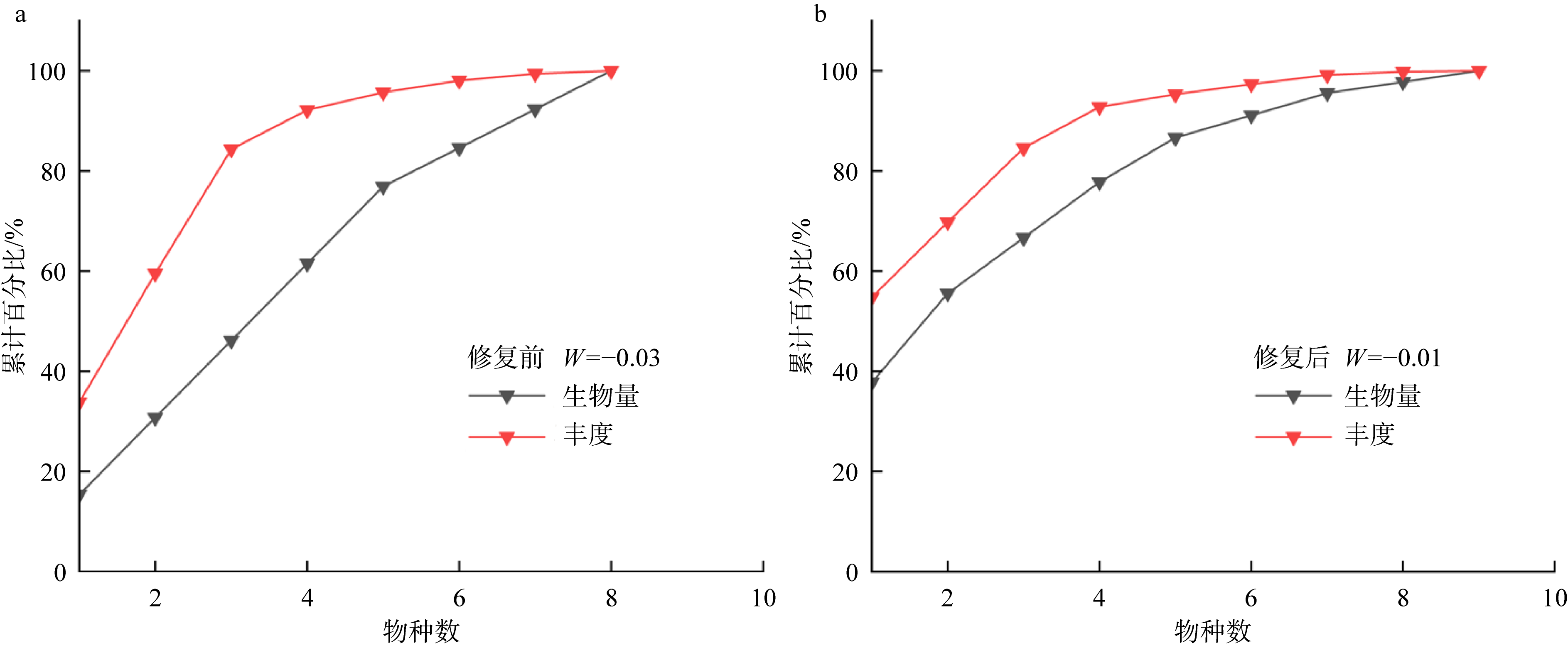
Fig. 3
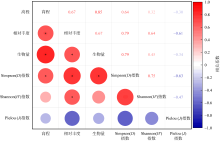
Fig. 4
Correlation between elevation and macrobenthic community indices on Shajing Island"
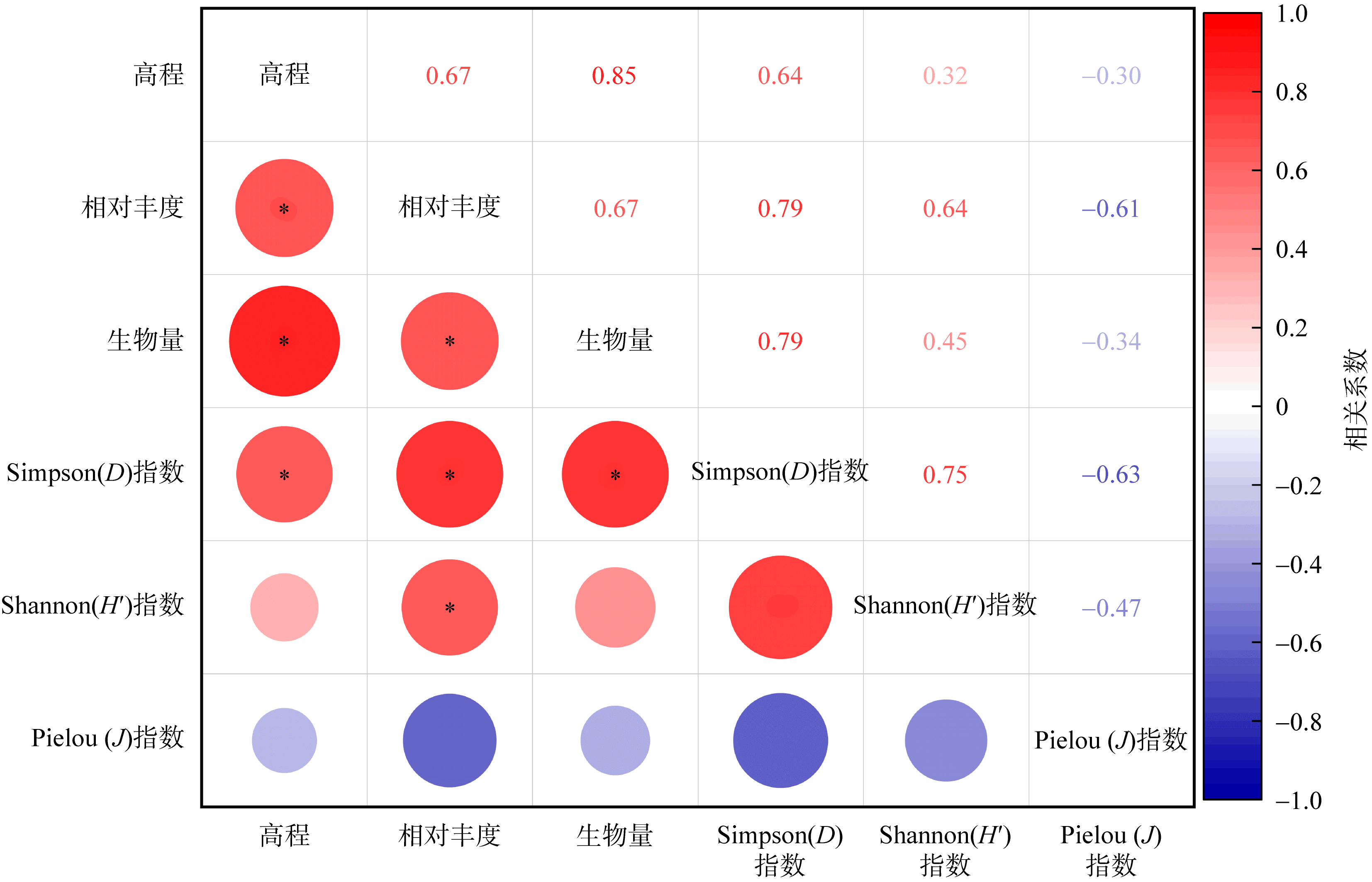
Fig. 4
| [1] |
阿尔发·阿布力克木, 于明乔, 张立虎, 等, 2025. 老鹳河大型底栖无脊椎动物群落结构及水质评价[J]. 环境生态学, 7(12): 75-82.
|
|
Aerfa·Abulikemu,
|
|
| [2] |
蔡立哲, 2003. 大型底栖动物污染指数(MPI)[J]. 环境科学学报, 23(5): 625-629.
|
|
|
|
| [3] |
蔡立哲, 马丽, 高阳, 等, 2002. 海洋底栖动物多样性指数污染程度评价标准的分析[J]. 厦门大学学报(自然科学版), 41(5): 641-646.
|
|
|
|
| [4] |
曹宏明, 朝鲁, 陈代庚, 等, 2020. 钦州湾沙井岛及周边海底沉积物重金属分布与生态风险评价[J]. 北部湾大学学报, 35(8): 1-7.
|
|
|
|
| [5] |
陈吉余, 陈沈良, 2002. 河口海岸环境变异和资源可持续利用[J]. 海洋地质与第四纪地质, 22(2): 1-7.
|
|
|
|
| [6] |
陈小华, 高伟, 刘文亮, 等, 2013. 平原河网地区大型底栖动物群落结构及其与环境因子的关系[J]. 生态环境学报, 22(8): 1310-1316.
|
|
|
|
| [7] |
陈作志, 邱永松, 贾晓平, 等, 2008. 捕捞对北部湾海洋生态系统的影响[J]. 应用生态学报, 19(7): 1604-1610.
pmid: 18839926 |
|
pmid: 18839926 |
|
| [8] |
戴志军, 周晓妍, 王杰, 等, 2021. 红树林潮滩沉积动力研究进展与展望[J]. 热带海洋学报, 40(3): 69-75.
doi: 10.11978/YG2020007 |
|
doi: 10.11978/YG2020007 |
|
| [9] |
丁敬坤, 张雯雯, 李阳, 等, 2020. 胶州湾底栖生态系统健康评价- 基于大型底栖动物生态学特征[J]. 渔业科学进展, 41(2): 20-26.
|
|
|
|
| [10] |
杜飞雁, 王雪辉, 李纯厚, 等, 2009. 大亚湾大型底栖动物的群落结构[J]. 生态学报, 29(3): 1091-1098.
|
|
|
|
| [11] |
付命伟, 2016. 湿地修复对底栖动物及其环境因子影响研究[D]. 曲阜: 曲阜师范大学 (in Chinese with English abstract).
|
| [12] |
胡知渊, 鲍毅新, 程宏毅, 等, 2009. 中国自然湿地底栖动物生态学研究进展[J]. 生态学杂志, 28(5): 959-968.
|
|
|
|
| [13] |
胡知渊, 李欢欢, 鲍毅新, 等, 2008. 灵昆岛围垦区内外滩涂大型底栖动物生物多样性[J]. 生态学报, 28(4): 1498-1507.
|
|
|
|
| [14] |
耿婉璐, 邢永泽, 张秋丰, 等, 2024. 广西北海红树林宜林滩涂大型底栖动物群落结构特征[J]. 热带海洋学报, 43(1): 107-115.
|
|
|
|
| [15] |
黄驰, 江志坚, 张景平, 等, 2017. 钦州湾春季和秋季大型底栖动物群落结构特征[J]. 渔业研究, 39(4): 272-282.
|
|
|
|
| [16] |
赖廷和, 何斌源, 黄中坚, 等, 2019. 防城河口湾潮间带大型底栖动物群落结构研究[J]. 热带海洋学报, 38(2): 67-77.
doi: 10.11978/2018058 |
|
doi: 10.11978/2018058 |
|
| [17] |
李宝泉, 李新正, 于海燕, 等, 2005. 胶州湾底栖软体动物与环境因子的关系[J]. 海洋与湖沼, 36(3): 193-198.
|
|
|
|
| [18] |
李新正, 杜小丽, 徐勇, 等, 2026. 夏、冬季钦州湾茅尾海大型底栖动物群落特征及其环境影响因素探究[J]. 热带海洋学报, 45(4): 15-28.
|
|
|
|
| [19] |
李新正, 李宝泉, 王洪法, 等, 2006. 胶州湾潮间带大型底栖动物的群落生态[J]. 动物学报, 52(3): 612-618.
|
|
|
|
| [20] |
李雪, 李亚芳, 陈清华, 等, 2023. 大亚湾潮间带大型底栖动物群落结构特征及其影响因素[J]. 南方水产科学, 19(3): 42-50.
|
|
|
|
| [21] |
梁喜幸, 戴志军, 黄鹄, 等, 2024. 基于无人机航测的红树林潮滩地貌高程反演[J]. 海洋科学进展, 42(2): 384-399.
|
|
|
|
| [22] |
沈晓龙, 叶思泉, 董建宇, 等, 2025. 雷州半岛人工种植红树林湿地大型底栖动物多样性与生态质量评价[J]. 海洋与湖沼, 56(5): 1122-1132.
|
|
|
|
| [23] |
冼华琳, 汤昌盛, 张杨阳, 等, 2025. 基于线粒体COI和18S rRNA基因构建舟山海域浮游动物DNA宏条形码数据库[J]. 南方水产科学, 21(4): 85-97.
|
|
|
|
| [24] |
许铭本, 姜发军, 赖俊翔, 等, 2015. 广西钦州湾大型底栖动物生态特征及其与沉积物环境的相关性研究[J]. 海洋技术学报, 34(1): 62-68.
|
|
|
|
| [25] |
袁涛萍, 李恒翔, 李路, 等, 2017. 夏季大亚湾大型底栖动物群落结构[J]. 热带海洋学报, 36(1): 41-47.
doi: 10.11978/2016040 |
|
doi: 10.11978/2016040 |
|
| [26] |
张刚, 欧阳凯, 万凯超, 等, 2023. 生态修复后南通市老坝港围垦区大型底栖动物群落结构的变化及其影响因素[J]. 安徽农业科学, 51(22): 51-56.
|
|
|
|
| [27] |
张乔民, 隋淑珍, 2001. 中国红树林湿地资源及其保护[J]. 自然资源学报, 16(1): 28-36.
|
|
doi: 10.11849/zrzyxb.2001.01.005 |
|
| [28] |
甄文全, 张金凤, 杨明柳, 等, 2023. 利用潮间带大型底栖动物群落评估茅尾海生态环境质量[J]. 动物学杂志, 58(3): 390-401.
|
|
|
|
| [29] |
中华人民共和国国家质量监督检验检疫总局, 中国国家标准化管理委员会, 2007. GB/T12763.6-2007海洋调查规范第6部分: 海洋生物调查[S]. 北京: 中国标准出版社.
|
|
General Administration of Quality Supervision, Inspection and Quarantine of the People's Republic of China, Standardization Administration of the People's Republic of China, 2007. Specifications for oceanographic survey - Part 6: Marine biological survey (GB/T12763.6-2007)[S]. Beijing: Standards Press of China (in Chinese).
|
|
| [30] |
doi: 10.1890/10-1510.1 |
| [31] |
doi: 10.1016/j.marenvres.2010.11.005 pmid: 21236484 |
| [32] |
doi: 10.12911/22998993/116335 |
| [33] |
doi: 10.1007/s12237-010-9271-8 |
| [34] |
doi: 10.1016/S1385-1101(00)00004-6 |
| [35] |
|
| [36] |
|
| [37] |
doi: 10.1016/j.jmarsys.2009.06.003 |
| [38] |
|
| [39] |
|
| [40] |
doi: 10.1016/j.jembe.2016.12.010 |
| [41] |
doi: 10.1016/S0141-1136(99)00056-2 |
| [42] |
doi: 10.1007/BF00392515 |
| [43] |
doi: 10.2307/1352728 |
| [44] |
doi: 10.1016/0302-3524(77)90070-6 |
| [45] |
doi: 10.1007/s002270050114 |
| [1] | WANG Mengzhu, XU Shanshan, LI Shushi, LI Jianming, YANG Xialing, HUANG Sheng. Variations of suspended sediment concentration in the Qinjiang River in the past 60 years under the influence of human activities and climate change [J]. Journal of Tropical Oceanography, 2026, 45(4): 126-139. |
| [2] | ZENG Debin, KANG Zhenjun, YANG Bin, ZHOU Jiaodi, LU Dongliang, HUANG Haifang, YAN Tingting. Distribution characteristics of dissolved carbohydrates and their influencing factors in the Dafengjiang River Estuary (Qinzhou Bay, northern South China Sea) [J]. Journal of Tropical Oceanography, 2026, 45(4): 179-189. |
| [3] | TIAN Mi, ZHANG Jian, LIAO Riquan, DONG Fengfeng, TANG Jianhui. Spatiotemporal variation and source analysis of per- and polyfluoroalkyl substances (PFAS) in the surface seawater of Qinzhou Bay, China [J]. Journal of Tropical Oceanography, 2026, 45(4): 116-125. |
| [4] | JIANG Shihao, LIAO Riquan, NIU Donglei, QIAO Zhen, LU Dongliang, TANG Jianhui. The distribution characteristics, compositions and sources of dissolved organic matter (DOM) in Qinzhou Bay [J]. Journal of Tropical Oceanography, 2026, 45(4): 190-202. |
| [5] | LIANG Xixing, DAI Zhijun, LI Yan, LI Shushi, LI Weihua, WANG Riming, WU Erjiang. Spatiotemporal dynamics of mangroves at the Pinglu Canal estuary based on Sentinel-2 [J]. Journal of Tropical Oceanography, 2026, 45(4): 77-88. |
| [6] | SUN Kangwei, LIAO Riquan, LI Han, WENG Peiyao, TANG Jianhui. Monthly variability of nutrient concentrations and influencing factors in surface seawater of Qinzhou Bay* [J]. Journal of Tropical Oceanography, 2026, 45(4): 162-178. |
| [7] | TAN Qingbi, GUO Hongying, SUN Siqi, ZHONG Yuhang, NIE Hui, NIU Lixia. Analysis of nitrogen sources and influencing factors in mangrove sediments of the Qingjiang River estuary (Zhejiang) using stable isotopes [J]. Journal of Tropical Oceanography, 2026, 45(3): 202-211. |
| [8] | LIU Zeyu, ZHANG Guocheng, WANG Yuanyuan. Composition and distribution characteristics of modern biological relics in the estuary of Pearl River Delta [J]. Journal of Tropical Oceanography, 2025, 44(6): 39-50. |
| [9] | WANG Riming, SU Jinheng, DAI Zhijun, WU Tianliang, XIE Xiaowen, HUANG Chunmei, LI Xingrong, ZHANG Shangyu. Dynamic changes in mangrove wetland of the Maolingjiang Estuary, Qinzhou Gulf [J]. Journal of Tropical Oceanography, 2025, 44(6): 143-154. |
| [10] | HE Chen, WANG Jianing, ZHOU Linbin, KE Zhixin, LIU Weiwei, LIU Jiaxing, WANG Junxing, TAN Yehui, CHEN Zhiyun. Comparison of macrobenthic community structure between seagrass beds in Xincungang and Li’angang, Hainan [J]. Journal of Tropical Oceanography, 2025, 44(4): 106-118. |
| [11] | GUO Shaojing, ZHANG Xiaobo, CHANG Jinglong, ZHANG Shouwen, JI Xuanliang, MIAO Runqiao, LI Jiandong, ZHU Xueming. Summer hydrological variations during 2021-2023 in the Pearl River Estuary and its adjacent areas [J]. Journal of Tropical Oceanography, 2025, 44(1): 108-121. |
| [12] | SONG Xingyu, LIN Yajun, ZHANG Liangkui, XIANG Chenhui, HUANG Yadong, ZHENG Chuanyang. Distribution characteristics and influencing factors of meso- and micro-zooplankton communities in the offshore waters of the Guangdong-Hong Kong-Macao Greater Bay Area* [J]. Journal of Tropical Oceanography, 2023, 42(3): 136-148. |
| [13] | YAN Jing, WEI Xing. Geomorphological changes and dynamic responses of the Huangmaohai Estuary in the Pearl River Delta [J]. Journal of Tropical Oceanography, 2023, 42(2): 9-20. |
| [14] | GAO Na, ZHAO Mingli, MA Yi, XU Wanming, ZHAN Haigang, CAI Shuqun. Effect of typhoon on storm surge in the Pearl River Estuary [J]. Journal of Tropical Oceanography, 2023, 42(1): 32-42. |
| [15] | TANG Ling, NIE Yuhua, WANG Ping, TANG Chaolian. Trend analysis of marine heatwaves variability in the outer Pearl River estuary from 1974 to 2020 [J]. Journal of Tropical Oceanography, 2022, 41(6): 143-150. |
|
||