

Journal of Tropical Oceanography ›› 2026, Vol. 45 ›› Issue (5): 80-93.doi: 10.11978/2025246CSTR: 32234.14.2025246
Previous Articles Next Articles
Microfossils in the Neogene carbonate platform of Nansha Islands and their significance*
SU Xiang1,2( ), XIANG Rong1,2(), YI Liang3, ZHANG Qiang1,2, ZHANG Yanan4, QIN Guoquan5, WAN Sui1,2, YAN Wen1,2,6()
- 1
South China Sea Institute of Oceanology ,Chinese Academy of Sciences, State Key Laboratory of Tropical Oceanography
2South China Sea Institute of Oceanology ,Chinese Academy of Sciences, Laboratory of Ocean and Marginal Sea Geology
3State Key Laboratory of Marine Geology ,Tongji University
4Guangzhou Institute of Geochemistry ,Chinese Academy of Sciences, State Key Laboratory of Deep Earth Processes and Resources
5CNOOC South China Sea Eastern Petroleum Corporation
6University of Chinese Academy of Sciences
-
Received:2025-12-20Revised:2026-02-07Online:2026-09-10Published:2026-10-13 -
Contact:XIANG Rong. email:rxiang@scsio.ac.cn ; YAN Wen. email:wyan@scsio.ac.cn -
Supported by:National Key Research and Development Program of China(2021-06); National Key Research and Development Program of China(2022-24); National Natural Science Foundation of China(42476066)

CLC Number:
- P736.221
Cite this article
SU Xiang, XIANG Rong, YI Liang, ZHANG Qiang, ZHANG Yanan, QIN Guoquan, WAN Sui, YAN Wen. Microfossils in the Neogene carbonate platform of Nansha Islands and their significance*[J].Journal of Tropical Oceanography, 2026, 45(5): 80-93.
share this article
Add to citation manager EndNote|Reference Manager|ProCite|BibTeX|RefWorks
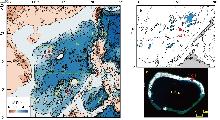
Fig. 1
Locality map of Well NK-1 on Nansha Islands. (a) Topographic map of the SCS. The red star and dots denote the study site NK-1 in the Nansha Islands, sites CK-2 and XK-1 in the Xisha Islands, respectively; (b) The location of Meiji Atoll in Nansha Islands. The blue areas denote the modern biogenic reefs in the southern SCS; (c) Location of Well NK-1 on Meiji Atoll"
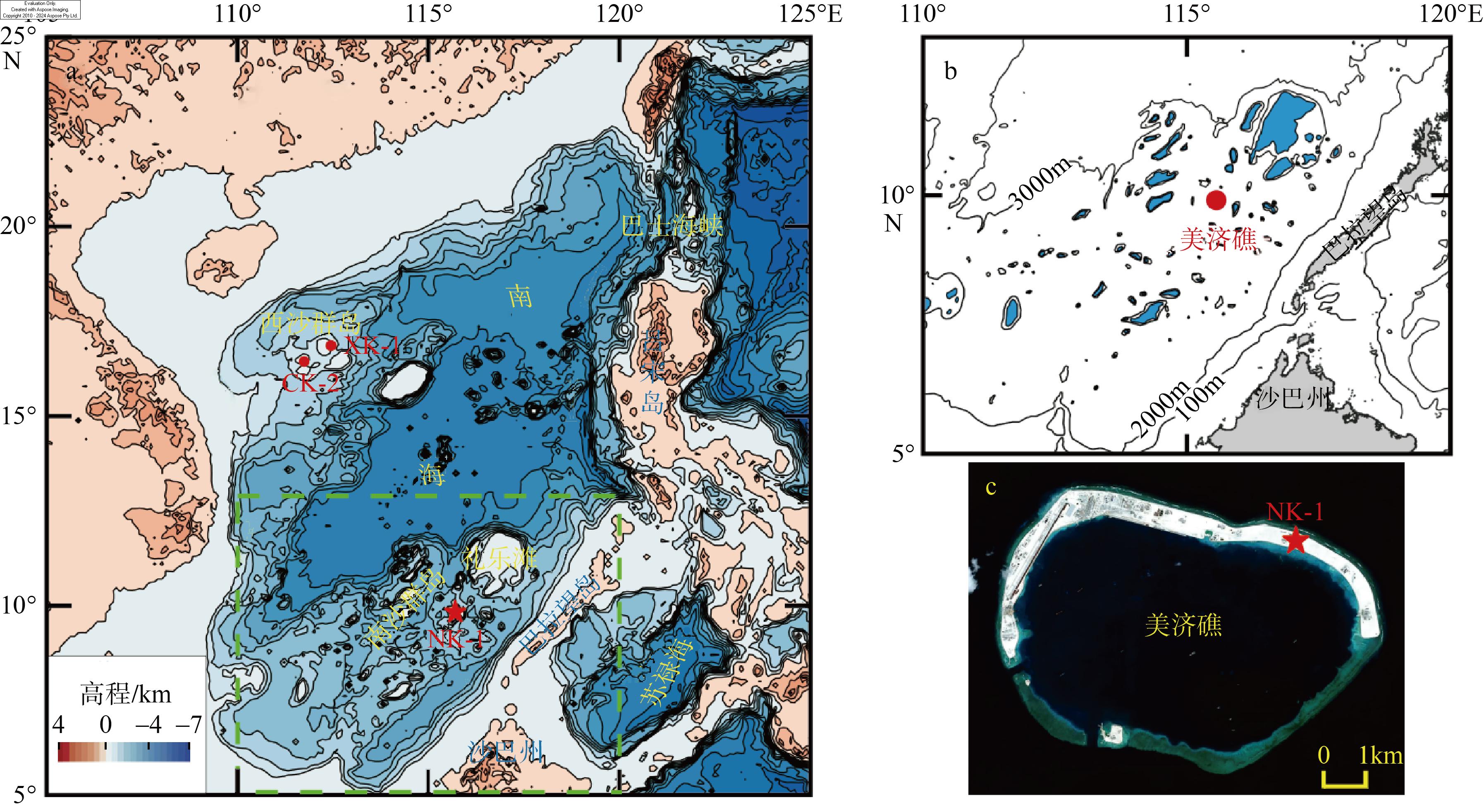
Fig. 1
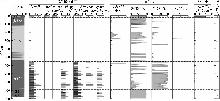
Fig. 2
Relative abundances of calcareous nannofossils, proportions of foraminifers and the total abundance of radiolarians from Well NK-1. The mineral compositions of Well NK-1 are revised from Liu et al (2022). The three dashed lines indicate boundaries of fossil evolution stages"

Fig. 2
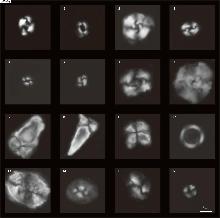
Fig. 3
Calcareous nannofossils in Well NK-1 1. Gephyrocapsa oceanica (10.54m); 2. Emiliania huxleyi (10.54m); 3. Cyclicargolithus floridanus (562.88m); 4. Reticulofenestra haqii (840.35m); 5. Reticulofenestra minuta (994.45m); 6. Reticulofenestra producta (565.53m); 7. Reticulofenestra pseudoumbilicus (558.30m); 8. Reticulofenestra bisecta (< 10μm) (669.1m); 9. Sphenolithus heteromorphus (562.88m); 10. S. heteromorphus (840.35m); 11. Sphenolithus moriformis (1000.80m); 12. Coronocyclus nitescens (809.85m); 13. Pontosphaera spp. (831.13m); 14. Coccolithus pelagicus (669.10m); 15. Helicosphaera carteri (977.15m); 16. Umbilicosphaera jafari (1000.80m)"
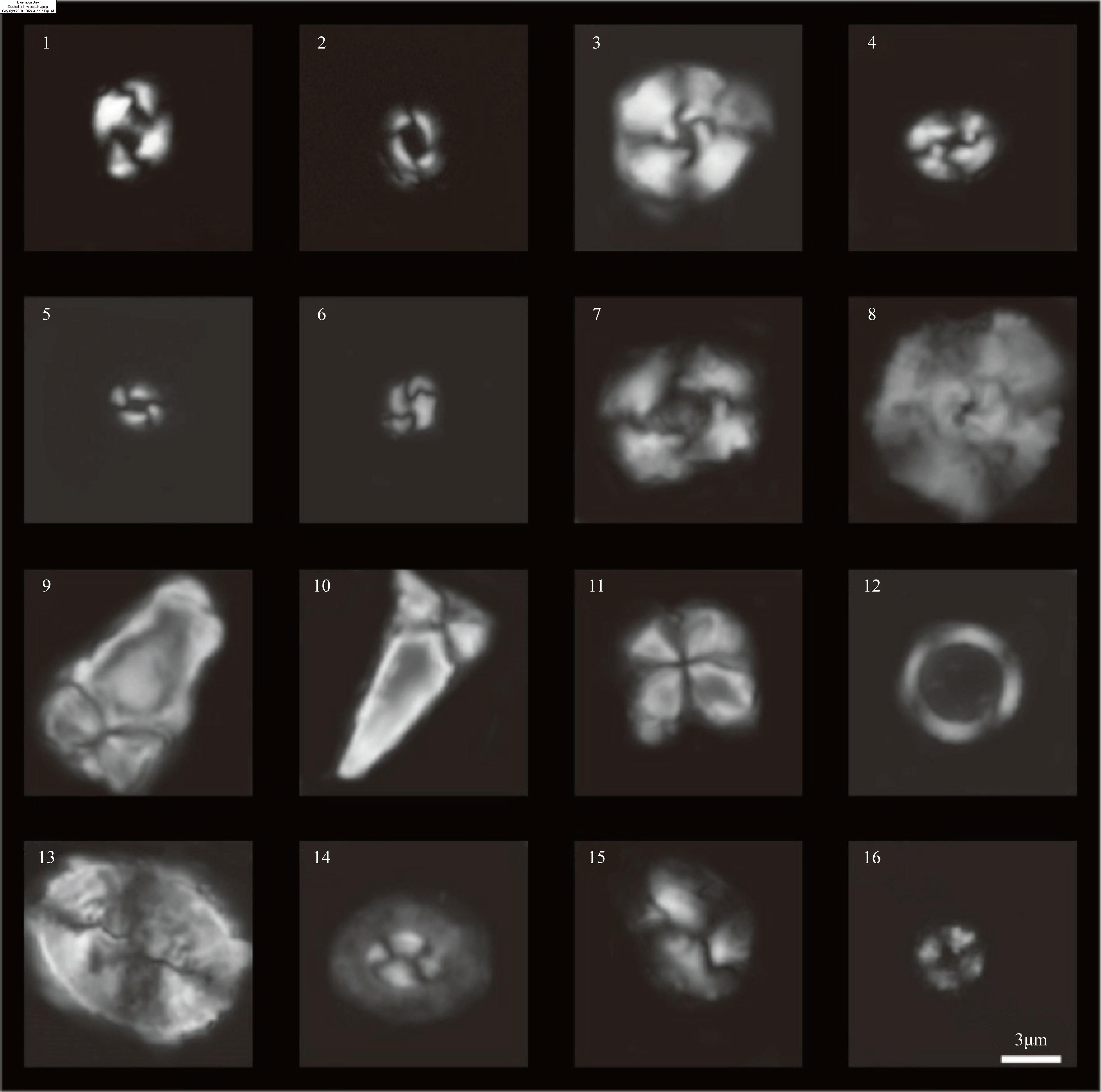
Fig. 3
Fig. 4
Foraminifers in Well NK-1 1~2. Globigerinoides extremus (Bolli) (200.78m); 3~4. Dentoglobigerina altispira (Cushman and Jarvis) (210.48m); 5~6. Globoquadrina dehiscens (Chapman, Parr and Collins) (469.38m); 7. Turborotalia siakensis (LeRoy) (810.3m); 8. Globigerinoides subquadratus Brönnimann (850.5m); 9. Amphistegina lessonii d’Orbigny (850.5m); 10. Heterostegina depressa d’Orbigny (991.1m); 11. Operculina ammonoides (Gronovius) (850.5m); 12. Nephrolepidina verbeeki (Newlon et Holland) (991.1m); 13. Quinqueloculina sp. (760.4m); 14. Triloculina trigona Cushman (760.4m); 15. Pyrogo sp. (760.4m); 16. Textularia sp. (991.1 m)"
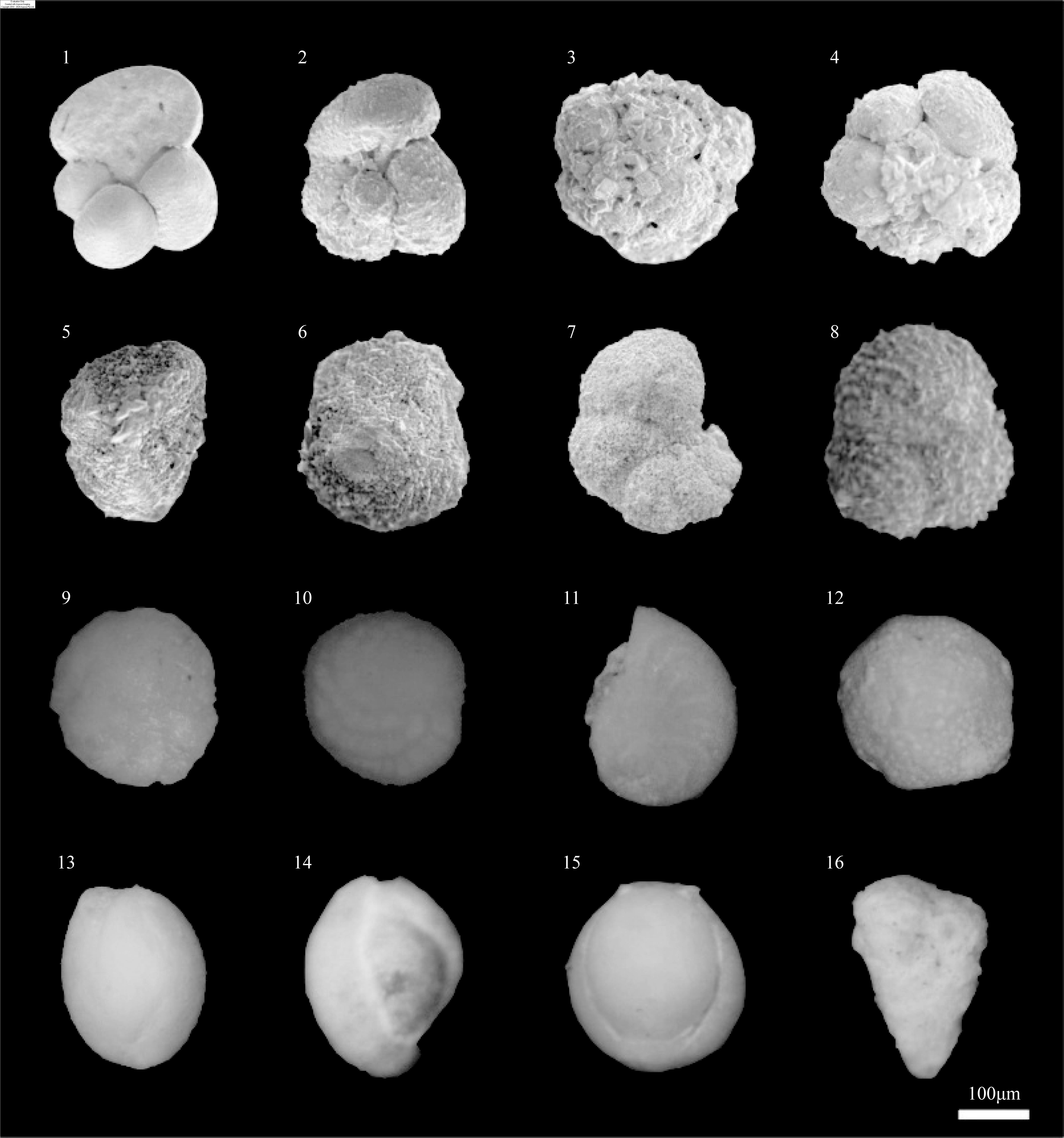
Fig. 4
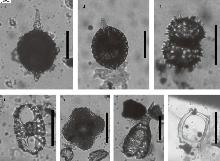
Fig. 5
Radiolarians in Well NK-1 (Scale bar = 100 μm) 1. Stylatratus universus (19.15m); 2. Stylatratus spp. (19.15m); 3. Didymocyrtis tetrathalamust (5.46m); 4. Tetrapyle octacantha (15.68m); 5. Spongaster tetras (19.15m); 6. Lamprocyrtis hannai (19.15m); 7. Zygocircus productus (10.54m)"
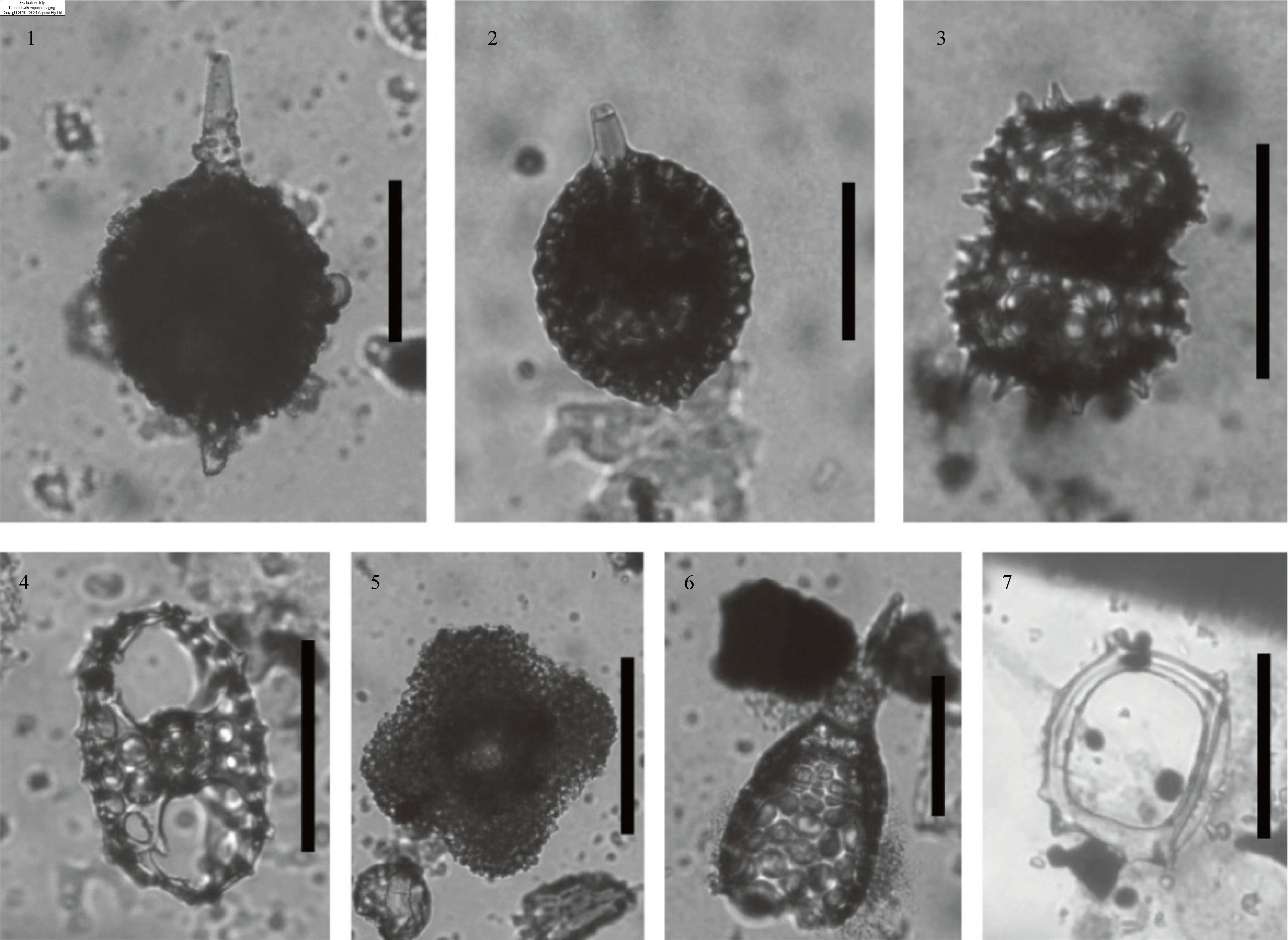
Fig. 5
Tab. 1
Biostratigraphic events of Well NK-1"
| 时代 | 化石类型 | 化石带 | 生物地层事件 | 深度/m | 年龄/Ma | 阶段 | 参考文献 |
|---|---|---|---|---|---|---|---|
| 更新世 | 钙质超微化石 | NN21 | Emiliania huxleyi初现面 | 19.2 | 0.29 | 4 | Gradstein等( |
| 浮游有孔虫 | PL6 | Globigerinoides extremus末现面 | 200.8 | 2.40 | 3 | 秦国权( | |
| 上新世 | 浮游有孔虫 | PL5 | Globoquadrina altispira末现面 | 210.5 | 2.80 | ||
| 中新世 | 浮游有孔虫 | M12 | Globoquadrina dehiscens末现面 | 469.4 | 10.00 | ||
| 钙质超微化石 | NN7 | Cyclicargolithus floridanus末现面 | 562.9 | 11.85 | 2 | Gradstein等( | |
| 钙质超微化石 | NN6/5 | Sphenolithus heteromorphus末现面 | 562.9 | 13.53 | |||
| 钙质超微化石 | NN4 | Sphenolithus heteromorphus初现面 | 845.6 | 17.71 |
Tab. 1
Fig. 6
Lithostratigraphic summary and biostratigraphy of Well NK-1. The standard zonal schemes of calcareous nannofossil and planktic foraminifers follow Martini (1971) and Berggren et al (1995); Calibrated age datums are from Gradstein et al (2012) and Qin (2002)"
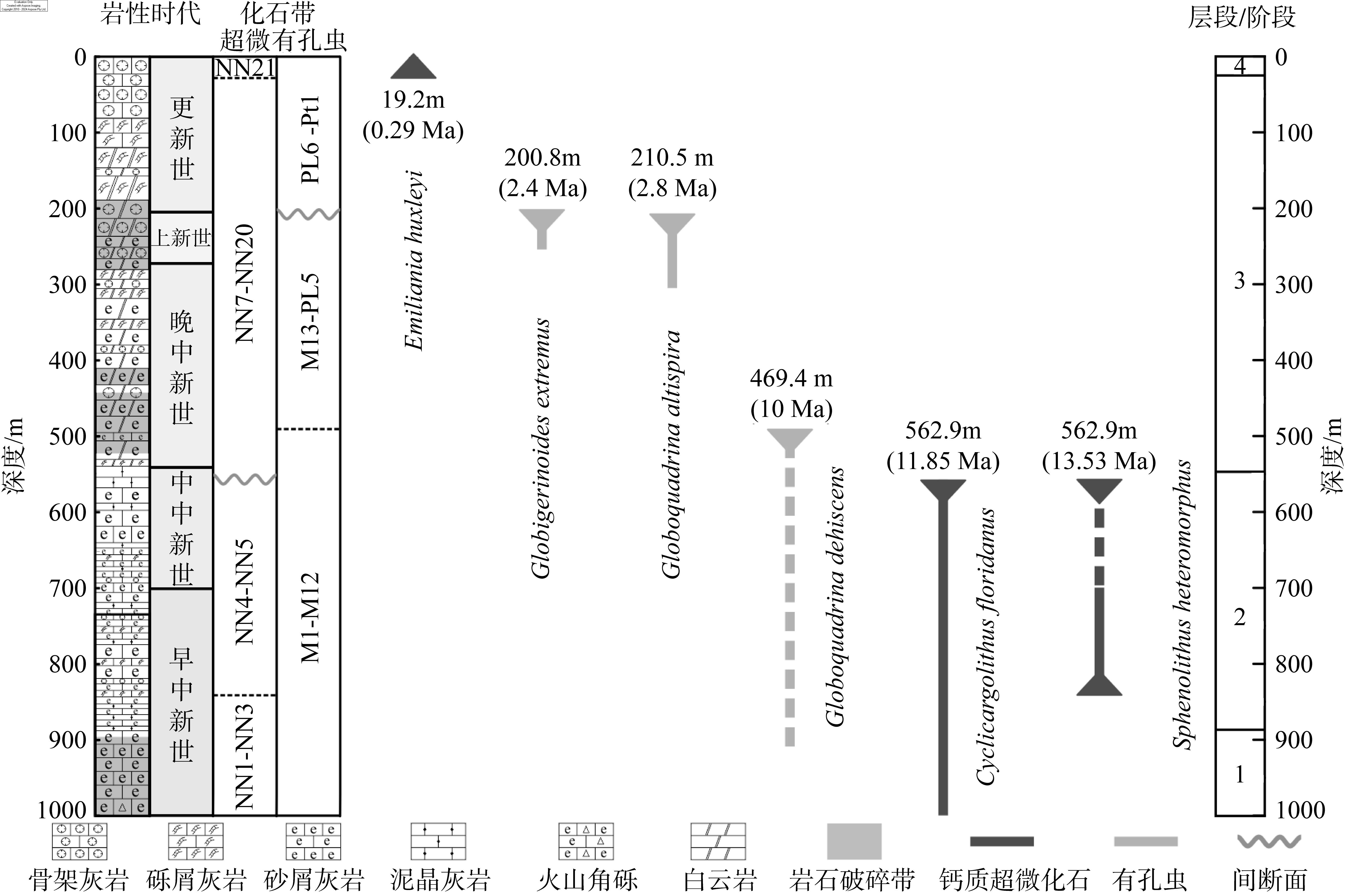
Fig. 6
Fig. 7
Age-depth relationship and depositional rate changes of core NK-1. The epoch, lithology and depths of exposed surfaces in core NK-1 are shown on the left side. The depth data of the exposed surfaces are from Li et al (2022), Liu et al (2022)"
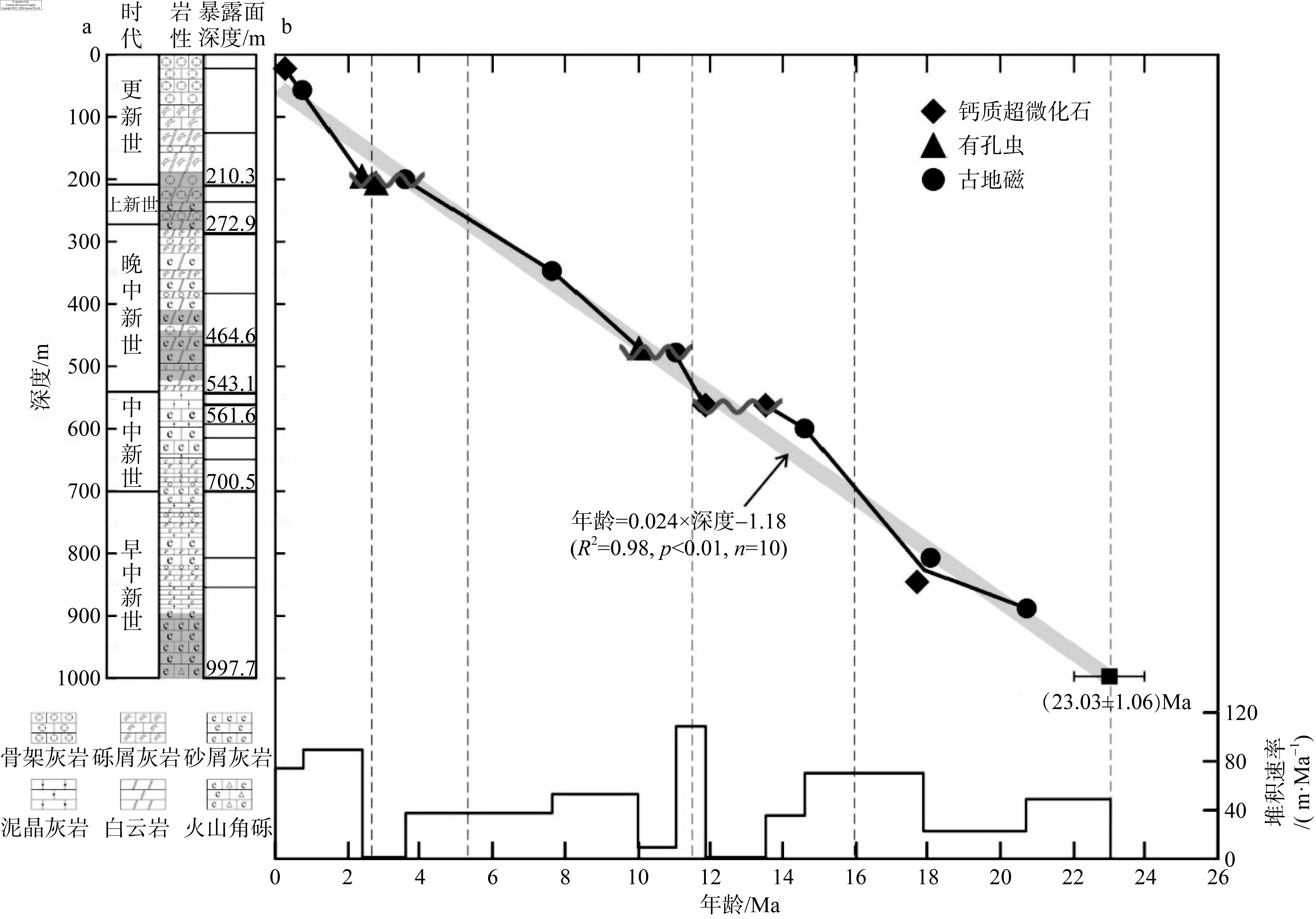
Fig. 7
Fig. 8
Carbonate platform developments in the SCS. (a) age-depth relationships of the deep drilling cores in Nansha and Xisha Islands; The age-depth data of cores CK-2 and XK-1 are from Fan et al (2020) and Yi et al (2018), respectively; (b) growth rates of the three cores; (c) global climatic events and tectonic events in the SCS; (d) the global compilation of sea-level variations (Miller et al, 2020)"
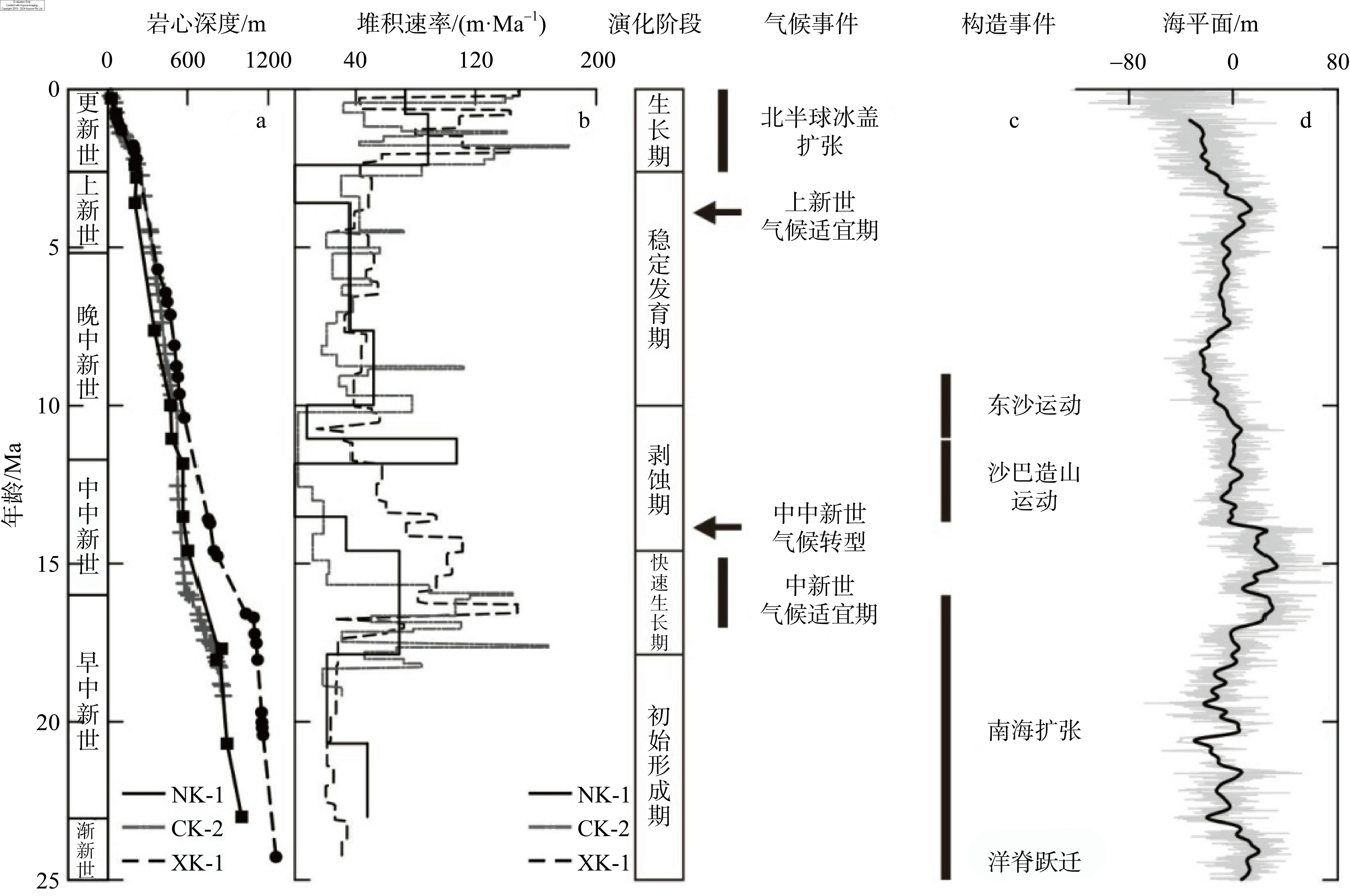
Fig. 8
| [1] |
罗云, 黎刚, 徐维海, 等, 2022. 南科1井第四系暴露面特征及其与海平面变化的关系[J]. 热带海洋学报, 41(1): 143-157.
doi: 10.11978/2021013 |
|
doi: 10.11978/2021013 |
|
| [2] |
秦国权, 1996. 微体古生物在珠江口盆地新生代晚期层序地层学研究中的应用[J]. 海洋地质与第四纪地质, 16(4): 1-18.
|
|
|
|
| [3] |
秦国权, 2002. 珠江口盆地新生代晚期层序地层划分和海平面变化[J]. 中国海上油气(地质), 16(1): 1-10, 18.
|
|
|
|
| [4] |
徐国强, 吕炳全, 王红罡, 2002. 新生代南海北部碳酸盐岩台地的淹没事件研究[J]. 同济大学学报(自然科学版), 30(1): 35-40.
|
|
|
|
| [5] |
祝幼华, 刘新宇, 马瑞芳, 等, 2016. 南海西沙群岛西科1井早中新世-第四纪生物礁地层中钙质超微化石的发现及其意义[J]. 古生物学报, 55(3): 385-392.
|
|
|
|
| [6] |
doi: 10.1016/j.marpetgeo.2014.02.022 |
| [7] |
|
| [8] |
doi: 10.1038/srep29838 pmid: 27436574 |
| [9] |
doi: 10.1002/gj.v54.6 |
| [10] |
|
| [11] |
|
| [12] |
doi: 10.1016/j.jseaes.2022.105202 |
| [13] |
doi: 10.1016/j.earscirev.2014.01.002 |
| [14] |
doi: 10.1016/S0025-3227(01)00287-0 |
| [15] |
doi: 10.1130/B35088.1 |
| [16] |
doi: 10.1016/j.palaeo.2011.03.026 |
| [17] |
doi: 10.1016/j.jseaes.2013.02.023 |
| [18] |
|
| [19] |
doi: 10.1130/G36317.1 |
| [20] |
doi: 10.1016/j.marpetgeo.2004.07.002 |
| [21] |
doi: 10.1016/j.margeo.2010.01.007 |
| [22] |
doi: 10.1126/science.1152197 pmid: 18339937 |
| [23] |
doi: 10.1002/ggge.v15.12 |
| [24] |
doi: 10.1130/B36365.1 |
| [25] |
|
| [26] |
doi: 10.1016/j.palaeo.2022.110957 |
| [27] |
doi: 10.1016/j.jseaes.2022.105091 |
| [28] |
doi: 10.1016/j.epsl.2017.12.002 |
| [29] |
doi: 10.1016/j.jseaes.2010.11.003 |
| [30] |
doi: 10.1002/gj.3942 |
| [31] |
|
| [32] |
doi: 10.1038/s41598-020-64119-9 pmid: 32346046 |
| [33] |
doi: 10.1016/j.palaeo.2022.111163 |
| [34] |
|
| [35] |
doi: 10.1126/sciadv.aaz1346 |
| [36] |
doi: 10.1029/93GB02524 |
| [37] |
doi: 10.1016/j.jseaes.2016.01.013 |
| [38] |
doi: 10.1126/sciadv.1500850 |
| [39] |
doi: 10.1007/s00442-011-2156-0 pmid: 22009340 |
| [40] |
doi: 10.1016/j.palaeo.2017.07.006 |
| [41] |
doi: 10.1016/j.margeo.2017.01.009 |
| [42] |
|
| [43] |
|
| [44] |
doi: 10.1016/j.marmicro.2020.101911 |
| [45] |
doi: 10.1130/G30139A.1 |
| [46] |
doi: 10.1016/j.margeo.2021.106629 |
| [47] |
|
| [48] |
doi: 10.1007/s11001-017-9321-8 |
| [49] |
doi: 10.1016/j.palaeo.2006.06.014 |
| [50] |
doi: 10.1016/j.jseaes.2012.08.003 |
| [51] |
doi: 10.1016/j.scib.2020.08.014 pmid: 36654321 |
| [52] |
doi: 10.1016/j.scib.2018.04.001 pmid: 36658843 |
| [53] |
|
| [54] |
|
| [55] |
doi: 10.1126/science.1059412 pmid: 11326091 |
| [56] |
doi: 10.1038/sdata.2016.29 |
| [57] |
doi: 10.1016/j.palaeo.2022.111152 |
| [1] | LUO Yun, LI Gang, ZHANG Xiyang, XU Weihai, ZHU Xiaowei, ZHOU Wanqiu, HUANG Huiwen, ZHONG Fuchang, YAN Wen. Differential dolomitization process of coral reefs in the South China Sea: a case study based on a deep borehole in Meiji Atoll [J]. Journal of Tropical Oceanography, 2026, 45(5): 108-127. |
| [2] | ZHU Xiaowei, MO Ziyi, MAO Shengyi, TIAN Yuhang, LUO Yun, MIAO Li, XU Weihai, LI Gang, YAN Wen. Distribution characteristics of biomarker components and their environmental indications at Well NK-1 on Meiji Atoll, Nansha Islands* [J]. Journal of Tropical Oceanography, 2026, 45(5): 162-177. |
| [3] | LI Gang, XU Weihai, LUO Yun, LIU Jianguo, ZHAO Jianxin, FENG Yuexing, CHENG Jun, SUN Zhen, XIANG Rong, XU Min, YAN Wen. The Cenozoic tectonic evolution of the southern South China Sea: stratigraphic evidence from a deep borehole in Meiji Atoll [J]. Journal of Tropical Oceanography, 2026, 45(5): 16-34. |
| [4] | LIU Jianguo, HUANG Yun, XU Weihai, LI Gang, XIANG Rong, SU Xiang, LUO Yun, ZHAO Zhongxian, YAN Wen. Formation and development of Meiji coral reefs in the South China Sea* [J]. Journal of Tropical Oceanography, 2026, 45(5): 94-107. |
| [5] | MIAO Xiuquan, ZHANG Yunying, YAN Wen. Mesozoic magmatism in the Nansha Block: implications for the tectonic affinity of southern continental margin of the South China Sea and the opening mechanism of the Proto-South China Sea* [J]. Journal of Tropical Oceanography, 2026, 45(5): 35-52. |
| [6] | DI Pengfei, LI Niu, GONG Shanggui, Jörn Peckmann, WANG Shuhong, CHEN Duofu, YAN Wen. Carbonate-associated sulfate records seawater sulfate δ34S and δ18O: insights from reef carbonate rocks in the southern South China Sea* [J]. Journal of Tropical Oceanography, 2026, 45(5): 178-198. |
| [7] | LI Dongping, SHI Haolei, LUO Zhongyuan, CAO Jiantao, JIA Guodong. Compositional characteristics and ecological significance of fatty acids of the surface suspended particulate matter in the South China Sea* [J]. Journal of Tropical Oceanography, 2026, 45(3): 61-73. |
| [8] | ZHANG Yunfan, TANG Danling, SUN Zhen, QIU Ning. Study on the geological structural characteristics of the U-shaped boundary in the South China Sea [J]. Journal of Tropical Oceanography, 2026, 45(3): 10-24. |
| [9] | LI Kaizhi, HUANG Liangmin, YIN Jianqiang, LIAN Xiping, LIU Yuan, TAN Yehui. Review and prospects of zooplankton ecology in the South China Sea [J]. Journal of Tropical Oceanography, 2026, 45(2): 1-15. |
| [10] | LIANG Shun, HUANG Guibin, HE Guomei, ZHANG Yongchui, ZHOU Yi, WANG Yang, HONG Mei. Analysis of spatiotemporal variation characteristics of local typhoons in the South China Sea [J]. Journal of Tropical Oceanography, 2026, 45(2): 59-70. |
| [11] | CHEN Yuchen, FU Dongyang, TAO Bangyi, LI Jizhe, ZHU Yixian, LIU Bei, LIN Ye, CHAI Xia. Study on remote sensing monitoring and time series change of shallow sea topography of typical islands and reefs in the South China Sea* [J]. Journal of Tropical Oceanography, 2025, 44(5): 140-153. |
| [12] | ZHU Xiaoyu, YANG Hua, MAO Beibei, ZHENG Yuxuan. Observations of fine-scale structure and study of turbulent mixing in the deep northeastern South China Sea* [J]. Journal of Tropical Oceanography, 2025, 44(5): 22-30. |
| [13] | LI Ruoan, LI Xuqing, CHEN Tianran. Graded responses of coral skeletal δ18O and Sr/Ca to ENSO in the southern South China Sea [J]. Journal of Tropical Oceanography, 2025, 44(4): 45-55. |
| [14] | ZHOU Zhiqian, LIAN Xiping, TAN Yehui. Morphological characteristics of a newly recorded species of the genus Stylocheiron (Euphausiidae) from the South China Sea* [J]. Journal of Tropical Oceanography, 2025, 44(3): 66-71. |
| [15] | XIONG Xin, FENG Yingci, YANG Renhui, SUN Jie, LI Jian, ZHAN Wenhuan, LYU Kaiyun. Study on the characteristics of internal solitary waves in the Dongsha area of the northern South China Sea based on acoustic backscatter data* [J]. Journal of Tropical Oceanography, 2025, 44(3): 14-23. |
|
||